Tours
Activities
Places of interest
Where to eat
Where to sleep

Discover Chaville, Hauts-de-Seine: adventures and scenery

Are you in charge of the destination?
In the heart of the Hauts-de-Seine, Chaville in Ile de France offers a serene and lush environment, while remaining just a stone's throw away from Parisian excitement. Nature enthusiasts will appreciate the nearby Meudon forest, a sprawling green space perfect for invigorating walks, jogging, or even mountain biking. The marked trails guide you through picturesque landscapes, where local wildlife ...See more

Walking around Chaville

See more suggestions
Hiking routes in Chaville.
See more suggestions
Cycling route - The plain of Versailles
4.8 km

Cycling route - The plain of Versailles

Explore the plain of Versailles by bike and discover its historical secrets and the park of the Château. A 25km route, combining history, culture and nature, ideal for a ride with family or friends. Start your cycle tour on Avenue Charles de Gaulle, then enter the grounds of the Château de Versailles through the Grille des Matelots. Cycle around the Grand Canal, which stretches for 1,670 metres and has been the setting for many memorable festivities. Next, follow the Ru de Gally, which rises in the Grand Canal. This 22km-long stream crosses the plain of Versailles and was once used to provide drinking water, wash clothes and power mills. Exit at the far end of the château grounds and turn right to discover the Gally farm. Situated between the forest of Marly and the hills of Saint-Cyr-l'École, this farm has been patiently cultivated by monks, ploughmen, market gardeners and gardeners over the centuries. After leaving the park, you'll find Versailles airfield on your left. Since 1909, the Saint-Cyr airfield has been alive with take-offs and landings. Next, cross the Plaine de Versailles, which was part of the great park of Versailles created by Louis XIV between 1660 and 1685 for hunting. This magnificent, unspoilt area is a haven for many rare natural species. Finish your walk in Rennemoulin, a village made up of agricultural, forest and natural areas. Then complete your cycle tour, passing by the Grand Canal and returning to the starting point on Avenue Charles de Gaulle. This cycle tour offers you a complete exploration of the destination's history, culture and natural beauty.

25 km
Easy
1 place du maréchal Lyautey 78000 Versailles
Show
Cycling route - Discovering Versailles
4.8 km

Cycling route - Discovering Versailles

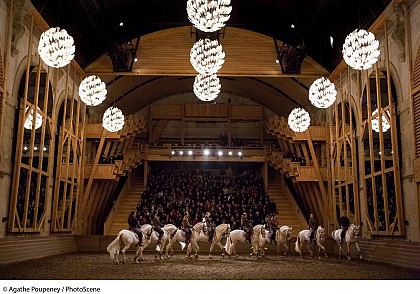
Discover Versailles by bike through its historic neighborhoods and the magnificent Château park. A 14 km route blending history, culture, and nature, perfect for a family outing or a trip with friends. Start at the Carrés Saint Louis, a picturesque spot with historic buildings. Then, head to the Saint Louis Cathedral, an example of classical architecture with impressive stained glass windows. Continue to the Potager du Roi, a historic garden created for Louis XIV, where traditional gardening techniques are still practiced. Stop at the Jeu de Paume Hall, an emblematic site of the Tennis Court Oath, a significant event of the French Revolution. Next, go to the Pièce d'eau des Suisses, a large basin surrounded by lawns and trees, perfect for a break. Enter the park of the Palace of Versailles, famous for its French gardens and groves. Explore the Domaine de Trianon, including the Grand Trianon, the Petit Trianon, and the Queen's Hamlet, which offer a glimpse into royal life. Return to town to visit the Notre-Dame Church, an example of Baroque architecture where many royal events took place. Continue to the Notre-Dame Market Square, the center of the local market with its fresh and artisanal products. Pass by the Hoche Square, the first octagonal square in France, and end your tour at the Equestrian Academy, where equestrian art is showcased. This bike route offers a comprehensive exploration of the history and beauty of Versailles. Please note : Certain areas of the Château de Versailles park will be closed during the Olympic Games.

14 km
Very easy
1 place du maréchal Lyautey 78000 Versailles
Show

What to do in Chaville

See more suggestions
Explore the bookable activity options in Chaville for all tastes and ages.
See more suggestions
Versailles Palace Skip The Line + Passport Entry with Audioguide
4.8 km

Versailles Palace Skip The Line + Passport Entry with Audioguide

ArrayWhat to Expect The enchanting Palace of Versailles is one of the most extraordinary achievements in 17th-century European art. Situated just 30 minutes outside Paris, in the village of Versailles, this elaborate complex once thrived as an epicenter of political power for the Kingdom of France. Today, the Palace, also known as Château de Versailles, contains 700 rooms spread across 800 hectares. Each year, it is estimated that approximately 5 million people visit the Palace of Versailles, and between 8 and 10 million people walk through its gardens. Begin your visit by exploring the ornate King's State Apartments. Learn about the French monarchy and explore the themed salons and their elaborate ceiling paintings. Next, make your way to the glittering Hall of Mirrors. After admiring the inside of the Palace, head outdoors and take in the grandeur of the estate’s impressive architecture. Stroll along the cobblestone grounds, through the beautiful French gardens, and pass by the gorgeous Versailles fountains. At Marie Antoinette’s Estate, discover the Trianons and get a peek into her secret life. For tips on how to navigate the palace, make the most of your time, and choose the best experience, refer to our Palace of Versailles tours and tickets collection. If you’d like to maximize your time at the palace of Versailles and get a more in-depth Castle experience, check out the Versailles Half Day Guided Tour ticket.

Meeting Point : Guidatours, 10 Avenue du Général de Gaulle 78000 Versailles
Book from 36 EURBook
Show
Toile de Jouy Museum
5.3 km

Toile de Jouy Museum

The Toile de Jouy Museum traces the history of the Toile de Jouy factory, created in 1760 in Jouy-en-Josas by Christophe-Philippe Oberkampf (1738-1815). Also called "Indian", Toile de Jouy is a painted or printed cotton fabric. The Toile de Jouy Museum was created in 1977 in Jouy-en-Josas, the town where the Toile de Jouy originated, to ensure the continuity of the work of its creator Christophe-Philippe Oberkampf and to promote the qualities of entrepreneurship, humanism and openness to the world. Installed in 1991 at the Château de l'Eglantine, the museum bears witness to the quality and know-how of the productions of the Oberkampf factory, which was active from 1760 to 1848. Its collections bring together nearly 10,000 items from the 18th century to the present day, including: painted and printed canvases, sample albums, drawings, gouache prints, paintings, costumes, furniture, bed linens, as well as various tools and mechanisms related to the printing technique. The production of Jouy-en-Josas as well as other French (Normandy, Alsace, Provence) and foreign (Great Britain, Italy) productions are illustrated. From the beginning of the school year 2022, the Musée de la Toile de Jouy will inaugurate its new historical exhibition spaces for the 18th and 19th centuries. An immersive dive into the heart of the production of the Oberkampf factory (1760-1843) and its 30,000 printed motifs. This walk through the inspired interiors of the Oberkampf family, a bedroom, an office and a music room, invites visitors to discover the use of printed fabrics in furnishings. To punctuate the visit, an interactive digital device allows visitors to become familiar with this important textile heritage. The inauguration, scheduled for 13 September 2022 at 6:30 pm, will be attended by Valérie Pécresse, President of the Île-de-France Region, Pierre Bédier, President of the Yvelines Departmental Council, and Marie-Hélène Aubert, Mayor of Jouy-en-Josas and Vice-President of the Yvelines Departmental Council. The visit of the permanent collections takes you on a discovery of the history, the printing techniques and the use of Toile de Jouy in clothing and furnishings. With the help of the Association of Friends of the Toile de Jouy Museum, the Museum regularly makes new acquisitions: canvases, objects, costumes, etc., from the time of the founder of the factory as well as from today's designers. Numerous artists, publishers and designers are inspired by the Toile de Jouy fabrics to design their collections and contribute to the influence of this heritage. The permanent exhibition reveals the incredible creativity of the designers of the time through the canvases exhibited with floral, geometric and character motifs. It also presents the different printing techniques used: the wooden plate, then the copper plate and the copper roll. Reconstructions with pieces from the French National Furniture, among others, evoke the intimacy of Oberkampf as a visionary. DISCOUNT WITH THE PASS MALIN Take advantage of our exclusive promotional offer! A 15%* discount valid on all Musée de la Toile de Jouy tickets. *Simply present the discount voucher you can download from the passmalin.fr website! The museum will be closed from January 20th to 27th 2025.

Château de l'Églantine 78350 Jouy-en-Josas
Book from 0 €Book
Show
Palace of Versailles
5.3 km

Palace of Versailles

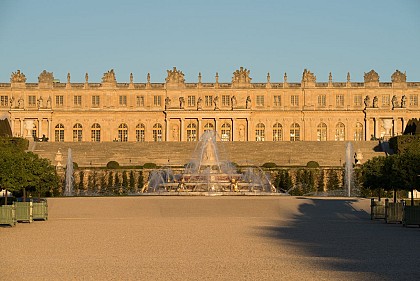
Listed as a World Heritage Site for 1979 years, the Château de Versailles is one of the finest achievements of 17th century French art. The Château and the Trianon estate are open every day except Monday. The Château opens at 9am, the Trianon estate only opens from 12pm. The Park and gardens are open every day and free of charge (access to the gardens is subject to a charge on the days of the Grandes Eaux Musicales and Nocturnes and during the Jardins Musicaux). Access to the Park only through the Queen's Gate (for pedestrians, cyclists and vehicles every day), through the Saint-Antoine Gate (for pedestrians and cyclists every day and for vehicles at weekends and public holidays) and through the Sailors' Gate (for pedestrians and cyclists every day) from 7am to 8.30pm, with the last access at 6.15pm in the high season and from 8am to 6pm in the low season The Hall of Mirrors, the King's Apartments, the Museum of French History: over the centuries, the Palace of Versailles, the seat of power until 1789, has never ceased to expand. At the beginning, it was only a modest castle built by Louis XIII for hunting. However, Louis XIV chose this site to build the palace we know today, a symbol of royal absolutism and the embodiment of French classical art. In the 1670s, Louis XIV had the Grand Apartments of the King and Queen fitted out. The most emblematic achievement of these spaces, places of parade and reception par excellence, remains the Hall of Mirrors designed by Mansart. In the following century, the extensions continued, notably with the construction of the Chapel and the Opera House. The Château now has 63,154 m2 divided into 2,300 rooms. Although the Château lost its vocation as the official seat of power in 1789, in the 19th century it had a new destiny: to become the Museum of the History of France, as desired by Louis-Philippe, who came to the throne in 1830. Many of the rooms in the Château then housed the new collections retracing the great events of French history, which were enriched until the beginning of the 20th century.

Château de Versailles Place d'armes 78000 Versailles
Book from 0 €Book
Show
Palace of Versailles All Access Passport Entry with Audioguide
5.3 km

Palace of Versailles All Access Passport Entry with Audioguide

ArrayYour Experience Use Your Passport to Tour the Château de Versailles Your ticket gives you access to the most famous places within the royal estate including the Royal Palace, the Park, Gardens, Marie Antoinette’s Estate, and entry to any exhibitions on show at the time of your visit. If you plan to visit on a Friday, Saturday or Sunday, it’s worth paying the extra €8 for an upgraded Passport ticket, which includes access to the Musical Fountain and Garden shows. Learn About the French Monarchy with the Help of a Multilingual Audio Guide Upon entering the Palace, collect your complimentary audio guide from one of the two pick-up counters located on the ground floor, one at the entrance to the Apartment Ladies and the other at the entrance to the Gallery of Castles. Audio guides are available in 11 languages: Spanish, Chinese, English, French, German, Italian, Japanese, Korean, Polish, Portuguese and Russian. Begin your visit by exploring the ornate King and Queen's State Apartments. Learn about the French monarchy and peek into the private lives of the infamous King Louis XIV and Marie Antoinette. Next, make your way to the glittering Hall of Mirrors. Designed to protect the ornate walls and ceilings from smoke, the hall’s 357 mirrors were strategically placed to reflect the light of candles. With just a few flames, the reflection from so many mirrors was enough to light up the whole hall! Explore 250 Acres of Gorgeously Landscaped Lawns and Fountains After admiring the inside of the Palace, head outdoors and take in the grandeur of the estate’s impressive architecture. Stroll along the cobblestone grounds, through the beautiful French gardens, and pass by the gorgeous Versailles fountains. Next, stop by the Estate of Marie Antoinette and discover the life and antics of the Queen at the Petit Trianon. Walk around the Village of the Queen and English gardens, then see where Marie Antoinette built her own house, a Mill, a Preparation Dairy, a Cave, a Belvedere and the magnificent Temple of Love where lovers get engage. At the Carrosses Gallery, travel back in time as you explore carriages, coaches, sculptures and other artifacts left behind by the French Monarch. If you’re short on time and would prefer to skip the long lines, a Versailles skip-the-line entry ticket will allow you to save your time. If you’d like to maximize your time at the palace of Versailles and get a more in depth Castle experience, click here. Each year, it is estimated that approximately 5 million people visit the Palace of Versailles, and between 8 and 10 million people walk its gardens. A place of immense beauty, Versailles stands as a symbol of France’s monarchy and its glorious history.

Book from 20 EURBook
Show
Palace of Versailles Entry Ticket with Audioguide
5.3 km

Palace of Versailles Entry Ticket with Audioguide

ArrayWhat to Expect Begin your visit by exploring the ornate King and Queen's State Apartments. Learn about the French monarchy and peek into the private lives of the infamous King Louis XIV and Marie Antoinette. Next, make your way to the glittering Hall of Mirrors. Designed to protect the ornate walls and ceilings from smoke, the hall’s 357 mirrors were strategically placed to reflect the light of candles. With just a few flames, the reflection from so many mirrors was enough to light up the whole hall! After admiring the inside of the Palace, head outdoors and take in the grandeur of the estate’s impressive architecture. Stroll along the cobblestone grounds and pass by the gorgeous Versailles fountains. At the Carrosses Gallery, travel back in time as you explore carriages, coaches, sculptures and other artifacts left behind by the French Monarch. If you’re short on time or would prefer to skip the long entry lines, a Versailles skip-the-line entry ticket will allow you to save anywhere from 1-3 hours of waiting. If you happen to visit the Palace on a Tuesday, Saturday or Sunday, consider opting for a Versailles Passport ticket and catch one of the famous water fountain and musical shows. Each year, it is estimated that approximately 5 million people visit the Palace of Versailles, and between 8 and 10 million people walk its gardens. A place of immense beauty, Versailles stands as a symbol of France’s monarchy and its glorious history.

Book from 18 EURBook
Show

What to visit in Chaville

See more suggestions
Explore the cultural heritage of Chaville.
See more suggestions
Park of Madame Elisabeth's estate
3.7 km

Park of Madame Elisabeth's estate

This property was acquired in 1783 by king Louis XVI, as a gift for his siter, Madame Elisabeth. Information COVID: Mrs Elisabeth's domain is be able to welcome you again as of June 2nd from 11am to 8pm according to the following guidelines: Physical distances must be respected and groups must not exceed 10 people. Wearing a mask is recommended as in the rest of the public space. Picnics are allowed, as well as sitting on the lawns, under strict conditions of respect of sanitary rules (less than 10 people, physical spacing, respect of barrier gestures). Individual sports are allowed, but team sports remain prohibited.The estate was created during the second part of the XVIII century, for Prince and Princess of Rohan-Guéméné. It includes an English style park open to the public with a cave and some groves. The plan was designed by the architect Alexandre Louis Étable de La Brière, requested by the family Guéméné-Conti. This 8 hectare park was composed of tree groves, winding path and a tiny river, powered by the tanks of Montbauron. Le Monnier, Louis XIV's physician and botanist, collected some rare plants in it. You could also find a kitchen garden, an orangery and a dairy. In 1783, the property was acquired by king Louis XVI, as a gift for his siter, Madame Elisabeth. Redesigned in the XIX century, as an romantic english garden, the park still have the cave, the groves and the lanes.

Domaine de Madame Elisabeth 73 Avenue de Paris 78000 Versailles
Show
Notre-Dame Church
4.6 km

Notre-Dame Church

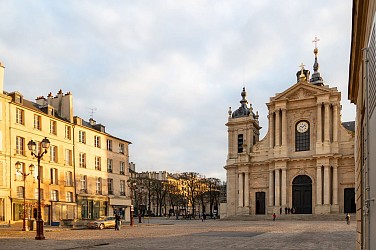
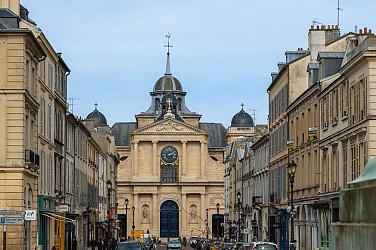
Don't miss the Sun King's parish church, the sober beauty of its architecture and the remarkable works of art in it! The town of Versailles once had a parish church of Saint-Julien, located in the Vieux-Versailles district. When the Notre-Dame district was created, it was decided to transfer it to the north of the Château de Versailles, and a modest church was built, still under the patronage of Saint-Julien. But the installation of the court in Versailles in 1682 changed the status of this parish, which became that of the king: in fact, all the inhabitants of the city then depended on a single parish, and the Royal Chapel was in its dependency. The church of Saint-Julien was far too modest, and the construction of a new church was launched in 1684 on the plans of Jules Hardouin-Mansart, the famous architect of the Sun King. In a very sober classical style, the church was completed in record time (as early as 1686), and from then on served the inhabitants, but also the Court. The king's links with the church of Notre-Dame are evidenced by the parish registers, in which the baptismal, marriage and death certificates of members of the royal family were recorded. Thus, we find the death certificate of King Louis XIV and the marriage certificate of the future Louis XVI with Marie-Antoinette, all scattered among certificates relating to the humblest of parishioners... During the French Revolution, the church temporarily became the cathedral of the new diocese of Seine et Oise, then the temple of Reason, and was stripped of all its ornaments. Returned to worship in 1800, it was refurnished and thus regained its stalls and its splendid altar painting commissioned by King Louis XIV from Michel II Corneille and dedicated to the Assumption of the Virgin, the patronal feast of the kingdom. It also retains its original pulpit and its organ case, as well as a beautiful collection of sculptures made by members of the Royal Academy of Painting and Sculpture during the reign of Louis XIV, and paintings by the king's painters Jean Restout, Carle Van Loo, Louis de Boullogne, Joseph Suvée, Nicolas Brenet, etc. In the 19th century, the Notre-Dame church was given an axial chapel dedicated to the Sacred Heart, in fulfillment of a vow made during the cholera epidemic that ravaged Europe in 1832, but spared Versailles. With a circular plan, it extends the building towards the north. The entire church, which was initially simply listed as a historic monument, was listed in its entirety in 2005.

35 rue de la Paroisse 78000 Versailles
Show
Saint-Louis Cathedral
5.1 km

Saint-Louis Cathedral

Discover a beautiful baroque church with original works of art, preserved between paintings, sculptures and historical organ ! It was after the return of the Court to Versailles in 1722, the regency having ended with the minority of the young Louis XV, that the Saint-Louis quarter was built, to establish a symmetry with the Notre-Dame quarter. A provisional church was built next to the site planned for the final church. The latter was built between 1743 and 1754 to the plans of Jacques Hardouin-Mansart de Sagonne, grandson of the famous architect of Louis XIV. In a very baroque style, dominated by curves (bulbs on the roof, curves on the organ loft, etc.), this sumptuous church was soon considered out of fashion, as neoclassicism became the norm in architecture. The catechism chapel, built on its side by Louis-François Trouard in 1764, shows the evolution of taste at the time... At the same time, a considerable number of paintings were commissioned from the king's painters to decorate the new church: most of them can still be seen there, by the famous François Boucher, Jean Restout, Jean-Baptiste Pierre, François Lemoyne... The historic organ also dates from the beginning, by the famous Louis-Alexandre Clicquot, whose instrument is still partly preserved today. In 1789, the opening mass of the Estates-General was celebrated in the Saint-Louis church, in the presence of King Louis XVI, Queen Marie-Antoinette and the deputies. Shortly afterwards, the Constituent Assembly having decided to redraw the ecclesiastical map of the kingdom, Versailles became the centre of a diocese and the church of Notre-Dame was initially chosen as the cathedral. This function was transferred to Saint-Louis under the Concordat of 1801, which re-established worship after the period of the Terror when churches had been stripped and closed. After the French Revolution, the restoration of the monument led to the installation of coloured glass windows in place of the white ones: the most remarkable ones are in the chapel of the Virgin. Based on models given by the painter Achille Devéria, the stained glass windows of the Annunciation and the Assumption were made in 1848 by the famous Sèvres factory, which was then diversifying its production. Solemnly consecrated in 1843, the Saint-Louis de Versailles cathedral has been classified as a historic monument since 1906.

4 place Saint-Louis 78000 Versailles
Show

Where to eat in Chaville

See more suggestions
Food enthusiasts will love Chaville's restaurants.
See more suggestions

Where to sleep in Chaville

See more suggestions
Discover popular accommodations in Chaville.
See more suggestions
Caution!
We have no information on the difficulty of this circuit. You may encounter some surprises along the way. Before you go, please feel free to inquire more and take all necessary precautions. Have a good trip! 🌳🥾