Tours
Activities
Places of interest
Where to eat
Where to sleep

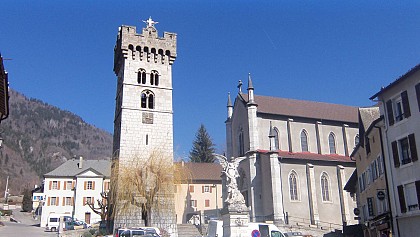
Saint-jeoire, Haute-Savoie: Alpine Escape and Discoveries

Are you in charge of the destination?
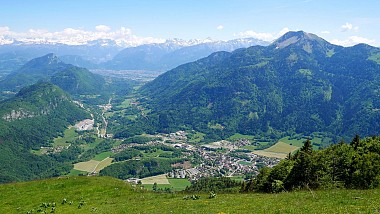
This page guides you through the attractions and activities accessible from Saint-jeoire, Haute-Savoie, Rhône-Alpes, perfect for enriching your stay. Discover local sites, walking trails, and the cultural specialties of the region. From Saint-jeoire, explore the stunning surrounding mountains on foot or by mountain bike. Nearby Lake Geneva offers a variety of water activities and beaches for relax...See more

Walking around Saint-jeoire

See more suggestions
Explore the hiking trails around Saint-jeoire.
See more suggestions
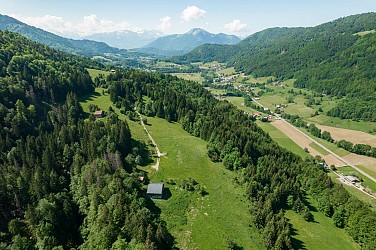
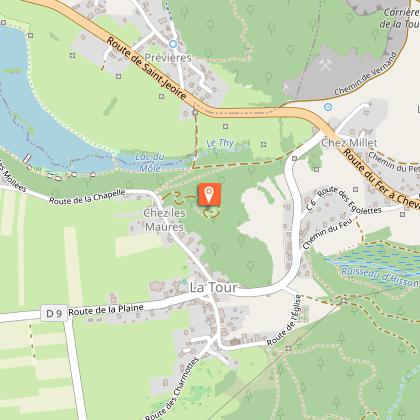
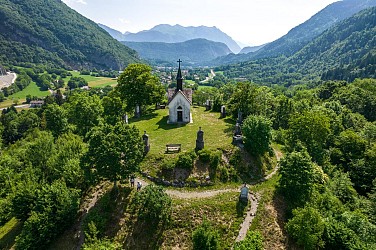
Walking tour - Around Lake Môle and the Calvary Chapel
2.9 km

Walking tour - Around Lake Môle and the Calvary Chapel

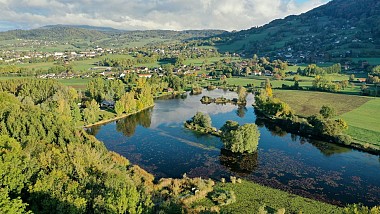
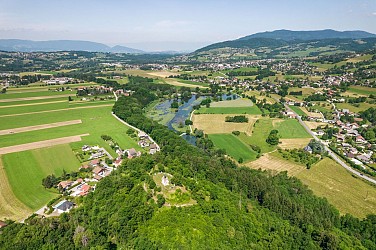
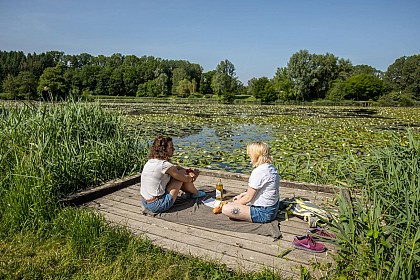
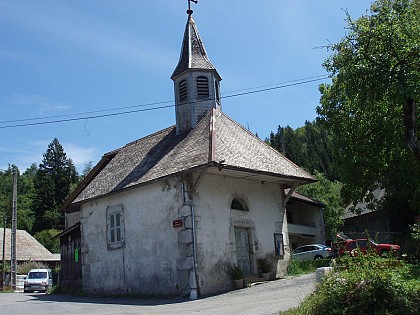
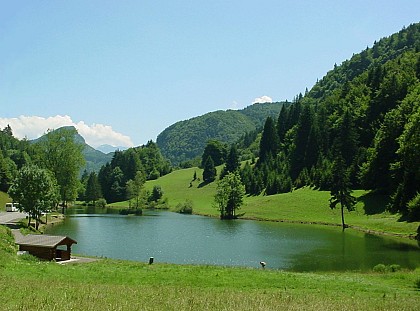
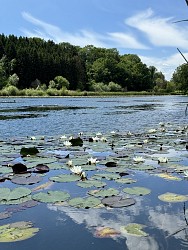
This easy 45 minute walk takes you around Lake Môle and up to the Calvary Chapel, where you can enjoy a gorgeous panorama. Lake Môle is an artificial lake created in 1969 by digging out a former marsh. It is located between the municipalities of Ville-en-Sallaz and La Tour, in the Mont Blanc region. Covering an area of 10 hectares in an idyllic, wild, and protected setting, it is a paradise for nature lovers, hikers, and fishermen. It has remarkable flora and fauna, including endemic plants to this mountainous region that are used in herbal medicine. Numerous water lilies line its banks and provide a generous habitat for fish, frogs, and herons. It also offers a high density of fish, including predators (pike, perch, black bass), white fish (bream, roach), and common carp. As for the Calvary Chapel, it is important to note that the Calvary hill was originally grassy and had nothing at its summit, not even a few fir trees (planted in 1901). Its name changed over time:b Petit Môle, La Forteresse, Le Pain de Sucre, and even Tour du Guidon. Based on an idea by the parish priest of Bonnaz, a chapel dedicated to Our Lady of Seven Sorrows was built there in a neo-Gothic style and inaugurated on September 15, 1889, approximately one year after the completion of the Way of the Cross. On the fourteenth station of the Way of the Cross, a clearly visible date indicates that the work was completed in 1878. While three stations were built thanks to donations from parishioners, the other eleven were built by families from the region. Thus, every year on the third Sunday in September, a pilgrimage took place up to the chapel. Its construction required materials to be transported by donkeys. Over the years, the chapel underwent several phases of repairs, the first of them took place in 1910-1911. For its 50th anniversary, the bell tower was renovated and the roof was covered with slate in 1971. Step-by-step directions are available by clicking on the printer icon.

45 min
3.2 km
Very easy
244 Route du Lac 74250 La Tour
Show

What to do in Saint-jeoire

See more suggestions
Choose from a variety of activities in Saint-jeoire and book your favorites.
See more suggestions

What to visit in Saint-jeoire

See more suggestions
Relax in the parks of Saint-jeoire.
See more suggestions
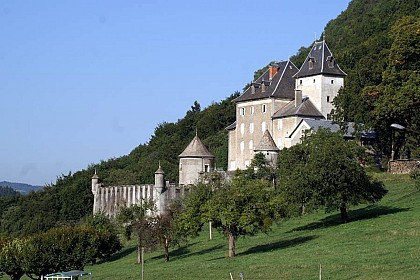
Beauregard castle
351 m

Beauregard castle

Beauregard Castle was the residence since the 13th century the Lord, became the Earls of Fletcher. You can admire this jewel, illuminated at night. The history of the castle, closely linked to that of the family of La Fléchère, Faucigny and the States of Savoy in general, has been very eventful. Burned down and looted several times, in particular by troops from Geneva or during the French Revolution, its interior had to be completely rebuilt several times, the walls however remaining in place. Witnesses of these reconstructions still remain, in particular a walled-up mullion window located under the plaster of the south facade, the location of which testifies to the different positioning of the floors at the time of its construction. The castle is said to have been built in the 13th century by the La Fléchère family. The original function of the castle, in addition to the dwelling, was to defend the village of Saint-Jeoire-en-Faucigny. It was then a simple rectangular keep with walls about 1.20 meters thick, which still constitutes the main body of the castle today. The other parts of the building were added to it as the history progressed and the needs of the Lords of La Fléchère evolved; starting with the staircase tower, built in the 14th century, including a staircase with rough marble steps. The white band painted under the roofs of the various towers reminds us that Hugues de la Fléchère will participate in 1366 in the crusade organized by the Green Count Amédée VI of Savoy to come to the aid of the Eastern Christian emperor, his brother-in-law. It was burnt down in 1589 during the Bernese invasion and subsequently restored. Among the most illustrious characters of this family, we must cite Colonel Jean-Pierre de la Fléchère who in the 18th century was Governor of Cagliari and Viceroy of Sardinia and General Georges-François de la Fléchère who was Major General of the province of Savoy. The castle remained in the family of La Fléchère until 2004, i.e. for 8 centuries, when its owner donated it to the diocese of Annecy, which entrusted it to a charismatic religious community wishing to be of Franciscan inspiration, the Eucharistein Fraternity, in 2008.

217 Montée de Beauregard 74490 Saint-Jeoire
Show

Where to eat in Saint-jeoire

See more suggestions
Chefs in Saint-jeoire will delight you.
See more suggestions

Where to sleep in Saint-jeoire

See more suggestions
Discover the best lodging options in Saint-jeoire.
See more suggestions
Caution!
We have no information on the difficulty of this circuit. You may encounter some surprises along the way. Before you go, please feel free to inquire more and take all necessary precautions. Have a good trip! 🌳🥾