Tours
Activities
Places of interest
Where to eat
Where to sleep

Discover the treasures of Pamfou, Seine-et-Marne

Are you in charge of the destination?
Pamfou, a charming town in Seine-et-Marne, Ile de France, welcomes you to a stay rich in discoveries and activities. Nestled in nature, you can explore the numerous hiking trails that weave through the region. History enthusiasts will enjoy the proximity to sites like the Château de Fontainebleau, a true gem of the Renaissance, located just a few kilometers away. For culture aficionados, the regio...See more

Walking around Pamfou

See more suggestions
Hiking trails in the Pamfou area.
See more suggestions
Petit Barbeau walking trail - Seine et Forêt, marked trail
7.5 km

Petit Barbeau walking trail - Seine et Forêt, marked trail

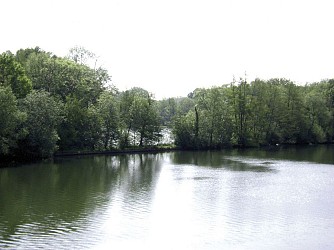
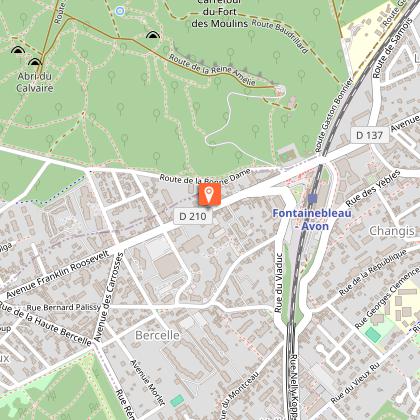
The Office de Tourisme du Pays de Fontainebleau has published this tour, which takes you from the charming village of Samois-sur-Seine to discover a wide variety of tree species. Between the Seine and the forest, take advantage of this walk to recharge your batteries! The walk starts from the Petit Barbeau parking lot. The route takes you along the banks of the Seine, sheltered by the forest. Along the way, walkers are invited to observe the diversity of the forest's tree species and to discover a number of carefully preserved remarkable trees (blue paint circle). In this setting, it's not unusual to come across numerous species of birds. This itinerary invites you to observe the diversity of forest species and discover some of the remarkable trees carefully preserved along the banks of the Seine. Remarkable trees are identified and listed, and the most remarkable are classified by rarity, size, botanical peculiarity or sometimes curious shape... These trees are marked with a blue circle. The alliance of river and forest is favorable to many bird species: many woodpeckers, common buzzards, sparrowhawks and woodcock frequent the forest, while the river is home to cormorants, grey herons, kingfishers and many species of ducks. Cold winters bring rare species to the Seine. A dive into the heart of beautiful biodiversity. Difficulty: Easy. Please note: you may come across cyclists. Accessibility: accessible to people with reduced mobility, except for certain sandy sections. Loop Length: 10 km Duration: approx. 1 h 30 Orange mountain bike signpost Starting point Parking du Petit Barbeau 77920 Samois-sur-Seine Corresponding map IGN Top 25 N°2417OT How to get there From Samois Drive through Samois and along the Seine to the Petit Barbeau parking lot. From Fontainebleau-Avon Take the D210 to the Valvins bridge crossroads. Turn towards Samois and continue along the Seine to the Petit Barbeau parking lot. This itinerary has been developed by ONF and AFF. To discover other itineraries, don't forget to use the balade branchée application.

3 h
5.2 km
Parking du Petit Barbeau, Samois-sur-Seine 77300 Fontainebleau
Show

What to do in Pamfou

See more suggestions
Choose from a variety of activities in Pamfou and book your favorites.
See more suggestions
Palace of Fontainebleau
14 km

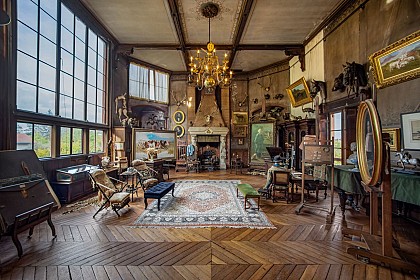
Palace of Fontainebleau

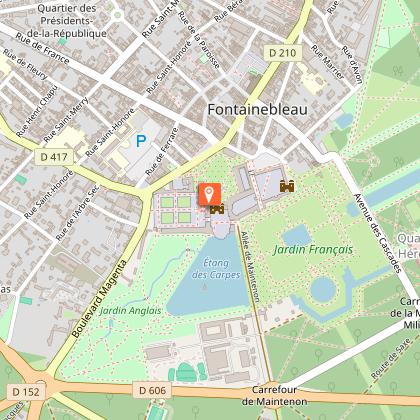
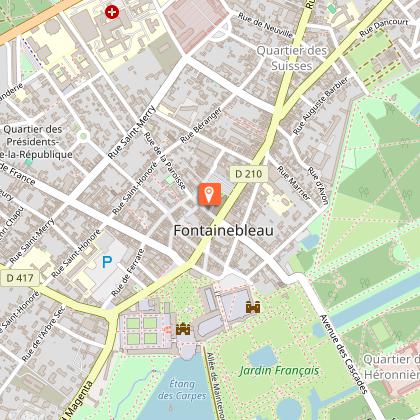
The Château de Fontainebleau is a big part of French history! This vast building, in both classical and Renaissance style, is not only famous for witnessing Napoleon's imperial adventure. From the royal charter of 1137 to the fall of the Second Empire in 1870, the Palace of Fontainebleau saw the lives of the greatest French sovereigns from day to day. The original medieval fortress was replaced by a Renaissance palace under the guiding hand of Francois I. At that time, two Italian artists, Primaticcio and Il Rosso vied in talent and founded the first School of Fontainebleau. The Galerie François I, which leads from the royal apartments to the chapel of the Convent of the Holy Trinity, is most original with its décor of frescoes, stucco and carved wood in praise of François I. The Ballroom was completed at the time of the last Valois kings, under Primaticcio’s direction. With Henri IV, the new Bourbon dynasty took over the palace, and built new rooms with interior decoration placed in the hands of the artists of the second School of Fontainebleau. Louis XIII completed the work started by his father. Under the Sun King Fontainebleau continued to be the royal family home, and the Grand Dauphin was born there in 1661. The king’s nieces were married from Fontainebleau, and the Edict of Nantes was revoked there in 1685. Louis XV and Louis XVI would spend the autumn there and initiated new, large scale building works and interior doing-ups. After the French Revolution, Napoleon I found the palace completely emptied of its furniture but intact. He undertook to refurnish the apartments and brought the palace back to its former glory as the home of the sovereign. Napoleon Bonaparte spent his last days there before his abdication in 1814 and departure for the Elba. Louis-Philippe was the first sovereign to order a complete restoration of Fontainebleau. The restoration of the Empire in 1852 gave renewed importance to the palace, and Napoleon III became strongly attached to this home, staying there regularly with his court. Housed in the Louis XV wing, the Napoleon I museum is dedicated to the Emperor and his family, with a large collection of objects from his everyday life, weapons used in military campaigns and gifts he received. The Chinese museum, created by Empress Eugenie, displays works of art from the Far East. The Jeu de Paume court, thought to be the oldest of the three surviving in France, is open to the public with demonstrations and introductory games. Le Nôtre's French gardens, the Queen’s English garden with its Fountain of Diana, the hedge maze and the Cour des Adieux are open to the public all year round. Boat excursions on the Etang aux Carpes or horse-drawn carriage rides are available. The Domain of the Fontainebleau Palace is inscribed at the UNESCO Humanity World Heritage. There is a little train going around the gardens during the touristic season.

Place du Général de Gaulle 77300 Fontainebleau
Book from 0 €Book
Show

What to visit in Pamfou

See more suggestions
Walk along the picturesque streets of Pamfou.
See more suggestions
Moret-sur-Loing
11 km

Moret-sur-Loing

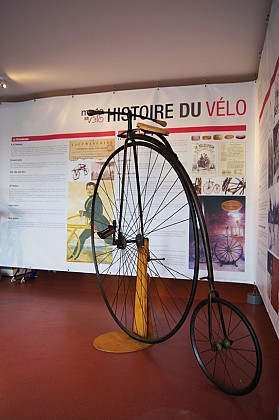
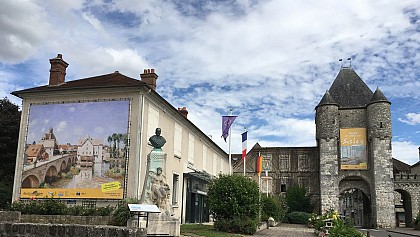
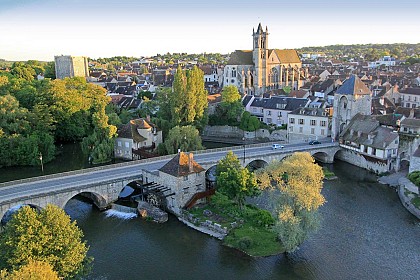
The Royal Square, the City Walls, the 12th century Keep are proud of their medieval origins and shape the architecture of the old city. Though most of the 1356 meters of walls and the twenty towers have disappeared over the years, the two gateways, Porte de Bourgogne and Porte de Samois, magnificently attest its medieval past. The majesty of the gates, the bridge and the banks of the River Loing as that of the Church Notre-Dame make Moret an exceptional site for history enthusiasts, dedicated walkers and painters. While strolling through the centre of town, you will discover superb Renaissance façades, the House of the Barley Sugar, a speciality of the nuns of Moret-sur-Loing since the 17th century or even the house and tomb of Alfred Sisley, the “Moret Impressionist”, who was the first to capture the majesty of light over the city. Numerous tourists come and see the sites painted by Sisley and these sites have been preserved: the Bridge over the Loing, immortalized by the painter ,the Church Notre Dame, the dominating Keep, the towpaths…To those who come from town or villages nearby, come and enjoy a guided tour and don’t hesitate to wander in the narrow streets or along the banks of the river, before enjoying a meal at one of the best restaurants in town. Enjoy rowing a boat or have a walk, canoe down the river, reach Moret by boat, arriving at the port of call. The “Point Sisley”, the Local Museum, the Bicycle Museum will welcome you. And don’t forget the Festivals! The heart of Moret keeps beating.

26 rue Grande Moret-sur-Loing 77250 Moret-Loing-et-Orvanne
Show
The Moret Barley sugar Museum
11 km

The Moret Barley sugar Museum

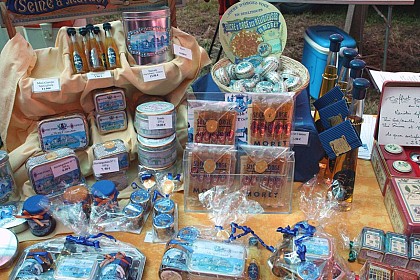
The Moret Nuns Barley Sugar has been well-known and appreciated for more than 300 years, It was originally made by the Benedictine nuns who, in 1638, founded a house in Moret, under the name of the Priory of Our Lady of Angels. This sweet, unique in its own way, was the delight of the most important people who carried of large quantities when the Court came to Moret. After having prospered under Louis XIV and gone through a period of glory until 1758, the monastery when through a number of ups and downs and disappeared in 1792. Production also stopped during the Revolution and even the secret recipe seemed to have disappeared forever, washed away with the nuns by the revolutionary tide. Luckily, after the bad days, a nun from the former Moret priory, Sister Felicity, came back with her secret to live in the Moret-sur-Loing region. Before dying, she confided the secret recipe to a faithful friend. Later, when other nuns came to live in Moret, the pious confident, in compliance with the recommendations of the deceased nun, lost no time in handing over the precious formula. In 1853, production started to grow again. At the beginning of the twentieth century, the nuns produced and sold their speciality in a corner of the Place Royale in front of the church. The nuns encountered all kinds of difficulties in the 1960’s. They had to stop production and leave Moret in 1972. In 1970, Sister Marie-André handed the secret of barley sugar to Mr. Jean Rousseau, confectioner. Thanks to the association “Produits et Terroir” this centuries-old speciality has been brought back to life and is being produced again. The Moret Nuns Barley Sugar museum in Moret-sur-Loing recounts the history and production of this delicious delicacy. Free tasting and on-site purchasing.

Rue du Pont Moulin Provencher Moret-sur-Loing 77250 Moret-Loing-et-Orvanne
Show
Castle of Blandy
14 km

Castle of Blandy

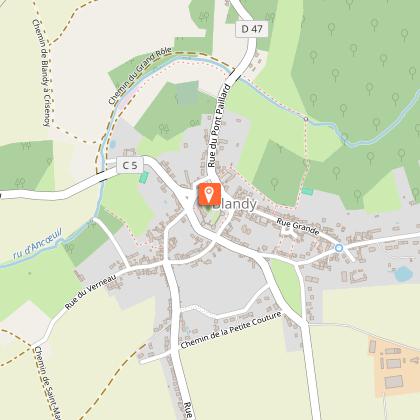
Blandy is a medieval fortress last one left as well restaured in the Ile-de-France region. The first baronial residence was built in the thirteenth century, in the form of a simple manor with an irregular surrounding wall. Later that century, considerable fortification work was done, particularly the three towers which were added to the fortified entrance tower. A large residential building was built inside these fortifications. The fourteenth century saw considerable development of the château defences, with a moat and a new tower entrance boasting a spiked drawbridge. In the second half of this century Blandy became the model for fortified castles. The keep, 39 metres high, defended by two drawbridges, was built. The keep was altered by the addition of new towers and curtain walls. Between the fifteenth and seventeenth centuries, the fortress gradually lost its military purpose and became a residential castle. More domestic buildings were built. In the early eighteenth century, Maréchal Villars, the owner of Vaux-le-Vicomte, bought the lands and fortress of Blandy, which was pulled down and turned into a farm. Little by little, the fortress disappeared. Bought by the town council in 1883, the ruins of the fortress were classified as a historic monument the following year. From 1970 onwards, volunteer associations began work on restoring the château. In 1992, the Seine et Marne general council bought the fortress and undertook a vast restoration operation. A complete programme of works has enabled this superb fortress to be resuscitated and become one of the leading tourist attractions in the department. This dashing fortress represents one of the flagship tourist site of the district.

Place des Tours 77115 Blandy
Show
Val d'Ancoeur: listed site
14 km

Val d'Ancoeur: listed site

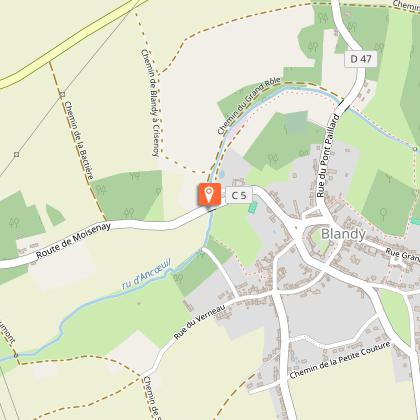
The story begins like a fairy tale: "Once upon a time, there was the Val d'Ancœur..." with its castles, its legends and the 3 names of this small stream, which has become a myth, from Ancœur to Ancoeuil and ends in Almont... before flowing into the Seine. (extract from the Archives Départementales website) The ru d'Ancoeur is a watercourse which rises in the commune of Grandpuits-Bailly-Carrois at an altitude of 125 m. It then takes the name of "Ancoeuil" in the commune of Moisenay and, after a journey of 25 km from its source, flows into the Bassin de la Poële at the Château de Vaux-le-Vicomte. At the end of this basin, it flows into the Almont 5 km downstream into the Seine at Melun. Together with its tributaries, it forms a catchment area of approximately 306 km². The ru d'Ancoeur flows through the municipalities of Grandpuits-Bailly-Carrois, La Chapelle-Gauthier, Bréau, Bombon, Saint-Méry, Blandy-les-Tours, Moisenay, Maincy and Melun. Classified as an "Exceptional Site" since 14 October 1985 by the Direction Régionale et Interdépartementale de l'Environnement et de l'Energie d'Île-de-France, the ru d'Ancœur offers enchanting landscapes. The listed site covers 1861 hectares. Along its watercourses - the Almont, the Ancoeuil (or Ancueil) and then the Ancoeur - the Val d'Ancœur offers panoramic views: villages, forests, châteaux (Vaux-le-Vicomte, Blandy-Les-Tours, etc.) and, at the confluence with the Seine, urbanised areas. "The Ancoeur is a river with very little water, very irregular and in danger of running dry on a regular basis. The water level in its catchment area is 96 millimetres a year, which is one of the lowest in France, more than three times lower than the average for the country as a whole, and above all well below the average for the whole of the Seine basin (around 240 millimetres). For centuries, however, the constant flow of the river Ancoeur has enabled numerous mills to operate. The large number of hydraulic structures, such as canals, basins and ponds, small reservoirs and mills, give the landscape a distinctive identity based on water and its control. This is linked to the wet nature of the land. A place where people live, produce and create, the Val d'Ancoeur is home to a number of major heritage sites throughout the area: churches and works of art dating back to the 12th century, castles, farms, mills, rural housing, small-scale rural heritage, and so on. It has also become a subject of reflection and aesthetic admiration thanks to the artists who have seized upon its beauty to interpret it in their own way. - L'Ancueil ("Anqueil" in its 17th-century spelling), for example, gave its name to a majestic statue in the grounds of Vaux-le-Vicomte located to the left of the grotto complex (1659-1662), facing the Tiber installed to the right in 1659. - In 1879, the painter Paul Cézanne immortalised the Pont de Maincy (preserved at the Musée d'Orsay). - And sculptor Auguste Rodin devoted some superb drawings to the Collegiate Church of Champeaux (1890-1917), testifying to his admiration. For several years now, the Communauté de Communes Brie des Rivières et Châteaux and the Communauté d'Agglomération Melun Val de Seine have been working together to draw up a Landscape Plan to highlight the assets of the Val d'Ancoeur. An opportunity to protect and enhance the landscape heritage. The perimeter of the listed site covers 11 communes in an area of around 56 km². As the crow flies, it is almost 17 km long.

77115 Blandy
Show

Where to eat in Pamfou

See more suggestions
Food enthusiasts will love Pamfou's restaurants.
See more suggestions
Where to sleep in Pamfou

See more suggestions
Stay near Pamfou with our lodging options.
See more suggestions
Centre International de Séjour Le Rocheton
16 km

Centre International de Séjour Le Rocheton

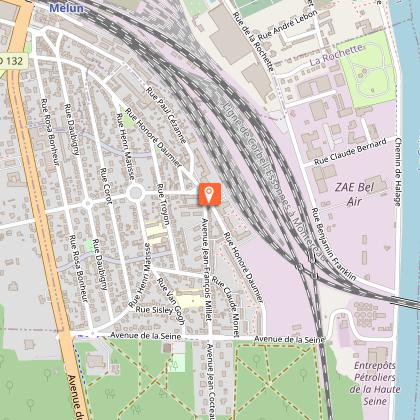
The centre is located in La Rochette, on the edge of the Fontainebleau forest and in the heart of a 10-hectare wooded park. Its green, peaceful setting and proximity to many sites of interest make Le Rocheton an ideal base for discovering the region. Whether you're on your own, with family, friends, an association, a school, a work group, a walker or a climber, whether you're coming as a neighbour or from another continent to relax or to work, the whole team at Le Rocheton is here to welcome you and to meet your needs. What's more, Le Rocheton is ideally located close to many sites of interest: exceptional residences, the Châteaux of Fontainebleau, Vaux le Vicomte and Blandy les Tours, the medieval town of Provins, museums, theme parks, etc. Activities : - A covered and fenced volleyball/tennis/archery pitch with a suitable synthetic surface - A city stadium (volleyball / mini football / badminton / handball / tennis / basketball) on an adapted synthetic surface - 4 squash courts are planned for 2017 in collaboration with the French Squash Federation. Services : - Tourist breaks (groups or individuals) - Educational breaks (with a tailor-made programme of activities) - Room hire for private events - Seminars and study days - BAFA training courses Whatever the nature of your project, the teams at Le Rocheton are here to help make it unforgettable. (Tourism & Handicap label since April 2019).

Rue de la Forêt 77000 La Rochette
Show
Caution!
We have no information on the difficulty of this circuit. You may encounter some surprises along the way. Before you go, please feel free to inquire more and take all necessary precautions. Have a good trip! 🌳🥾