Tours
Activities
Places of interest
Where to eat
Where to sleep

Explore Chatuzange-le-goubet, Drôme, Rhône-Alpes

Are you in charge of the destination?
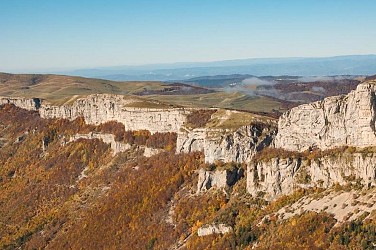
Welcome to Chatuzange-le-Goubet, a charming village located in the beautiful Drôme region in Rhône-Alpes. If you're seeking a place that combines rural tranquility with rich cultural heritage, you've come to the right spot. Don't miss a visit to the Vercors, a mountain range offering breathtaking landscapes and hiking trails for all levels. Spend a day exploring the Choranche caves or enjoy the sk...See more

Walking around Chatuzange-le-goubet

See more suggestions
Discover the trails of Chatuzange-le-goubet.
See more suggestions
The valley of Isère
13 km

The valley of Isère

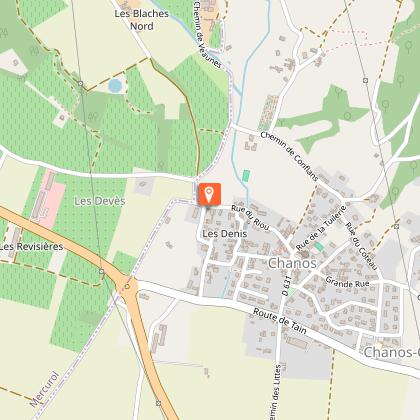
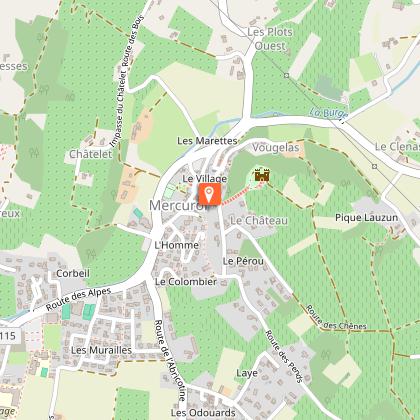
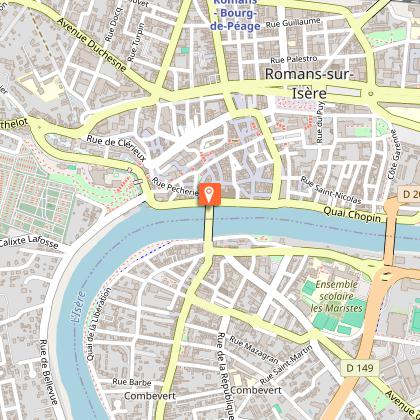
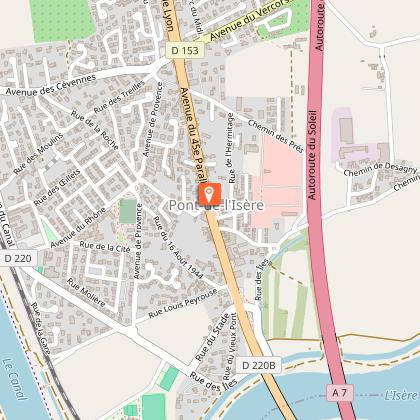
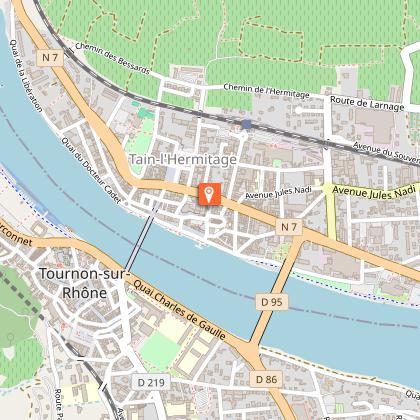
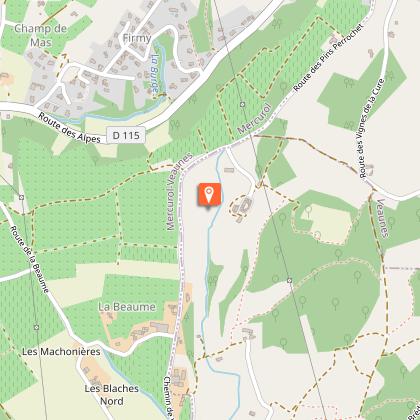
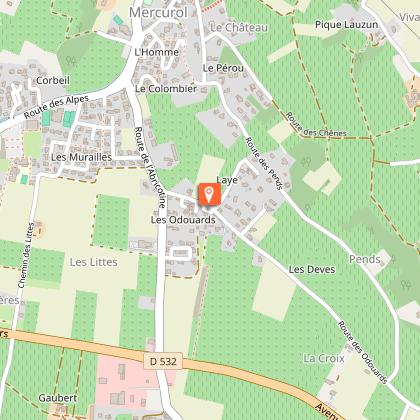
Like an immense green velvet blanket, the plain of Crozes Hermitage stretches as far as the eye can see. Wandering in free wheel will perhaps lead you to one of the numerous wine cellars. Halfway you will begin to see the purple grape replaced by the blue water of the rivers Rhône and Isère as you ride along on safe cycling routes. Head north towards “Domaine Breyton” for 900m then follow the sign to Chanos Curson. 1. 1,9 km Turn left onto “chemin de Compostelle”. 2. 3,2 km Turn right at the giveway sign then continue opposite at the following stop sign onto “chemin des Littes” to the centre of Chanos. 3. 5,4 km Turn left onto “route du Riou” continue for 400m then turn right onto “chemin de Veaunes and immediately left “chemin des Odouards”. 4. 6,6 km Turn right onto “route des Pends” to Mercurol. 5. 8,5 km Follow the D115 towards Veaunes.6. 10,8 km Turn left onto “route des charmes”. 7. 11,4 km Turn right at the stop sign after the church then left onto “rue de l’eau vive” then left agein. 8. 12,1 km Turn right onto “route des sources”. 9. 13,3 km Turn right onto “route des vignes de la cure” then first left onto “route du Mont-Laurent”. 10. 15,3 km Turn left at the stop sign, immediately left onto “rue du côteau” then left again at the following stop sign onto “rue des pierres”. 11. 16,1 km Turn left at the stop sign onto “route de Romans” then follow the signs Châteauneuf-sur-Isère at the roundabout. 12. 17,8 km Turn left onto “chemin de la plaine”. 13. 18,7 km Turn left at the 2 giveway signs. 14. 19,7 km Straight on at the giveway sign following signs for Saint-Jean then turn left onto “route des collines”. 15. 21,1 km Turn right at the stop sign onto “route de Romans” then at the roundabout straight on “route des champs”. 16. 23,3 km Turn right onto “route des pierres”. 17. 24,3 km Turn right onto “route du barrage” then follow the Vallée de l’Isère cycling route heading west to Pontde- l’Isère.18. 38,2 km Follow the ViaRhôna towards Tain. 19. 39,6 km Leave the ViaRhôna turning right onto a path through the woods. 20. 40,7 km Turn right at the stop sign then straight on at the roundabout. 21. 41,5 km Turn right towards Les Gours. 22. 43,3 km Turn left towards the “quartier “les pibouleries” then first left and first right. 23. 44,3 km Turn right at the giveway sign. 24. 45,7 km Turn left onto the Via Magne. 25. 46,2 km Go opposite onto the main road towards Tain. 26. 49 km Turn right onto “ch. de Chapon”. 27. 50,1 km Turn right at the stop sign then straight on at the following 2. 28. 52,2 km Turn right at the giveway sign then immediately left towards Chasselières then straight on to Beaumont-Monteux (don’t follow signs to Chassellières after left turn).

4 h
55 km
Show

What to do in Chatuzange-le-goubet

See more suggestions
Explore the many bookable activities in Chatuzange-le-goubet and make the most of every moment.
See more suggestions

What to visit in Chatuzange-le-goubet

See more suggestions
Discover the nightlife of Chatuzange-le-goubet.
See more suggestions
Collegiate church of Saint Barnard
5.2 km

Collegiate church of Saint Barnard

This monastery founded in 838 by Barnard, archbishop of Vienne, is at the origin of the city of Romans. Marriage of Romanesque and Gothic style, it houses a pure jewel: the Nine embroidered hangings representing the Passion of Christ (visit in season and on a guided tour) Transformed into a collegiate church around 935, the church was several times destroyed and rebuilt during the medieval period. Its classification as a Historic Monument in 1840 testifies to its importance in terms of history and art history. Western facade The western entrance of the church is decorated with Romanesque sculptures of southern inspiration that represent apostles. To the right of the entrance, one thus recognizes Saint John with a book at his feet. On the left, one can guess the word 'PETRUS' on a phylactery: it is about Saint Peter. The other sculptures could represent Saint Paul and Saint James the Greater. The four characters are surrounded by lions, colonnettes and capitals with rich vegetal decoration evoking antiquity. Mutilated during the French Revolution, the ensemble was also completely overhauled at an undetermined time. Nef The nave is composed of elements from several eras. Dating from the 11th century, the lower parts are the oldest of the building. The nave is raised in the 13th century century, embellished with a triforium (high gallery) and covered with an ogive cross vault. Triforium and the vaults, destroyed in 1567 during the Wars of Religion, are rebuilt identically at the end of the following century. On the north side, we notice historiated capitals from the Romanesque era representing biblical scenes (Visitation, last judgment) and fantastic animals. On both sides of the nave, chapels were founded and decorated between the 15th and 19th centuries. The large sacristy serves as a setting for superb 18th century walnut woodwork and many sacred art objects. On the organ gallery built in 1720, there is an organ signed by Facteur Chambry* and installed in 1843. It is undoubtedly the 4th or 5th organ successively present in the building. Above the organ, stained-glass windows installed in 2000, designed by the artist Georg Ettl and created by the Thomas workshops deliver a modern vision of the Apocalypse of Saint John. *An organ builder is a craftsman specialized in making organs Choir and transept The choir and transept are erected from 1238 in a Gothic style, by decision of Jean de Bernin, archbishop of Vienne, known for his action as a builder. The decor exceptional which is found today in the choir is dated from 1330-1350. It was indeed on this date that the Dauphin Humbert II, also a canon of Saint-Barnard, ceded the Dauphiné to the crown of France, during a ceremony held in Romans in 1349. In this teeming decor, we indeed recognize fleurs-de-lis and crowned figures but also angels on a crenellated walkway and vegetal and geometric patterns. In the two arms of the transept, many traces of paint come from decorations made successively from the 13th to the 19th century Temporary exhibitions and concerts take place several times a year in this building. Possibilities of guided tours for groups or individuals. In summer: exceptional opening of the sacristy and the Chapel of the Holy Sacrament (to see the hangings) from Tuesday to Friday as well as on Sundays!

Quai Ulysse Chevalier 26100 Romans-sur-Isère
Show
Sheep house - Maison du Mouton
5.3 km

Sheep house - Maison du Mouton

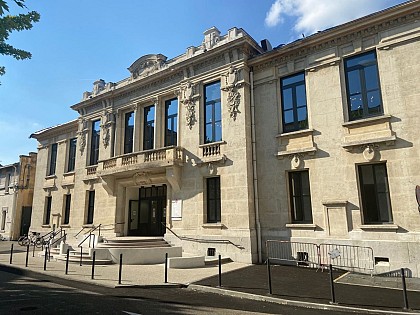
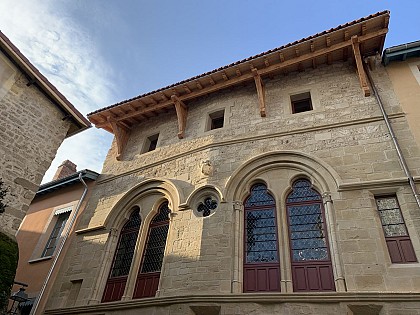
New! Come and discover the Maison du Mouton, one of the oldest residences in Romans, now a Maison du patrimoine! A free space open to all, inviting you to discover the heritage of the Isère Valley and the Drôme des Collines. History Located in the first urban core of the city, the Maison du Mouton is one of the oldest buildings in Romans. On the street and on the courtyard, its two Gothic facades are indeed dated from the end of the 13th or the beginning of the 14th century. Ashlar stones, painted decorations, extent of the spaces indicate that it belonged to a well-off family. The woolen cloth trade then made the fortune of the city: perhaps one should see in it the explanation of its name. A sheep’s head has adorned the facade since its origin. Very deteriorated, it was returned during major restoration works carried out between 2020 and 2024. The stone used probably comes from the molasses quarries located in Châteauneuf-sur-Isère. These quarries, about fifteen kilometers apart, were exploited from antiquity to the 19th century. Once extracted, the molasse, fine stoneware and easy to cut, circulated by river, both towards Romans and towards Valencia. For the framework and intermediate floors, softwood was mainly used. Beautiful medieval house abandoned during the 20th century, the Maison du Mouton was acquired by the City of Romans in 2020. Open to the public after restoration since 2025, it now houses one of the two sites of the Heritage House of the Land of Art and History of Valence Romans Agglo. The public there discovers the history and architectural heritage of Romans and the Drôme des collines. In Valence, the visitor can continue his visit at the Maison des Têtes, second site dedicated to local heritage. Originally, the ground floor had a commercial or artisanal vocation. The large bays being closed by wooden shutters, the light came from square-shaped light cannons, drilled into the masonry and located high up. The French oak ceiling was restored during the restoration work. It is through this space that the public enters the Heritage House today. An educational workshop also welcomes teachers and their classes. The rear facade of the house is remarkably preserved in its 14th century state. Under the modern staircase, the original straight staircase has been partially preserved. It gave access to the floors from the outside, from the courtyard. The frame of a well is also visible in the masonry. At the back of the house, a building was erected in the 15th or 16th century. This outbuilding could have served as an annex for residential and service uses. Upstairs, a majestic room nearly six meters high corresponds to the aula of the medieval house. Both a reception room and a space for private use, it was the heart of the residence. Heated by an imposing chimney now disappeared, the hall was lit by two tall gothic bays, geminate and trilobed. In front of them, there are seat cushions. These benches arranged in the window recess served as seats. The second floor was able to house the housing of the servants and storage spaces. The offices of the Heritage-Country service for art and history are now located there. Archaeological excavations have unearthed numerous traces of painted decorations, which reveal a pronounced medieval taste for color and geometric patterns. In the aula, a decoration dated from the 14th century, composed of yellow squares on a red background and white borders, was discovered during the work. It has been preserved in situ. In this same room, a decor from the Hôtel de Loulle presents a frieze of coats of arms decorated with plant motifs, in shades of black, red, yellow and blue. The quality of these paintings indicates that high-ranking families occupied the houses in the neighborhood. On the second floor, a simpler decoration, imitating an apparatus of stones, was also discovered. It covered the entire space, in a common approach to many buildings of the same period.

Rue du Mouton 26100 Romans-sur-Isère
Show

Where to eat in Chatuzange-le-goubet

See more suggestions
Chefs in Chatuzange-le-goubet will delight you.
See more suggestions

Where to sleep in Chatuzange-le-goubet

See more suggestions
Find the perfect lodging for your visit to Chatuzange-le-goubet.
See more suggestions
Caution!
We have no information on the difficulty of this circuit. You may encounter some surprises along the way. Before you go, please feel free to inquire more and take all necessary precautions. Have a good trip! 🌳🥾