Tours
Activities
Places of interest
Where to eat
Where to sleep

Explore Tournai, Hainaut, Hainaut: A Belgian Gem

Are you in charge of the destination?
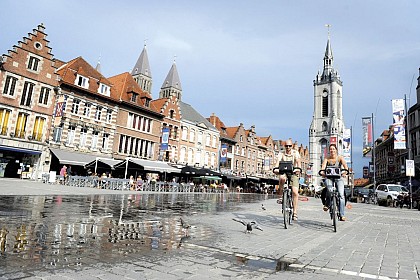
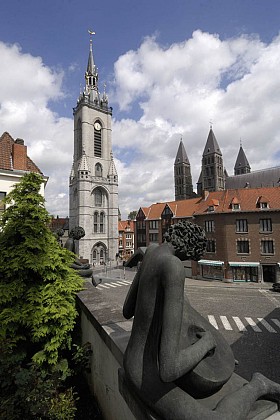
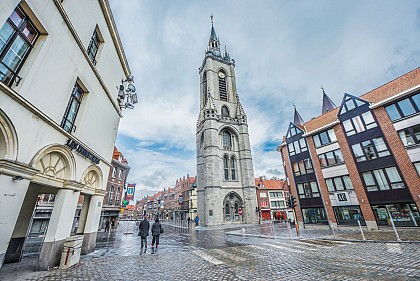
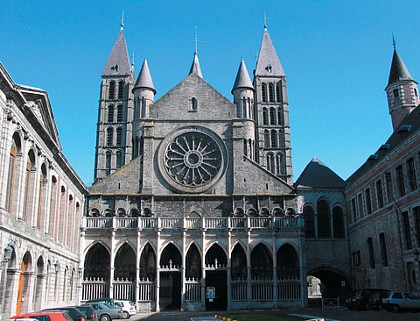
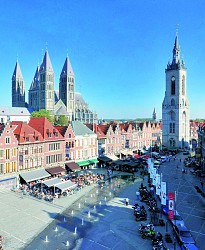
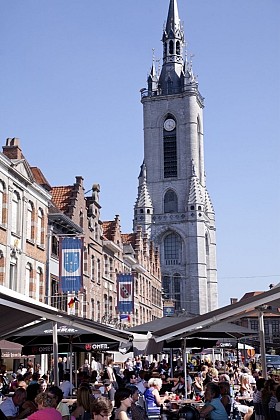
Discover Tournai, Hainaut, Hainaut, a city rich in history and culture. Start your visit with the majestic Notre-Dame Cathedral, a UNESCO World Heritage site. Stroll through the picturesque streets and charming squares like the Grand-Place, with its ancient belfry, the oldest in Belgium. Don't miss the Fine Arts Museum designed by architect Victor Horta, housing an impressive collection of Flemish...See more
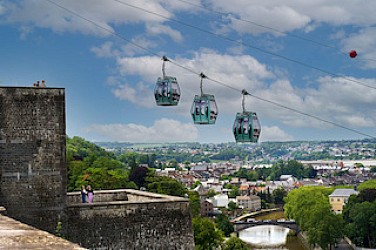
Walking around Tournai

See more suggestions
Discover the trails of Tournai.
See more suggestions
Roadtrip: Tournai to Dinant | Hit the Road
1 m

Roadtrip: Tournai to Dinant | Hit the Road

What to see? Tournai’s UNESCO-worthy belfry and cathedral, the lakes at Cerfontaine, the Château in Beloeil and Hitler’s hideaway in Brûly-de-Pesche. Where to drive? The N598 over the tranquil lakes, the N59 to sample Wallonia’s customary mix of open fields and close-set villages, the roads around Brûly for compact twists in a tunnel of green. Just eight kilometres from the French border and 90 minutes from the Channel Tunnel, the city of Tournai is the medieval gateway to Wallonia. Clustered around the Cathedral of Notre-Dame, itself a UNSECO world heritage site that mixes Gothic and Romanesque styles, the centre delights with open squares, cobbled streets and cultural sights. The remains of the 17th century citadel commissioned by King Louis XIV and the art gallery that houses a range of Impressionist works demand attention, but the city’s most remarkable story is almost invisible. Besieged in 1513 and held for the next ve years, Tournai is the only continental European city to ever fall under the control of Henry VIII. One of the main towers built during the occupation – the Grosse Tour – still stands in the north of the city. Spy it from Rue de Rempart, then pick up the N7 for a leisurely cruise east through Leuze-en-Hainaut and the N526 heading south. The pace soon slows, the route wandering through the centre of Belœil, and a keen eye might spot the entrance to the local château. A multi-era building that sits within acres of pristine Baroque garden, it’s well worth a stop. Nearby Chemin du Major oŸers another angle on the estate, skimming along the perimeter to oŸer a glimpse of the grounds’ imposing water features. If it’s tranquil vistas you’re after, the N90 and N59 track over open land to the expansive Lakes of Cerfontaine but that’s no reason to miss Mons. Hungry travellers will welcome the restaurants that ¡ank the main square here, while the Biercée Distillery in nearby Thuin will satisfy passengers looking for something stronger. Fast twists lead on into Chimay where glimpses of Armco and coloured kerbing reveal that you’re on the route of the Chimay road circuit, once host to Maserati 250Fs and straight-eight Bugattis, now a classic motorcycle racing venue. The town’s streets fuss with antique terrace housing and the local Abbey is renowned for its brewery. Amble south through the trees and turns of the Rue des Parconniers and Brûly-de-Pesche eventually appears. A short walk in the forest brings you to Wolf’s Gorge – the secret base where Hitler resided in May and June 1940. His walking route and emergency bunker have both been preserved; to walk into the sparse concrete interior is unsettling but highly recommended. Dinant, the birthplace of saxophone inventer Adolf Sax, echoes to jazz. The medieval fortress towers above the town, the local scenery rewards a Meuse river cruise and the restaurants tempt with popular moules marinière.

4 h
212 km
1 Rue Saint-Martin 7500 Tournai
Show
Roadtrip: Tournai to Marche-en-Famenne | Dig Deep
1 m

Roadtrip: Tournai to Marche-en-Famenne | Dig Deep

What to see? Mahymobiles for an excellent car collection, full of unrestored and premium vintage machines, the expansive Pairi Daiza zoo, a curious boat lift and a Huyssens baroque church in Namur. Where to drive? The N947 outside Namur for thrills and the roads twisting up to the citadel for grandeur, unparalleled views and cobblestones. Lovely as they may be, there’s more to Wallonia than castles and lakes. A 20- minute blink from Tournai, Leuze-enHainaut snares unsuspecting petrolheads with the excellent Mahymobiles museum – expect coachbuilt Packards, the Alfa Romeo RL SS that took a podium at the 1926 German Grand Prix and more – and nearby Brugelette stuns with a very different kind of collection. From its 65-hectare site to its status as Belgium’s most popular tourist attraction, the Pairi Daiza zoological gardens know how to live large. This extends to themed gardens and enclosures that can be viewed by path, steam train and suspension bridge. Now drive east over the N57 to Écaussinnes. From here, the road cuts between the trees to run north along the line of the BrusselsCharleroi canal until you reach the Plan Incliné de Ronquières. This mechanical curiosity has been here since 1968 and succeeds the 14 locks that previously carried boats over the local geography. Vessels are now placed on giant crates of water and winched over the incline within minutes and creates a remarkable sight. Back on the road, the N533’s gentle curves carry you through Nivelle, home to an imposing Romanesque collegiate church, and onto the N237. Quiet Genappe punctuates the drive east and marks the point where the roads get twister and forest views more dramatic. Fast and challenging, the next ten minutes are all about driving. You’ll roar back into the light just above Abbaye de Villers to pick up the southbound N275. Villers-la-Ville passes in a flash, before a hard left onto the N93. Namur – a medieval city that sits between the Meuse and Sambre rivers and hosts an extensive citadel – is the target now. The centre is best explored on foot, so park up and marvel at the belfry, cathedral and cavernous 16th century Halle al’Chair butcher’s building. Finish at the Saint-Loup church and you’ll save the best for last. Giddyingly excessive, the 1621 Catholic church exhibits the Baroque works of Huyssens. The Meuse snakes away from the city, the N947 a rollercoaster along its every move, and you pass through the villages of Wépion and Rivière until the signs to Crupet appear. The village has been voted one of the prettiest villages in Wallonia – while the road east bumbles past churches and townhouses before merging into the twisty and engaging N944. Progress gets faster over the open, flowing roads of Ciney and Buissonville, then Marche-en-Famenne appears to complete the route. Nearby Château Jemeppe offers a fittingly grandiose overnight stop for groups. All 77 rooms are uniquely appointed and the classically-appointed common areas evoke Belgium’s most famous fictional detective.

5 h
219 km
1 Rue Saint-Martin 7500 Tournai
Show
Car Free Style - From Tournai to Mouscron
951 m

Car Free Style - From Tournai to Mouscron

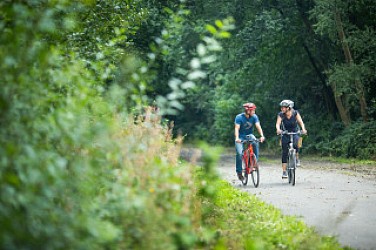
From the City of Five Steeples to the City of Hurlus Get ready for two great days in Picardy Wallonia between Tournai and Mouscron along the French border. Start the adventure on foot or by bike from Tournai, the City of Five Steeples. The name was given due to the five towers of its cathedral and is one of the oldest cities in Belgium. Everywhere you go you’ll find traces of multi-millennial history in its preserved architecture. In particular, the oldest Belfry in Belgium as well as Notre-Dame Cathedral and heritage sites from medieval times, both on the UNESCO list. Another highlight is the Museum of Fine Arts designed by Victor Horta. In this impressive building, you’ll discover the paintings of great names in art, from the middle ages to the present day. You then leave Tournai, following the recently re-developed banks of the River Scheldt in the direction of ‘Mont Saint-Aubert’. Once you’ve made the climb you’ll be rewarded with a superb panorama of Tournai and its surrounding countryside. Then, as you follow the canals again you’ll discover the Domaine and ‘Château de Bourgogne’, arriving in Mouscron where you can admire its famous ‘Château des Comtes’. Mouscron was nicknamed the City of Hurlus in reference to a character who lived on crimes of all kinds in the region during the religious wars in the 16th century. This resulted in the Hurlus festival which takes place every first weekend of October and is punctuated by trumpets, drums and folkloric characters. Picardy Wallonia is full of surprises you won’t expect.

53 km
Easy
9 Place Crombez 7500 Tournai
Show
Car Free Style - From Tournai to Mouscron
983 m

Car Free Style - From Tournai to Mouscron

From the City of Five Steeples to the City of Hurlus Get ready for two great days in Picardy Wallonia between Tournai and Mouscron along the French border. Start the adventure on foot or by bike from Tournai, the City of Five Steeples. The name was given due to the five towers of its cathedral and is one of the oldest cities in Belgium. Everywhere you go you’ll find traces of multi-millennial history in its preserved architecture. In particular, the oldest Belfry in Belgium as well as Notre-Dame Cathedral and heritage sites from medieval times, both on the UNESCO list. Another highlight is the Museum of Fine Arts designed by Victor Horta. In this impressive building, you’ll discover the paintings of great names in art, from the middle ages to the present day. You then leave Tournai, following the recently re-developed banks of the River Scheldt in the direction of ‘Mont Saint-Aubert’. Once you’ve made the climb you’ll be rewarded with a superb panorama of Tournai and its surrounding countryside. Then, as you follow the canals again you’ll discover the Domaine and ‘Château de Bourgogne’, arriving in Mouscron where you can admire its famous ‘Château des Comtes’. Mouscron was nicknamed the City of Hurlus in reference to a character who lived on crimes of all kinds in the region during the religious wars in the 16th century. This resulted in the Hurlus festival which takes place every first weekend of October and is punctuated by trumpets, drums and folkloric characters. Picardy Wallonia is full of surprises you won’t expect.

36 km
Medium
7500 Tournai
Show

What to do in Tournai

See more suggestions
Book your activities in Tournai and experience memorable moments.
See more suggestions
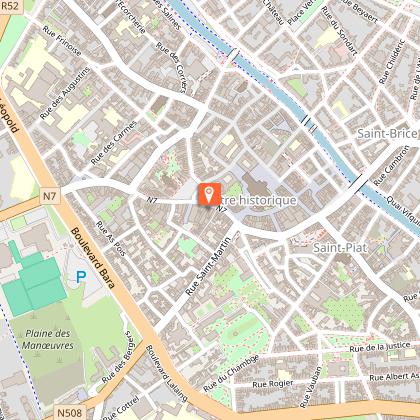
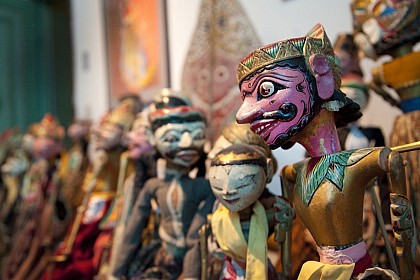
Puppet Centre
143 m

Puppet Centre

Located in the historical centre of the Town of Tournai, Hôtel Peeters houses an atypical museum which is devoted to puppetry arts in all their forms. The Puppet Centre will take you on a voyage of discovery, during which the Centre's hidden treasures will be revealed to you – treasures from the four corners of the earth. This trip around the world will thus take you in the footsteps of the most popular figures in European puppet theatre, known by the young and the not-so-young alike, but also in the footsteps of the typical characters and techniques found in the puppetry traditions of various African and Asian countries. Apart from the heritage items stored in the museum, the Puppet Centre offering for visitors also consists not only of various temporary exhibitions, educational events (upon request), creative workshops, but also many shows, training sessions and courses for children and adults. NEW! An unaccompanied tour for families entitled "Jack s'est fait la malle" – the puppet called Jack has disappeared! The only evidence of where he has been are the selfies that he has hidden, here and there, in the museum's rooms. We need you to help him to get back to his designated place amongst the other puppets! During your investigation, you will have to solve riddles, experiment with various puppet handling techniques, observe the puppets in detail, imitate their expressions, touch the material they are made of, and so forth. Available every day the museum is open. We prefer that you book in advance (by calling us on +32 (0)69 889 140 or by emailing us at maisondelamarionnette@skynet.be).

47 Rue Saint-Martin 7500 Tournai
Book from 0 €Book
Show

What to visit in Tournai

See more suggestions
Visit the iconic landmarks of Tournai.
See more suggestions
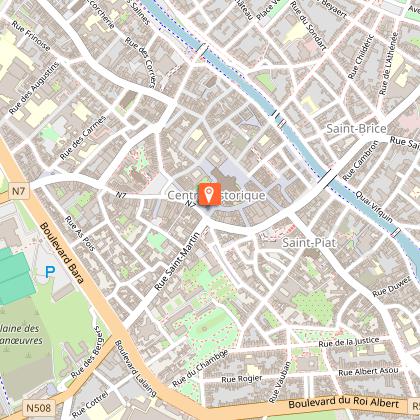
L’église Saint-Quentin
62 m

L’église Saint-Quentin

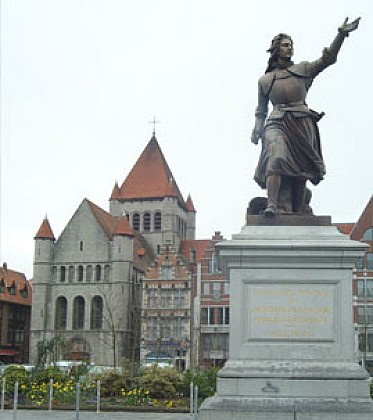
  Saint-Quentin church is a Romanesque and transitional building. The Romanesque church, built in around 1200, was cruciform and today there still remain the nave, transept and transition crossing tower, two chapels and the upper part of the chancel. In the 13th century, the arches of the chevet were added, along with the arms of the transept and other chapels. The lower part of the chancel was rebuilt in the 15th century, ringed by an ambulatory and three chapels. The main restoration was carried out after the bombing in the Second World War. This work was completed in 1968. The Romanesque façade, flanked by two corner turrets, is made up of three levels topped by a triangular gable. The first level features a neo-Romanesque door, the second three large Gothic windows ahead of a way through and the third features alternating blind and open Roman windows. Above the crossing is a squat tower topped by a pyramidal spire. The tower is enclosed by four octagonal corner turrets with pinnacles. The nave rises to three levels with five bays. The higher it goes, the larger the windows and more light enters the building. The nave has a flat wooden ceiling. The prominent transept with two bays has two windows, above which is a large round window. The arms of the transept have a vaulted ceiling. The chancel has one bay and seven walls. It is vaulted in white stone and surrounded by a late Gothic Tournai ambulatory with large windows under an archivolt. This is crowned by a ridged vault in Tournai stone. Note the polychrome vaults in the axial chapel dating from the 15th century depicting the four evangelists accompanied by angels, as well as the marble wall separating the chancel from the ambulatory. Listed 15-09-1936  

Show

Where to eat in Tournai

See more suggestions
Discover the culinary diversity of Tournai.
See more suggestions
Caution!
We have no information on the difficulty of this circuit. You may encounter some surprises along the way. Before you go, please feel free to inquire more and take all necessary precautions. Have a good trip! 🌳🥾