Tours
Activities
Places of interest
Where to eat
Where to sleep

Discover Trevilly, Yonne, Burgundy: A Hidden Gem in the Region

Are you in charge of the destination?
Welcome to Trevilly, nestled in the stunning Yonne region of Burgundy. Explore this charming village and let its numerous attractions captivate you. Start your adventure by visiting the surrounding vineyards, where you can taste world-renowned wines. For history enthusiasts, the Château de Saint-Fargeau is a must-see with its magnificent medieval towers and lush gardens. Nature lovers will be thri...See more
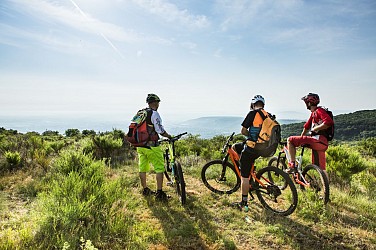
Walking around Trevilly

See more suggestions
Hikes for all levels in Trevilly.
See more suggestions
What to do in Trevilly

See more suggestions
Plan your leisure time in Trevilly by booking activities that suit your preferences.
See more suggestions
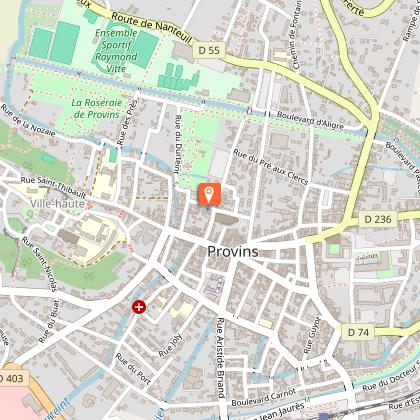
Medieval town of Provins
128 km

Medieval town of Provins

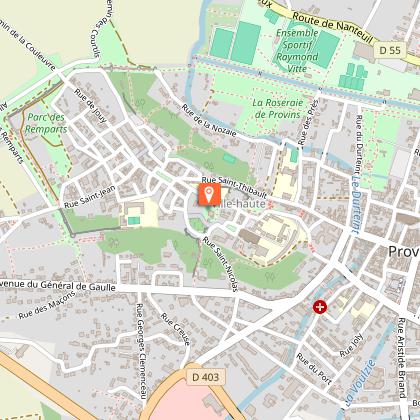
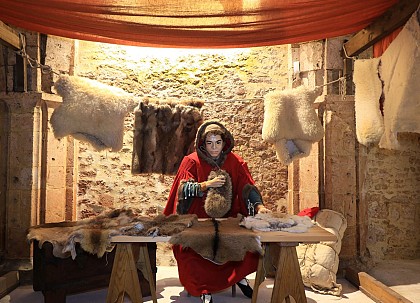
Provins, UNESCO’s World Heritage List! Located 1 hour from Paris in Seine-et-Marne, discover this medieval town offering visits, historical shows & great events... to go back to the Middle Ages! Inscribed on the UNESCO’s World Heritage List on December 2001, Provins is today a wonderfully preserved medieval town. During the 12th and 13th centuries, Provins is at the height of its fame thanks to the famous Trade Fairs of Champagne. The urban structure is organised to accommodate the great number of wholesalers: the wide streets for the transfer of goods and for the stalls, the three level merchant’s houses with sumptuous vaulted low rooms... The presence of water (Durteint and Voulzie rivers) favours also the economic activities and the expansion of many trades such as the woollen cloth manufacturer, the parchment maker, butcher, etc... The impressive fortified wall was built during the 13th century and extended for 5 km (today 1,2 km), and it offers a catalogue of military architecture. Those ramparts protected the inhabitants and the tradespeople, and showed off the power of the Earls of Champagne. Exceptional monuments to visit all year round: > the superb keep of the Cesar Tower with its different rooms and a panoramic view from the top floor, > the Grange aux dîmes (tithe barn), a typical medieval house with an exhibition of merchants and craftsmen of the time to discover with an audio-guided tour available in French, English, German, Spanish and Chinese, > the Museum of Provins and the Provinois, located in one of the oldest houses of Provins, and presenting unique collections since prehistory, > the thousand-year-old and majestic Saint-Ayoul Priory, recently restored, to be visited with an audio guide, Amazing shows of chivalry and falconry, "The Legend of the Knights" and "The Eagles of the Ramparts", will take visitors into the heart of history every day from the end of March to All Saints' Day. Not forgetting the little train, the Provins Rose Garden, guided tours, rental of electric bikes, hiking, major events, and a whole region to discover to prolong the pleasure and the experience, to live with family or friends! Pass Cards formulas allow you to visit the monuments and to benefit from reduced rates for other activities. The Tourist Office team will be happy to offer you the "Visitor's Guide", a very complete brochure to enjoy your stay...

Office de tourisme Intercommunautaire 4 Chemin de Villecran 77160 Provins
Book from 0 €Book
Show

What to visit in Trevilly

See more suggestions
Enjoy the green spaces of Trevilly.
See more suggestions
Egreville
114 km

Egreville

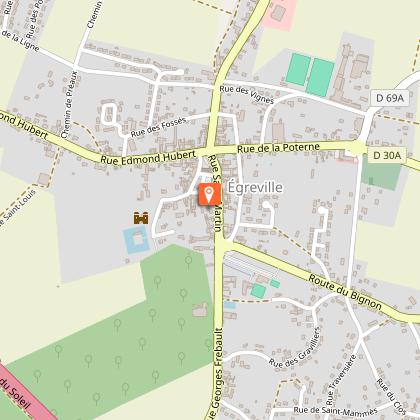
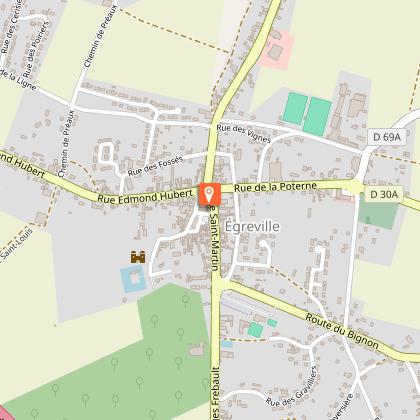
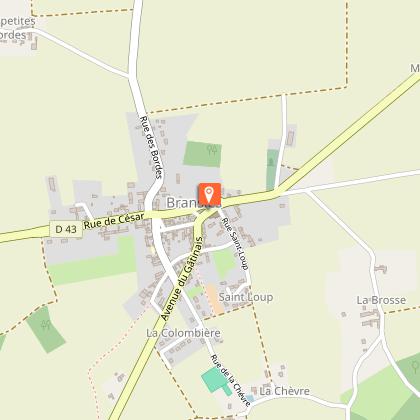
Located on the plateau overlooking the Loing valley, here is a charming village in the middle of the plains and woods. The village grew from the 4th century thanks to easily exploitable iron mines that allowed the development of a flourishing industry. Similarly, its location at the crossroads of several ancient Roman roads makes Egreville an important stop, especially thanks to its fairs and markets. But also, with the passage of the many pilgrims who criss-cross the region and find the cottage and the canopy. For this reason, the governor of Castle Landon acquired the estate at the beginning of the sixteenth century and became the first lord of Egreville. First, he built the first chapel of Saint-Martin and a castle around which the village developed. Then, on the order of Saint-Louis, the village was fortified in the 13th century. The village suffered some damage during the hundred-year war. Then, in the sixteenth century, François the first offers the fief to his mistress, Anne of Pisseleu, Duchess of Etampes. The latter, together with her heirs, undertook important restorations and constructions. They will also prosper the village. Witness to the importance of the markets in the villages of Gâtinais since the Middle Ages, Egreville forms a beautiful ensemble with its old houses massed around its hall of the sixteenth century and the large bell tower of its church which also has superb stained glass windows. Moreover, with its magnificent and robust framework and its sloping roof, the old hall surprises with its undeniable beauty. Every year, before the Christmas holidays, she comes to life with a major fat poultry fair.

1 rue Saint-Martin 77620 Égreville
Show
Garden Museum Antoine Bourdelle
115 km

Garden Museum Antoine Bourdelle

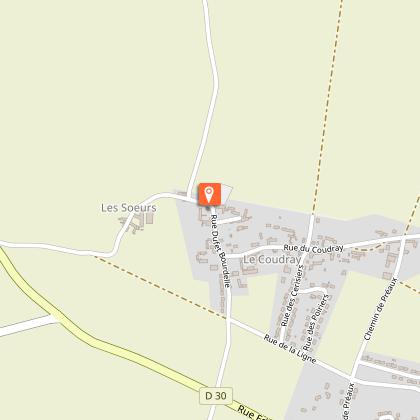
This open-air museum refurbished by the Departement Council is the setting for 56 bronze sculptures. The garden restoration was directed by the architect-landscaper, Françoise Phiquepal. The landscaping for the estate designed by Michel Dufet between 1966 and 1985 has been totally recreated under this restoration project. The paths and beds have been retraced accurately, terraces and borders have been consolidated, many trees and shrubs have been replaced to create a pleasing balance between the sculptures by Antoine Bourdelle (1861-1929) and the plantings that serve as a their showcase. The flowering of the beds will put the finishing touches on the rebirth of this magnificent garden in late Spring. These iridescent plants form the backdrop for the public to discover or rediscover the work of the sculptor, Antoine Bourdelle; Michel Dufet and the artist's daughter, Rhoda Bourdelle, have been seeking to make it known for many years. Have worked on creating the first Bourdelle museum in the sculptor's former studio in the Montparnasse district of Paris, they embarked on achieving a true open-air museum on the Egreville property. All the sculptures have been placed and set off by space, light and the colour of the surrounding plant life. The viewpoints on the works become some of the most spectacular, with the most sheltered locations reserved for the most intimate sculptures. All together they represent a varied route that is ideal for understanding the diversity of the sculptor's works, his most celebrated creations like Hercules the Archer, the Dying Centaur and the equestrian statue of General Alvear. Works from his youth still influenced by Rodin's artistry or moving portraits of his contemporaries and the masters he admired like Beethoven, Daumier and Carpeaux are also exhibited. Michel Dufet and his wife Rhodia, Antoine Bourdelle’s daughter, between 1966 and 1969, built the property of the Bourdelle Garden Museum in Egreville. They acquired several plots of land together making up close to 7,000 m2 and a selection of agricultural buildings standing on them. Immediately after the acquisition of the land in 1966, Michel Dufet started on laying out the garden and converting the buildings. Several old trees were kept in the garden, designed around a complex, very organised layout of lawns and beds bordered by neat box hedges, brightened up with annual or perennial plants with the dominant colours varying from season to season. Groups of conifers were planted to structure the space, whilst curtains of poplars or planted hedges screened off the vistas towards the outside. This creation inspired by traditional French-style parks and gardens from the art deco era appears to be the only work by Michel Dufet in this field. The garden is the setting for a collection of 56 bronze sculptures by Antoine Bourdelle, which were introduced gradually between 1967 and the early 1980s. They are original bronzes* (*Limited number of copies in bronze eight maximum + four non-commercial artist's copies), in the main created specially to be exhibited in this place. Although some bronzes were moved to make way for new works, it would appear that overall the position of each sculpture was decided very carefully, based more on the decorative impact of each bronze than with respect to a didactic presentation of Bourdelle's work. The majority of Bourdelle's major works can be found in the garden, including, to name just a few of the most famous, Hercules the Archer, the Dying Centaur, the bas relief of the Théâtre des Champs-Elysées and the equestrian statue of General Alvear, surrounded by his four allegorical figures. Michel Dufet and his wife Rhodia intended with this garden project to create an open-air counterpoint to the Bourdelle Museum in Paris that they themselves had crafted a few decades previously. Presenting the sculptures in the open air, in a strictly-ordered plant setting playing with colours and the organisation of space, is ideal for appreciating all the vigour of Bourdelle's art, which Michel Dufet wished to heighten with an original landscaping creation.

1 rue Dufet-Bourdelle Le Coudray 77620 Égreville
Show
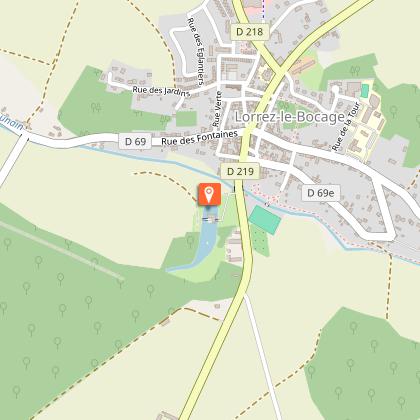
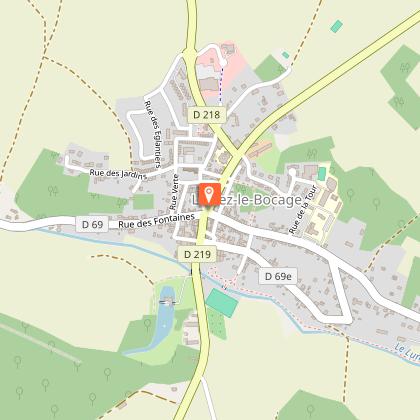
Lorrez-le-Bocage-Préaux town
117 km

Lorrez-le-Bocage-Préaux town

Along the Lunain, the charm of the bocage landscape... The village takes its name from a domain which, before the Frankish conquest, belonged to a Roman or Gallo-Roman settler called Laurus, hence Louriacum (domain of Laurus). In the 12th century, a priory was established there and Lorri Super Lunan was also surrounded by a fortified enclosure with 13 towers. Nevertheless, it was damaged during the 100 years war and then rebuilt under François I. Finally, it was destroyed in the 19th century by decision of the town council. To this day, all that remains is the turret (Mill Tower), the Gisclon Tower (converted into a dwelling) and some remains. It should be noted that Louis VII, Saint-Louis and his mother Blanche de Castille lived here. Built on the foundations of an old feudal manor house built by Louis VII the Younger, the castle was built by Aymar de Brisay, Lord of La Motte and Lorrez from 1480 to 1512. It was then sold during the revolution and left to decay. Much later, in 1839, it was bought and restored by Madame Amélie Greffulhe, Countess Paul de Ségur. It was at this time that Sophie Rostopchine, of Russian origin, "Countess of Segur" and famous writer, came to the castle to visit the family of her husband, Count Eugene de Segur, a cousin of Count Paul. Subsequently, Juliette, the daughter of the Countess and Count Paul de Segur, married Count Roger de La Rochefoucauld in 1853. Their descendants still own the castle. The church of Sainte-Anne dates from the 13th century. A turret and a tower can be seen there, which were used as watchtowers. For a long time, the church was the sanctuary of the priory, whose enclosure encompassed the entire valley as far as the Lunain. It was also the refuge of the inhabitants and the priors during troubled times. At the crossroads of two ancient roads stands a pierced sandstone cross dating from 1615. It was restored in 1770 by a stonemason from Préaux and in 1981 by the AHVOL association. Similarly, on a path towards Paley, there are the remains of a Roman building dating from the time of Emperor Claudius (41-51). This place is called the" Cave aux fées". The 19th century washhouse has a system of elevation with mobile trays allowing it to adapt to the level of the water. PREAUX In the 13th century, this village, whose houses are grouped around the central church, belonged to the Payen brothers from Chevry en Sereine. They later bequeathed the fief to their sister Catherine, prioress of the Villechasson Abbey. The church of Notre Dame de la Nativité dates from the 13th century, and during the Heritage Days you can admire the altarpiece of the main altar, a beautiful statue of the Virgin and Child and the gilded wooden tabernacle dating from the 17th century. Préaux has been part of Lorrez-le-Bocage since 1972.

1 rue Emile Bru 77710 Lorrez-le-Bocage-Préaux
Show

Where to eat in Trevilly

See more suggestions
The flavors of Trevilly await you.
See more suggestions

Where to sleep in Trevilly

See more suggestions
Book a pleasant stay in Trevilly.
See more suggestions
Caution!
We have no information on the difficulty of this circuit. You may encounter some surprises along the way. Before you go, please feel free to inquire more and take all necessary precautions. Have a good trip! 🌳🥾