Tours
Activities
Places of interest
Where to eat
Where to sleep

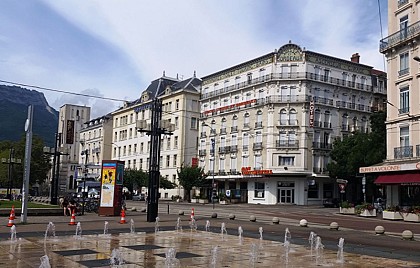
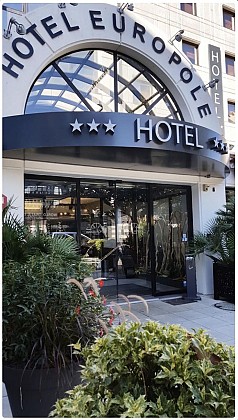
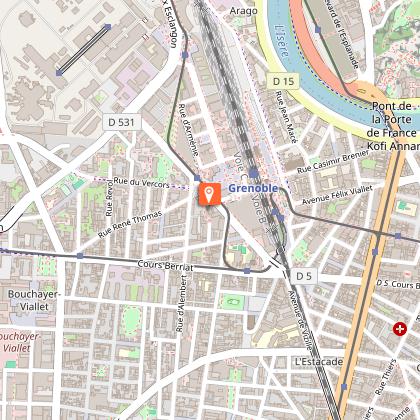
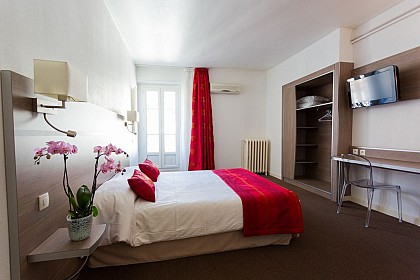
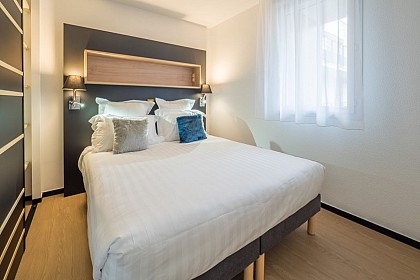
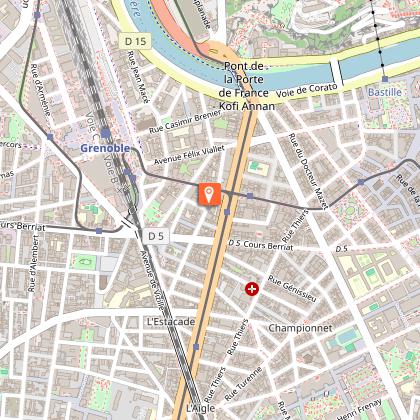
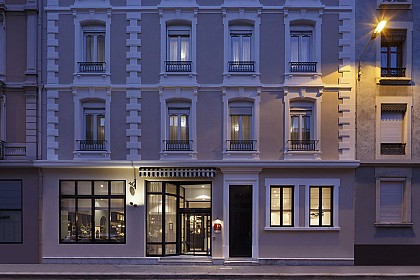
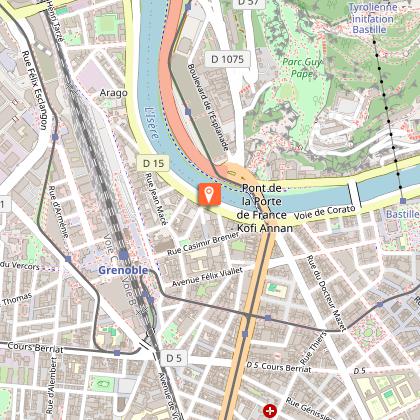
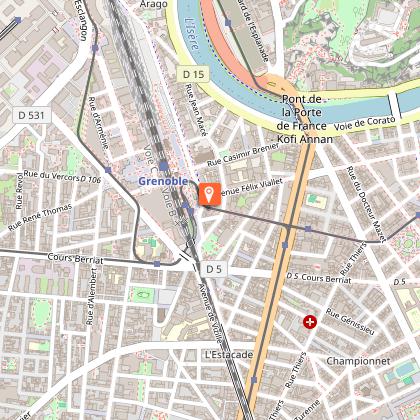
Discover the Charm of Grenoble at HOTEL IBIS STYLES GRENOBLE CENTRE GARE

Are you the owner?
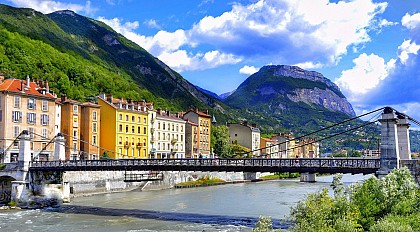
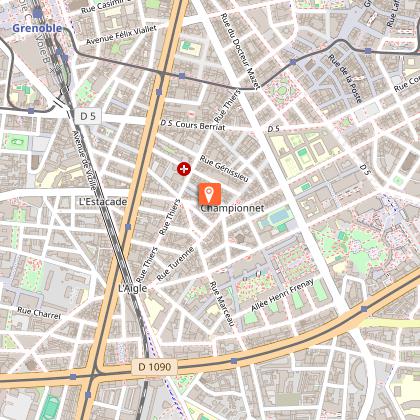
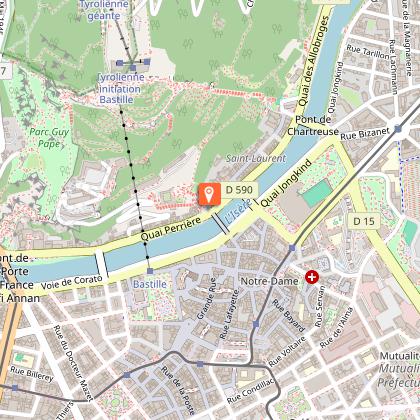
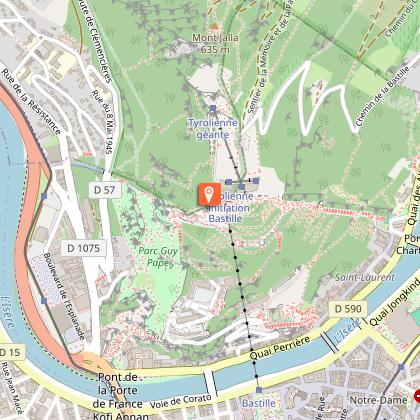
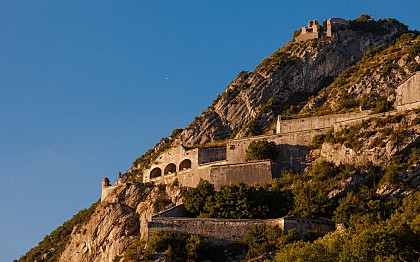
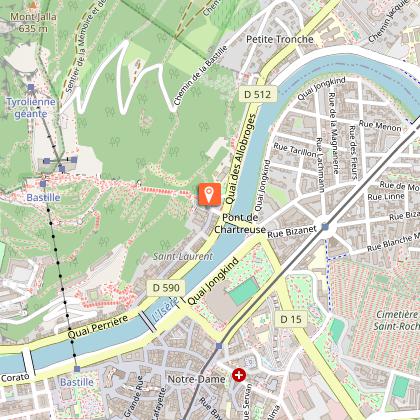
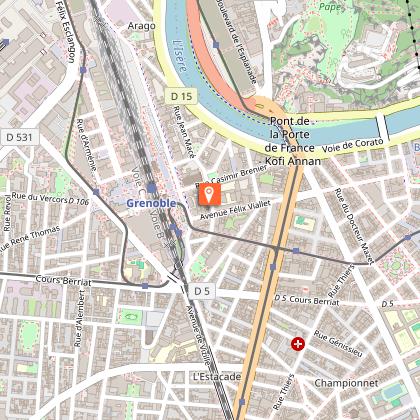
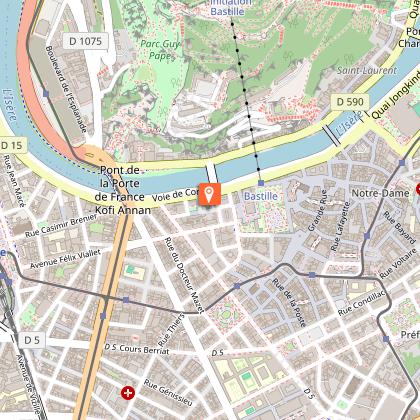
Nestled in the heart of the beautiful city of Grenoble, HOTEL IBIS STYLES GRENOBLE CENTRE GARE offers the perfect base to explore numerous local attractions. Start by wandering through the picturesque streets of the city center, where you can admire the historic architecture and artisanal shops. Take the Grenoble-Bastille Cable Car for breathtaking views of the city and the Alps mountains.

Grenob...
See more

Walking around HOTEL IBIS STYLES GRENOBLE CENTRE GARE

See more suggestions
Take a walk around HOTEL IBIS STYLES GRENOBLE CENTRE GARE.
See more suggestions
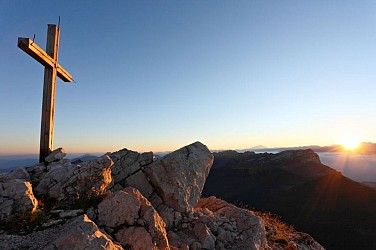
The Great Crossing of the Vercors (GTV) by foot
7.3 km

The Great Crossing of the Vercors (GTV) by foot

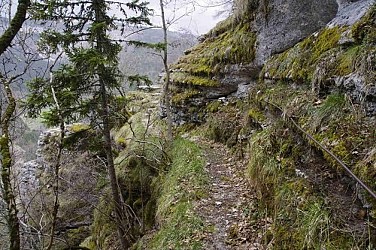
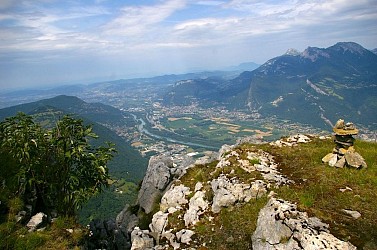
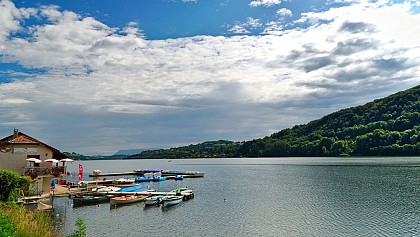
The GTV (for Grand Tour du Vercors) is the opposite to the very high speed TGV!No high speed here, but one of the many hiking itineraries in the massif, to be enjoyed at a leisurely walking pace, taking in each landscape, mountain and viewpoint. Note, the 23 day duration to complete the Great Crossing of the Vercors by foot is given as an indication, and may be varied according to your hiking level and speed. The Great Crossing explores the trails of the Vercors Regional Natural Park. Created in 1970, the Park extends from 180 to 2,341 metres in altitude, culminating in the Grand Veymont and the Rocher Rond.The region brings together seven geographical sectors: the Quatre-Montagnes, the Coulmes, the Drome Vercors, the Royans, the Diois, the Trièves and the Gervanne. Alongside the Isère, we find the cool Northern Alps, whilst in the Drôme, the Mediterranean climate and fragrant vegetation perfume the paths. To the north and south, the massif is covered by a thick layer of limestone, which, through erosion, has created the spectacular landscapes: gorges, needles, cliffs, lapiaz… And when we say an exceptional environment, we also find amazing flora and fauna.But the Vercors is also a place where people live: 54,000 inhabitants are spread across the region, with the old "Vertacomicoriens" mixing with new residents attracted by the exceptional quality of life. The itinerary goes through numerous villages amongst the 84 in the park, ideal to visit and restock on supplies. After a magnificent day of hiking, who can resist the delicious "vercouline", a local speciality based on Vercors-Sassenage blue cheese? A variant to the main tour is a 60 kilometre trail going through the High Plateaux at the heart of the Nature Reserve. Created in 1985, the reserve nestles at the heart of the Vercors Park, in its highest and wildest area. No roads, no villages. The scarcity of surface water has prevented a permanent human presence. The only activities are grazing, which is still alive, and forestry. Its main task is to preserve and study nature. For this, the six reserve rangers conduct observations of the fauna and flora. Another specificity of this region: very little itinerary signposting, no real refuges, but instead unmanned cabins and shelters. These conditions may seem restrictive at first sight, but they provide the guarantee of total immersion in this rich, preserved natural environment. From the "Grand Tour" itinerary, you can also take a trip to the Vercors Haut-Plateaux at any time. Invent your own "GTV"!

552 h
329 km
Easy
Show

What to do in HOTEL IBIS STYLES GRENOBLE CENTRE GARE

See more suggestions
Find the best activities in HOTEL IBIS STYLES GRENOBLE CENTRE GARE and book easily online.
See more suggestions
Museum of the French Revolution
14 km

Museum of the French Revolution

The castle shelters the museum of the French Revolution since 1984. The collections gather pieces of art such as paintings, drawings, sculptures and engravings. On July 21st 1788, the castle of Vizille entered History. The Etats Généraux of the Dauphiné meeting which had been forbade by Grenoble authorities had been thus sheltered by Claude Perrier. Seduced by the liberal ideas, his castle sheltered this meeting. 187 members of the Tiers Etats, 49 clergymen and 159 noblemen deliberated during 16 hours. In demanding the meeting of the Etats généraux this event is considered to have triggered the Revolution. The Salle du jeu de paume which was the witness of this event have burnt during the fire of 1865. Its implantation is now symbolised by a terrace planted with trees at the entrance of the museum. The castle shelters the museum of the French Revolution since 1984. The collections gather pieces of art such as paintings, drawings, sculptures and engravings. One can see figurative piece of art too such as English and French ceramics, tapestries, materials and furniture. But one can also find French and foreign historical pieces such as (stones of the Bastille, swords of the National Guard) dating from the Ancien Régime to the 3rd Republic. The museum recalls the French Revolution as well as the artistic creation and cultural transformations all around Europe, from the times of the Lumières to Romanticism. The museum offers to the public an original approach of this period and its myth through evocative pieces which are replaced in their context. The museum is opened every day except on Tuesdays, from 10 a.m. to 12.30 p.m. And from 1.30 p.m. to 6p.m. from April till October and from 10 a.m to 12.30 p.m and from 1.30 p.m. To 5 p.m from November till March. Closed on public holidays from November till March and on the May 1st . Free entrance and possibility of audio guide .

Domaine de Vizille Place du Château 38220 Vizille
Book from 0 €Book
Show
Refuge de la Pra
18 km

Refuge de la Pra

At 2100 meters, the refuge of La Pra, close to the many clear lakes of the Massif Belledonne, will delight anglers, hikers and families. La Pra is also a wonderful pasture where you can encounter marmots, wild sheep and ibex. The refuge is a stopover on the GR 738 from Chamrousse. The surrounding peaks are often accessible in summer, either on footpaths or "off-track" for those who prefer less frequented areas (Vaudaine, Doménon, Croix de Belledonne sectors), as soon as the snow has disappeared. You are entering a Natura 2000 protected area where swimming in rivers and lakes is strictly prohibited. From the Pré Raymond parking lot, take the forest road, then a path to the left (south-east). A few hairpin bends bring you to an almost level path leading out of the forest. Cross the stream before reaching the dam and Lac du Crozet. Follow the path along the lake and up the Vallon de Mercier to the Col de la Pra. At the col, turn right (south) and descend to the refuge, 5 minutes from the col de la Pra. From Chamrousse, from the parking lot at the foot of the Grande Aiguille, follow the GR de Pays, then pass between the lakes (GR 738). Climb slightly before descending into the combe de l'Echaillon. Turn left onto the path leading to the Oursière waterfalls, then right onto the path leading to Lac David. Climb up to Lac Léama, then on to Lac Longet and Lac Claret. Climb up to the refuge. From the Recoin de Chamrousse, take the GR 738 to Lac Robert. Then follow the same route as the Croix de Chamrousse.

38420 Revel
Book from 0 €Book
Show

IGN cards

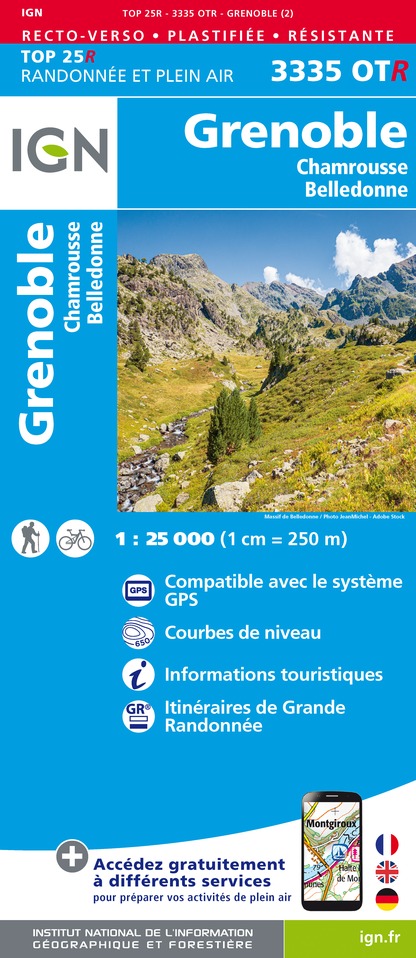
3335OTR - GRENOBLE RESISTANTE CHAMROUSSE BELLEDONNE
Editor : IGN
Collection : TOP 25 RÉSISTANTE
Scale : 1:25 000
17.20€
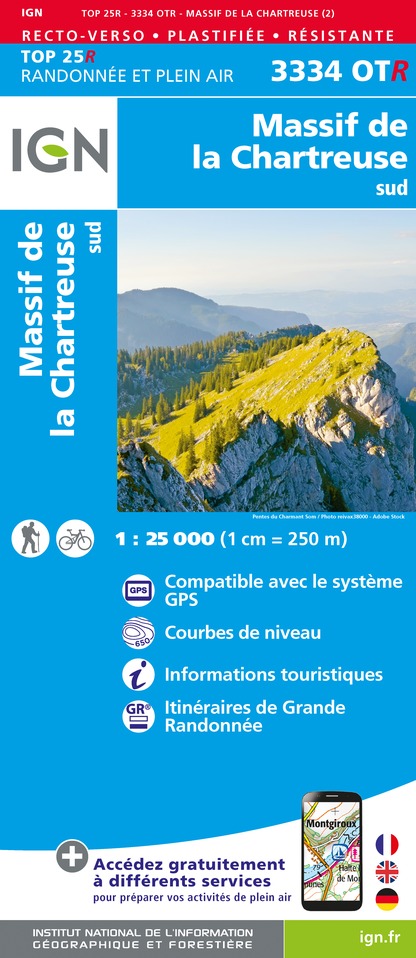
3334OTR - MASSIF DE LA CHARTREUSE RESISTANTE SUD
Editor : IGN
Collection : TOP 25 RÉSISTANTE
Scale : 1:25 000
17.20€
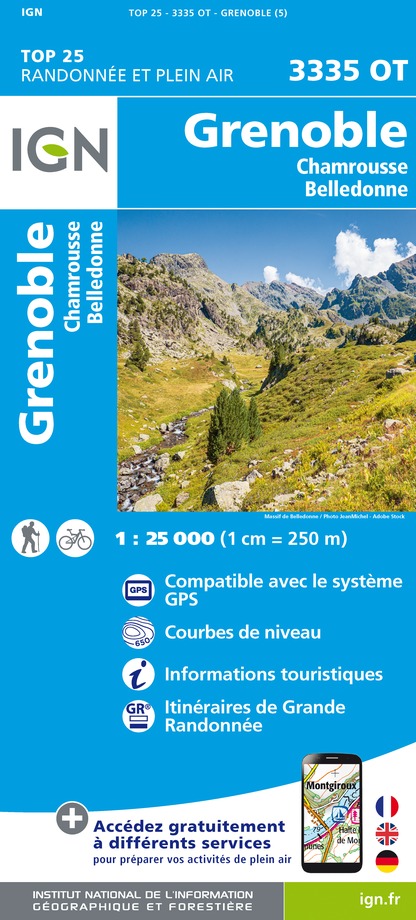
3335OT - GRENOBLE
Editor : IGN
Collection : TOP 25 ET SÉRIE BLEUE
Scale : 1:25 000
13.90€
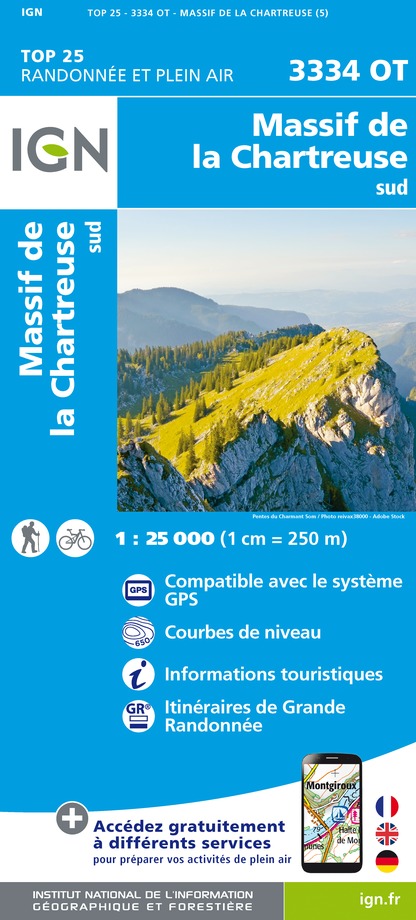
3334OT - MASSIF DE LA CHARTREUSE SUD
Editor : IGN
Collection : TOP 25 ET SÉRIE BLEUE
Scale : 1:25 000
13.90€
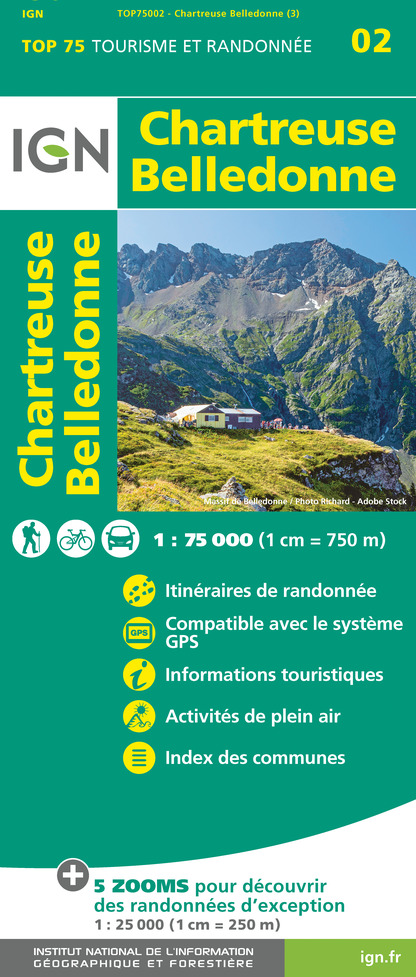
TOP75002 - CHARTREUSE BELLEDONNE
Editor : IGN
Collection : TOP 75
Scale : 1:75 000
9.80€
TOP75001 - MASSIF DU VERCORS
Editor : IGN
Collection : TOP 75
Scale : 1:75 000
9.80€
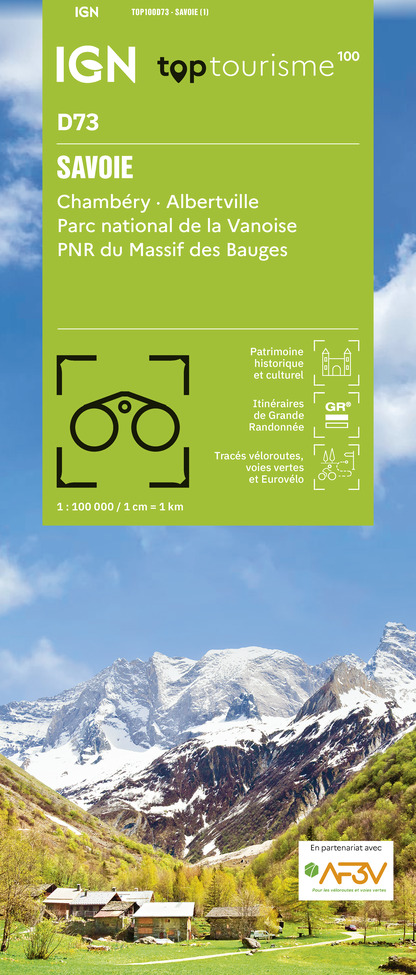
TOP100D73 - SAVOIE CHAMBÉRY ALBERTVILLE PARC NATIONAL DE LA VANOISE PNR DU MASSIF DES BAUGES
Editor : IGN
Collection : TOP 100
Scale : 1:100 000
8.40€
202 JURA ALPES DU NORD
Editor : IGN
Collection : TOP 200
Scale : 1:200 000
6.80€
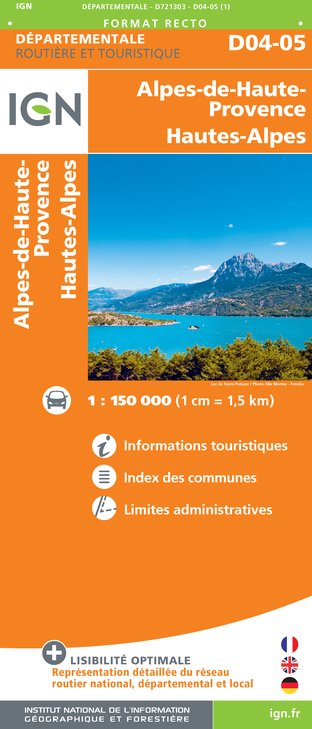
D04-05 ALPES-DE-HAUTE-PROVENCE HAUTES-ALPES
Editor : IGN
Collection : CARTES DÉPARTEMENTALES IGN
Scale : 1:150 000
5.90€
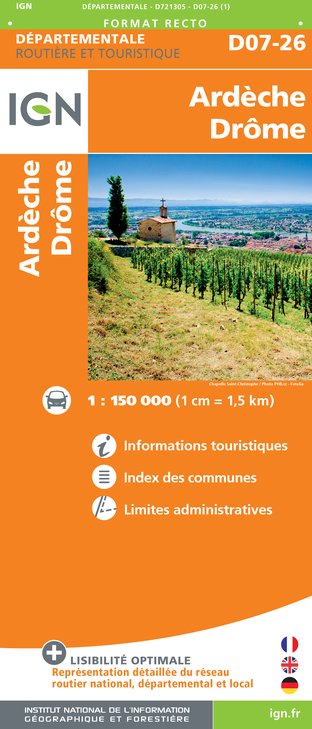
D07-26 ARDÈCHE DRÔME
Editor : IGN
Collection : CARTES DÉPARTEMENTALES IGN
Scale : 1:150 000
5.90€
D38 ISÈRE
Editor : IGN
Collection : CARTES DÉPARTEMENTALES IGN
Scale : 1:150 000
5.90€
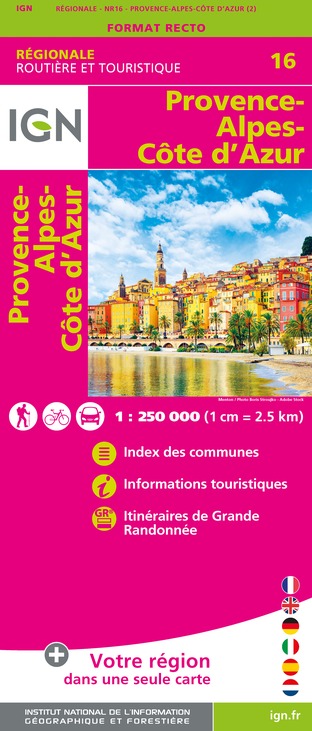
NR16 PROVENCE-ALPES-CÔTE D'AZUR
Editor : IGN
Collection : CARTES RÉGIONALES IGN
Scale : 1:250 000
6.80€
NR14 AUVERGNE-RHÔNE-ALPES RECTO/VERSO MASSIF CENTRAL
Editor : IGN
Collection : CARTES RÉGIONALES IGN
Scale : 1:250 000
6.80€
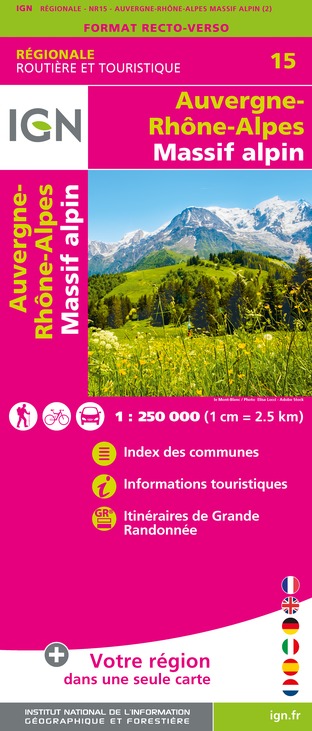
NR15 AUVERGNE-RHÔNE-ALPES RECTO/VERSO MASSIF ALPIN
Editor : IGN
Collection : CARTES RÉGIONALES IGN
Scale : 1:250 000
6.80€
EUROPE
Editor : IGN
Collection : DÉCOUVERTE DES PAYS DU MONDE IGN
Scale : 1:2 500 000
7.00€

What to visit in HOTEL IBIS STYLES GRENOBLE CENTRE GARE

See more suggestions
Visit the historical sites of HOTEL IBIS STYLES GRENOBLE CENTRE GARE.
See more suggestions
Mountain Troops Museum
914 m

Mountain Troops Museum

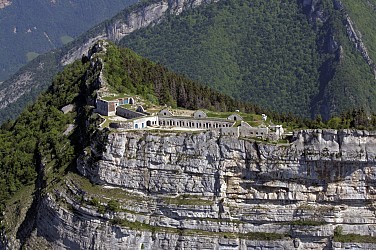
The public is invited to discover the history of mountain soldiers from their creation to the present day. Six thematic areas are presented: History of the Mountain Troops, Conquering and Surviving in the Mountains, Combat, Living in the Mountains and with the Local Population, Culture and Identity, and Alongside the Mountain Troops. Other themes are presented through temporary exhibits. They focus on the relationship between the military and civilian communities. The Museum: As part of the historic Bastille site, Isere's number one tourist attraction, the Mountain Troops Museum, targets a wide public and families in particular. In a privileged setting, at the heart of an old fortress, the museum offers visitors an experience unique in France, which associates man and the mountain. It is on this alliance that the Mountain Troops are based. A visit to the museum comes as a good complement to that of the Bastille site. Overlooked by the Memorial to the Soldiers of the Mountain 200 metres above, this museum also reminds us that the history of the Bastille and of Grenoble itself is inextricably linked to that of the Mountain Troops. The visit Through its rich collection and innovative layout, the museum offers an attractive visit presenting the history of the Mountain Troops from its foundation to today. Thanks to the audio guide, a multilingual voice will recount the story of this Alpine adventure. The information is presented through a resolutely modern format, unlike that of most traditional military museums, and includes many exceptional objects. A spectacular and realistic scenography totally immerses the visitor in the epic of the mountain soldiers through life size recreations of poignant scenes of military life, such as a World War I trench or a room from the Maginot Line.

Fort de la Bastille 38000 Grenoble
Show
Musée Hébert
3 km

Musée Hébert

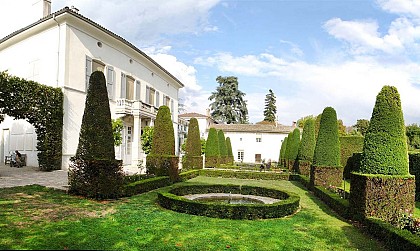
The renovated property of painter Ernest Hébert invites visitors to step into the artist's 19th century world and to discover his work through the presentation of his collections. The Hébert museum of La Tronche is a somewhat unusual museum: sheltered behind walls, this two and a half hectare estate has protected itself from the wears of time. The artist's house has held onto the spirit of the place and the intimate character of a family house. The garden, sometimes hidden in the shadows, still holds onto the artist's memories of Italy. The museum, as soon as it opened in 1979, set a double mission for itself: encourage a better knowledge of 19th century art through the artist's collection and to promote contemporary artists, both aspiring and confirmed. The permanent exhibit halls take the visitor on a journey through Ernest Hébert's long artistic career via his works and those of his friends. They illustrate the academics, whose complexity and importance we are rediscovering today and which sheds light on official art. Between the romanticism of Eugene Delacroix and the symbolism of Gustave Moreau, Hébert paves the way for a deeper understanding of 19th century aesthetic movements. The painter Ernest Hébert (1817-1908), after having studied at l'Ecole des Beaux Arts de Paris and winning the Grand Prix of Rome for historic painting, became famous with "La Malaria" which he presented at the 1850 Salon. A flourishing career was set before him and he shared his time between France and Italy, where he served twice as director of the Academy of France in Rome (1867-1873 and 1885-1890). He very soon became a sought-after portraitist for high Parisian society during the Second Empire and Third Republic, where he frequented upper class salons. Hébert keenly expressed the poetry and secrecy of his feminine models, but it was in Italy that he found the most inspiration, preferring to depict rural scenes imprinted with a melancholic realism. He was responsible for the mosaic on the apse of the Pantheon, inaugurated in 1884. The museum Through a chronological and thematic layout, the museum presents Hébert's work plus the paintings and sculptures of his friends and students. His years of study, his life at the Villa Medicis, his stays in Italy, the two terms he spent as a director, and his Parisian career are presented. The recreated studio has been restored to its original function. The numerous drawings included in the collection are presented in rotation, in the drawing room, set up in one of the house's bedrooms (2nd floor). The house The house recreates the atmosphere that the artist knew with its period furniture and souvenirs, including the restored Laetitia Bonaparte salon. The impressive 17th century frescoes, uncovered during renovation work, depict the ancient history of the house. Numerous testimonies from Hébert's mentors—David d'Angers, Delaroche, his friends from the Académie de France in Rome, Gounod, Regnault,--and his patrons—Théophile Gautier or Princess Mathilde—evoke his career as well as illustrating the artististic wealth of the prolific 19th century. The gardens Set aside from urban life, the museum's park, with its shaded alleyways, rippling brooks, and trellises, has held onto the charm of the artist's "secret garden." In 2004, it was recognized as a "Remarkable Garden," an award recently created by the Ministry of Culture and Communication. This label recognizes the garden's quality and charm, whose richness stems as much from its 17th and 18th century origins as from the modifications made by Ernest Hébert and his wife Gabrielle. The juxtaposition of well groomed, Italian style areas with English garden-type landscapes, the antique elements, and the numerous water basins are reminiscent of the Villa Medicis in Rome and make for an original setting, open freely to the public.

Chemin Hébert 38700 La Tronche
Show

Where to eat in HOTEL IBIS STYLES GRENOBLE CENTRE GARE

See more suggestions
The flavors of HOTEL IBIS STYLES GRENOBLE CENTRE GARE await you.
See more suggestions

Where to sleep in HOTEL IBIS STYLES GRENOBLE CENTRE GARE

See more suggestions
Book your stay at one of HOTEL IBIS STYLES GRENOBLE CENTRE GARE's accommodations.
See more suggestions
Refuge de la Pra
18 km

Refuge de la Pra

At 2100 meters, the refuge of La Pra, close to the many clear lakes of the Massif Belledonne, will delight anglers, hikers and families. La Pra is also a wonderful pasture where you can encounter marmots, wild sheep and ibex. The refuge is a stopover on the GR 738 from Chamrousse. The surrounding peaks are often accessible in summer, either on footpaths or "off-track" for those who prefer less frequented areas (Vaudaine, Doménon, Croix de Belledonne sectors), as soon as the snow has disappeared. You are entering a Natura 2000 protected area where swimming in rivers and lakes is strictly prohibited. From the Pré Raymond parking lot, take the forest road, then a path to the left (south-east). A few hairpin bends bring you to an almost level path leading out of the forest. Cross the stream before reaching the dam and Lac du Crozet. Follow the path along the lake and up the Vallon de Mercier to the Col de la Pra. At the col, turn right (south) and descend to the refuge, 5 minutes from the col de la Pra. From Chamrousse, from the parking lot at the foot of the Grande Aiguille, follow the GR de Pays, then pass between the lakes (GR 738). Climb slightly before descending into the combe de l'Echaillon. Turn left onto the path leading to the Oursière waterfalls, then right onto the path leading to Lac David. Climb up to Lac Léama, then on to Lac Longet and Lac Claret. Climb up to the refuge. From the Recoin de Chamrousse, take the GR 738 to Lac Robert. Then follow the same route as the Croix de Chamrousse.

38420 Revel
Book from 0 €Book
Show
Caution!
We have no information on the difficulty of this circuit. You may encounter some surprises along the way. Before you go, please feel free to inquire more and take all necessary precautions. Have a good trip! 🌳🥾