Tours
Activities
Places of interest
Where to eat
Where to sleep

Must-See Activities near PETIT HOTEL CONFIDENTIEL

Are you the owner?
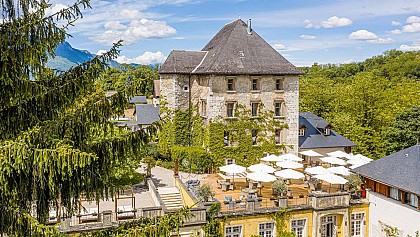
Welcome to Chambery, at the heart of Savoie in the stunning Rhône-Alpes region. From PETIT HOTEL CONFIDENTIEL, embark on a journey to discover a wealth of heritage and diverse activities. Start your day with a visit to the charming Château des Ducs de Savoie, a true historical treasure, and stroll through the picturesque streets of the old town. Nature lovers will enjoy hiking in the Chartreuse Re...See more

Walking around PETIT HOTEL CONFIDENTIEL

See more suggestions
Explore the natural surroundings of PETIT HOTEL CONFIDENTIEL.
See more suggestions
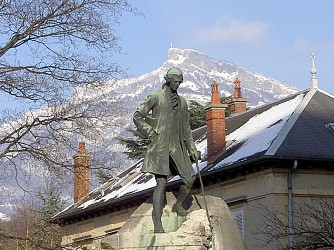
Discovery walk: Jean-Jacques Rousseau in Chambéry
68 m

Discovery walk: Jean-Jacques Rousseau in Chambéry

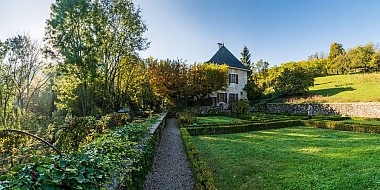
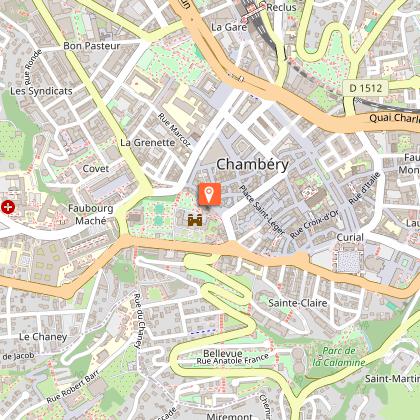
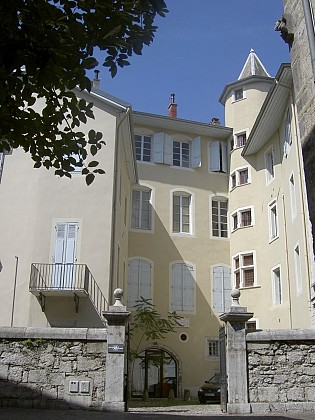
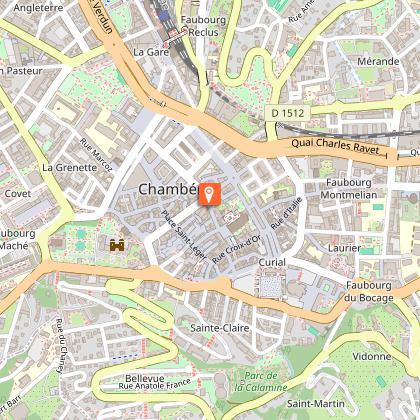
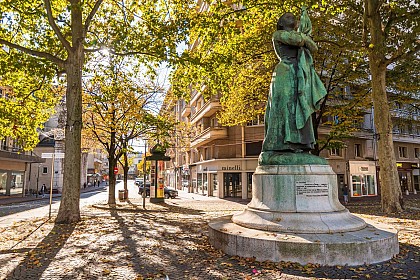
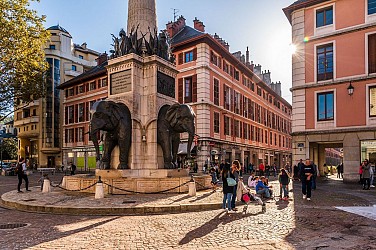
Rousseau's stay in Chambéry with Mme de Warens was a decisive stage in his life and in the development of his thought. After Chateaubriand, Lamartine, Stendhal and so many others, follow in the footsteps of the Enlightenment philosopher. The route starts at the foot of the Château des Ducs de Savoie (Castle of the Dukes of Savoie). Rousseau arrived in Chambéry in September 1731. Thanks to Madame de Warens he got work in the land registry service, set up in the Tour Trésorerie (Treasury Tower). Having little interest in this boring work, he resigned very quickly: "I was twenty years old, nearly twenty-one... I was going to work reluctantly, the assiduousness and tedious nature of the work was unbearable torture for me, I finally decided to leave my employment to abandon myself totally to music." Go up the "Rue Basse du Château" and turn right on the "Place Saint Léger" square. Cross the "Rue de Boigne" and enter the covered passageway to the right of the Yves Rocher shop, the "Allée Jean-Jacques Rousseau". It is at the end of this courtyard where you'll find the Hôtel de Saint Laurent. Chambéry had a population of 10,000 inhabitants at this time. The town was rather insalubrious and enclosed by its ramparts. Madame de Warens occupied the house of the Count de Saint-Laurent: "The house she lived in was dark and sad, and my bedroom was the darkest and saddest in the house." From 1735-1736, Rousseau persuaded her to get a house in the country in Les Charmettes, which she would occupy especially in summer, while still keeping her townhouse. Cross the small courtyard on your right and continue on the "Allée de la Cure" to reach the "Rue Métropole". Go up the street to the Cathedral and take the covered passageway situated at the end of the "Place Métropole" on your right. You arrive in the "Rue Croix d'Or" which is home to beautiful townhouses like the Hôtel des Marches de Bellegarde or the Hôtel Castagnéry de Châteauneuf. The young Rousseau gave music lessons to young girls of Chambéry's nobility in such residences. "Here am I all of a sudden thrown among the beautiful people, accepted, sought after in the best houses; everywhere a gracious, pleasant welcome, a festive air: nice, well-dressed damsels await me, greet me eagerly, I smell only roses and orange blossom; we sing, we laugh, we enjoy ourselves." When you arrive in front of the Théâtre Charles Dullin, take the "Rue Denfert Rochereau" to the right then cross the "Carré Curial" opposite you. On the other side take the "Rue de la Calamine" then go up to the "Avenue de la Grande Chartreuse" through the "Parc de la Calamine". Cross the street and take the "Chemin de Jean-Jacques" facing you. Then take the signposts marked "Les Charmettes, Maison de Jean Jacques Rousseau". You arrive at the Musée des Charmettes museum, the emblematic place of Rousseau's presence in Chambéry. Madame de Warens, who he called "Mother" rented a little garden in one of the suburbs of the town. That was where Madame de Warens decided to take him away from "perils of his youth" to treat him like a man: "I saw myself for the first time in the arms of a woman, and a woman I adored". (Confessions, book V). His description of Chambéry is embellished by memory: "If there is a small town in the world where you taste the sweetness of life in pleasant and trusty company, it is Chambéry. The provincial nobility which assemble here have everything for living well, but not enough to succeed. The women are beautiful and could do without being beautiful, they have everything to enhance their beauty and to even complement it. It is worth noting that I have seen many young ladies because of my position, I do not recall seeing any in Chambéry that were not charming." (Confessions, book V) To get to the town centre, descend the "Chemin des Charmettes" then the "Rue Jean-Jacques Rousseau". At the roundabout take on your right the "Rue Plaisance" then, at the end of this street, go left on the "Rue Pasteur". Go up it and at the end turn right on the "Rue de la Banque". When you arrive on the "Place d'Italie" , take the "Passage du Mont Blanc" to the left then turn right on the "Rue du Théâtre" and continue straight on to the "Fontaine des Eléphants" where the trail ends, in the heart of the town dear to the great philosopher. This period in Chambéry is indeed fundamental in Rousseau's life: "It is during this precious interval that my desultory and mixed education having taken shape made me what I no longer ceased to be through the storms that were awaiting me" (Confessions, book V). He devoted himself to the study of science and especially music. He organised small concerts in Madame de Warens' home, taught music to the young girls of the polite society, formed solid friendships: Gauffecourt, the Marquis of Conzié, who opened his library. Rousseau left Chambéry from September 1737 to February 1738 for a trip to Montpellier, then he stayed in Lyon from April 1740 to April 1741. Finally, he was ousted from Madame de Warens' house by a younger man, he left the Savoy region in 1742 for Paris. Madame de Warens died miserably in July 1762 and is buried in Lémenc Cemetery. On July 25th 1768, Rousseau went to Madame de Warens' grave and met his friend, Conzié. In 1910, a statue of Jean-Jacques Rousseau, sculpted by Marius-Mars-Valett, was erected at Clos Savoiroux. The more motivated can prolong this walk following the traces of Rousseau and visit Lémenc Cemetery. From the "Fontaine des Eléphants", take the "Rue Claude Martin" then traverse the "Place de la Libération" and go up the "Boulevard de Lémenc" to the "Parc du Clos Savoiroux". Go through the park via the "Allée René Cassin". Be sure to make a small detour to admire the statue of Mars-Valett and go back down via the "Boulevard de Lémenc" to the large turn. Turn left on the "Rue Amélie Gex" then again turn left on the "Rue Burdin". You arrive at the Église Saint Pierre de Lémenc (church), which is next to the cemetery where the benefactress of Jean-Jacques Rousseau, Madame de Warens lies (please note that the cemetery is not open to the public).

4 h
6.2 km
Very easy
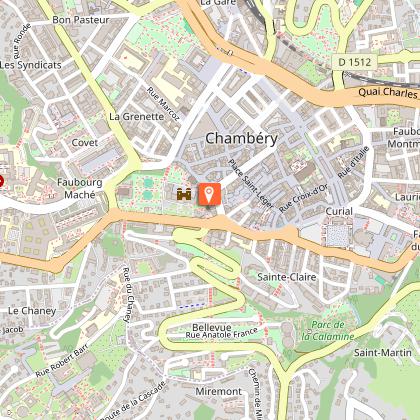
Place du Château 73000 Chambéry
Show

What to do in PETIT HOTEL CONFIDENTIEL

See more suggestions
Exciting adventures await you in PETIT HOTEL CONFIDENTIEL, book now.
See more suggestions

What to visit in PETIT HOTEL CONFIDENTIEL

See more suggestions
Attend events organized in PETIT HOTEL CONFIDENTIEL.
See more suggestions
Holy Chapel of the Castle of the Dukes of Savoy
193 m

Holy Chapel of the Castle of the Dukes of Savoy

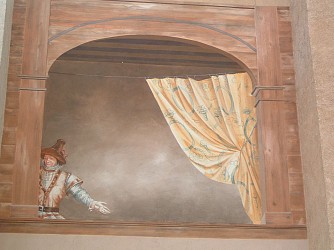
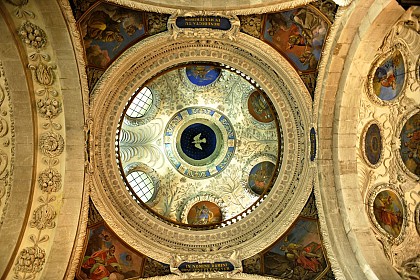
Built in the 15th century during the reign of Amadeus VIII, the first Duke of Savoy, this is a fine chapel built in a flamboyant gothic style. The chapel, located on the grounds of the château, has an unusually-narrow chevet (eastern end). The bell tower, or Tour Yolande, contains the Chambéry ‘carillon’, made up of 70 individual bells. Inside the chapel, admire the 16th-century stained glass windows, and the ‘trompe d’oeil’ paintings in the ‘Gothic troubadour’ style. This chapel is famous for containing the Suaire de Turin (Shroud of Turin) between 1502 and 1578. Sainte-Chapelle was commissioned by Amédée VIII and built by master builder Nicolet Robert between 1408 and 1430. On the grounds of the château, the chevet is integrated into the Château’s defences, strengthened by the height and narrowness of the 5 bay windows. A rampart walkway passes through the buttresses, which bear the weight of flying buttresses. The chapel is flanked by a bell tower, built in 1470 by Blaise Neyrand de Saint-Pourçain in Bourbonnais, thanks to Yolande of France. In the Château’s cour d’honneur, notice the Baroque façade, designed by a famous Turin architect, Amedeo di Castellamonte. This change in style is due to the restoration works that took place on the building between 1655 and 1663, commissioned by the duchesse de Savoie, Christine de France. The vaults of the building would have been renovated at the same time. Once inside, visitors are often struck by the height of the building (22m). A fire in 1532 meant the decoration sculpted by Jean Prindale and his workshop was lost, but the stained-glass windows were able to be repaired, with some being restored by a Chamberian artist, Gaspard Masery, between 1541 and 1548. These stained-glass windows had been made a few years beforehand, (1521 – 1527), by artists Blaise de Lyon, Jean Baudichon and Jean de l'Arpe, and depict 9 scenes from the Passion of Christ. In the central stained-glass window, the window depicting the Three Marys at the tomb of Jesus recalls the presence of the Suaire de Turin in the chapel in the 16th century. The vaults are decorated with surprising ‘trompe-oeil’-style paintings: in 1836, King Charles Albert began renovation works on the chapel, and ordered that the chapel be painted in this fashionable style. Painted by Casimir Vicario, from Piedmont, who had worked two years previously on a cathedral in Chambéry, most of these works were lost during restorations in 1959, and have only recently (2012) been restored to their former glory. Le Suaire de Turin (The Shroud of Turin) In 1453, Duke Louis and his wife, Anne de Lusignan, acquired an important Christian relic: a white sheet, measuring around 4.3m long and 1.1m wide, with a brownish stain in the shape of a crucified man. Some people argue that this was the shroud used to wrap the body of Christ when he was put in the tomb. How this sheet arrived in Europe remains a mystery, as its history is largely unknown before the beginning of the 13th century. During this period, the shroud belonged to the Charny family, and was displayed publicly in Lirey, near to Troyes. In 1453, Marguerite de Charny, who had no heir, decided to sell it to the Dukes of Savoie, a powerful and rich Catholic family. The Duke’s chapel was officially named Sainte-Chapelle du Saint-Suaire, on the 11th June 1502, when the relic was officially installed. Huge public displays attracted large crowds. The shroud narrowly escaped the terrible fire in the chapel in 1532, with burn marks being clearly visible on the cloth. After the Court moved to Turin, Duc Emmanuel-Philibert had the shroud transferred. As the personal property of the Maison de Savoie, the relic would not leave Turin, despite the supplications of the people of Chambéry and canons of Sainte-Chapelle. A Baroque chapel was built in Turin by Guarino Guarini, next to the Palais Royal, in order to house the shroud, and it has remained there ever since. However, it now belongs to the Church, as a bequest from the last king of Italy (Umberto II), upon his death in 1983. In 1988, a carbon 14 dating was carried out, which concluded that the cloth dated from a period between 1260 and 1390, and thus could not have been used to shroud the body of Christ. Nevertheless, this conclusion is not universally accepted, and so the relic continues to be mysterious. Two copies of the shroud, donated by the Archbishop of Turin, are on display in Saint-Chapelle and the cathedral.

Château des Ducs de Savoie Place du Château 73000 Chambéry
Show
Historic centre of Chambéry
321 m

Historic centre of Chambéry

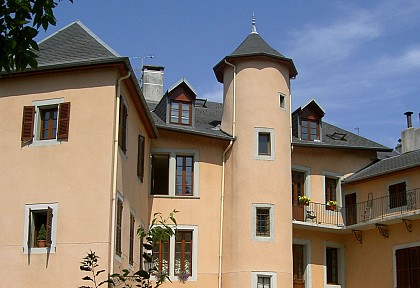
The old own of Chambéry is characterised by a maze of streets and private mansions. The Piedmont-style architecture is often enhanced by decorative elements (trompe-l'oeil, ironwork, sculpture, etc.). Guided tours all the year round. Near the castle, the historical center of Chambéry offers an urban configuration dense and original, strongly marked by the presence of water. This set is quite homogene and is protected by a saving area program. The rue de Boigne : This straight street, lined with torinese gantry, was created thank to the liberality of the general de Boigne. Real hole in the urban tissue inherited from the middle age, this is the artery that is linking the castle to the fountain of the elephants. The place Saint Léger : Primitive center of the town, this place has become an area of life thank to its development at the end of the 1970's. Behind its colored fronts, a whole maze of streets and court of hotel particulier, giving to Chambéry its particular appearance. The rue Basse du Château : This strret inherited from the middle age conserves one of the last aerial footbridge of the town. The rue Croix d'or : During centuries, travellers coming from Italy were entering the town by this street. Artisanal district and aristocratic until the XIXth century, numerous testimony are still visibles, for example : the metal gates of the Hôtel of Castagnéry (n°18) and the front of the hôtel des Marches et de Bellegarde (n°19).

Ville ancienne 73000 Chambéry
Show
Museum of Fine Arts
324 m

Museum of Fine Arts

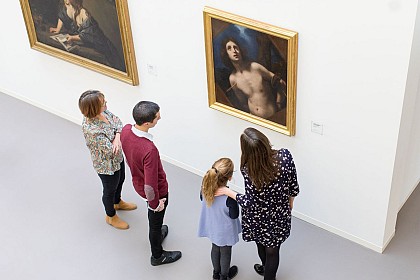
The renovated Musée des Beaux Arts contains a collection largely composed of Italian works from the end of the Middle Ages to the beginning of the 20th century, but it also displays works that help us to understand the history of art in the Savoy region. The Grenette building This corn exchange, previously known as a ‘grenette’, was located along the Medieval ramparts of the ducal city and surrounded by the Leysse, the river deviating from the Lac du Bourget. Closed down in the 19th century, it was repurposed as a voting booth for the union of the Savoie region and France, before being transformed into a museum-library in the 1880s. Renovated between 2009 and 2011, the unique architectural character of this building was restored, exploiting the diversity of the three rooms: the pillars under vaults on the ground floor, the metallic, Eiffel Tower-like aspect of the first floor, and the large windows of the second floor. Permanent collections Early art The 15th century is considered to be Savoie’s Golden Age. Combining both northern (Flanders, Germany, Switzerland) and Italian influences, these extremely rare wooden paintings demonstrate an exceptional artistic quality, marked with various archaisms. The Renaissance and Mannerism A remarkable collection of Italian works dating from the 15th and 16th centuries, with Sienna and Florence being particularly well-represented. The religious and allegorical scenes are carefully composed, with bright colours and clear, acidic tones. Portraits A wonderful collection of Italian, Flemish and Savoyard portraits, dating from the 14th to the 18th centuries. The social status of the subject can be determined by looking at whether they are alone or in a group. Genre paintings bring together various characters. The 17th century The heart of the Italian collection, the intense, formal quality of the Ecole de Naples is well-documented, which increases the dramatic atmosphere in the paintings. The collection also includes work from Rome, Florence and Venice. Piedmont in the 18th century Ecole de Turin, with its background in the unique history of the Savoie and the special relationship between Chambéry and Piedmont, produced some the most outstanding Baroque and neo-Classic works from Piedmont. L'Ecole savoyarde The Ecole de Peinture de Chambéry produced various artists, who were inspired by workshops in Geneva, Turin et Paris during the 19th century and at the beginning of the 20th century. They painted landscapes, with the constantly-changing countryside being their main source of inspiration. Furthermore, the museum offers a year-round programme of temporary exhibitions and cultural events.

Place du Palais de Justice 73000 Chambéry
Show

Where to eat in PETIT HOTEL CONFIDENTIEL

See more suggestions
Explore the culinary traditions of PETIT HOTEL CONFIDENTIEL.
See more suggestions
Where to sleep in PETIT HOTEL CONFIDENTIEL

See more suggestions
Find the perfect lodging for your visit to PETIT HOTEL CONFIDENTIEL.
See more suggestions
Caution!
We have no information on the difficulty of this circuit. You may encounter some surprises along the way. Before you go, please feel free to inquire more and take all necessary precautions. Have a good trip! 🌳🥾