Alert

Alerts

To see around
See more
Open
Close
Show
Show
Show
Show
Show
Show
Show
Show
Show
Show
Show

Oups... It would appear that Cirkwi does not have permission to use your location.

Presentation
Description
Map
Steps
Points of interest
Ratings and reviews
See around

Comfort Ride: Following the elephants

Comfort Ride: Following the elephants
Description

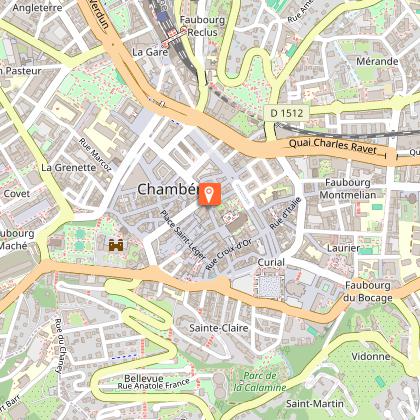
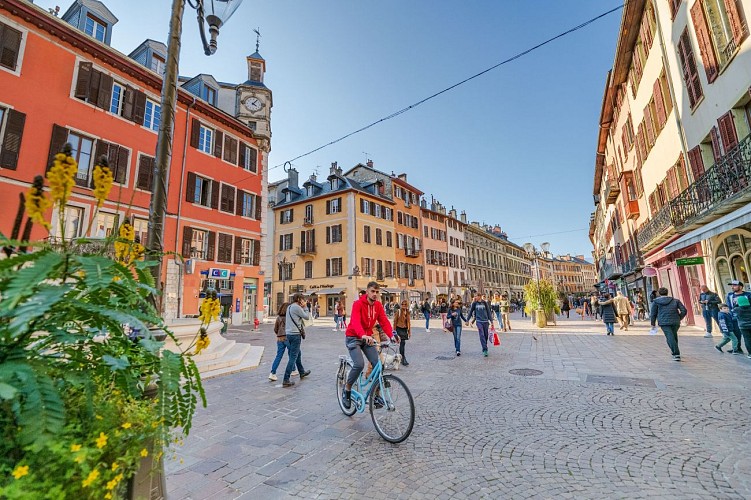
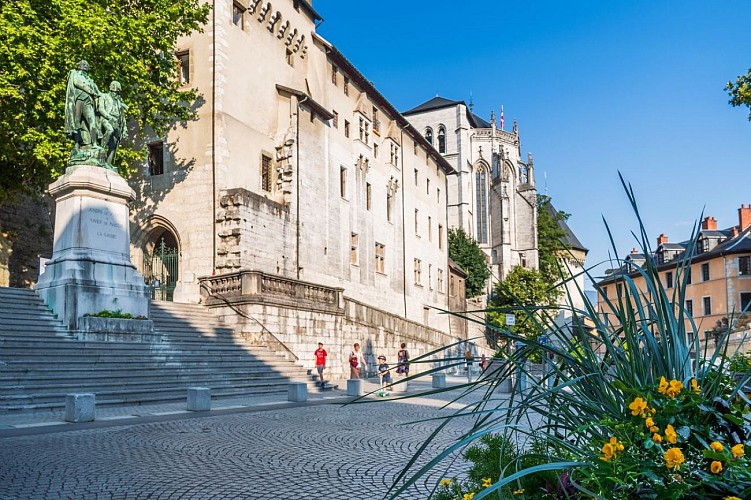
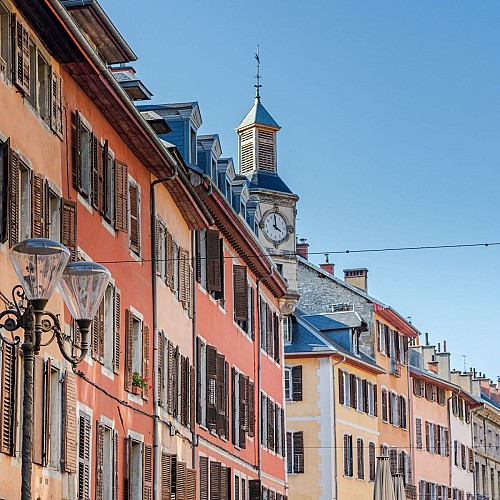
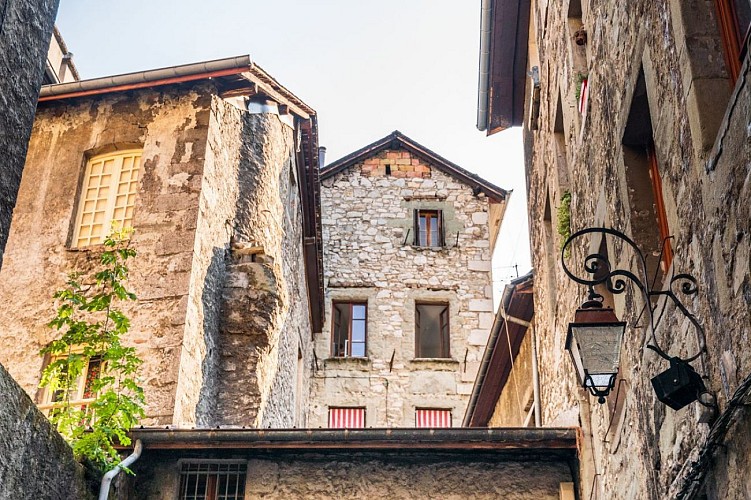
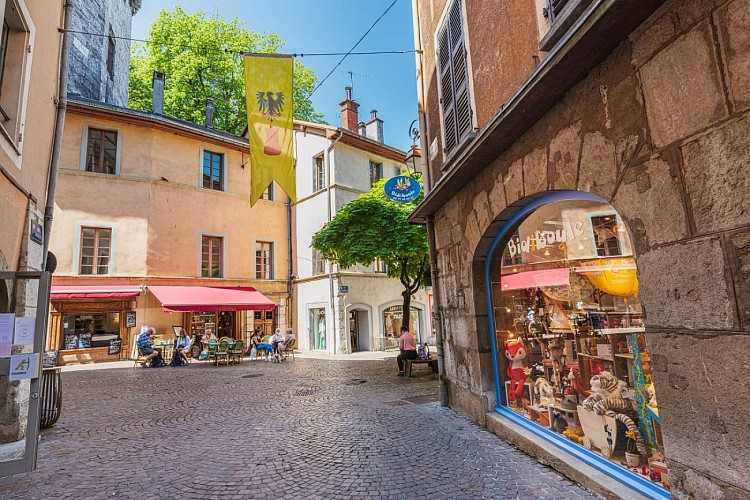
Follow the medallions decorated with elephants. Pass through the narrow streets and alleys, discover the heritage of Chambéry and stroll along without forgetting to look up.

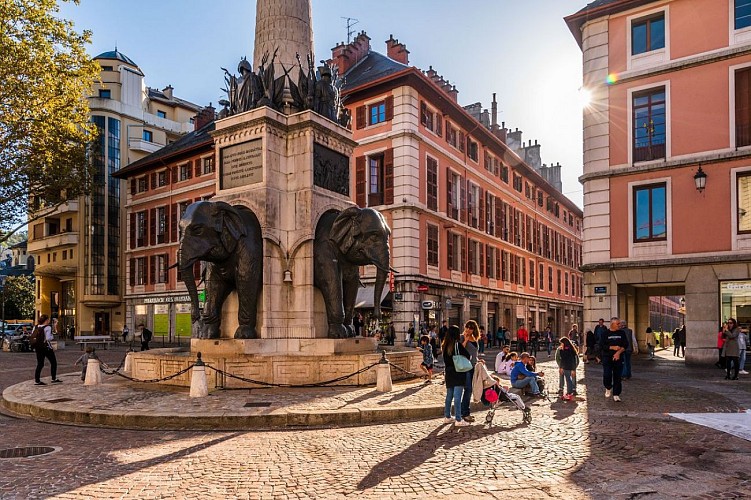
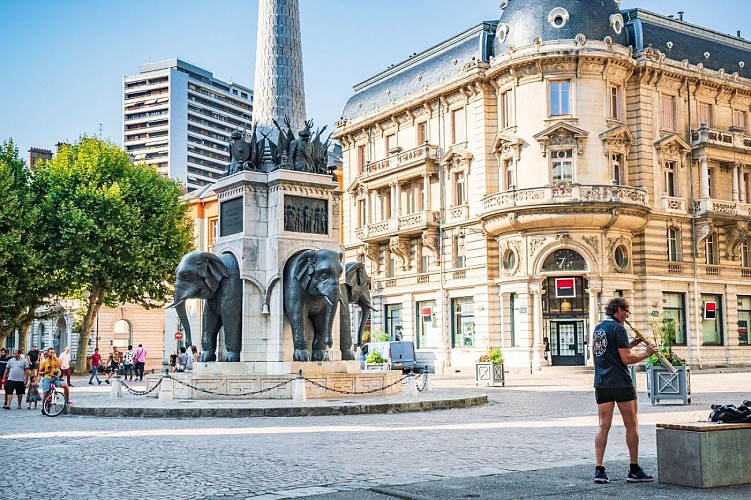
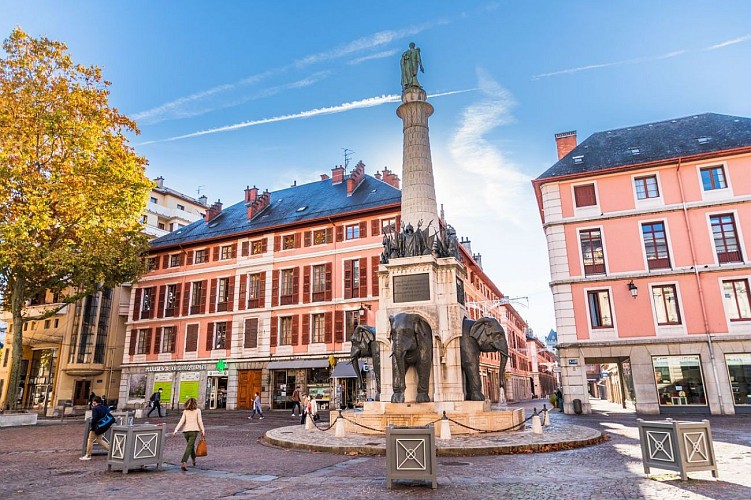
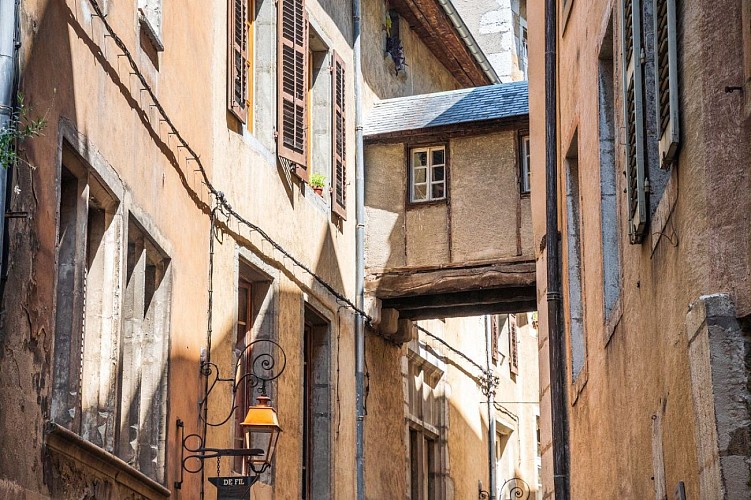
Have you noticed these golden elephants lining the cobblestones of the historic centre? Follow them, they'll be your guides! From squares to town houses, passing by the cathedral and the Elephant fountain, you'll follow medieval alleys and "traboules", discovering the historic city at your own pace.

New for 2022: the route will be extended to include the Faubourg Montmélian.

Technical Information

Walking
Difficulty
Very easy
Duration
1h30mn
Dist.
2.6 km
Show more

Altimetric profile

Starting point

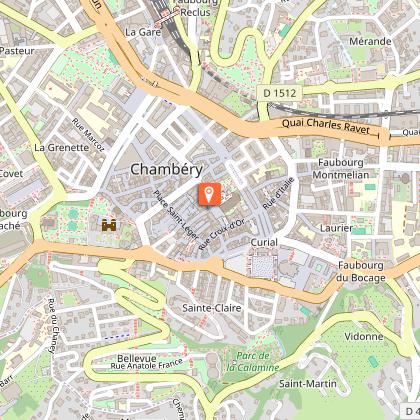
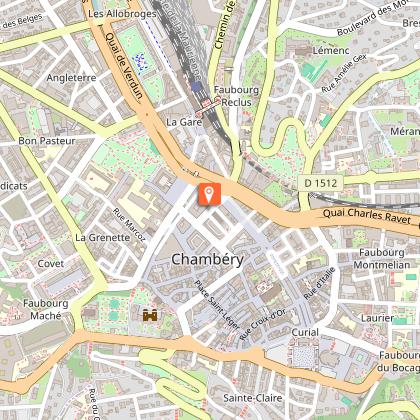
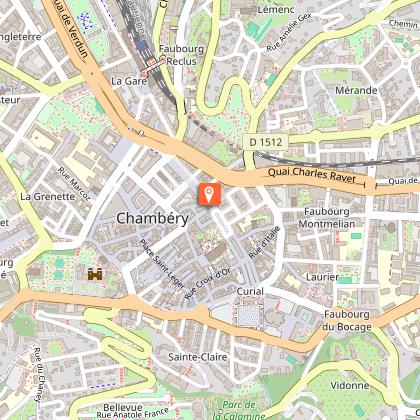
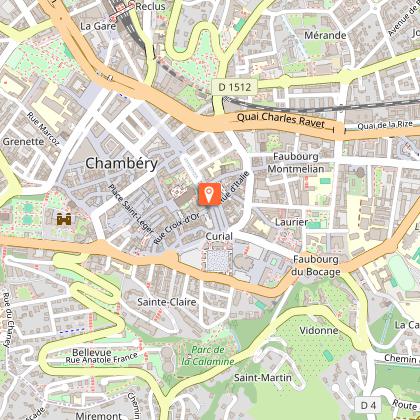
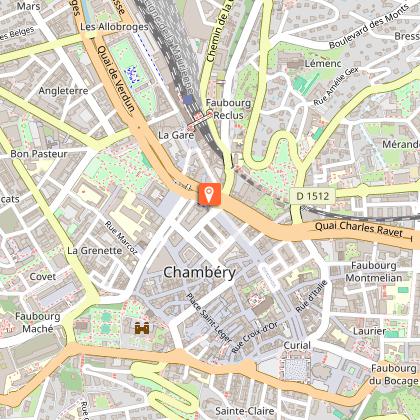
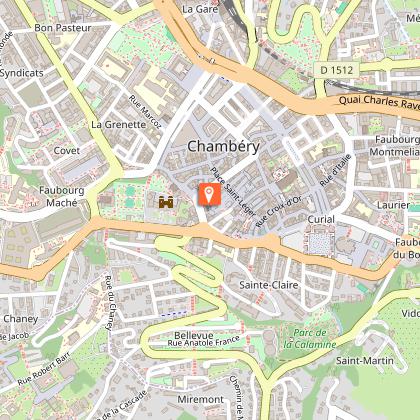
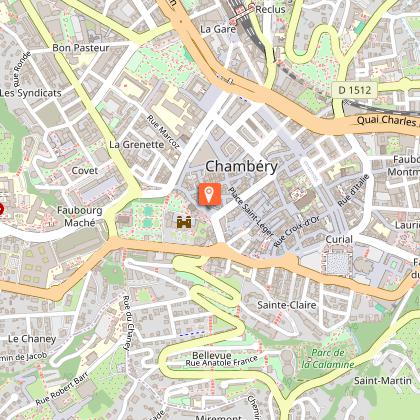
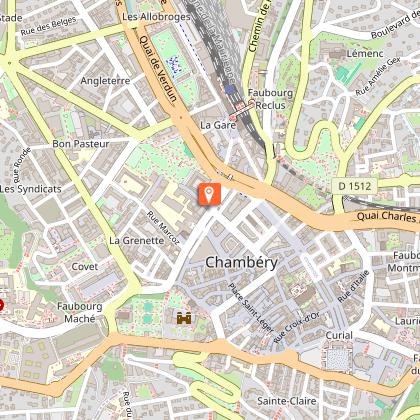
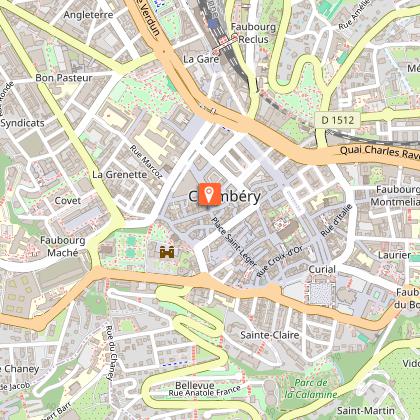
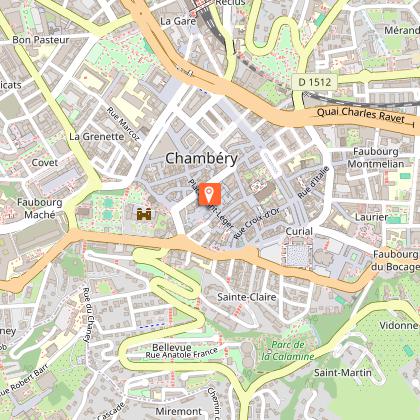
5 bis place du palais de justice , 73000   Chambéry
Lat : 45.567842Lng : 5.919034

Steps

Points of interest
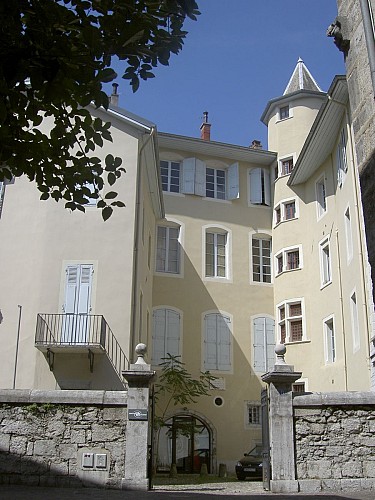
image du object

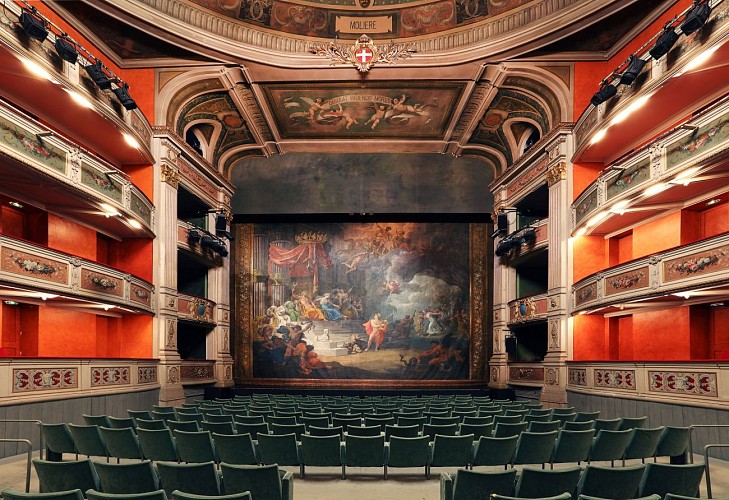
Charles Dullin Theatre

Rebuilt in 1866, this is one of the finest Italian-style theatres in France. It is named after Charles Dullin, a famous actor and director, who was born in Yenne in Savoie.Of the theater built in 1824 thank to the General de Boigne, is surviving a wonderful drop cloth, painted by Luigi Vacca and representing "The Descent of Orpheus to the Underworld". After its destruction because of a fire in 1864, the theater was rebuilt at the same place, following the plans of Charles Bernard Pellegrini and Joseph Samuel Revel. The main plan is the same as the one of the first building. The prostyle is actually a vestige of the theatre of 1820. The front, divided in a first central part and of two back part on the sides, is however much less important, which more adapted to the place. The big room surprises by its heat and its refinment. Its conception is typically italian with a horseshoe form, composed of 4 galleries superimposed. The decor of the stage and of the room are the work of Chenillion, set designer of the opera of Marseille, the decoration of the galleries are the work of Diéterle, designer of the opera of Paris. Sculptures and painting are from Delécole and Bin. The renovation of 1993 has allowed to keep the variety of colors, with the galleries and the walls ochre and the boxes and the stalls in green-grey. The theatre from Chambéry was nicknamed "the small Scala" because of its big inspiration from the prestigious milanese opera.

Place du Théâtre 73000 Chambéry
- Grand Chambéry Alpes Tourisme -
Consulter
image du object

St. Francis de Sales Cathedral

It was built in the 15th century by the Franciscans and became a cathedral in 1779, when the diocese of Chambéry was created. Behind a simple façade, it houses the largest collection of trompe-l'oeil paintings in Europe (6000m²).The work started in 1418 and the church was finished in 1587. It became cathedral in 1779 and then metropolis in 1817 when Chambéry became an archdiocese. The front isn't showing the customary greatness of cathedrals. It's explained by the franciscan modesty but also by the swampy subsoil which required the installation of more than 30000 larch piers. Such planting didn't allow the construction of a slender structure. On the other hand, the inside is striking with its greatness and its Flamboyant Gothic style very simple. The main caracteristic of the Saint-François de Sales Cathedral remains however in its trompe-l'oeil paintings which cover the walls and vaults. It was realized in 1834 by Casimir Vicario who privileged the Troubadour Gothic style which was very popular in Savoy at the time. Its romantic organ dating from 1847, classified historical monument, is the work of Augustin Zeiger. With its 50 registers on 3 piano keys and pedalboard, its one of the most important of the region Rhône-Alpes. Since 2010, a copy of the "Turin Shroud" is exposed in the cathedral. It has been offered by the Turin Archbishop for the 150th anniversary of the Savoy join with France.

Place de la Métropole 73000 Chambéry
- Grand Chambéry Alpes Tourisme -
Consulter
image du object

Museum of Fine Arts

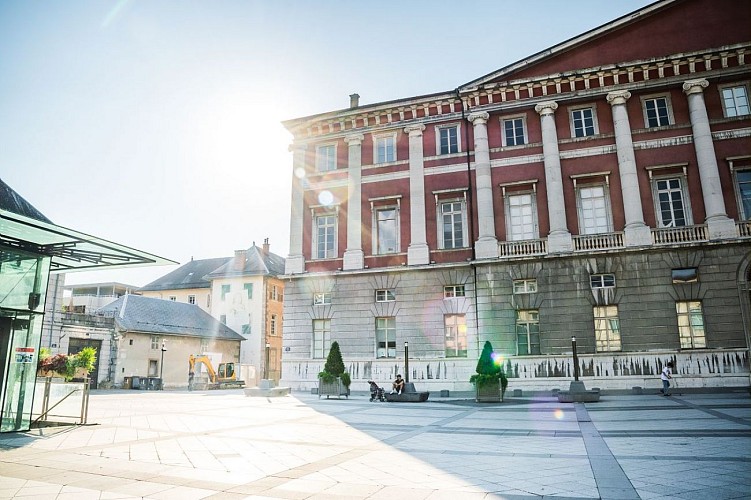
The renovated Musée des Beaux Arts contains a collection largely composed of Italian works from the end of the Middle Ages to the beginning of the 20th century, but it also displays works that help us to understand the history of art in the Savoy region.The Grenette building This corn exchange, previously known as a ‘grenette’, was located along the Medieval ramparts of the ducal city and surrounded by the Leysse, the river deviating from the Lac du Bourget. Closed down in the 19th century, it was repurposed as a voting booth for the union of the Savoie region and France, before being transformed into a museum-library in the 1880s. Renovated between 2009 and 2011, the unique architectural character of this building was restored, exploiting the diversity of the three rooms: the pillars under vaults on the ground floor, the metallic, Eiffel Tower-like aspect of the first floor, and the large windows of the second floor. Permanent collections Early art The 15th century is considered to be Savoie’s Golden Age. Combining both northern (Flanders, Germany, Switzerland) and Italian influences, these extremely rare wooden paintings demonstrate an exceptional artistic quality, marked with various archaisms. The Renaissance and Mannerism A remarkable collection of Italian works dating from the 15th and 16th centuries, with Sienna and Florence being particularly well-represented. The religious and allegorical scenes are carefully composed, with bright colours and clear, acidic tones. Portraits A wonderful collection of Italian, Flemish and Savoyard portraits, dating from the 14th to the 18th centuries. The social status of the subject can be determined by looking at whether they are alone or in a group. Genre paintings bring together various characters. The 17th century The heart of the Italian collection, the intense, formal quality of the Ecole de Naples is well-documented, which increases the dramatic atmosphere in the paintings. The collection also includes work from Rome, Florence and Venice. Piedmont in the 18th century Ecole de Turin, with its background in the unique history of the Savoie and the special relationship between Chambéry and Piedmont, produced some the most outstanding Baroque and neo-Classic works from Piedmont. L'Ecole savoyarde The Ecole de Peinture de Chambéry produced various artists, who were inspired by workshops in Geneva, Turin et Paris during the 19th century and at the beginning of the 20th century. They painted landscapes, with the constantly-changing countryside being their main source of inspiration. Furthermore, the museum offers a year-round programme of temporary exhibitions and cultural events.

Place du Palais de Justice 73000 Chambéry
- Grand Chambéry Alpes Tourisme -
Consulter

Additional information

Updated by

Agence alpine des territoires - 14/10/2025
www.agate-territoires.fr
Report a problem

Environments

Town location

Topo guides and map references

Map references :
Route map available from the Tourist Office.

Open period

All year round.

Type of land

Hard coating (tar, cement, flooring)
Suitable for city strollers

Contact

Phone : 04 79 33 42 47

Email : accueil.chambery@chamberymontagnes.com

Website : https://www.chamberymontagnes.com

Guidebook with maps/step-by-step

1/ Place du Palais de Justice

2/ Place de Genève

3/ Place Saint-Léger

4/ Rue Juiverie

5/ Rue Basse-du-Château

6 / Rue Sainte-Apollonie

7/ Castle of the Dukes of Savoy

8/ Les allées

9/ Place Saint-Léger

10/ Îlot de l'Horloge

11/ Rue Croix-d'Or

12/ Hôtel Castagnery de Châteauneuf

13/ Théâtre Charles Dullin

14/ Place du Théâtre
Here, a variation of the route takes you to Faubourg Montmélian via rue d'Italie, then back via Passage du Mont-Blanc.

15/ Elephant fountain

16/ Hôtel de Cordon - Ciap

17/ Saint-François-de-Sales cathedral

18/ Jean-Jacques Rousseau in Chambéry

19/ Rue de Boigne

20/ Hôtel de Ville

21/ La Reconstruction

22/ Notre-Dame church

23/ La Sasson

24/ Museum of Fine Arts

Animals

Yes

Data author

Ratings and reviews

To see around
See more
Open
Close
Show
Show
Show
Show
Show
Show
Show
Show
Show
Show
Show
Caution!
We have no information on the difficulty of this circuit. You may encounter some surprises along the way. Before you go, please feel free to inquire more and take all necessary precautions. Have a good trip! 🌳🥾