Alert
Alerts
Discovery walk: Jean-Jacques Rousseau in Chambéry
Description
Rousseau's stay in Chambéry with Mme de Warens was a decisive stage in his life and in the development of his thought.
After Chateaubriand, Lamartine, Stendhal and so many others, follow in the footsteps of the Enlightenment philosopher.
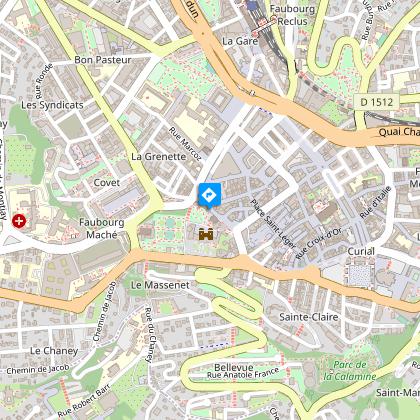
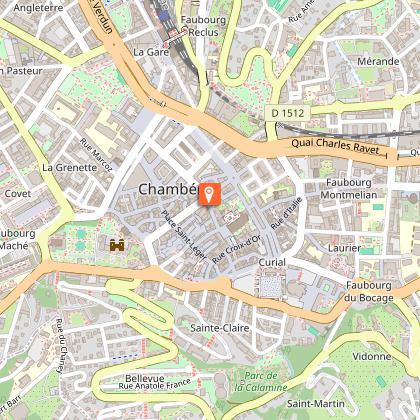
The route starts at the foot of the Château des Ducs de Savoie (Castle of the Dukes of Savoie). Rousseau arrived in Chambéry in September 1731. Thanks to Madame de Warens he got work in the land registry service, set up in the Tour Trésorerie (Treasury Tower). Having little interest in this boring work, he resigned very quickly: "I was twenty years old, nearly twenty-one... I was going to work reluctantly, the assiduousness and tedious nature of the work was unbearable torture for me, I finally decided to leave my employment to abandon myself totally to music."
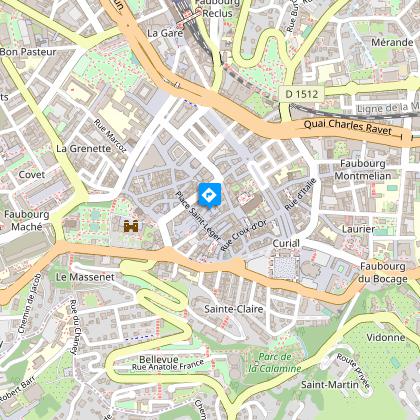
Go up the "Rue Basse du Château" and turn right on the "Place Saint Léger" square. Cross the "Rue de Boigne" and enter the covered passageway to the right of the Yves Rocher shop, the "Allée Jean-Jacques Rousseau".
It is at the end of this courtyard where you'll find the Hôtel de Saint Laurent.
Chambéry had a population of 10,000 inhabitants at this time. The town was rather insalubrious and enclosed by its ramparts. Madame de Warens occupied the house of the Count de Saint-Laurent: "The house she lived in was dark and sad, and my bedroom was the darkest and saddest in the house." From 1735-1736, Rousseau persuaded her to get a house in the country in Les Charmettes, which she would occupy especially in summer, while still keeping her townhouse.
Cross the small courtyard on your right and continue on the "Allée de la Cure" to reach the "Rue Métropole". Go up the street to the Cathedral and take the covered passageway situated at the end of the "Place Métropole" on your right.
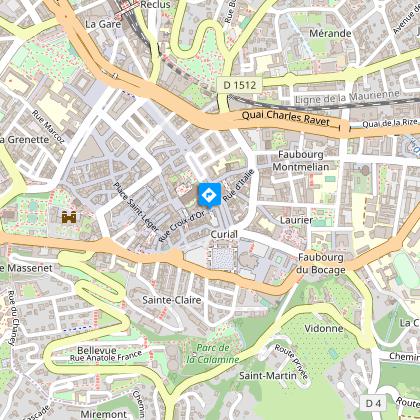
You arrive in the "Rue Croix d'Or" which is home to beautiful townhouses like the Hôtel des Marches de Bellegarde or the Hôtel Castagnéry de Châteauneuf.
The young Rousseau gave music lessons to young girls of Chambéry's nobility in such residences. "Here am I all of a sudden thrown among the beautiful people, accepted, sought after in the best houses; everywhere a gracious, pleasant welcome, a festive air: nice, well-dressed damsels await me, greet me eagerly, I smell only roses and orange blossom; we sing, we laugh, we enjoy ourselves."
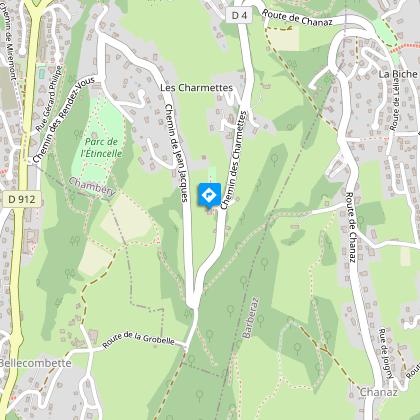
When you arrive in front of the Théâtre Charles Dullin, take the "Rue Denfert Rochereau" to the right then cross the "Carré Curial" opposite you. On the other side take the "Rue de la Calamine" then go up to the "Avenue de la Grande Chartreuse" through the "Parc de la Calamine". Cross the street and take the "Chemin de Jean-Jacques" facing you. Then take the signposts marked "Les Charmettes, Maison de Jean Jacques Rousseau".
You arrive at the Musée des Charmettes museum, the emblematic place of Rousseau's presence in Chambéry.
Madame de Warens, who he called "Mother" rented a little garden in one of the suburbs of the town. That was where Madame de Warens decided to take him away from "perils of his youth" to treat him like a man: "I saw myself for the first time in the arms of a woman, and a woman I adored". (Confessions, book V).
His description of Chambéry is embellished by memory: "If there is a small town in the world where you taste the sweetness of life in pleasant and trusty company, it is Chambéry. The provincial nobility which assemble here have everything for living well, but not enough to succeed. The women are beautiful and could do without being beautiful, they have everything to enhance their beauty and to even complement it. It is worth noting that I have seen many young ladies because of my position, I do not recall seeing any in Chambéry that were not charming." (Confessions, book V)
To get to the town centre, descend the "Chemin des Charmettes" then the "Rue Jean-Jacques Rousseau". At the roundabout take on your right the "Rue Plaisance" then, at the end of this street, go left on the "Rue Pasteur". Go up it and at the end turn right on the "Rue de la Banque". When you arrive on the "Place d'Italie" , take the "Passage du Mont Blanc" to the left then turn right on the "Rue du Théâtre" and continue straight on to the "Fontaine des Eléphants" where the trail ends, in the heart of the town dear to the great philosopher.
This period in Chambéry is indeed fundamental in Rousseau's life: "It is during this precious interval that my desultory and mixed education having taken shape made me what I no longer ceased to be through the storms that were awaiting me" (Confessions, book V).
He devoted himself to the study of science and especially music. He organised small concerts in Madame de Warens' home, taught music to the young girls of the polite society, formed solid friendships: Gauffecourt, the Marquis of Conzié, who opened his library.
Rousseau left Chambéry from September 1737 to February 1738 for a trip to Montpellier, then he stayed in Lyon from April 1740 to April 1741. Finally, he was ousted from Madame de Warens' house by a younger man, he left the Savoy region in 1742 for Paris.
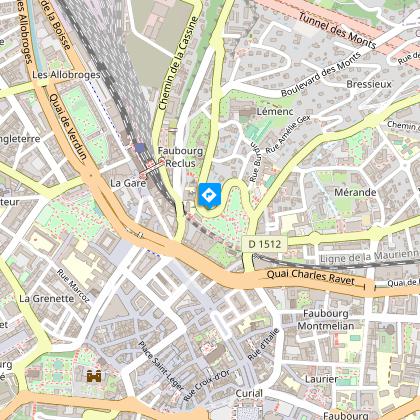
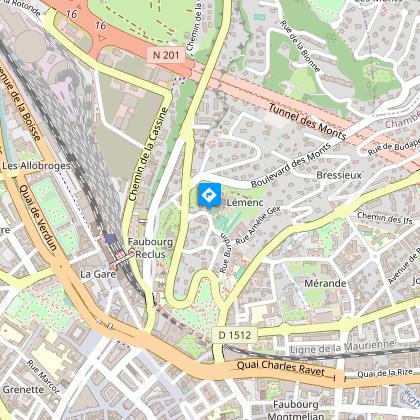
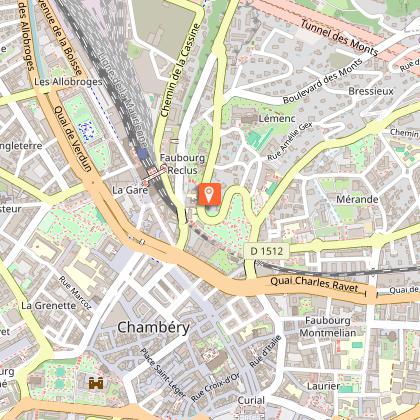
Madame de Warens died miserably in July 1762 and is buried in Lémenc Cemetery. On July 25th 1768, Rousseau went to Madame de Warens' grave and met his friend, Conzié. In 1910, a statue of Jean-Jacques Rousseau, sculpted by Marius-Mars-Valett, was erected at Clos Savoiroux.
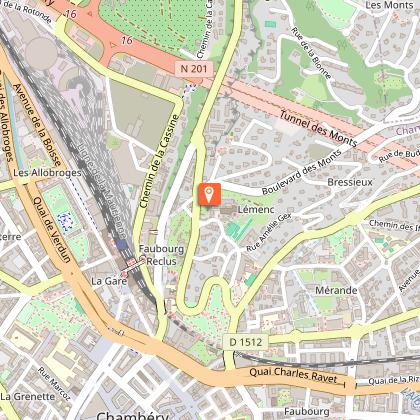
The more motivated can prolong this walk following the traces of Rousseau and visit Lémenc Cemetery. From the "Fontaine des Eléphants", take the "Rue Claude Martin" then traverse the "Place de la Libération" and go up the "Boulevard de Lémenc" to the "Parc du Clos Savoiroux". Go through the park via the "Allée René Cassin". Be sure to make a small detour to admire the statue of Mars-Valett and go back down via the "Boulevard de Lémenc" to the large turn. Turn left on the "Rue Amélie Gex" then again turn left on the "Rue Burdin". You arrive at the Église Saint Pierre de Lémenc (church), which is next to the cemetery where the benefactress of Jean-Jacques Rousseau, Madame de Warens lies (please note that the cemetery is not open to the public).
Technical Information
Altimetric profile
Starting point
Steps
Points of interest


Additional information
Updated by
Grand Chambéry Alpes Tourisme - 05/06/2026
www.chamberymontagnes.com
Report a problem
Environments
Mountain view
Town location
Open period
All year round.
Contact
Phone : 04 79 33 42 47
Email : accueil.chambery@chamberymontagnes.com
Website : https://www.chamberymontagnes.com
Type of land
Hard coating (tar, cement, flooring)
Grit
Not suitable for strollers
Location complements
Close to bus lines A, C and D (stop "Château des Ducs") or C, 1, 2 and 19 (stop "Préfecture"). More information on synchro.grandchambery.fr.
Animals
Yes
Data author
