Tours
Activities
Places of interest
Where to eat
Where to sleep

Discover Marseille with Hotel Restaurant Campanile Marseille Saint Ant

Are you the owner?
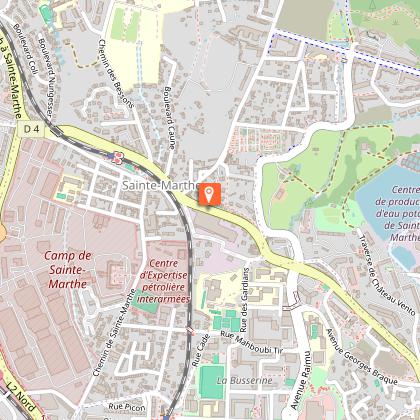
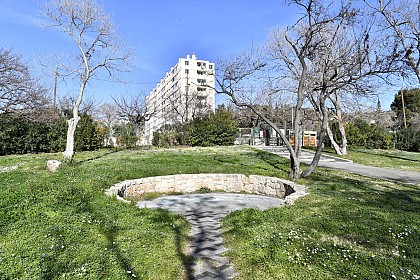
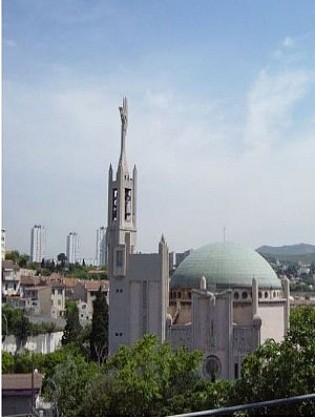
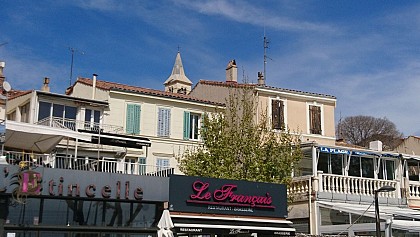
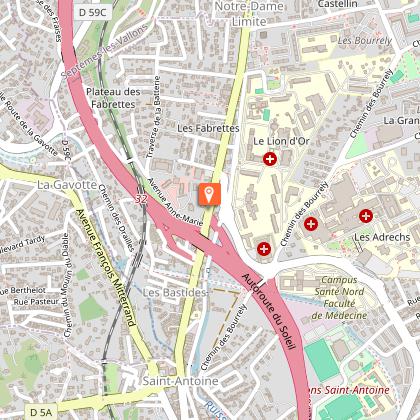
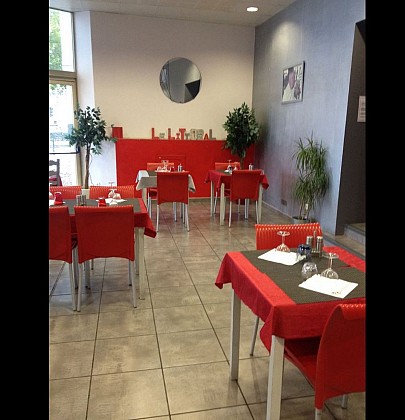
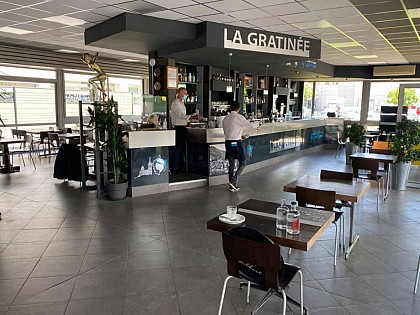
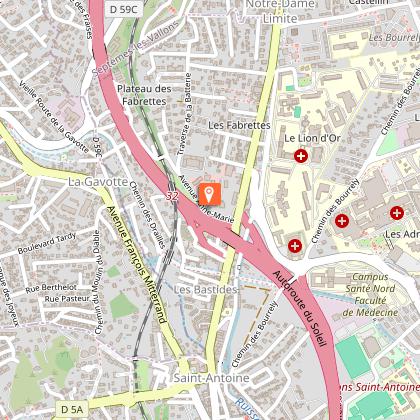
Welcome to Hotel Restaurant Campanile Marseille Saint Ant, your ideal starting point to explore the wonders of the 15th arrondissement of Marseille, in the Bouches-du-Rhône and Provence-Alpes-Côte d'Azur.
Whether you are a history buff, nature lover, or curious to discover local culture, Marseille's 15th arrondissement has delightful surprises for you.
Nearby, you will find the beautiful Parc Fr...
See more

Walking around HOTEL RESTAURANT CAMPANILE MARSEILLE SAINT ANT

See more suggestions
Embark on a hike in HOTEL RESTAURANT CAMPANILE MARSEILLE SAINT ANT.
See more suggestions
A stroll through the Saint-Charles district
8.7 km

A stroll through the Saint-Charles district

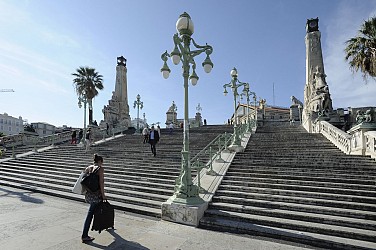
Follow this short stroll to discover the Saint Charles neighbourhood. When one mentions the name Saint-Charles, the SNCF station (1) is the first thing that comes to mind. Indeed, it stands out for several reasons. But it is also a neighborhood that has been transforming for several years and is becoming an university hub that we will introduce to you. We suggest arriving at Saint-Charles by metro and crossing the hall to reach Narvik Square (where the current drop-off point for motorists is located). On your left, first notice a stele (2). If you look further to the left, there is a large 15-story building in yellow/beige. In front of it stands the Golden Virgin (3). Cross the square to access the station's "masterpiece": its staircase and panoramic view of part of the city (4). Admire the sweeping view of Boulevard d'Athènes, the street art mural (5), and Notre-Dame de la Garde Basilica. Walk along the other side of the station to reach stairs that lead to Boulevard Maurice Bourdet. Cross and descend Boulevard Charles Nédélec. At the third intersection, turn right onto Rue Joseph Biaggi where you'll find the Bourse de Travail (6). Continue straight and skirt around the EMD Management School. Go up Rue Frédéric Ozanam until you reach Avenue du Général Leclerc, which you descend on the left. On the other side of the boulevard, you'll see the Saint-Charles campus, the original university site. Notably, there is a large rectangular peristyle building (7). Then you pass by a stele dedicated to General Leclerc (8). A flight of stairs takes you to the foot of the Toyoko Inn hotel (9). Enter on the left into Porte d'Aix Park (10). Follow the central path to reach the forecourt of the Arc de Triomphe (11). As you can see, this area designed by Euroméditerranée has undergone a major transformation over the past decade. Until recently, the A7 motorway divided the neighborhood in two, as it ended at the triumphal arch. The area is transforming with the construction of new student residences, numerous schools, the consolidation of three universities (specifically, the faculties of architecture, landscape, and urban planning), the creation of an inter-university library, and most importantly, the addition of a major asset: the inauguration of a brand new park in the heart of the city. The Saint-Charles district now positions itself as an urban campus. For more information: www.euromediterranee.fr In line with the Arc de Triomphe, cross Boulevard Charles Nédelec. In front of you, Rue d'Aix descends, which changes names several times over more than 6 kilometers, to reach the Mazargues district. It is one of the main north-south axes of the city. Sharpen your gaze, you should at least see the column of the fountain in Place Castellane, located 2 kilometers away. Finish your visit at the forecourt of the Regional Hotel, Place Gilberto Bosques. The Regional Council consists of two buildings that were built between 1984 and 1991 in the Butte des Carmes district. The forecourt of the Regional Hotel houses 3 remarkable elements (12).

1.7 km
Very easy
Square Narvik, gare Saint-Charles 13001 Marseille
Show
Walk in the footsteps of La Joliette's maritime history
9.1 km

Walk in the footsteps of La Joliette's maritime history

A walk that takes you back to the splendid period of the trading port and the heyday of shipping and travel. The opening up of maritime routes dates back to the 17th century, under the impetus of Colbert, Louis XIV's powerful minister. By the 19th century, commercial traffic was on the rise. From the 1840s onwards, this led to the creation of the port of La Joliette. Marseille forged links with the biggest ports in Europe and the world: Barcelona, Algiers, Naples, Rome, Valletta, Istanbul... The construction of the Suez Canal in 1859 also facilitated travel on the route to India. Thanks to this 6-stop tour, immerse yourself in the sumptuous period of the commercial port and the heyday of sea travel: The starting point is in front of the Regards de Provence museum, which houses the former maritime sanitary station (1) built by Fernand Pouillon. All passengers arriving by sea had to pass through a "disinfection" stage, via the oven room, directly accessible from the museum entrance. Then it's on to the Major vaults (2), which once housed warehouses. These vaults came into being with the construction of the new Major, the only cathedral built in France in the 19th century. The foundation stone was laid in September 1852, at a time when Marseille was experiencing economic, social and demographic growth, and was adorned with a number of important buildings: Palais de la Bourse (1834), Notre Dame de la Garde (1853), Docks de la Joliette (1858), Préfecture (1860), rue de la République (1860), Palais Longchamp (1862). At the fountain and double-flight staircase by Auguste Ottin, cross the street to the "bleu de Chine" statue by artist Bruno Catalano (3). Through this traveler, the artist pays homage to all the workers and dockers of the port of Marseille, as well as to all those who have restarted their lives on these quays. Continue straight ahead along the renovated facades of the Quai de la Joliette. You have to imagine that here, in the 19th century, there was the sea. All this space was reclaimed from the water thanks to embankments. Marseille had only one major port: the Vieux-Port. At the corner of Quai de la Joliette and Boulevard des Dames stands the "Castel Héritage" building (4). Built in the early 20th century by architect Gaston Castel in the art nouveau style, the building housed the Compagnie Générale Transatlantique (CGT) agency. The Compagnie des Messageries Maritimes, a prestigious French shipping company founded in 1851 and independent until 1977, was founded by a man from Marseilles. It then merged with Compagnie Générale Transatlantique to form Compagnie Générale Maritime. In 1999, following the privatization of CMA, the group became CMA CGM. Today, the building houses luxury accommodation, offices and shops. The façade along Boulevard des Dames, at the corner of the quay, is original. Return to Place de la Joliette and the Docks building (5). These are former warehouses comparable to those in London. Enter and cross the various atriums, until you reach the Place du Port. Take entrance D to exit the building and reach the port terraces, opposite on the seafront. Enter the shopping mall and go straight up to level 2. A beautiful terrace equipped with chairs and deckchairs (6) offers a sublime view of the ferries, ships, islands and harbor. This is how the tour ends.

1.1 km
Very easy
Allée Regards de Provence Rue Vaudoyer 13002 Marseille
Show
Cool Noons" freshness trail: historic downtown route
9.1 km

Cool Noons" freshness trail: historic downtown route

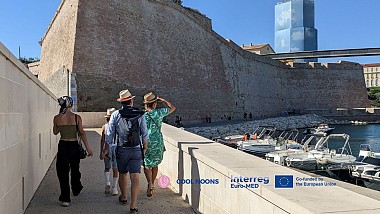
This urban walk, conceived as part of the European Cool Noons project, starts on the Mucem forecourt. It takes you to the Palais Longchamp and its monumental fountain. The Cool Noons project is a European project under the Interreg Euro-MED program (sustainable tourism), the main aim of which is to improve the visitor experience for tourists and residents of Mediterranean urban areas during the hottest hours of the day. By summer 2024, the project aims to offer routes that, wherever possible, include passages through shaded and/or ventilated streets, through existing cool spots where it is possible to refresh oneself, and close to free drinking water points. From the Mucem (1), walk along the Promenade Robert Laffont around the Villa Méditerranée (2). Then skirt Fort Saint-Jean (3) along the seafront and Promenade Louis Brauquier until you reach two twin buildings, the former sanitary lockers (4). Here you can choose between two routes to reach point number 5, the bell tower of Notre Dame des Accoules. * Follow the Quai du Port, taking advantage of the shade provided by the arches of the Pouillon buildings, which will protect you from the sun until you reach the Hôtel de Ville. At number 68, turn left up Rue de la Prison. You'll pass the diamond house and the back of the Pavillon Daviel. You come out on rue Caisserie, facing a large plane tree at the foot of the Accoules. * Or cross Quai du Port and walk up Avenue de Saint-Jean, which joins Rue Caisserie. After 400 meters and a few minutes' walk, you'll also reach the large plane tree in front of Les Accoules. After passing the steeple of the Notre Dame des Accoules church (5), take a break in the shade of other plane trees to admire the various buildings: the former Palais de Justice (6), the former Hôtel Dieu transformed into a luxury hotel, the Bargemon esplanade (7) and, in the distance, the Old Port with the city's emblematic symbol: Notre-Dame de la Garde. Return to the Grand' rue, where you'll pass one of the city's oldest buildings: the Hôtel de Cabre (8). Continue straight on, crossing Rue de la République to reach the entrance to the ancient port (9). Two options: * Turn left around the ancient port, aka the Jardin des Vestiges, or * Turn right through the air-conditioned shopping mall of the Centre-Bourse [open Monday to Saturday, 10am to 7.30pm] to reach the Cours Belsunce (10). From Cours Belsunce, head towards La Canebière (11) to turn into Rue des Récolettes, which continues into Rue d'Aubagne. You'll pass through the colorful Noailles shopping district. At the end of rue d'Aubagne, take the large staircase on your left, which leads to Cours Julien (12), a large, lively square planted with ponds. You'll then arrive in the festive La Plaine district, and take a section of Place Jean-Jaurès (13). Turn left into rue Curiol, then rue de la Bibliothèque, and right into the very pleasant rue Sénac de Meilhan, which has little traffic and is planted with trees and shrubs by local residents. At the bottom of the street, you'll reach the upper part of the Canebière. You'll pass the book milestone that pays tribute to the giraffe Zarafa, who arrived in Marseille, France, by boat and then made her way to Paris by walking with her friendly guardians! After all, it was a royal gift. Then there's the bandstand (14), the Monument aux Mobiles, which pays tribute to the soldiers who died in the 1870 war. And at the very end of the Canebière, you'll find yourself facing the church of Saint-Vincent de Paul (15), nicknamed "les Réformés". Follow the tramway as it winds around the Danaïdes fountain (16) and up the majestic avenue of plane trees on boulevard Longchamp. To round off this urban stroll, discover the Palais Longchamp (17), its museums and tree-lined park, built to celebrate the arrival of the waters of the Durance in Marseille.

2 h
5 km
Very easy
Mucem 7 Promenade Robert Laffont 13002 Marseille
Show
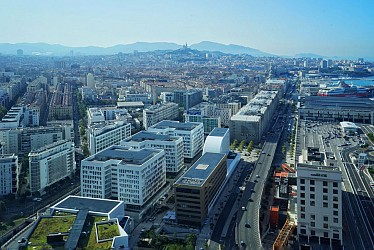
A stroll through Marseille's new districts
9.1 km

A stroll through Marseille's new districts

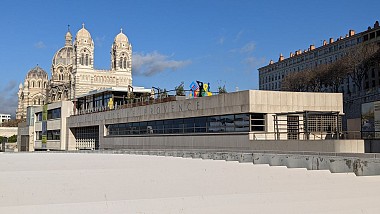
Discover the many emblematic architectural elements that shape today's urban panorama, particularly in the Joliette district. (1) The esplanade, which marks the starting point, takes its name from a former port area that housed the J4 hangar. Today it is home to the Mucem (2) and the Villa Méditerranée, two museum spaces inaugurated in 2013 when the city was European Capital of Culture. Since June 2022, the Villa Méditerranée (4) has housed a reproduction of the Cosquer cave, a prehistoric site found at a depth of 37 meters by a local diver, Henri Cosquer. A third site completes the cultural offering: the Musée Regards de Provence (8), a former 20th-century sanitary locker. Then we arrive at the monumental Cathedral de la Major (9). Below it are the Voûtes, a real link between the old town, the Panier district and the new waterfront, where you'll find places to relax and shop. Continuing on, the urban stroll leads to the historic Docks building (21) and the Terrasses du Port shopping center (14). Level 2 of this shopping mall boasts a 260-metre-long terrace offering a panoramic 180-degree view of the sea. The itinerary continues towards Cepac Silo (15), a former grain silo transformed into a concert hall. Step inside to admire the udder room. Continue along the CMA-CGM tower (145 m high) (16) to the Archives Départementales (18). The FRAC (24), with its pixelated glass facade reminiscent of a Paco Rabanne dress with sequins, when in fact it's more a question of opening up the structure to a space of subdued light in the Japanese tradition, brings this urban ramble to a close.

2 h
3.7 km
Very easy
Le point de départ de cette balade urbaine est situé devant l'entrée principale du Mucem Esplanade J4, au bout de la promenade Robert Laffont 13002 Marseille
Show
A stroll through the Réformés district
9.2 km

A stroll through the Réformés district

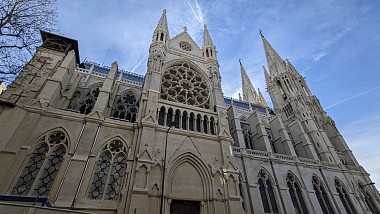
This itinerary lets you explore the Réformés district on foot, ideally located in Marseille's 1st arrondissement. Come and discover the many architectural curiosities hidden within. In the Réformés district, you'll have to look up to see the sights we're about to show you. The starting point for this walk is opposite the Eglise des Réformés (1), built in neo-Gothic style. Although its spires rise to a height of 75 meters, it holds no special place in the hearts of Marseillais. Walk up the Cours Franklin Roosevelt until you come to the Maison Castel (2). Retrace your steps and turn right into rue Saint-Savournin. Cross Boulevard de la Libération and continue straight ahead on Rue Bernex. When you reach boulevard Longchamp, walk a few meters down the boulevard to stop briefly at number 18. This is where you'll come across the first high relief dedicated to the Virgin Mary (3). Cross Boulevard Longchamp and take Boulevard National almost opposite to reach the building at number 9 (4). Continue along rue de la Rotonde, which runs along the north side of the Picon factory. Number 63 is the birthplace of Gaby Deslys, the internationally-renowned (in her day) singer and music-hall star who owned a sublime "folie" on the Corniche, the Villa Gaby (285 Corniche Kennedy). Admire the decorative elements of the entrance porch at number 16, headquarters of the "Les Excursionnistes de Marseille" association (5). A few more steps and you'll arrive at Place Alexandre Labadie (6). Turn right into Rue des Héros and follow it all the way up. At the far right, you'll see a large statue of a golden Virgin (7). Staying on the sidewalk on the Virgin's side, walk down Boulevard de la Liberté, looking up to admire the richly-decorated façade with its expressive faces and cat's mouths. The entrance, at number 46, is also adorned with two atlatls. However, we can't tell you the name of the architect. It's not known. At 23 rue de la Grande Armée, you'll discover a Greek Orthodox church (8). Then you reach Square Stalingrad, where you'll find a beautiful Art Nouveau fountain, the Danaïdes fountain (9). This square is particularly pleasant, as it is well shaded. Go downhill a little further and take the allée Gambetta. Three points of interest stand side by side: The Monument des Mobiles (10), the Byzantine building (11) and the Zarafa giraffe (12). The stroll ends on the upper part of the Canebière, renowned for its cultural and leisure establishments: the Artplexe cinema (13), with its rooftop café-restaurant, the Théâtre de l'Odéon (14) and the Théâtre du Gymnase (15).

2 km
Very easy
2 Cours Franklin Roosevelt 13001 Marseille
Show

What to do in HOTEL RESTAURANT CAMPANILE MARSEILLE SAINT ANT

See more suggestions
Book your activities in HOTEL RESTAURANT CAMPANILE MARSEILLE SAINT ANT and experience memorable moments.
See more suggestions

What to visit in HOTEL RESTAURANT CAMPANILE MARSEILLE SAINT ANT

See more suggestions
Savor the local cuisine of HOTEL RESTAURANT CAMPANILE MARSEILLE SAINT ANT.
See more suggestions
Emmanuel Vitria Park
2.7 km

Emmanuel Vitria Park

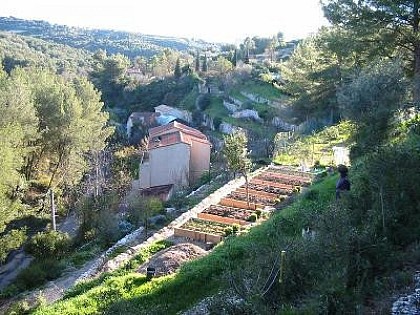
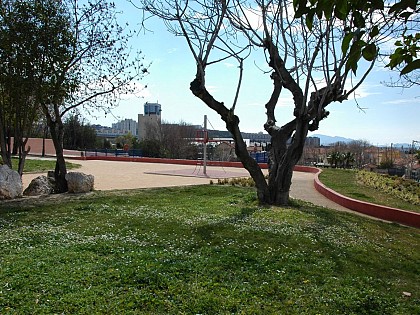
Children, teenagers, families, bowlers, the Emmanuel Vitria park welcomes you in the Saint-André district. In some squares, the playgrounds can still be used but are under the responsibility of parents who must ensure that health regulations are respected, including physical distance. Children, teenagers, families, bowlers, the Emmanuel Vitria park welcomes you in the Saint-André district. After the earthworks, planting and embellishment, the new park spreads over 3 large restanques on 7500m2. The upper restanque is a children's garden. Easily accessible on foot, closer to the nursery school on Rue du Boisseau and to the heart of the village of St-André, it offers a shaded and protected play area for the little ones. Safety and the preservation of play areas reflect the desire to guarantee a good cohabitation between families, young people and other users. A sports and recreational area has replaced the wasteland. Its creation offers two new entrances on the Pas de Faon Boulevard. A 365m2 mini multi-sports field allows teenagers to practice basketball and soccer. The game is safe thanks to the 80 m. fence around the field. Below the garden, the large St-André bowling green is very popular with local residents. The retaining wall, the pergola and the bleachers have been rehabilitated and made safe according to current standards. complete roadwork on bd Pas de Faon and Condorcet. A pedestrian pathway facilitates and secures access to the school on Rue Boisseau. Ten parking spaces, including one for people with reduced mobility, have been created with protective posts and railings, under an alley shaded by large hackberry trees.

17 rue Condorcet 13016 Marseille
Show
L'Estaque and its painters
3.7 km

L'Estaque and its painters

In the extreme north of Marseille, nestled at the foot of the Nerthe mountain range which protects it from the mistral wind, the small port of Estaque (attache, in Provencal), remains one of the most picturesque districts of the city. In the northernmost part of Marseille, nestling at the foot of the Nerthe massif, the little port of Estaque (meaning attachment in Provençal) is still one of the most picturesque districts of the city. Its development over the centuries has been closely associated with the traditional tile-making industry. At the beginning of the 20th century, people would come to L'Estaque to try sea urchins, bouillabaisse, panisses and sardines in hotels and restaurants built on the water's edge. Bastides, seaside villas (Château Fallet, Villa la Palestine, etc.) veritable architectural follies, etc. started to spring up next to the traditional small houses belonging to the workers from the nearby tile factories and cement works. For art enthusiasts, Estaque is above all one of the key locations in the birth of modern painting. From Collioure to Menton, just to consider the Mediterranean coast, there are plenty of places that have attracted great painters. However are there many places that can boast to have been frequented over a period of sixty years (1860-1920) by ten or so renowned artists? The name of L'Estaque is associated with impressionism, fauvism, cubism: these three periods that to a great extent determined the nature of painting in our time. Although Cézanne and Braque are the two major figures, we should not forget painters such as Derain, Dufy, Marquet, Friesz, Macke, Renoir, Guigou and Monticelli. Most of them painted dozens of canvasses at Estaque. An unusual destiny indeed for this village, which can firstly be explained by its situation: it offers an exceptional view point, where the panorama of the bay of Marseille is often very striking. The explanation for the painters' inspiration can also be found in the large number of different subjects, and in the variety of shapes and colours, all concentrated in a relatively small space: the horizontal sea, the vertical factory chimneys, the curves of the hills and the arches of the viaducts, the play of ochres and reds responding to the intensity of the myriad of greens and blues. A walking tour presents the history of this colourful working-class district with a strong character, little different nowadays from the village the painters knew and loved. Many of the themes are still here. To see them you just need to know how to look. Starting from the harbour jetty, take the painters' path, and after this walk lasting roughly two hours you will understand why these artists were so attracted to these sites. Eight enamelled lava information panels are positioned at various points of the walk.

13016 Marseille
Show

Where to eat in HOTEL RESTAURANT CAMPANILE MARSEILLE SAINT ANT

See more suggestions
Restaurants in HOTEL RESTAURANT CAMPANILE MARSEILLE SAINT ANT offer a friendly atmosphere.
See more suggestions

Where to sleep in HOTEL RESTAURANT CAMPANILE MARSEILLE SAINT ANT

See more suggestions
Find lodging to suit your needs in HOTEL RESTAURANT CAMPANILE MARSEILLE SAINT ANT.
See more suggestions
Caution!
We have no information on the difficulty of this circuit. You may encounter some surprises along the way. Before you go, please feel free to inquire more and take all necessary precautions. Have a good trip! 🌳🥾