Tours
Activities
Places of interest
Where to eat
Where to sleep

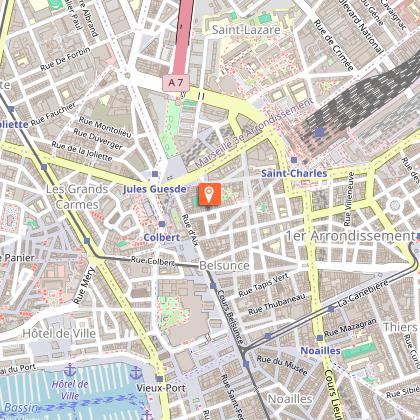
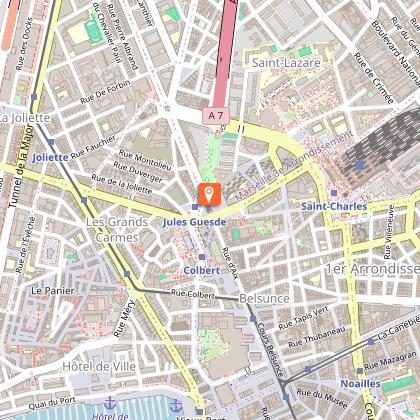
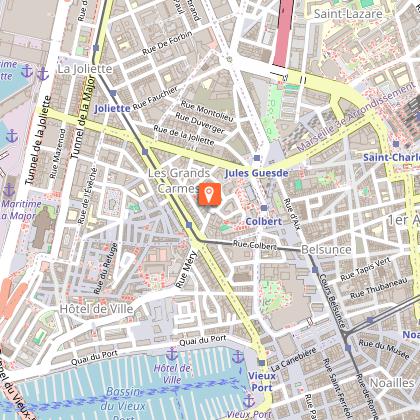
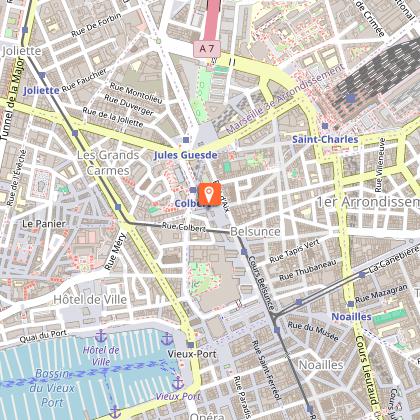
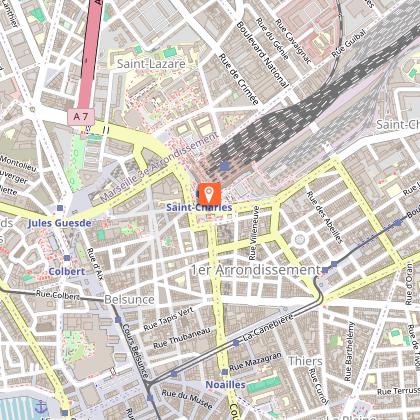
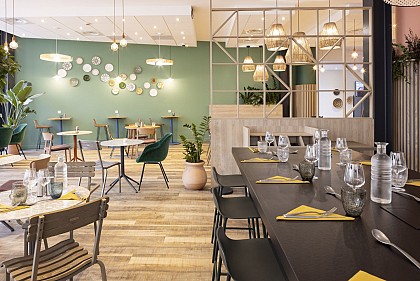
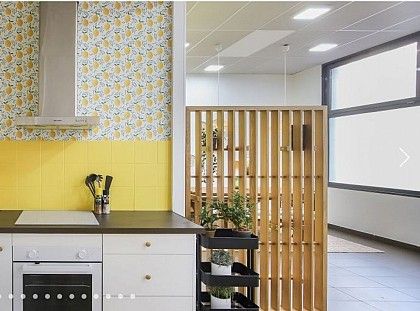
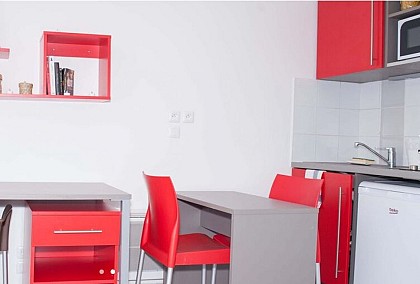
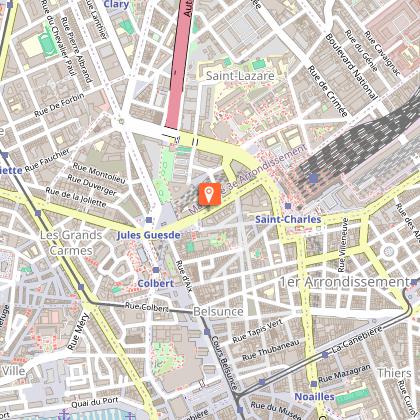
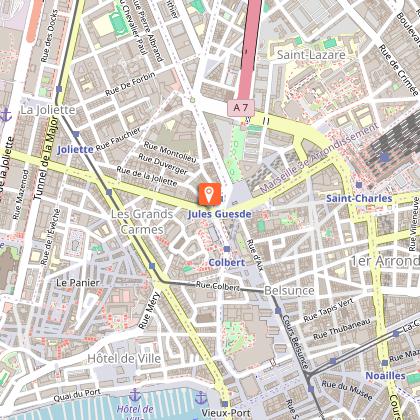
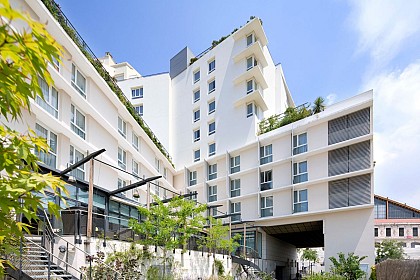
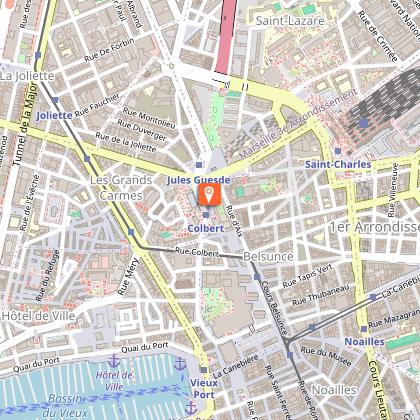
Unforgettable stay at TOYOKO INN MARSEILLE SAINT CHARLES

Are you the owner?
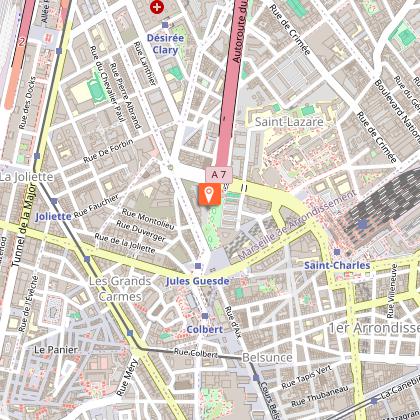
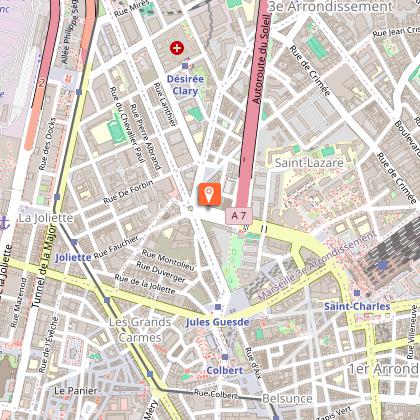
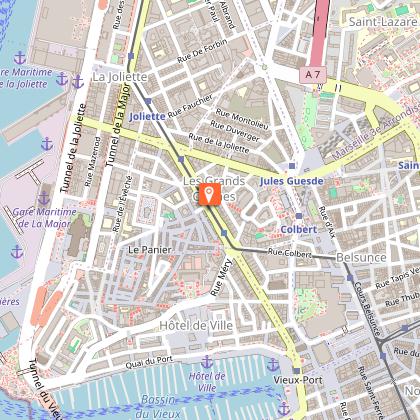
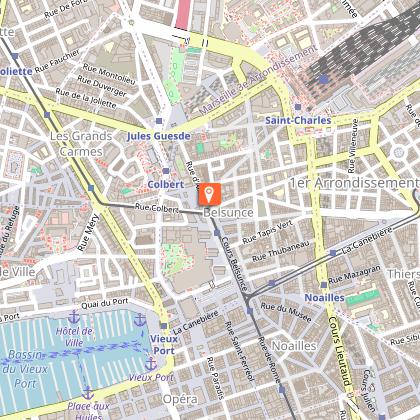
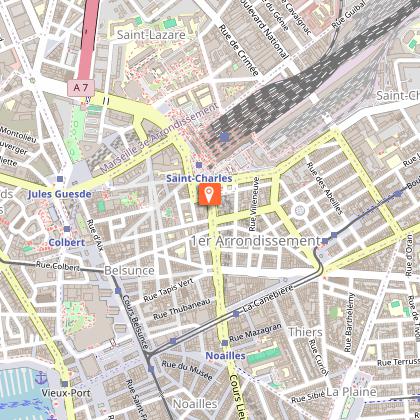
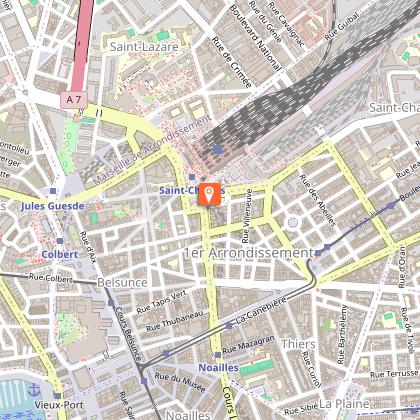
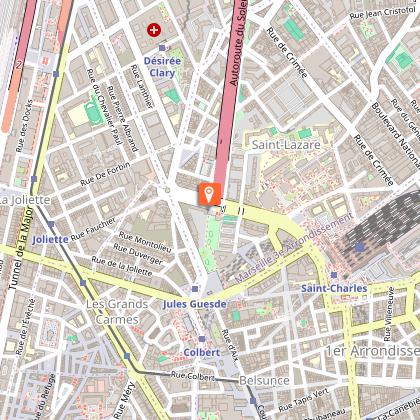
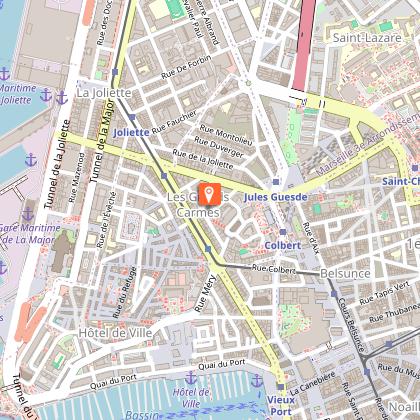
Experience the authentic charm of Marseille and the hidden gems of its 3rd arrondissement during your stay at TOYOKO INN MARSEILLE SAINT CHARLES. Nestled in the heart of the Phocaean city, this strategic location opens the door to a variety of activities and discoveries.

Begin your exploration at the Saint-Charles train station, an architectural masterpiece and major railway hub connecting Marsei...
See more

Walking around TOYOKO INN MARSEILLE SAINT CHARLES

See more suggestions
Explore the parks and paths of TOYOKO INN MARSEILLE SAINT CHARLES.
See more suggestions

A stroll through the Saint-Charles district
557 m

A stroll through the Saint-Charles district

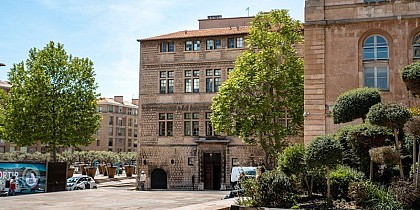
Follow this short stroll to discover the Saint Charles neighbourhood. When one mentions the name Saint-Charles, the SNCF station (1) is the first thing that comes to mind. Indeed, it stands out for several reasons. But it is also a neighborhood that has been transforming for several years and is becoming an university hub that we will introduce to you. We suggest arriving at Saint-Charles by metro and crossing the hall to reach Narvik Square (where the current drop-off point for motorists is located). On your left, first notice a stele (2). If you look further to the left, there is a large 15-story building in yellow/beige. In front of it stands the Golden Virgin (3). Cross the square to access the station's "masterpiece": its staircase and panoramic view of part of the city (4). Admire the sweeping view of Boulevard d'Athènes, the street art mural (5), and Notre-Dame de la Garde Basilica. Walk along the other side of the station to reach stairs that lead to Boulevard Maurice Bourdet. Cross and descend Boulevard Charles Nédélec. At the third intersection, turn right onto Rue Joseph Biaggi where you'll find the Bourse de Travail (6). Continue straight and skirt around the EMD Management School. Go up Rue Frédéric Ozanam until you reach Avenue du Général Leclerc, which you descend on the left. On the other side of the boulevard, you'll see the Saint-Charles campus, the original university site. Notably, there is a large rectangular peristyle building (7). Then you pass by a stele dedicated to General Leclerc (8). A flight of stairs takes you to the foot of the Toyoko Inn hotel (9). Enter on the left into Porte d'Aix Park (10). Follow the central path to reach the forecourt of the Arc de Triomphe (11). As you can see, this area designed by Euroméditerranée has undergone a major transformation over the past decade. Until recently, the A7 motorway divided the neighborhood in two, as it ended at the triumphal arch. The area is transforming with the construction of new student residences, numerous schools, the consolidation of three universities (specifically, the faculties of architecture, landscape, and urban planning), the creation of an inter-university library, and most importantly, the addition of a major asset: the inauguration of a brand new park in the heart of the city. The Saint-Charles district now positions itself as an urban campus. For more information: www.euromediterranee.fr In line with the Arc de Triomphe, cross Boulevard Charles Nédelec. In front of you, Rue d'Aix descends, which changes names several times over more than 6 kilometers, to reach the Mazargues district. It is one of the main north-south axes of the city. Sharpen your gaze, you should at least see the column of the fountain in Place Castellane, located 2 kilometers away. Finish your visit at the forecourt of the Regional Hotel, Place Gilberto Bosques. The Regional Council consists of two buildings that were built between 1984 and 1991 in the Butte des Carmes district. The forecourt of the Regional Hotel houses 3 remarkable elements (12).

1.7 km
Very easy
Square Narvik, gare Saint-Charles 13001 Marseille
Show
Marseille Between Sea and Landmarks: An Unforgettable Bike Ride
864 m

Marseille Between Sea and Landmarks: An Unforgettable Bike Ride

🔧 Practical Info Before You Go : Start: Indigo Parking – Centre Bourse Duration: 1h30 (non-stop, without visits, swims, or breaks) up to 5 hours if taking your time Distance: 18 km Bring: Water, sunscreen, sunglasses, swimsuit !!   🗺️ Step-by-Step Itinerary : Start from Indigo Parking – Centre Bourse, right in the city center. A few turns of the pedals take you down to the waterfront and the striking Mucem and Cosquer Cave exhibit on J4 Esplanade, a wide open space facing the Frioul Islands. Continue up toward the imposing Cathedral of La Major, then wander through the colorful alleyways of Le Panier, the oldest and most picturesque district in Marseille. Cruise down to the Ombrière by Norman Foster, the mirrored canopy that hovers above the Old Port, then cross over to reach the elegant Palais du Pharo, offering a superb view over the harbor. Ride along the sea to the Plage des Catalans, then head to the charming Vallon des Auffes, a tiny traditional fishing port carved into the coastline. Keep going through Malmousque, then Maldormé, and skirt the Anse de la Fausse Monnaie — peaceful coves with crystal-clear water. Pedal up through Parc Valmer, then take on the iconic Corniche Kennedy, a scenic balcony overlooking the Mediterranean, lined with villas, carved stone walls, and sweeping sea views. Take a refreshing break at the Plage du Prophète, one of Marseille’s most popular beaches: shallow water, a relaxed family vibe, and perfect for a quick dip. Then comes the climb to Notre-Dame-de-la-Garde, affectionately called La Bonne Mère. It’s the steepest part of the route — but also the most rewarding. From the esplanade, the 360° view over the city, islands, port and sea is truly breathtaking. Descend through Parc Puget, a quiet green escape, before stopping at the historic Abbaye Saint-Victor, a powerful monument to 15 centuries of Christian presence. Finally, wrap up your journey at the Citadel (Fort Saint-Nicolas). Entry is free, and a small hidden bar at the top offers a stunning view over the Old Port — the perfect place for one last drink to celebrate your ride. 🌇 Don’t Miss: One Last Drink with a View Over the Old Port Climb up to the Citadel (free access) and grab a seat at the small bar perched on top. The view is incredible, the vibe is peaceful… A perfect ending to your Marseille cycling adventure.

4 h
24 km
Easy
28 Rue Reine Elisabeth 13001 Marseille
Show
A stroll through the Noailles district
922 m

A stroll through the Noailles district

Take a free tour of the Noailles district, also known as the belly of Marseille. Noailles is made up of narrow streets where Marseillais come to stock up on spices, condiments, flavors and fragrances of all kinds! You'll find ingredients from all over the world. Exoticism guaranteed. The discovery of the Noailles district begins on the Cours Saint-Louis (2), Marseille's "ground zero". Since 1927, it's here, precisely at the corner of the Canebière and Cours Belsunce, that the numbering of buildings along all the city's streets has been determined. It's also kilometer zero for measuring the distance between Marseille and other French cities. Cours Saint-Louis extends into rue de Rome. Turn left into rue Méolan, where you'll find the famous shop founded by Père Blaize (3). At the end of the street, turn right onto rue d'Aubagne. At the next street, turn right again onto rue Vacon. On your left is rue Halle Delacroix, with its outstanding exotic goods merchants, such as Tam-Ky. Cross the square to reach rue Rouvière and continue up it to the left. Turn left down rue d'Aubagne to the crossroads with rue Longue des Capucins. This is where you'll find Saladin's cave of 1,000 spices (5). Continue straight on to the district's only fishmonger, du Lamparo, at the corner of Marché des Capucins and Marché de Noailles. Turn left down Rue des Feuillants onto La Canebière (1). Walk down the Canebière, then turn left into rue des Récolettes, where you'll discover another of the city's outstanding shops: the "Empereur" hardware store (8). Take time to explore this store, which is approaching 100 years of existence. There's a beautiful section of antique toys upstairs. As you leave the store, the neon sign of the Cours Saint-Louis pharmacy will lead you back to the starting point of this tour.

45 min
1 km
Very easy
Le point de départ de cette visite en boucle, se trouve sur le Cours Saint-Louis Cours Saint-Louis 13001 Marseille
Show
A stroll through 19th-century Marseille
928 m

A stroll through 19th-century Marseille

This urban walk starts on the Canebière: it will lead you to the Palais Longchamp and its monumental fountain. The route follows the Cours Saint Louis, the "Petit Cours" which takes its name from Louis d'Anjou. This is where the first santon fair was held in 1803. Then we enter the Noailles district. In a colorful effervescence, dive into the Mediterranean cultures and discover the different stalls. Once you have crossed the boulevard Garibaldi, you reach the rue du Théâtre Français. Italian style theater and baptized for a time "French theater" to mark its vocation dedicated to the French literature. Then you reach the upper part of the Canebière again. There we find a self-service book terminal in the shape of a giraffe to pay homage to the famous Zarafa, evoked in the urban stroll that leads to the Prefecture and the Monument aux Mobiles which celebrates the soldiers of the Garde Mobile of the Franco-Prussian war of 1870. At the very end of the Canebière, you find yourself facing the Saint-Vincent de Paul church, nicknamed "les Réformés" because it is located on the site of the chapel of the Augustins Réformés. Its 2 spires rise 70 meters above the Canebière. As you walk up the majestic avenue of plane trees on boulevard Longchamp, you will see on your right the mansion that houses the Grobet-Labadie museum. To end this urban stroll, you can discover the Palais Longchamp which was built to celebrate the arrival of the waters of the Durance in Marseille. Discover also its museums and its English garden.

1 h
2.1 km
Very easy
Départ Office Métropolitain de Tourisme et des Congrès 11 La Canebière 13001 Marseille
Show
Stroll along the south shore of the Old Port
930 m

Stroll along the south shore of the Old Port

This easy walking tour combines beautiful facades along the streets with panoramic views and grand monuments. The route is suitable for strollers. * The itinerary begins on the Canebière, a mythical and historic artery, lined with majestic facades, which in its heyday was home to grand hotels and the most beautiful cafés in Marseille. At number 9 is the Palais de la Bourse, the chamber of commerce and industry. Rue Beauvau leads to the Opera House. It was partially destroyed by fire in 1919, hence its Art Deco facade. At the back of the building. * Turn right onto rue Francis Davso which leads to the Cours Estienne d'Orves. A real city within the city, the Arcenaulx were the former warehouses of the arsenal of the royal galleys at the time of Louis XIV. Today, this Italian-style square is an attractive district with its cafés, restaurants and artists' galleries. * Parallel to this is the Rue Sainte, which leads to the Abbaye Saint-Victor, join it. Stop at the Four des Navettes, the oldest bakery in Marseille (1781) where you can taste the navettes, a dry orange blossom cookie typical of Marseille and very popular with gourmets. To the right of the Bertie Albrecht square, enjoy the panoramic view of the Old Port and the old city. * Then head for Fort Saint-Nicolas (17th century), the work of the Chevalier de Clerville. During the construction of the Palais du Pharo, the fort was cut in two, in order to create an access road and that is why today, Fort Saint-Nicolas is composed of Fort d'Entrecasteaux for the upper part and Fort Ganteaume for the lower part. * When you arrive in front of the gates of the Palais du Pharo, cross the public garden which offers other magnificent views of Marseille.

45 min
2.5 km
Very easy
11 La Canebière 13001 Marseille
Show
Old town stroll: focus on the Panier district
987 m

Old town stroll: focus on the Panier district

Stroll to discover the monuments and must-see sites in the heart of Marseille's Old Town, the Panier district. This walk begins in front of the Town Hall (1). Turn left around the building into Rue de la Prison. At the end of the street, take the stairs that lead to the Maison Diamantée (2). Cross the Place Bargemon towards the bust of the Massaliote Euthymènes, famous navigator and explorer, and turn left along the restaurant terraces. Before the staircase, turn right through an archway and cross Place Victor Gélu straight ahead into Rue Bonneterie. At the corner you reach the Hôtel de Cabre (3) and turn left into the Grand' Rue. You'll pass the bust of Honoré Daumier, a famous 19th-century Marseilles artist whose works were intended to comment on the social and political life of his day. Enjoy the view of the Hôtel Dieu (4) on your right and Place Bargemon on your left, with Notre Dame de la Garde in the background. You will also pass in front of the Daviel Pavilion (5), today an annex of the Hôtel de Ville. Jacques Daviel was King Louis XIV's surgeon. He was a famous ophthalmologist because he was the first to perform a cataract operation in 1745. Pass the Accoules church and bell tower on your right (6), then climb the Montée des Accoules flight of stairs on your right (7). At number 23 Montée des Accoules (8), fork right and continue up the stairs to Place des Moulins (9). Pass under the plane trees and at the end, go down the stairs of the rue des Moulins. Turn right into Rue des Moulins and the first left into Rue Puis Saint-Antoine and Traverse Saint-Antoine. Stairs lead up to Place de Lorette. Turn left onto rue de Lorette, which goes slightly uphill and continues into rue du Petit Puits. Follow the signs to the Vieille Charité. When you are in front of the main entrance of this former hospice (10), go under the plane trees that adorn the Place des Pistoles (11). At the end of the square, go up Rue du Panier for a few metres, then turn right into Rue du Refuge, which leads to another part of Montée des Accoules. In front of the old building of the communal school of the girls, take on the right and at the end the stairs which make you arrive on the Place de Lenche. Cross the square to the statue of Henri Tasso, a former socialist mayor of Marseille between 1935 and 1939. It was during his term of office that the terrible fire at Galeries Lafayette on La Canebière took place, claiming 73 victims on October 28, 1938. Since then, the municipal fire department has been disbanded and replaced by a military battalion of marine firefighters. Walk along rue Saint-Laurent on the right until you reach the square in front of the Saint-Laurent church (12) and the belvedere where the statue of the teddy bear trainer stands. Enjoy the view of Fort St Jean (13), Tour du Fanal (13), Fort Saint-Nicolas (14) and the Old Port as a whole. From here, you have two options: - Take the Jean-Paul Chaix-Kohler staircase down to the Old Port and back to Hôtel de Ville (750 meters, 9-minute walk). - Walk around the Saint-Laurent church and down the esplanade de la Tourette to reach the parvis des Cathédrales de la Major (POI) (500 meters, 5-minute walk).

2 h
1.9 km
Easy
66 Quai du Port Hôtel de Ville 13002 Marseille
Show
Marseille – Ride Along the Southern Coast, Parks & Châteaux
1 km

Marseille – Ride Along the Southern Coast, Parks & Châteaux

✨ In a nutshell: this itinerary combines historical heritage (Pharo, Borély, Pastré), spectacular coastal landscapes (Corniche, Prado, Goudes), and the authentic soul of Marseille in its fishing villages. A perfect day to experience the essence of southern Marseille, blending culture, nature, and the Mediterranean. ➡️ This route takes you directly to the southern part of the city. For a deeper discovery of Marseille’s historic center, another itinerary is available (Mucem, Panier, Pharo, Malmousque, Vallon des Auffes, Prophet’s Beach, and Notre-Dame de la Garde). 🔧 Practical information before you go Start: Indigo Parking – Centre Bourse Duration: 5 to 8 hours (depending on visits, swimming stops, picnic breaks) Distance: about 37 km Bring along: Water, sunscreen, sunglasses, swimsuit, comfortable shoes Difficulty: Easy (a few climbs but mostly flat along the sea) 🗺️ Step-by-step itinerary Centre-Bourse → Vieux-Port Right from the start, cycle through the vibrant heart of Marseille. The Vieux-Port, cradle of the city, offers a unique atmosphere of fishermen, boats, and lively terraces. 👉 For the curious: a short detour to the Palais du Pharo rewards you with an exceptional panoramic view of the Vieux-Port, Notre-Dame de la Garde, and Fort Saint-Jean. Corniche Kennedy Ride along the legendary Corniche Kennedy, an urban balcony suspended above the Mediterranean. From here, enjoy breathtaking views of Château d’If and the Frioul Islands. 📍 Don’t miss the Marégraphe, a historic monument that has measured sea levels since 1883. The Prado Beaches Time for a swim at Prado, a wide stretch of sandy beaches loved by families and athletes alike. A true seaside atmosphere! Borély Park & Château Borély Enter the greenery of Borély Park, one of Marseille’s most beautiful gardens. The 18th-century Château Borély, listed as a Historic Monument, is now home to the Museum of Decorative Arts, Faience, and Fashion. Pastré Park & Château Pastré Wilder and more hilly, Pastré Park is perfect for a picnic break. Here you’ll find bastides and ruins of the Pastré estate, reminders of Marseille’s 19th-century bourgeois past. La Pointe Rouge → Montredon → La Madrague The ride continues along the seafront: Pointe Rouge: a lively beach, hub for water sports. Montredon & La Madrague: smaller coves with a charming fishing village feel. Les Goudes, the “end of the world” village Arrive at the picturesque village of Les Goudes, with its tightly packed cabanons, white limestone rocks, and breathtaking panoramas. This true “end of the world” marks the gateway to the Calanques National Park. 🎯 From here, you can set out on a hike to the calanques of Morgiou or Sormiou, Mediterranean gems of unspoiled beauty. Return to the Vieux-Port Head back along the same route. The scenery takes on a completely new perspective: the coast, the city, and the sea reveal different lights and contrasts. ✨ Magical moment: at the end of the day, the sunset behind the Frioul Islands with its orange glow over the city offers an unforgettable spectacle by bike.

37 km
Very easy
Show

What to do in TOYOKO INN MARSEILLE SAINT CHARLES

See more suggestions
Enjoy unforgettable moments in TOYOKO INN MARSEILLE SAINT CHARLES by booking activities for everyone.
See more suggestions

What to visit in TOYOKO INN MARSEILLE SAINT CHARLES

See more suggestions
Take a boat tour around TOYOKO INN MARSEILLE SAINT CHARLES.
See more suggestions

Arc de Triomphe
281 m

Arc de Triomphe

The Triumphal Arch of the door of Aix " L'Arc de Triomphe de la Porte d'Aix" was realized by the architect Penchaud. Started in 1823, it was not inaugurated until 1839. It is inspired by the ancient arch of the city of Orange. It marks the main entrance of the town and the starting point of a prestigious vista leading to Castellane Square. At that time, an obelisk also built by Penchaud stood in this square, about a decade earlier, and nowadays it stands at the Mazargues roundabout. The objective behind the construction of the Porte d'Aix was twofold: to evoke triumph through ancient symbolism and to be visible from afar. The decoration was entrusted to David d'Angers and Jules Ramsey. Eight figures of military virtues, now destroyed, dominated this ensemble. Started under Charles X, it was only finished under Louis-Philippe. The decoration of the monument was affected by the change from the flag to the tricolour flag. And, afterwards, the successive regimes changed the dedication of the pediment. Composed of the single arch and an attic supported by four corinthian columns, it has a harmony inspired by the arches of antiquity. But it would have benefited, no doubt, from being placed in the heart of the city, on a beautiful road, and not on this square which already has a suburban aspect. Its height and width are the same : 17m68. The arcade measures 6m13 of opening and 10m40 of height. The Arc de Triomphe of Porte d'Aix was classified as a "Historic Monument" by decree on 2nd September 1982.

19 Place Jules Guesde 13003 Marseille
Show
Gare Saint-Charles
545 m

Gare Saint-Charles

Gare Saint-Charles is one of Marseille's most emblematic landmarks. It's the place to be for passengers arriving and departing. Its history is rich in twists and turns, and the site is always involved in future projects. After 8 years of study and work, it was in 1848 that Marseille was connected to the railroads, in particular to the PLM line (Paris, Lyon, Marseille). To build the station, land was chosen that still had the advantage of being undeveloped and close to the city center and its main thoroughfares, such as the Canebière. The plateau site offered considerable technical advantages for the engineers and architects of the time. Indeed, the railroad route bypasses the hills of Marseille, avoiding the challenges and high costs associated with tunnel construction. In today's urban context, the station is positioned diagonally. However, in the 19th century, it was aligned with the old city gates and fortifications. In its early days, the station was oriented towards the Porte d'Aix. The first station is thought to date from 1852. It was rebuilt in 1891. The main entrance was from the south (on the Boulevard Maurice Bourdet side). Access to the U-shaped station was not easy. There were three points of access. - A ramp for carriages and cars - by stairs - And via the nearby cemetery (closed in 1876). During reconstruction, the layout was rethought: the U-shape was abandoned in favor of an L-shape. It was also at this time that the question of accessibility arose. In 1911, the city decided to create a monumental staircase. The station today: the Marseille-St-Charles hub brings together rail, road and urban transport to serve the entire region. Today, the hub irrigates all modes of public transport: 16 tracks dedicated to rail (TGV, Corail and TER), 20 coach stands at the bus station, 2 metro lines, 2 drop-off points, cab stands, shuttles and soft mobility. Intermodality in figures: 45,000 passengers a day, 300 trains a day, 80 TGVs a day, 27 coach stands and 700 coach rotations a day, 785 parking spaces inside the hub, over 1,000 parking spaces in total (including outdoor spaces). As part of the project for the new Provence Côte d'Azur line, there are plans to build an underground station beneath the existing station. This initiative is designed to transform the Gare Saint-Charles into a dynamic hub and facilitate the passage of transit trains, while eliminating its "dead-end" layout. In addition, new tracks will be built. Not to mention the transformation of the station's surroundings as part of the Euroméditerranée project.

Square Narvik 13001 Marseille
Show
Rue de la République
541 m

Rue de la République

It was in 1860 that the decision was made to open the rue Impériale according to the urban planning principles of the Second Empire, but also according to hygienic theories and an obvious concern for beautification. La Rue de la République. In 1860 a decision was taken to create the Rue Impérial in order to meet with Second Empire town planning demands but also to comply with theories concerning public health and to beautify the town. This long straight street was in the Parisian Haussman style and was also intended to connect the city's historic centre to the newly-built Joliette port. The port was built in 1844 to cater for the rapidly increasing trading sector. Two major problems, that of a downward slope and the natural wall formed by the Carmes Hill, were quickly overcome when a decision was taken to cut a 150-metre wide breach in the hillside in order to accommodate the new street. The 800,000 square metres of excavated earth were used to construct new port buildings. Work began on the street in 1862 and the demolition and excavation work took two years to complete. 16,000 people were ordered to leave approximately 1,000 homes and the cost of this housing operation came to over one million Francs, more than a third of which was spent on compulsory purchase. The Rue Impérial was officially opened on 15th August 1864 but the buildings still had to be constructed. These buildings, which were intended as an investment, were constructed in an eclectic style that combined the charm of the Renaissance with the rigor of the Neo-Classical. The people of Marseille, however, were not taken with the buildings despite every floor being provided with utilities such as running water and gas. The promotion of the street proved a complete failure. Also included in this town planning project was the reconstruction of Place Sadi-Carnot and that of Rue Colbert unfortunately this plan was only partly completed. The present Rue de la République is a street of outmost importance to Marseille as it connects the south districts to the north districts and is at the centre of the Euroméditerranée project. Saint-Cannat Church. (listed in the Additional Inventory of National Heritage Sites in 1926) The monastery of the Dominican Friars (Order of Preachers) was built at the end of the 16th Century. Building work on the church was started in 1558. It was consecrated in 1619 and dedicated to the Annunciation of the Blessed Virgin Mary. In the middle of the 18th Century the Gérard brothers built the large Romanesque-style façade, the pediment and the upper section of which were removed in 1926 for safety reasons. The monastery was destroyed when the Rue Colbert was opened. The church became a parish church in 1803 and was dedicated to Saint Cannat, the former Bishop of Marseille. As in many other churches in Marseille, Saint Cannat contains precious works of art: the organ case, the polychrome marble high altar, the Notaries' chapel and paintings by the Provençal painter Michel Serre.

Rue De la République 13002 Marseille
Show

Where to eat in TOYOKO INN MARSEILLE SAINT CHARLES

See more suggestions
The restaurants of TOYOKO INN MARSEILLE SAINT CHARLES await you.
See more suggestions

Where to sleep in TOYOKO INN MARSEILLE SAINT CHARLES

See more suggestions
Find the perfect lodging for your visit to TOYOKO INN MARSEILLE SAINT CHARLES.
See more suggestions
Caution!
We have no information on the difficulty of this circuit. You may encounter some surprises along the way. Before you go, please feel free to inquire more and take all necessary precautions. Have a good trip! 🌳🥾