Tours
Activities
Places of interest
Where to eat
Where to sleep

Camping la Griotte: Discover Bormes-les-Mimosas

Are you the owner?
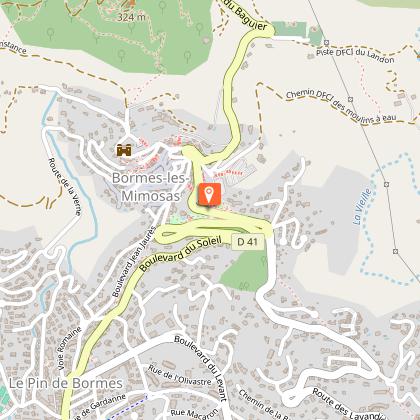
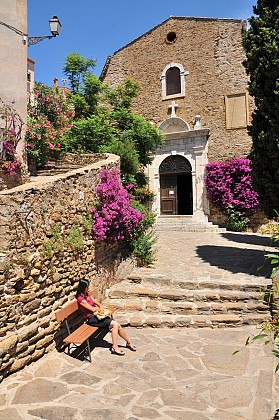
Welcome to Bormes-les-Mimosas, a gem in the Provence-Alpes-Côte d'Azur, where every landscape tells a story and every activity promises an adventure. During your stay at Camping la Griotte, don't miss the charming medieval village of Bormes-les-Mimosas. Stroll through its cobblestone streets lined with bougainvillea and discover the Saint-Trophyme church and the Seigneurs de Fos castle. Nature lov...See more

Walking around CAMPING LA GRIOTTE

See more suggestions
Walks and discoveries in CAMPING LA GRIOTTE.
See more suggestions
Tour 3: Once upon a time there were Trees, Plants and People
7.4 km

Tour 3: Once upon a time there were Trees, Plants and People

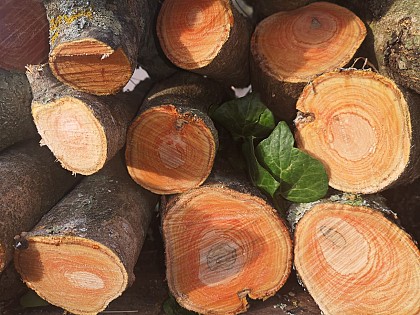
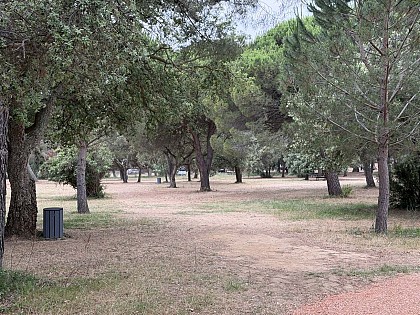
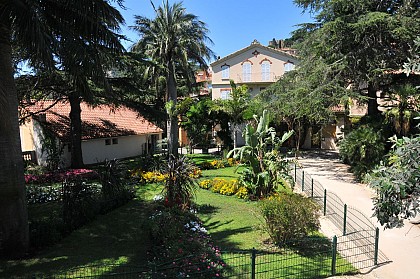
On this tour, you'll discover a heritage of remarkable trees, natural areas, parks and gardens, buildings and skills linked to the use of plants, revealing just a few facets of the relationship between plants and man. On this tour, you'll discover a heritage of remarkable trees, natural areas, parks and gardens, buildings and know-how linked to the use of plants, revealing just a few facets of the relationship between plants and mankind. At a time when everything moves so fast, it's important to remember that there is another kind of time. It's a time for slowness, seasons, patience and respect for the environment in the name of serene growth. This is the time of trees and plants Whether they are there by natural enchantment, or thanks to the hand of man, these living beings delight the eyes and awaken the hearts as a major element of local culture. While cherishing this resource, generations have managed to tame it, exploit it and develop their know-how. At the heart of France's leading forestry department, the communes of Méditerranée Porte des Maures are bursting with plant species. Remarkable trees and gardens, parks and natural areas, know-how and traditions, built heritage - these are just some of the things you can get to know. As a precious resource that is sometimes overlooked, a magical instrument for cleaning up pollution and the home of rich ecosystems, everyone today recognises the importance of preserving them. To better appreciate and protect these species, we need to recognise them. > Cuers Located at the western gateway to the crystalline Maures massif and the limestone massifs, and home to four Zones Naturelles d'Intérêt Écologique Faunistique et Floristique (Natural Areas of Ecological, Faunistic and Floristic Interest), Cuers has always been influenced by this plant environment. There is a strong link between its inhabitants, its topography and this highly varied vegetation. As far back as Antiquity, the Ligures set up their oppidum on the hills to protect themselves. Since then, the area's inhabitants have continued to live together in this way. The natural environment is conducive to a number of crops (cereals, tobacco, potatoes, hemp, flax, vines and olives) and gentle farming methods (bees, silkworms). Collobrières Nestling like a pearl in the heart of the crystalline Massif des Maures, the commune of Collobrières benefits from a mild Mediterranean climate, marked in particular by the presence of scrubland, cork oaks, hundred-year-old chestnut trees, arbutus and cades. The area around the village offers some remarkable walks, and is already revealing a wealth of biodiversity that will delight lovers of unspoilt nature, protected by a village that has been awarded 3 flowers under the "Villes et Villages Fleuris" (Towns and Villages in Bloom) label, as well as the "Village Nature 2 libellules - Territoire engagé pour la Nature" (Nature Village with 2 dragonflies - Territory committed to Nature) and "Villages de Caractère du Var" (Character Villages of the Var) labels. Pierrefeu-du-Var Due to its geographical location, Pierrefeu-du-Var benefits from a green setting that is ideal for hiking and discovering the flora and fauna of its waterways. Built on the first foothills of the Massif des Maures, it overlooks a vast, renowned wine-growing plain and wooded areas with typical Mediterranean scrubland vegetation, originally represented by white oak and cork oak. For many years, the link between nature and man has been an essential element in the economic development of the region, and this has been maintained to this day. > La Londe les Maures The part of the Maures massif that lies within the territory of Hyères was referred to as "forêts gastes" in the 17th century. The Norman origin of the name La Londe, "lund", means clearing, cleared forest. In order to exploit its resources and cultivate this land suitable for farming, man had to develop it. The first representatives of the commune, which was created in 1901, felt that "les Maures", which gained in value during the 19th century, deserved to add to its toponym. The latter is emblematic of the importance of the forest, which covers 75% of the territory, with wooded areas stretching right down to the seaside. > Bormes les Mimosas When you think of its name, you realise how important trees have always been to the village and its inhabitants. Bormes, classified as one of the "Most Beautiful Villages in France", is associated with an emblematic tree, the Mimosa, but its plant palette also includes remarkable trees and exotic species. In exchange for their care and respect, this forest and these trees have provided a living for entire families. At Bormes les Mimosas, mankind has come to realise that a close relationship with nature will bring him fulfilment, peace, fruitful exchanges and pleasures for the senses. Le Lavandou One flower, then two, then three... Le Lavandou's passion and the attentive care it lavishes on its environment and green spaces have gone to great lengths to create a bouquet of a thousand colours and a thousand scents... all the way to this coveted 4th flower, which honours the city of dolphins and whales with this exceptional label on the list of "Cities and Villages in Bloom in France". But as well as following the "Circuit des espaces fleuris" in the town centre, a visit to Le Lavandou also means taking a walk in the natural setting of the Saint-Clair terraces and discovering the many species in the resort.

6 h
208 km
Easy
775 Avenue de la Baie des Îles 83250 La Londe-les-Maures
Show
La Londe discovery tour - Between land and sea
7.9 km

La Londe discovery tour - Between land and sea

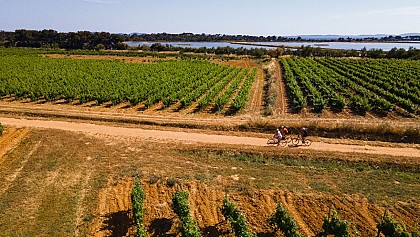
A walk between the village and the seaside along many vineyards. It can be used by all (mountain bikes, gravel bikes, VTC) and combines the Annamites promenade with the Garenne promenade. You will enjoy this complete tour of the commune thanks to the La Garenne and Annamites walks. You will also take part in the coastal cycle route. This easy walk will allow you to discover all the landscapes of La Londe: village, vineyards, hills, beaches and port. Ready? Then saddle up! Your walk starts in the town centre from Avenue Clémenceau, head west to pick up the coastal cycle route over 1 km. Arrive at the Garenne roundabout, cross the road to take the promenade of the same name. Head south towards the sea! You will then walk along the vineyards in the shade of the holm and cork oaks. You can then admire the view of the Vieux Salins d'Hyères and its pink flamingos. Pass along the campsites towards the Bastidon pine forest. There you are, the sea is there! Head east, towards the port and Miramar beach. A small diversions behind the Capitainerie (harbour office) allows you to cross to the other side of the Maravenne rainwater channel. Walk along the quay then follow the seafront to the Argentière pine forest. It's time to head back towards your starting point, via the Annamites promenade, which is particularly shaded under the pines! PRATICAL INFORMATION: - The Père Jacques-Hamel car park is located 150 m from your starting point. - The Annamites and Garenne promenades can be done individually in A/R. - Bring sun cream and water.

45 min
11 km
Very easy
3 Avenue Georges Clémenceau 83250 La Londe-les-Maures
Show
The Landing of Provence
8.2 km

The Landing of Provence

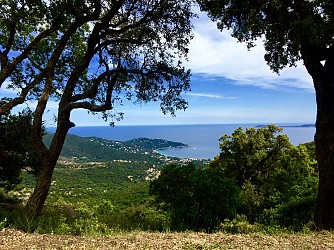
After the Armistice of June 1940, defeated, France collaborates with the Third Reich. Following the Allied landing in North Africa and the scuttling of the French fleet in the port of Toulon, in November 1942, General de GAULLE in 1943 tasked General GIRAUD, to reorganize in North Africa, a French army with American material support. The Allies imagine to fight the occupation troops by the North (Operation OVERLORD in Normandy) and the South (Operation DRAGOON in Provence). The coast of the Moors (la côte des Maures) appears then as the only place likely to escape the coastal batteries of the Toulon area. Two months after the landing of Normandy on the 6th of June of 1944, the Allies get the green light. On the night of August 14 to 15 in 1944, the African commandos, the first French soldiers on the soil of Provence, stormed Cape Negro, the naval assault group, the Esquirol point, the Canadians and American rangers the Golden Islands. American parachutists are dropped in the plain of Muy. On the morning of August 15th, American divisions land at Cavalaire; for eight days, those of the Army of Africa land in a continuous flow on the beaches of Cavalaire, Dramont, Nartelle to liberate the occupied towns and villages in Var. Go back in time and discover the town’s liberation’s highlights of Le Lavandou and Collobrières on August 15, 1944, Pierrefeu du Var and Bormes les Mimosas on the 16th, La Londe les Maures and Cuers on the 17th.

9 h
91 km
Medium
Avenue Henri Matisse 83250 La Londe-les-Maures
Show
The Gaoutabry dolmen
9.9 km

The Gaoutabry dolmen

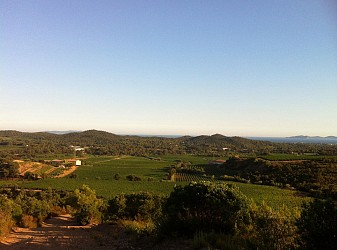
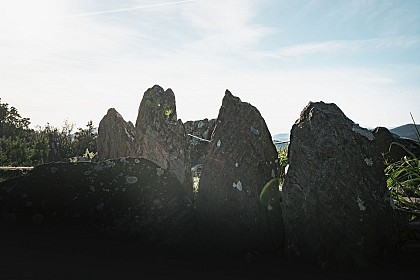
A walk in the heart of the Massif des Maures to discover the largest dolmen in the Var. This hike begins in the Pansard valley, an ideal starting point for exploring the natural and historical riches of the Maures massif. From the first climbs, you'll be immersed in typical Mediterranean vegetation, with arbutus, heather, rockrose and cork oak, typical of the maquis. The route takes you to the Gaoutabry dolmen, the largest megalith in the Var and an impressive testimony to prehistoric times. This listed site is surrounded by an enclosure, which you can cross to get a close-up view of the remains of this funerary structure. This walk will also take you through the vineyards and allow you to admire the pretty views over the sea, La Londe les Maures, the Salins d'Hyères and the Golden Islands. At the end of the route, the walk will take you to the hamlet of Notre-Dame-des-Maures. Did you know? The dolmen is a collective tomb dating from the Neolithic period and is listed as a Historic Monument. The presence of this structure suggests the past existence of a community with strong beliefs in the cult of the dead. PRACTICAL INFORMATION: - Depart from the Notre Dame des Maures piste car park on the Collobrières road (D88). ADVICE AND RECOMMENDATIONS: - Bring hiking boots or trainers, water, hat or cap. Always keep informed about the weather conditions. During the hunting season, stay on the marked trails. In the event of an emergency, call 112. From June to September, before driving in the Var mountain ranges, check the opening conditions on the fire risk map (updated at 5pm every day for the following day) or by calling the tourist office.

3 h
7.2 km
Very easy
D88 Route de Collobrières 83250 La Londe-les-Maures
Show
The Dolmen of Gaoutabry
9.9 km

The Dolmen of Gaoutabry

A mountain bike or gravel bike route in the heart of the Massif des Maures to discover the largest Dolmen in the Var. Take advantage of the panoramic views of the Maures massif and Notre Dame des Anges on the hillside as well as the Golden Islands and the Giens peninsula on the sea side. At the top of a small sunny hill this loop in the heart of the Maures massif will delight all nature lovers. Discover the secrets of the Dolmen de Gaoutabry, its magnificent panorama, and the very special vegetation of the Provençal maquis. Start from the free car park at the foot of the Notre Dame des Maures track. Take the DFCI track - Notre Dame Des Maures / Dolmen de Gaoutabry which rises slowly through the vineyards of the Maures. Follow the direction of the Dolmen and continue to the top of the hill to reach an open area. A little more effort and you will arrive at the prehistoric site from where you can observe the panorama of the Maures with, among other things, the relay at the top of Notre Dame des Anges, the Coudon, the Mont Faron. Once you have taken a short nature break, continue on a wider track, and after a few hundred metres, observe the panorama of the Iles d'Or and the Giens peninsula to the south and west. Continue your descent to reach the vineyards and olive groves. You will cross the hamlet of Notre Dame des Maures, then take a path along the vineyards that will lead you back to your starting point. PRACTICAL INFORMATION: - Bring sun cream and water. Regulated access: Traffic and parking of any motorised vehicle on the DFCI roads is prohibited all year round. From June to September, before driving in the Var massifs, check the opening conditions on the fire risk map (updated at 5pm every day for the following day) or by calling the tourist office.

45 min
7.4 km
Easy
1971 Route de Collobrières 83250 La Londe-les-Maures
Show

What to do in CAMPING LA GRIOTTE

See more suggestions
Enjoy the activities available in CAMPING LA GRIOTTE for moments of relaxation and fun.
See more suggestions

What to visit in CAMPING LA GRIOTTE

See more suggestions
Shop in the boutiques of CAMPING LA GRIOTTE.
See more suggestions

Where to eat in CAMPING LA GRIOTTE

See more suggestions
Experience CAMPING LA GRIOTTE's gastronomy.
See more suggestions

Where to sleep in CAMPING LA GRIOTTE

See more suggestions
Discover available accommodations around CAMPING LA GRIOTTE.
See more suggestions
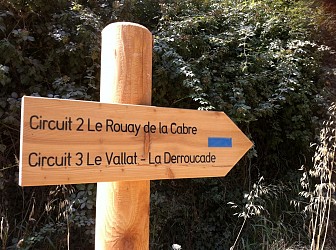
Caution!
We have no information on the difficulty of this circuit. You may encounter some surprises along the way. Before you go, please feel free to inquire more and take all necessary precautions. Have a good trip! 🌳🥾