Tours
Activities
Places of interest
Where to eat
Where to sleep

Camping Caravaning: Explore Verneuil-sur-Seine and its treasures

Are you the owner?
Located in Yvelines, Verneuil-sur-Seine offers a wealth of activities and attractions to discover during your stay at Camping Caravaning. Take a scenic walk along the banks of the Seine, admiring the natural beauty of the region. History enthusiasts will enjoy the nearby Saint-Louis de Poissy Basilica and the captivating Thoiry Castle and its wildlife park. Nature lovers can explore the Saint-Quen...See more

Walking around CAMPING CARAVANING

See more suggestions
Walks and discoveries in CAMPING CARAVANING.
See more suggestions
Historic houses of Saint-Germain-en-Laye
14 km

Historic houses of Saint-Germain-en-Laye

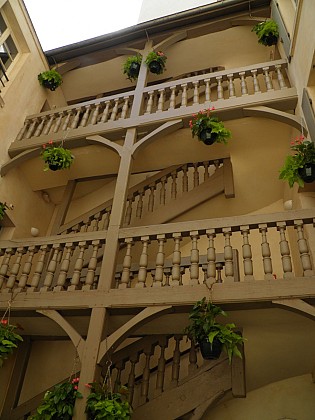
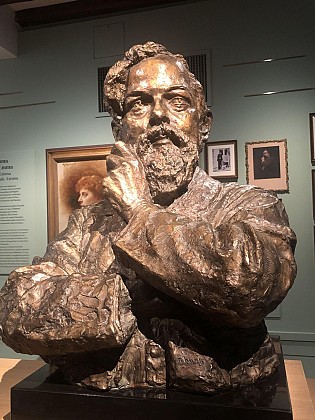
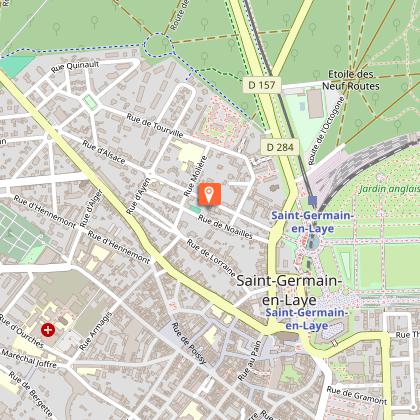
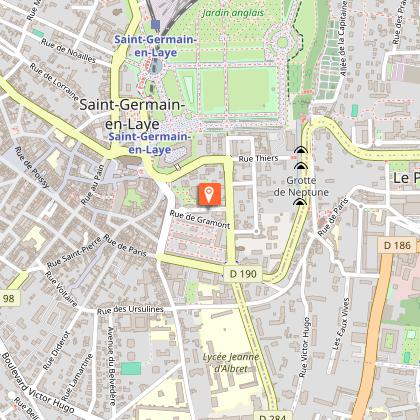
Saint-Germain-en-Laye is one of the most interesting historic towns of the Paris region. It has retained its urban fabric from the Middle Ages, as well as its pre-17th-century winding streets and cul-de-sacs. Starting point - Courtyard of the house where Claude Debussy was born No. 38 Rue au Pain In the courtyard, observe the beautiful stairway and wooden banisters, the only one remaining in Saint-Germain-en-Laye. It dates from the late 17th century. Take the steps up to the first floor. This is the Claude Debussy museum. The composer was born here on 22 August 1862. His parents lived in a modest ground-floor flat and ran an earthenware and porcelain shop. The upper floors were occupied by other families. Stage 1 - Rue de la Salle Thus named since 1640 in honour of the captains who governed the town, but also because it housed a hall (“salle”) where the residents would meet. - at no. 16: This is the oldest house in the town. Half-timbered, it is typical of the late Middle Ages. The façade has been restored. - at no. 18: Hôtel des Maréchaux de Villeroy. Owned by Nicolas de Neuville, governor under Louis XIV, and later by his son François, who was also a governor but under Louis XV. Stage 2 - Rue du Vieil Abreuvoir At the street entrance there was a large watering pond but it was demolished in the 18th century to make way for the “coche”, the public vehicle that was the ancestor of the “diligence” stagecoach. - at no. 24: Hôtel “de la Feuillade”. This mansion belonged to the Duc de la Feuillade. He was a great admirer of King Louis XIV, and erected a statue in his honour at Place des Victoires in Paris. - at no. 23: Hôtel de la Marquise de Maintenon. Mistress and, later, the second wife of Louis XIV, she purchased this mansion in 1680. The impressive wrought iron balcony dates back to 1880. - at no. 22: Hôtel de Montausier. Mansion owned by the Duc de Montausier, governor to Louis XIV’s eldest son. The future Maréchal Lyautey also lived here, from 1887 to 1891. He was just a Captain at the time. Stage 3 - Rue des Coches So named since 1700 because it was the departure point of the public “coche” stagecoaches travelling to neighbouring towns, including Paris and Versailles. - at no. 17: Hôtel de Guise: this private mansion was owned by Henri II de Lorraine, Duc de Guise and grandson of the “Balafré” (“slashed face”). Albert Alain, the famous organist from Saint-Germain-en-Laye, was also born here. Stage 4 - Rue des Vieilles Boucheries The street was named after the meat market that was here in the Middle Ages. The street was closed by a gate at night to dissuade thieves. Stage 5 - Cour Larcher Access to the courtyard is from Rue de Paris between nos. 40 and 42. It is named after Regnault Larcher, who was an archer for King Philippe Auguste who founded a “Maison Dieu” here. This little hospital sheltered the poor of Saint-Germain-en-Laye, as well as pilgrims and travellers. Stage 6 - Allée des Récollets A narrow passageway on the site of the ancient Recollects convent. The Recollects were part of the Franciscan order and were initially protected by Henri II and Catherine de Medicis Stage 7 - Rue Voltaire Named in honour of the philosopher of light who spent two months at Saint-Germain-en-Laye in 1729. - at nos. 2 to 6: Hôtel de Fieubet. Gaspard de Fieubet, advisor to King Louis XIV, acquired and embellished this mansion. It was reworked in the 19th century, unlike the one next to it (at no. 8) which has remained in its 18th century state. Stage 8 - Rue / Place Saint-Pierre - at no. 19: Hôtel de Folard, an 18th-century knight, soldier and military strategist. To the right of the door, a height marker decorated with the crown and royal cradle, indicates our altitude: 65.838 metres above the River Seine. At Place Saint-Pierre, the Colbert fountain originally faced the Château. It was restored, moved here and inaugurated in 1989. Stage 9 - Rue du Gast It has borne this name since 1700 in reference to a family of public figures, one of whom was a notary under Henri IV, another was a “garde manteau”, or forestry officer, under Louis XIV. - at no. 6, the façade features a little niche which shelters a statue of Saint Christopher. Opposite, through the wrought iron railings you can see the gardens of the Hôtel de Créquy, to which the entrance is located on Rue de Paris between nos. 10 and 12. Stage 10 - Rue du Vieux Marché The markets took place in this street from the moment they were initiated by François Premier in 1526. At the end of the 18th century, it was decided to move them to what is now Place du Marché Neuf, between Rue de Pologne and Rue de Poissy. Stage 11 - Rue des Louviers There are several theories as to where the term “louviers” comes from. It may be a deformation of the word “louvetier” meaning the officer serving as the Royal Wolfcatcher. Or, it may be a reference to the sheet merchants who came from the town of Louviers in Normandy. - at no. 15: The Institut Saint-Thomas-de-Villeneuve, the town’s oldest school, is still in use. - In the recess at no. 34, a niche shelters a statue of Saint Peter. Stage 12 - Rue des Ecuyers So-named since 1618, probably in reference to the numerous knights who lived in Saint-Germain-en-Laye along with their horsemen (“écuyers”). Opposite the school, you can see the coat of arms of Saint-Germain-en-Laye: a crib on a blue and gold background, with a fleur-de-lys. The inscription “5 septembre 1638” recalls the birth date of Louis XIV, who was born in our town. Stage 13 - Rue de la République - at no. 11: The chapel of the Institut Saint-Thomas-de-Villeneuve mentioned above (cf. Stage 12) features a peristyle built in 1788, with 4 Ionic columns. - nos. 24 and 26: Hôtel particulier of Henri d’Orléans, Duke of Longueville, whose second wife, Anne-Geneviève de Bourbon, sister of the Great Condé and the Prince of Conti, was renowned for her great beauty in the 17th century. The mansion was entirely reworked in the 19th century. - at no. 27: An 18th-century building that has remained intact since its construction. The small balconies are Louis XV. Stage 14 - Rue de Pontoise - at no. 16: Hôtel de Ville de Saint-Germain-en-Laye, established here in 1842 in the former Hôtel de la Rochefoucauld which dates from the 18th century. Stage 15 - Rue d’Alsace - at no. 11: Hôtel de Noailles. The sumptuous mansion of the three Dukes of Noailles, who were town governors until the French Revolution, was built by Jules Hardouin-Mansart. Mozart stayed here in 1778. Stage 16 - Rue Roger de Nézot Named after Roger de Nézot, who was a town councillor of Saint-Germain-en-Laye in the days of the Prussian occupation (1870-71). - at no. 9: Hôtel de Bontemps, who was Louis XIV’s first valet de chambre and confidant. Stage 17 - Place Charles de Gaulle You are standing opposite: • The Château-Vieux, which now houses the National Archaeology Museum. • The gardens of the National Domain. • Saint-Germain Church and its peristyle with 6 Ionic columns. Definitely worth a visit!

2 h
2 km
Very easy
38 au Pain Maison natale Claude-Debussy 78100 Saint-Germain-en-Laye
Show

What to do in CAMPING CARAVANING

See more suggestions
Explore the many bookable activities in CAMPING CARAVANING and make the most of every moment.
See more suggestions
La Maison Fournaise Renoir the immersive experience
18 km

La Maison Fournaise Renoir the immersive experience

The Fournaise museum proposes a meeting with the artist during a show, punctuated by digital animations and videos, in the middle of the atmosphere recreated by the sets of theaters. of the museum. One hundred years after his death, Renoir is back in Chatou hologram! Familiarly, he tells us about his vision of painting, the harsh criticisms of his contemporaries, his workshop secrets, his loves, his relatives ... and the fertile inspiration drawn from the banks of the Seine. At the time of the first scandals, Durand-Ruel and some amateurs give him a decisive support by buying him paintings. Alphonse Fournaise is one of the first! He ordered his portrait and that of his daughter for 200 francs. For more than ten years, Renoir made frequent stays at home and around Chatou where he painted about thirty paintings. Aged nearly forty, he began the ambitious Breakfast of the Boaters. This painting, painted on the balcony of the Maison Fournaise, is the result of long research. The painter feels then that he has arrived "at the end of impressionism". This great admirer of the masters of the Italian Renaissance dreams of making this work a bridge between Veronese, Raphael and the modern life of his century. Retained at the Fournaise by his painting in 1880, he wrote to Monsieur de Bellio: "You will not regret your trip. It is the most beautiful place around Paris. " To complete your experience in the footsteps of Renoir, go back in time on the Fournaise hamlet thanks to the virtual reality helmets, wander among the characters of the Breakfast of the boaters with the tactile tablets or create your own work according to the master in painting Virtual. In this unprecedented show, technology offers an innovative, fun and surprising approach to an immersive journey in the heart of the painter's Impressionist years in Chatou. - Departures of visits every 30 minutes. Come 15 to 20 minutes in advance. - Duration of the show: about 60 minutes

3 rue du bac Île des Impressionnistes 78400 Chatou
Book from 0 €Book
Show
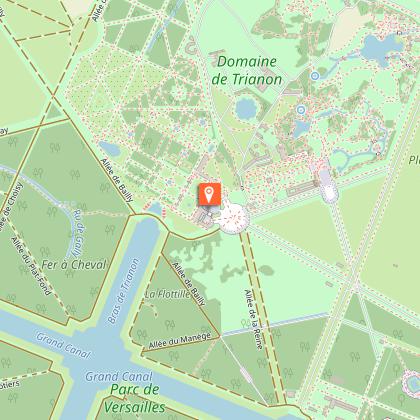
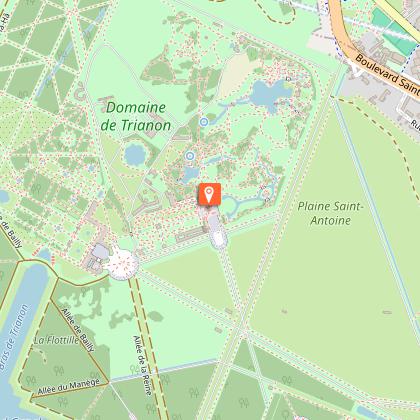
The Petit Trianon
22 km

The Petit Trianon

The Petit Trianon was built between 1763 and 1768 by the architect Gabriel, requested by Madame de Pompadour, mistress then friend of king Louis XV. Madame de Pompadour, who wished to “relieve the king’s boredom” — though no longer his mistress, she remained his friend — was the instigator of this small château, built by architect Gabriel between 1763 and 1768. It was erected near the Botanical Garden and the new menagerie, as Louis XV had a keen interest in the sciences. To please the marquise, always at the forefront of fashion, the king’s architect broke away from the rococo aesthetic and adopted a cubic form with very pure lines, in keeping with the brand-new “Greek style” then in vogue. Its simplicity is only apparent, for each façade is different, designed in relation to the space it overlooks: the courtyard, the French Garden with its elegant pavilion, the Botanical Garden, and the Florist’s Garden. Inside, one finds the same modernity of style. Simpler than the rest of the estate, the decoration of the Petit Trianon lies not in lavish materials — gilding is almost absent — but in the refinement of its sculptures, in a château entirely dedicated to nature. Madame de Pompadour died in 1764 and never saw the château completed. Today, it is above all the memory of Marie-Antoinette that it evokes. In 1774, Louis XVI gave the Trianon estate to his wife, who was able to live here a life apart — too much so for some — from the Court.

Château de Versailles 78000 Versailles
Book from 12 EURBook
Show
Palace of Versailles All Access Passport Entry with Audioguide
24 km

Palace of Versailles All Access Passport Entry with Audioguide

ArrayYour Experience Use Your Passport to Tour the Château de Versailles Your ticket gives you access to the most famous places within the royal estate including the Royal Palace, the Park, Gardens, Marie Antoinette’s Estate, and entry to any exhibitions on show at the time of your visit. If you plan to visit on a Friday, Saturday or Sunday, it’s worth paying the extra €8 for an upgraded Passport ticket, which includes access to the Musical Fountain and Garden shows. Learn About the French Monarchy with the Help of a Multilingual Audio Guide Upon entering the Palace, collect your complimentary audio guide from one of the two pick-up counters located on the ground floor, one at the entrance to the Apartment Ladies and the other at the entrance to the Gallery of Castles. Audio guides are available in 11 languages: Spanish, Chinese, English, French, German, Italian, Japanese, Korean, Polish, Portuguese and Russian. Begin your visit by exploring the ornate King and Queen's State Apartments. Learn about the French monarchy and peek into the private lives of the infamous King Louis XIV and Marie Antoinette. Next, make your way to the glittering Hall of Mirrors. Designed to protect the ornate walls and ceilings from smoke, the hall’s 357 mirrors were strategically placed to reflect the light of candles. With just a few flames, the reflection from so many mirrors was enough to light up the whole hall! Explore 250 Acres of Gorgeously Landscaped Lawns and Fountains After admiring the inside of the Palace, head outdoors and take in the grandeur of the estate’s impressive architecture. Stroll along the cobblestone grounds, through the beautiful French gardens, and pass by the gorgeous Versailles fountains. Next, stop by the Estate of Marie Antoinette and discover the life and antics of the Queen at the Petit Trianon. Walk around the Village of the Queen and English gardens, then see where Marie Antoinette built her own house, a Mill, a Preparation Dairy, a Cave, a Belvedere and the magnificent Temple of Love where lovers get engage. At the Carrosses Gallery, travel back in time as you explore carriages, coaches, sculptures and other artifacts left behind by the French Monarch. If you’re short on time and would prefer to skip the long lines, a Versailles skip-the-line entry ticket will allow you to save your time. If you’d like to maximize your time at the palace of Versailles and get a more in depth Castle experience, click here. Each year, it is estimated that approximately 5 million people visit the Palace of Versailles, and between 8 and 10 million people walk its gardens. A place of immense beauty, Versailles stands as a symbol of France’s monarchy and its glorious history.

Book from 20 EURBook
Show
Palace of Versailles
24 km

Palace of Versailles

Since 1979, the Palace of Versailles has been listed as a UNESCO World Heritage Site. It stands as one of the finest masterpieces of 17th-century French art. The Palace and the Trianon Estate are open every day, except Mondays. The Palace opens at 9 a.m., while the Trianon Estate opens only from 12 p.m. The Park and Gardens are open daily with free admission (access to the Gardens is ticketed on the days of the Musical Fountains Shows and Night Fountains Shows, as well as during the Musical Gardens). You can only access the Park via: the Queen’s Gate (Grille de la Reine, entrance for pedestrians, cyclists, and vehicles every day), the Saint-Antoine Gate (Porte Saint-Antoine, pedestrians and cyclists every day, vehicles only on weekends and public holidays), the Matelots Gate (Grille des Matelots, pedestrians and cyclists every day), from 7 a.m. to 8:30 p.m., with last entry at 6:15 p.m. in high season, and from 8 a.m. to 6 p.m. in low season. By exploring the Hall of Mirrors, the King’s State Apartments, and the Museum of the History of France, you step into a palace that, until 1789, was the heart of royal power and continued to evolve over the centuries. Originally, Versailles was nothing more than a hunting lodge built by Louis XIII. But it was here that Louis XIV chose to construct the majestic palace we know today, a symbol of absolute monarchy and French classical art. In the 1670s, Louis XIV commissioned the construction of the King’s and Queen’s State Apartments. The most emblematic creation of these ceremonial spaces is undoubtedly the Hall of Mirrors, designed by Mansart. During the following century, the palace kept expanding, with major works such as the Royal Chapel and the Opera. Today, the Palace covers 63,154 m², spread across 2,300 rooms. Although the Palace lost its role as the seat of power in 1789, in the 19th century it was given a new purpose: to become the Museum of the History of France, an idea launched by Louis-Philippe, who ascended the throne in 1830. Many rooms of the palace were then transformed to house collections recounting the great moments of French history, enriched until the early 20th century.

Château de Versailles Place d'armes 78000 Versailles
Book from 22 EURBook
Show
Equestrian Academy of Versailles
24 km

Equestrian Academy of Versailles

Since 2003, in the heart of the Grande Écurie of the Palace of Versailles, the Académie Équestre de Versailles has embodied an exceptional project: bringing together French classical riding tradition and contemporary creation. Founded by Bartabas, this unique company-school welcomes rider-artists and trains them in equestrian art, with absolute respect for oneself and for others. Transmission and excellence shape their daily life. “I wanted to create a school; a new kind of school, a sort of company-school where a philosophy of ‘living together’ could be invented, a school where horses would teach us to work in harmony, with respect for others, a school in perpetual motion, evolving at the rhythm of a human and a horse learning from one another. I imagined this Academy as a high-level school, capable of training rider-artists, but also as a place of personal fulfilment, a place where beautiful people are shaped. I never considered the act of transmission to be limited to passing on technique or know-how to others,” Bartabas – Extract from *Manifeste pour la vie d’artiste* Visitors are invited to discover a world apart, between light, discipline and poetry, offering an insight into every aspect of equestrian work. Every weekend, the Academy opens its doors for a singular experience: the discovery of its repertory performance, *La Voie de l’écuyère*, followed by a self-guided visit of the stables. SEASON PERFORMANCE “La Voie de l’écuyère”: every ballet corps needs a repertoire Emblematic of the Academy, *La Voie de l’écuyère* presents High School dressage placed at the service of sensitivity and emotion. The narrative thread remains faithful to the spirit of the original creation: the scenes evolve over time, along with the expertise of the riders and horses. Every weekend, this repertory performance choreographed by Bartabas reveals the work of the Academy. Based on the transmission of knowledge, it revisits its emblematic scenes, such as the horseback fencing routine or the ballet of Sorraia horses on long reins. Solos, pas de deux and carousels are punctuated by texts from great masters of equitation, bearing witness to the excellence of French classical dressage. All celebrate the precision and harmony of the bond between human and animal. AN EXCEPTIONAL SETTING An emblematic site of the Palace of Versailles, the Grande Écurie was designed in the 17th century by Jules Hardouin-Mansart at the request of Louis XIV. It once housed the king’s horses as well as the École des Pages, where young noblemen were trained in etiquette, dance, weapon handling and equestrian skills. A major centre of equestrian art, the Grande Écurie is the birthplace of French classical riding tradition, carried forward by the master riders of the École de Versailles and structured around the principles of lightness and balance, dear to François Robichon de La Guérinière. Today, it has reclaimed its artistic vocation. The Académie Équestre de Versailles continues this heritage while reinventing it: a living tradition, nourished by contemporary creation and dedicated to transmission. The presence of the Academy in the Grande Écurie thus continues the history of horses in Versailles and keeps alive, in a contemporary setting, the spirit of the great equestrian schools that shaped this place. PRACTICAL INFORMATION • Booking on acadequestre.fr or by phone on +33 (0)1 39 02 62 70 • 1-hour performance, followed by a self-guided visit of the stables • Prices: €17 to €36 • Performance recommended from age 5; admission not permitted for children under 4 • Venue: Royal Riding Arena of the Grande Écurie of the Palace of Versailles • Free seating in the riding arena • Recommended arrival: 30 minutes before the start of the performance

1 Avenue Rockefeller 78000 Versailles
Book from 17.5 EURBook
Show

What to visit in CAMPING CARAVANING

See more suggestions
Stroll through the historic districts of CAMPING CARAVANING.
See more suggestions
Domaine National
14 km

Domaine National

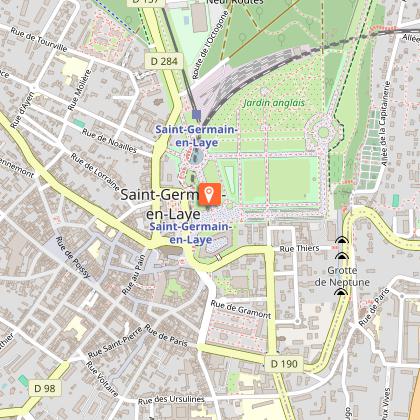
Many 16th-century kings and their landscape architects strove to make the Domaine National a rare gem featuring some of the most beautiful gardens of Ile-de-France. One of the main features of the Domaine de Saint-Germain is its famous Terrasse, which was designed by Louis XIV's head gardener, André Le Nôtre, and offers a superb view across western Paris. But the Domaine National also incorporates 70 hectares of protected spaces designed during the 16th, 17th and 19th centuries. Henri IV was the main person responsible for enhancing this park by building here, in the 16th century, a succession of six terraces leading down to the Seine, as well as arched galleries and some sumptuous grottoes. Later, during the reign of Louis XIII, the gardens lost their splendour, and it was Louis XIV who commissioned Le Nôtre to create new ones, from 1662 to 1674, giving rise to the famous "parterre de broderie" gardens. As a result, walkers and joggers benefit from the French gardens with suggestive names, such as the Boulingrin, the Grand Parterre and the Jardin de la Dauphine. As for the English garden, this was created in 1845 by the Crown Estate engineer, Loaisel de Tréogate. It was built on a parcel of forestland and features some remarkable trees. Nowadays, the Domaine attracts families, having adapted to become a recreational space with play areas and restaurants which open in the summer season for lunches and snacks.

Place Charles de Gaulle Domaine national du château de Saint-Germain-en-Laye 78100 Saint-Germain-en-Laye
Show
The old 'Prieuré' de Maurice Denis
14 km

The old 'Prieuré' de Maurice Denis

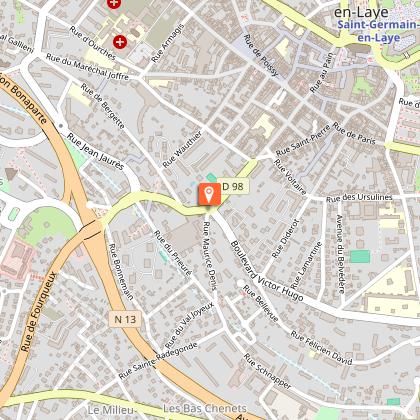
The Maurice Denis departmental museum conceals a dense history in the maze of its vaulted corridors and gives pride of place to symbolist and Nabis painters whose works are revealed during your journey. Discover a garden dotted with sculptures and planted with tall trees, below a terrace and a former 17th century hospital. Now listed as a historic monument, this imposing building built at the end of the 17th century at the request of Madame de Montespan was then a royal general hospital which welcomed the needy. In 1914 Maurice Denis acquired this building in the garden of which he already had a workshop. He restored it, named it "The Priory" and lived there with his family until the end of his life. The initial fund of the museum was constituted by an exceptional donation made in 1976 by the family of Maurice Denis. Since then, numerous donations and acquisitions of works by Symbolist and Nabis artists, this innovative artistic movement at the crossroads of the 19th and 20th centuries, have enriched it. Thus, alongside the works of Maurice Denis illustrating religious and family themes, intimate scenes, or landscapes of Italy and Brittany, are exhibited paintings by Sérusier, Bonnard, Ranson, Vuilliard,... among the friends of the artist. . Do not miss to enter the chapel of the old hospital, one of the treasures of the place. The unique decor is the most complete and characteristic religious pictorial ensemble of the artist. Tiered on the hillside, the garden in which the museum is nestled invites you to stroll by offering varied landscapes and a rich botanical trail. Around the museum, a first level decorated with sculptures by Antoine Bourdelle, a close friend of the owner of the premises, is made up of a shaded courtyard and a long terrace lined with lime trees and hundred-year-old yews. From there, you reach the alley of the rose garden and a vast green theater lined with tall trees. Below stretch the old orchard and the vegetable garden, embellished with a fountain and a pond. Strolling through this harmonious garden provides a better understanding of the importance of nature in the painter's work and life. The garden space is now the privileged setting for plastic arts workshops and open-air concerts... A museum and a collection to discover without delay in the heart of Saint-Germain-en-Laye! Attention people with reduced mobility will not be able to access the floors, the elevator was out of order for an indefinite period.

2 bis, rue Maurice Denis 78100 Saint-Germain-en-Laye
Show
Château-Vieux, an historical and architectural gem
14 km

Château-Vieux, an historical and architectural gem

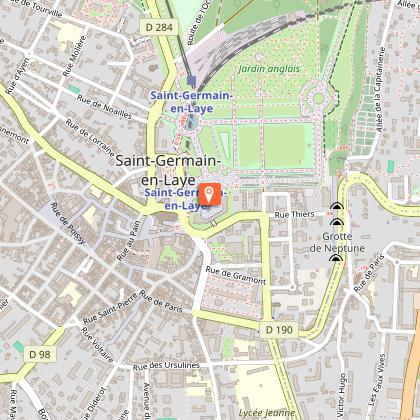
The Château-Vieux de Saint-Germain has welcomed many kings over the centuries, up to the time of Napoleon III, who turned it into the Musée d'Archéologie nationale that we know today. Come and learn about its history. / A ROYAL RESIDENCE / The imposing Château de Saint-Germain with its elegant Renaissance-style profile is in fact the third of a series that was begun by Louis VI in the 12th century. The first fortress, which became a ruin after the Hundred Years' War, gave way to a second building with a pentagonal shape commissioned by Charles V. It was François I who finally instigated the building of the Renaissance château, which was designed by Pierre Chambiges. François I and the kings that succeeded him stayed here often. Henri II continued the work initiated by his father and began construction of the Château-Neuf, where Louis XIV was born on 5 September 1638. It was Henri IV who finished this building. Overlooking the Seine, it was a real pleasure palace for the king and the court. The king added terraced gardens, which stretched down to the river. The Château-Neuf de Saint-Germain was at that time one of the finest in Europe. Under the reign of Louis XIV, Saint-Germain became the seat of the kingdom's government and the Château-Vieux was the king's main residence from 1666 to 1682, when the court left for Versailles; the layout of the city centre dates from this time. Some important events took place in the château, including the christening of Louis, Grand Dauphin, and the marriage of Mlle de Lois and the Prince de Conti; it was the scene of grand festivities, too: concerts, balls and theatrical performances. The King particularly favoured the worked of Molière and Lully. Towards the end of the 18th century, the Château-Neuf, which was already in a state of disrepair due to a lack of maintenance, was abandoned. Today, only a few remains, including the Rampe des Grottes and the Mur des Lions, recall its former existence. / TODAY'S MUSÉE D'ARCHÉOLOGIE NATIONALE / Napoleon III had the Château-Vieux restored by Eugène Millet, who notably destroyed the corner pavilions that Louis XIV had added. In 1867, the Emperor set up the 'Musée d’antiquités celtiques et gallo-romaines' here. Today, it houses the Musée d'Archéologie nationale. The old rooms of this Renaissance building display some of the finest archeological collections in the world. / THE CHÂTEAU'S COURTYARD AND CHAPEL / It was Louis IX, known as Saint Louis, who, in 1230–38, added a chapel whose style prefigured that of the Sainte-Chapelle de Paris. Many royal christenings and marriages took place here. Later, François I, adding bricks to stone, built the Renaissance château that you can discover today. And it was in the palace chapel that he married Claude of France on 18 May 1514. In the courtyard, a hidden trompe-l'œil presents itself to keen-eyed visitors. See if you can find it! As you enter the Rayonnant Gothic-style chapel, the oldest of the preserved buildings, look up and admire the corners of the rib vaults and their seven ronde-bosse heads, and have some fun seeing if you can spot that of Saint Louis! Free admission except during certain temporary exhibitions.

Place Charles de Gaulle 78100 Saint-Germain-en-Laye
Show

Where to eat in CAMPING CARAVANING

See more suggestions
Restaurants in CAMPING CARAVANING offer a variety of cuisines.
See more suggestions

Where to sleep in CAMPING CARAVANING

See more suggestions
Choose a comfortable accommodation in CAMPING CARAVANING.
See more suggestions
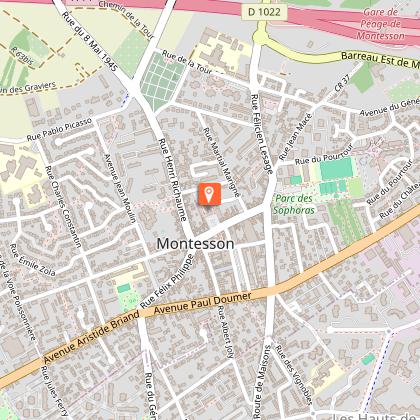
Campanile Montesson-Le Vésinet
16 km

Campanile Montesson-Le Vésinet

An entirely renovated Campanile hotel which invites you to enjoy the calm of this residential district of Montesson Located 15 km from Porte Maillot, our establishment offers a strategic position for business travellers in north-western Paris. Close to Saint-Germain en Laye, Le Vésinet, Port-Marly and Le Pecq, the hotel is easily accessible from the A86, A13 and A14 motorways. Le Vésinet-Le Pecq RER train station (line A serving La Défense and the centre of Paris) is a 15-minute walk away, Use your leisure time here to visit the Palace of Versailles or the Château de Maisons-Laffitte, both within easy reach of our hotel which proposes bright, modern 3-star rooms in Montesson. Our rooms are air-conditioned and sound-proofed and boast a contemporary style. Recently renovated in line with New Generation standards, they feature all the modern comforts needed for a restful stay. The hotel has 3 specially-adapted rooms to accommodate people with disabilities. To make your stay even more pleasant, you can also enjoy the television channels Canal + and Bein Sport, free of charge. We have a restaurant and terrace, as well as a secured indoor car park. In its lush green setting, our restaurant is open for breakfast, lunch and dinner. It is a modern, convivial venue that opens onto a shady terrace accommodating up to 35 people. Our chefs propose traditional French cuisine and seasonal dishes concocted from fresh ingredients. Our all-you-can-eat buffet menus for adults and children will satisfy every appetite,

9 Rue du Chant des Oiseaux 78360 Montesson
Show
Gîte Le chalet
28 km

Gîte Le chalet

This charming gîte is located in the center of a small village on the banks of the Epte, just a few kilometers from Giverny and Claude Monet's gardens. You'll need sunglasses and sunscreen to enjoy sunbathing in the one-hectare garden, planted with trees and meticulously tended. The lovely covered terrace is perfect for aperitifs. You'll be immersed in nature, and surprised by the season's hazelnuts, cherries... there's something for everyone! This comfortable chalet-style gîte, all decked out in wood, will be the starting point for beautiful bike rides on the voie verte, just two streets away, or on foot on the GR2, 5km away. For a real moment of adventure and fun, the canoe route, less than 3km away, reveals a whole new side to the Vexin Normand. Between the picturesque charm of Vernon, the Domaine de Villarceaux and its park classified as a Remarkable Garden, and La Roche Guyon, one of France's most beautiful villages, you won't have time to get bored. ON THE GROUND FLOOR: you pass through the pretty covered terrace to enter the bright, pleasant kitchen-dining room. It opens directly onto the small living room with its leather furniture and TV (sofa bed for emergency use). The corridor leads to the two double bedrooms: one a twin with 2 single beds, the other a double. A small step leads down to the bathroom with shower, washbasin and toilet. A large enclosed garden, half of which is private (approx. 5000m²), is ideal for playing pétanque, soccer or darts, and for letting your four-legged friends frolic about. Nathalie and Didier's house is at the front of the garden, and the gîte at the back has its own pedestrian access to the village, as well as a charging point for electric vehicles.

27630 VEXIN-SUR-EPTE
Show
Gîte La Grange
29 km

Gîte La Grange

This adorable little village house, in the heart of the Epte valley, has everything to seduce you! Amélie and Elodie have skillfully restored this old barn as a family and with all their heart to create a truly warm cocoon. If the soul of the building has been preserved with exposed stones and old beams, you will discover a very modern, bright and bathed in light interior. As for the decor, the whole is rather contemporary, combined with a few second-hand elements for a nice result. As for the equipment, everything is there for your comfort and to make you feel good: a living room with cocoon sofas, a top-notch kitchen to prepare good meals, a very beautiful bathroom ... Another strong point: an enclosed garden at the front and back of the house, with a large terrace and its elegant furniture where you can spend friendly moments around a good meal or games. In the village, you will find all the shops you want within walking distance. ON THE GROUND FLOOR: entrance to the living room with the lounge, connected TV, the dining area and the kitchen; the room opens at the back onto the terrace. Beautiful bathroom with a large walk-in shower, 2-sink unit, linen area with washing machine and dryer. Separate toilet. Upstairs, the 2 bedrooms: double bed and single bed in one (a pull-out bed is possible as a backup), 3 single beds in the second. The garden is fully enclosed (approximately 200 m²), at the front with a parking area as at the back of the house with the large terrace. In the village: food shops, restaurants, city stadium, pétanque ground, charging stations for electric vehicles. The region is very nice and rich, enough to occupy your entire stay and much more! Giverny, with Claude Monet's garden and house and the Museum of Impressionism (5 km), the Château de la Roche-Guyon (3 km), the Epte valley on foot, by bike or canoe (greenway and GR2), Vernon and its banks of the Seine...

75 bis rue de l'industrie 27620 GASNY
Show
Caution!
We have no information on the difficulty of this circuit. You may encounter some surprises along the way. Before you go, please feel free to inquire more and take all necessary precautions. Have a good trip! 🌳🥾