Tours
Activities
Places of interest
Where to eat
Where to sleep

Camping de la Trillonnière: Discover Mornant's Charms and Attractions

Are you the owner?
Nestled in the delightful town of Mornant in the Rhône-Alpes region, Camping de la Trillonnière is your gateway to a wealth of discoveries and adventures. Hiking enthusiasts can embark on numerous marked trails around Lake Ronzey, perfect for a day in the great outdoors. Explore the surrounding vineyards and savor the exquisite wines of Côte-Rôtie and Condrieu, true oenological gems of the region....See more

Walking around CAMPING DE LA TRILLONNIERE

See more suggestions
Discover the nature of CAMPING DE LA TRILLONNIERE on foot.
See more suggestions
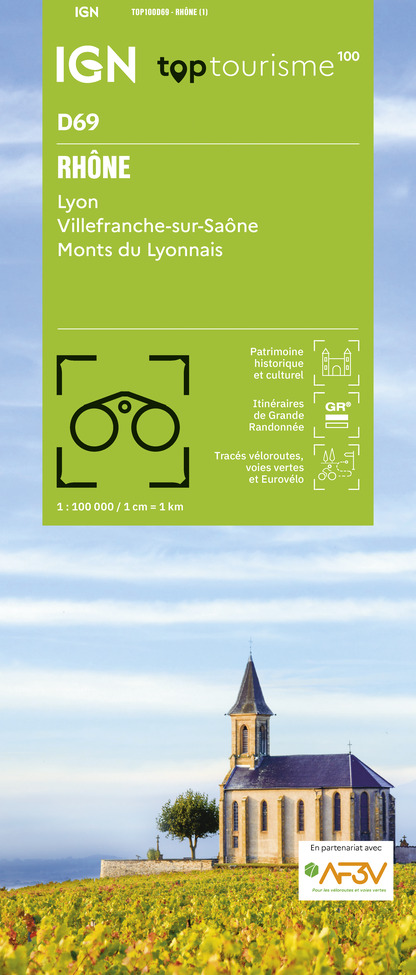
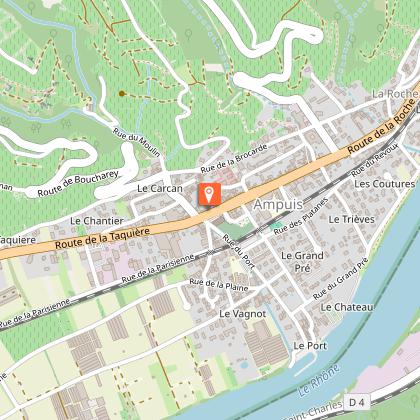
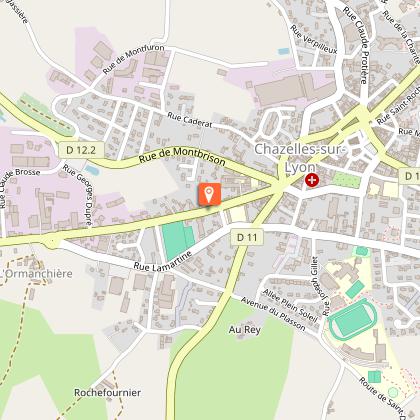
Vineyard path in Ampuis
16 km

Vineyard path in Ampuis

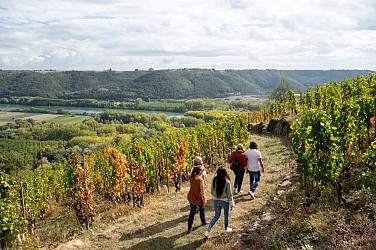
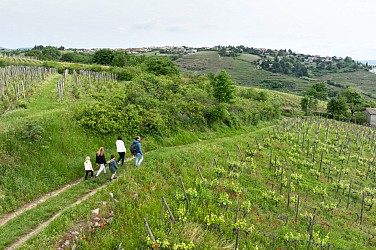
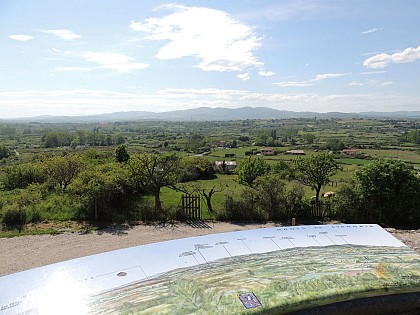
This walk takes you through the prestigious vineyards of Côte-Rôtie overlooking the majestic Rhône River. Go down the road towards Tartaras, and after 100 metres, take the dirt road on the left. Cross the brook and then the valley. Go up the path on the left to reach the Tartaras plateau. At the hamlet of Tartaras, take the municipal road on the left. Go downhill for 1 km and take the dead-end road. At the end of the paved section, stop to enjoy the hillsides, village, Rhône and the market gardening area. Then, take the dirt road on the left, and go down to the heart of one of the oldest and most prestigious vineyards in France. The path reaches a restored building: it's the Mill. Here, the Fongeant and Reynard streams become one. Follow the path and the stream in parallel to the D 386 road, then cross the square in front of the church. Return to the stream and take Rue du Port straight ahead to the Rhône. Here, every first Sunday and Monday of September, you can applaud the jousters and their Lyon or Givordine combat. On the left, go up the dead end by the port, continuing via Petite Rue du Port. Turn right and pass in front of the château, by Rue du Grand Pré. At the junction with Rue des Coutures, turn left onto Rue du Trièves. Take the underpass to cross the railway tracks. Then go up Impasse du Trièves to the D 386 road. Cross it and take Rue de Ritolas, opposite. At the crossroads, Rue du Jarre and Route de la Brocarde, take the dirt road opposite. Go around the house and you’ll find Coursière de Ritolas on your left. Up to the middle of the hill, the path is dirt and then tarred. Go straight up the municipal road for 2.5 km, and cross the hamlets of Ritolas and Giraud before arriving at the car park.

3 h
6.9 km
Easy
Parking du Giraud au croisement de la RD45 et de la route de Tartaras 69420 Ampuis
Show
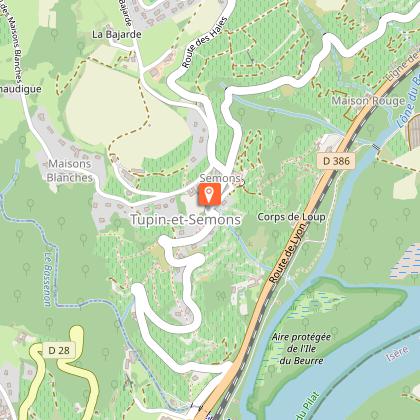
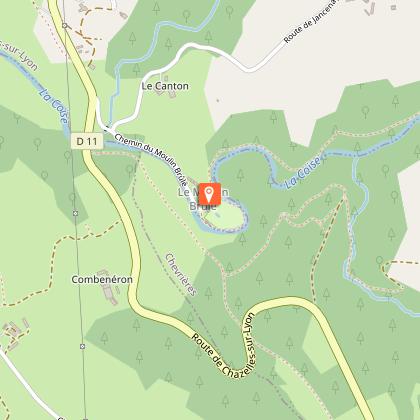
Hiking between the Rhône and the vineyards: Tupin, Condrieu, Semons
17 km

Hiking between the Rhône and the vineyards: Tupin, Condrieu, Semons

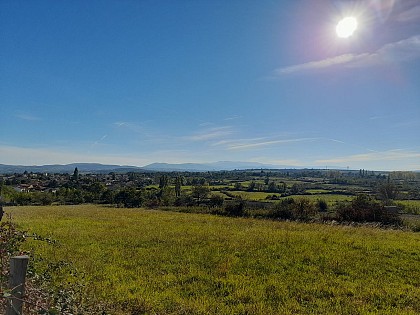
This hike lets you discover the Rhône’s river banks in the protected area of Ile du Beurre, the old part of the village of Condrieu and beautiful viewpoints of the market gardening plain of Ampuis and the steep vineyards of Côte-Rôtie. From the car park, cross the Lyon road, go around the chapel, then take the Lyon road for a few metres to the South (towards Condrieu). Immediately, take the small road that goes down to the left (Chemin des Gravières), pass the railway tracks and continue on this small road (Chemin de l'île de la Chèvre). At the end, turn right, going along the river bank. 1- Take the bridge on the right which crosses this tributary and continue on the track which follows the other bank of the tributary. When there is a choice between the ViaRhôna and the pedestrian path, choosing the latter, you enter the protected area of Ile du Beurre. At the end of the path, pass over a bridge that spans the Bassenon stream, just before its confluence with the Rhône. Turn left off the bridge to reach a kind of promenade that serves as a nature observatory. 2- Continue along the right bank of the Rhône (towards the South). Pass between a campsite and the Rhône. A little before the end of the campsite, you’ll discover the river port of Roches-de-Condrieu on the other bank. At the entrance to Condrieu, after a large coloured house (pink), turn right to go down about twenty metres to Place du Razat (restored houses), then go back to the quay. At the next street (Rue du Grand Port), do the same (restored houses) and then return. You arrive at a very pleasant place at the edge of the Rhône, pass under the bridge which spans the Rhône and continue onto the quay. Take the first right, Rue de Sauze, and immediately left to follow the Rhône quay again. 3- After 2 big plane trees, turn right (at a right angle), Place du Raffour. This small street looks like a dead end, go to the end and take the narrow passage between a house and a large stone wall, continue on this passage which turns right then left. Pass under the small stone railway bridge. Continue straight on Rue Henri Barbuse, cross the RN86 and continue straight on Rue du Marché aux Fruits. 4- Just before the brook, turn right onto Rue Eugène Genet, then first right into Rue de la Croix and first left into Grande Rue. Take the covered passage on the left into Rue Saint-Martin (just after No.22), and when you arrive at Place du Marché, turn right and follow Rue de Belfort. Take the second left, Rue Saint-Étienne, which goes up under the town’s old fortification gate. Then take the first street on the left, until you reach Rue de la Visitation. Take this covered passage, then the first passage on the right, where you find Place du Marché, take a right to cross the Arbuel stream and immediately after the bridge, turn right onto Rue Claude de Villard. At the junction with Montée de la Caille (dead end sign), take the bridge on the right, and go straight on to Rue Ecorcheboeuf. At the end of the street, turn left twice to take the Montée des Recollets. At the cemetery, go down Montée de la Tour, which runs alongside the cemetery on the right. When you reach the D28 (Montée du Rozay), go up for about 20 metres and then turn right on a pedestrian path, Rue de la Croix de l'Oiseau. 5- At the crossroads (4 roads), turn left on Rue Cuvillière, then the first right onto Rue de Croyez. When you reach the RN86, turn right and then immediately left into Allée de la Bachasse, which you follow until you reach the banks of the Rhône. On the left, take the path that follows the river, follow the direction "Retour vers collège de Bassenon", follow the stream to pass under the RN86 road and the D124. When the path arrives at paved parking, turn left twice. Turn back at the traffic roundabout and take the D124 for fifty metres. Just after the stream, at the Condrieu sign, turn left and immediately right onto the marked mountain bike (VTT) path. 6- At the Bassenon road, go up via the road on the left, which offers beautiful views of the valleys behind Condrieu. The road makes a hairpin to the right, and you’ll find the path marked VTT on the left. 7- Continue on this mountain bike track until the village of Semons, head for the belvedere by Chemin du Belvédère (see the view over the market gardening plain of Ampuis, almost to Vienne). Walk all the way around the church, and behind the church, pass under a porch to take the wide path on the left (not marked) that starts to descend into the vineyards. 8- Take the first track on the left, which goes back to the road (D124). Turn right and go all the way down by the road to enjoy the terraced vineyards, keeping a very clear view of the plain. At the bottom of this road, arriving at the D386 (old RN86), you’ll find the car park where you started.

4 h
11 km
Easy
Parking au croisement de la route de Lyon et la D124 69420 Tupin-et-Semons
Show

What to do in CAMPING DE LA TRILLONNIERE

See more suggestions
Explore CAMPING DE LA TRILLONNIERE through its many bookable activities.
See more suggestions
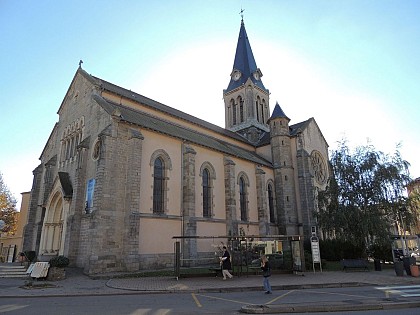
The Church "Saint-Clair"
9.2 km

The Church "Saint-Clair"

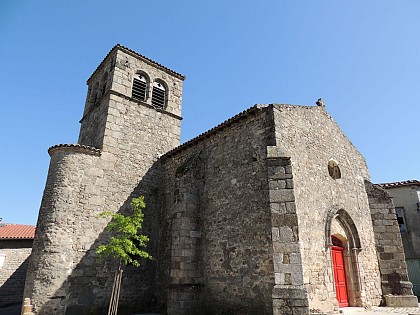
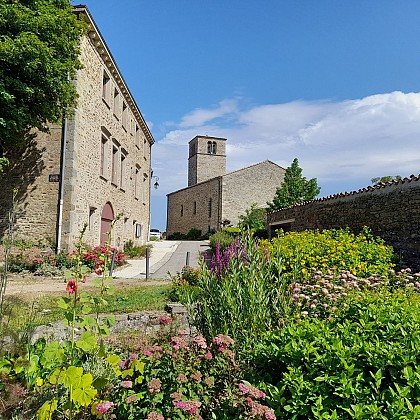
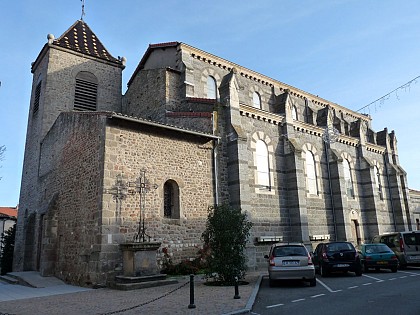
This church (19th century) is the most beautiful monument of the artistic heritage of Brignais. You can notice the bell, the organ, the woodword and the stain-glass windows. This church is the most beautiful monument of the artistic heritage of Brignais. Dedicated to Saint-Clair (590-660), patron saint of the blind and partially sighted persons, its first foundations dated from 1859. It was built on the place of the former feudal church and of the former cemetery. This church was built thanks to public subscriptions and town funds. The architect, Claire Tisseur, born in Sainte-Foy-lès-Lyon (writer of the "Littré de la Grand'Côte"*, and more famous, in France, under its pseudonym Nizier du Puitspelu.) and the abbot Rival, priest of the parish, presided the building of the monument. Thanks to its architecture and its furnishing, the monument forms a remarkable unity of ogival style of the 13th century, modernized in the 20th century. The woodwork (the pulpit, the confessionals and the stalls of the choir) is realised by sculptor Aubert from Lyon. The bell, dated from 1492, was listed in the "Inventaire des Monuments Historiques", on 27th November 1905. The organ was built by organ makers of the Jura mountains, Hartmann and Deloye, for the Benedictine community of Pradines (near the town of Roanne) in 1972. As it was for sale, the association "Les Amis de l'Orgue de Brignais", helped by the town hall, bought it in 1955. The size of the organ is fairly important (20 timbers). It integrates harmoniously the west transept of the church due to its dimensions. The organ builder, Hervé Clénet (from "Bectave-Aguin" - Gers department) and his assistant Jean Boissonade (from "Séverac l'Eglise" - Aveyron department), restaured the organ. The assembling, after restauration, was made by Jean Boissonade, helped by Maurice Crouzet and Jean-Marie Royet, from Brignais. The stain-glass windows : the five large stained-glass windows of the choir and the eight smaller windows of the lateral chapels were made by Mr Mauvernay, a glass-worker for Saint-Galmier. One of the roses represents the virtues of the Virgin, the other, the virtues of Saint-Clair. The stained-glass windows of the lawer naves represent scenes of Christian life. The designs were made by the abbot Rival. * a famous book encyclopedia with many humorous and picturesque anecdotes, inspired by the true and viviacious spirit of Lyon and its people.

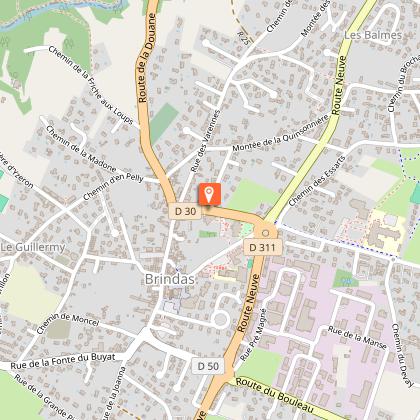
1 avenue de Verdun 69530 Brignais
Book from 0 €Book
Show
Jazz à Vienne festival
19 km

Jazz à Vienne festival

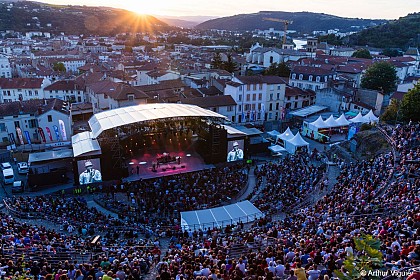
Jazz à Vienne looks forward to seeing you at the 45th edition of the festival in 2026! Every year, over 220,000 festival-goers come to meet the 1,000 artists performing on 4 stages, including the most legendary: the Théâtre Antique. This internationally-renowned festival honours all kinds of music: gospel, blues, soul, funk, ethnic... They will all find a special place on the festival stages, as the event is fully experienced both at the Théâtre Antique and on one of the different stages. The Théâtre Antique, built in the 1st century, is the emblematic venue of Jazz à Vienne. Its unique acoustics, combined with its history, provide an exceptional setting for the public and the internationally renowned artists who perform there. A true blend of the modern and the ancient, a sincere musical melting pot, the festival is rich in diversity and open to all. Jazz à Vienne looks forward to welcoming you to the 45th edition of the festival in 2026. This anniversary edition marks the birth of an unprecedented partnership between Jazz à Vienne and the Annecy International Animation Film Festival. Over the 65 years of its existence, this festival has established itself as the world's biggest event dedicated to animation. It encompasses the Festival and the Marché international du film d'animation, offering a rich programme of screenings, previews, retrospectives, conferences, exhibitions and more. Celebrating creativity and the diversity of styles and techniques (from drawing to virtual reality), the event brings together talent from all over the world. The first fruit of this collaboration will be the visual identity for the 2026 edition of Jazz à Vienne, entrusted to Lucrèce Andreae, a product of the creative pool at the Annecy Festival, where her work was selected in competition and awarded a Special Jury Prize for her graduation film in 2011. Lucrèce then went on to present her animated short, Pépé Le Morse, which won the 2017 Annecy Festival Audience Award. The quality of her work, her ability to explore different artistic forms with brio, her sensitivity and the visual splendour shown in the first images of her next film augur well for the future of the Jazz à Vienne 2026 line-up.

11 Rue de Goris 38200 Vienne
Book from 0 €Book
Show

What to visit in CAMPING DE LA TRILLONNIERE

See more suggestions
Visit the historical sites of CAMPING DE LA TRILLONNIERE.
See more suggestions
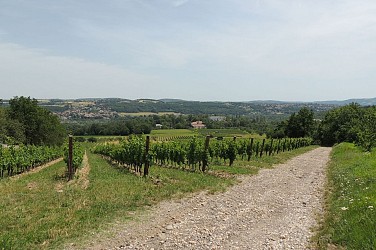
The Church "Saint-Clair"
9.2 km

The Church "Saint-Clair"

This church (19th century) is the most beautiful monument of the artistic heritage of Brignais. You can notice the bell, the organ, the woodword and the stain-glass windows. This church is the most beautiful monument of the artistic heritage of Brignais. Dedicated to Saint-Clair (590-660), patron saint of the blind and partially sighted persons, its first foundations dated from 1859. It was built on the place of the former feudal church and of the former cemetery. This church was built thanks to public subscriptions and town funds. The architect, Claire Tisseur, born in Sainte-Foy-lès-Lyon (writer of the "Littré de la Grand'Côte"*, and more famous, in France, under its pseudonym Nizier du Puitspelu.) and the abbot Rival, priest of the parish, presided the building of the monument. Thanks to its architecture and its furnishing, the monument forms a remarkable unity of ogival style of the 13th century, modernized in the 20th century. The woodwork (the pulpit, the confessionals and the stalls of the choir) is realised by sculptor Aubert from Lyon. The bell, dated from 1492, was listed in the "Inventaire des Monuments Historiques", on 27th November 1905. The organ was built by organ makers of the Jura mountains, Hartmann and Deloye, for the Benedictine community of Pradines (near the town of Roanne) in 1972. As it was for sale, the association "Les Amis de l'Orgue de Brignais", helped by the town hall, bought it in 1955. The size of the organ is fairly important (20 timbers). It integrates harmoniously the west transept of the church due to its dimensions. The organ builder, Hervé Clénet (from "Bectave-Aguin" - Gers department) and his assistant Jean Boissonade (from "Séverac l'Eglise" - Aveyron department), restaured the organ. The assembling, after restauration, was made by Jean Boissonade, helped by Maurice Crouzet and Jean-Marie Royet, from Brignais. The stain-glass windows : the five large stained-glass windows of the choir and the eight smaller windows of the lateral chapels were made by Mr Mauvernay, a glass-worker for Saint-Galmier. One of the roses represents the virtues of the Virgin, the other, the virtues of Saint-Clair. The stained-glass windows of the lawer naves represent scenes of Christian life. The designs were made by the abbot Rival. * a famous book encyclopedia with many humorous and picturesque anecdotes, inspired by the true and viviacious spirit of Lyon and its people.

1 avenue de Verdun 69530 Brignais
Book from 0 €Book
Show

Where to eat in CAMPING DE LA TRILLONNIERE

See more suggestions
Establishments in CAMPING DE LA TRILLONNIERE offer dishes for all tastes.
See more suggestions

Where to sleep in CAMPING DE LA TRILLONNIERE

See more suggestions
Explore hostels and hotels in CAMPING DE LA TRILLONNIERE.
See more suggestions
Caution!
We have no information on the difficulty of this circuit. You may encounter some surprises along the way. Before you go, please feel free to inquire more and take all necessary precautions. Have a good trip! 🌳🥾