Alert
Alerts
J4, Mucem & Coster , Fort Saint Jean
Description
🌍 J4 ESPLANADE: MEMORY BY THE SEA
Welcome to the J4, a unique place where the history of Marseille, bold contemporary architecture, and the origins of humanity converge... right by the sea! Here, in a single glance, you can travel from the Paleolithic era to the digital age — without ever getting off your bike. Let us show you around.
🌺 GISÈLE HALIMI ESPLANADE (formerly J4) – A QUAY TURNED SYMBOL
"It's not every day that an old industrial quay becomes a place of remembrance, culture, and struggle. And yet... welcome to the Gisèle Halimi Esplanade, where Marseille tells stories of sea, power, art, and freedom."
⚓ Origins: A Quay Carved from the Sea
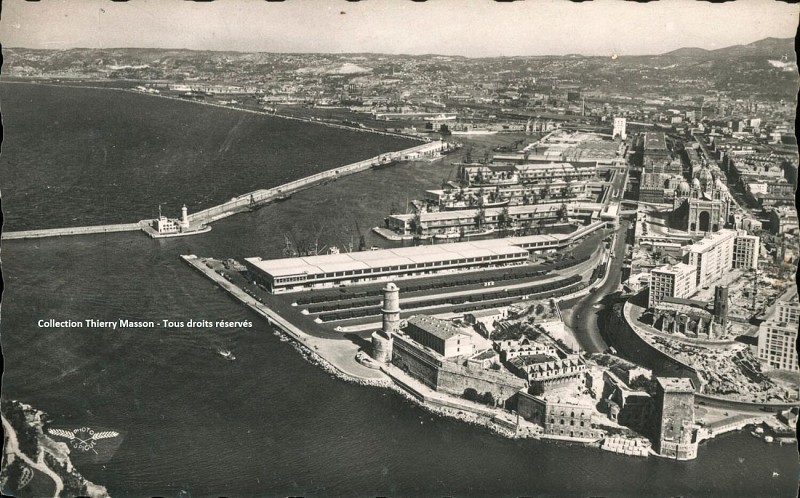
The J4 quay was built in the 19th century, when Marseille became a maritime giant. It was part of a larger industrial system with piers J1 through J4. The iconic Hangar J4 stood here, amid cranes, barrels, and shipping noise.
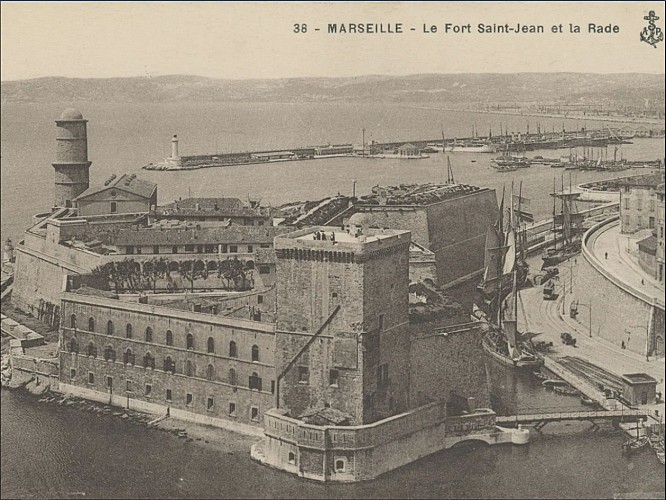
But this spot's story goes further back. In the 15th century, the Tower of King René — still visible today within Fort Saint-Jean — was connected to Saint-Laurent hill. In the 17th century, military engineer Vauban had a trench dug to isolate the fort from the city, which later became a canal linking the Old Port and the Joliette district.
🧐 Urban trivia: That canal (Canal Saint-Jean) was filled in 1937 to create what is now Quai de la Tourette. In the 21st century, part of it re-emerged as two new sea darses.
🚧 From Cranes to Culture: A Total Transformation
Until 1997, the J4 was a closed port area. When the hangar was demolished, the city decided to return the sea to its people. For over a decade, the J4 became a public events space — home to circuses, festivals, concerts... No museum, but full of life.
The real turning point came in 2013, when Marseille became the European Capital of Culture.
🏠 A Monumental Cultural Project
Between 2013 and 2014, everything changed:
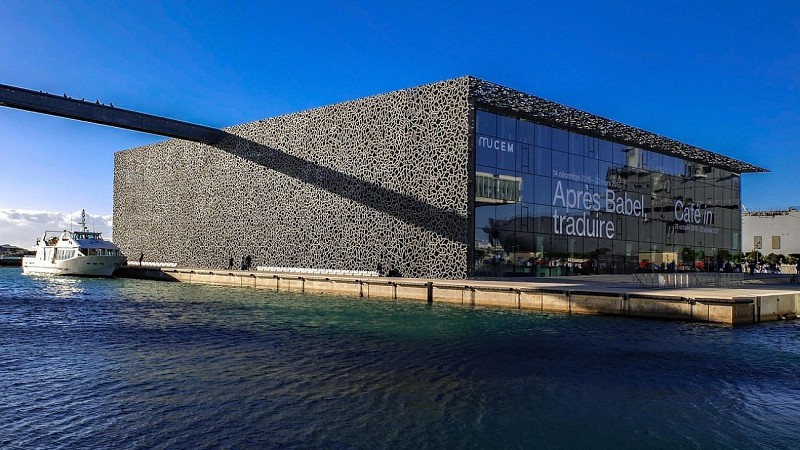
The Mucem (Museum of European and Mediterranean Civilisations) opened, suspended above the sea.
The Villa Méditerranée was built nearby, its cantilevered design imagined by Stefano Boeri.
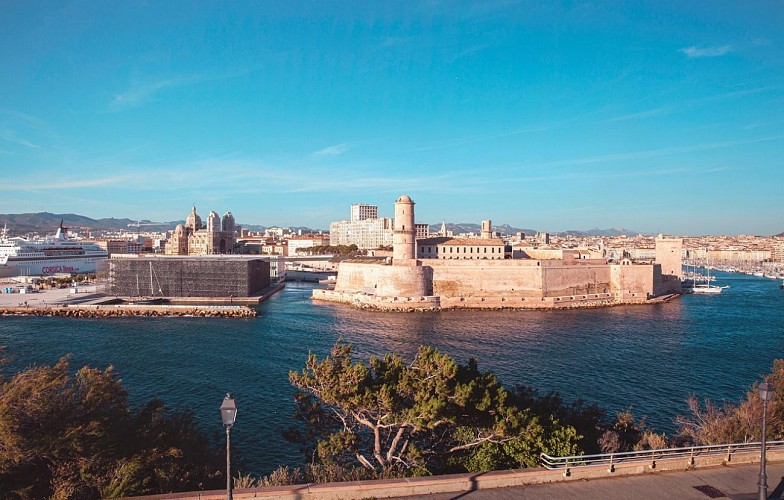
Fort Saint-Jean was restored and connected via pedestrian footbridges.
Two darses (inlets) were dug, reconnecting the fort to the sea.
An underground car park was created, discreetly hidden to preserve the view.
The large open esplanade was landscaped — like a stage between city, sea, and heritage.
Everything was designed to preserve the viewline between the sea, the Frioul islands, and the cathedral of La Major.
⛵ The Darses: Where Water Takes Back Its Place
Two L-shaped basins ("darses") were created at the fort's edge.
West DarseWelcomes tall ships, navy vessels, floating exhibitions
Hosts regattas, ceremonial launches, and nautical events
Depth: 4 meters
Showcases Marseille’s traditional boats: barquettes, pointus, and water-based performances (jousts, floating concerts)
Depth: 3 meters, perfect for light heritage craft
Offers a stunning view beneath the Mucem footbridge, where sea meets concrete and sky
💡 Did you know? Floating stage shows have been hosted right here. Even radio-controlled sailboats have sailed these waters!
📍 From Robert Laffont to Gisèle Halimi
In 2014, the space was named Promenade Robert Laffont, after the Marseille-born publisher. But on November 23, 2024, it was renamed Esplanade Gisèle Halimi, in the presence of her granddaughter Maud Halimi and many other engaged women.
🕊 Gisèle Halimi was a lawyer, feminist activist, and political icon. She fought against injustice her whole life: from defending abortion rights at the Bobigny trial, to exposing torture in Algeria, to defending rape victims. Her name now graces a place of emancipation, facing the sea and steeped in history.
🗺 A CROSSING BETWEEN PAST, SEA, AND STRUGGLE
The Gisèle Halimi Esplanade is a place of passage and remembrance:
Between the Old Port and Marseille's Grand Port Maritime
Between royal fortresses, civic ideals, and bold modernity
Between stone and concrete, sailboats and cycling paths
🎓 Guide’s tip: Sit on the stone ledge, watch the Major sparkle, children play, boats drift... and imagine the centuries of stories this place has seen.
🏫 FORT SAINT-JEAN – THE FORTRESS THAT WATCHED THE CITY
"If you look closely, you’ll notice: the fort’s cannons don’t point to the sea... but toward Marseille. Yes. Louis XIV built this fort not to defend the city, but to keep it in check!"
✨ The Backstory
In 1655, Marseille was rich, proud, and a bit too independent for King Louis XIV’s liking. He sent troops and came himself in 1660. The message was clear: the Crown rules here.
He ordered the construction of two forts to guard the port:
Fort Saint-Jean (north)
Fort Saint-Nicolas (south)
🧹 Historical note: During construction, locals wondered why the cannons aimed inward. The governor reportedly replied, “Not to defend the city from enemies, but to remind it to behave.”
⛪ But the Fort Is Even Older
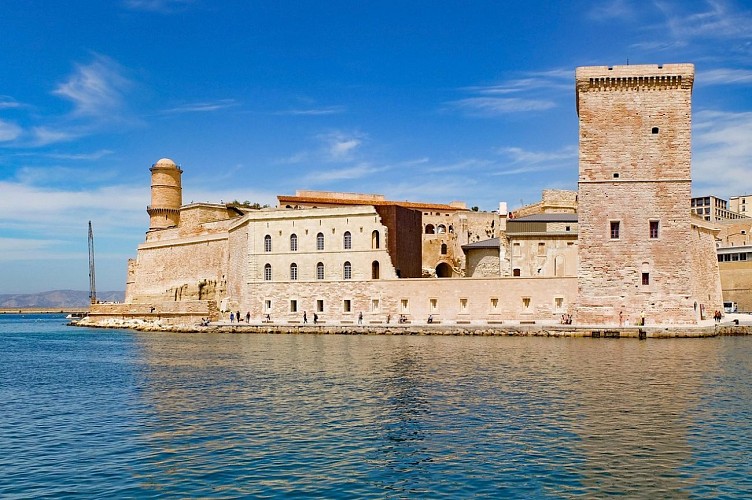
Long before Louis XIV, this site hosted a 12th-century Hospitalier commandery: chapel, hospital, commander’s palace, and the now-iconic Tower of King René.
🔍 Archaeology secret: Excavations uncovered traces of Greek settlement here from the 6th century BCE — some of the earliest stones of ancient Massalia!
💣 The Fort Through the Ages
Used as a military post
Became a prison during the French Revolution
In WWII, German troops stored munitions there
In August 1944, an explosion destroyed much of it
Restored from the 1970s to the early 2000s; now part of the Mucem complex
🎒 What You Can See Today
The fort is open to the public — and it’s free!
Lower level:
Square Tower of King René
Saint-Jean Chapel
Officer’s Gallery
DRASSM HQ (underwater archaeology)
Upper level:
Walkable ramparts & panoramic footbridges
Round Fanal Tower
Ruins of old barracks
Mediterranean garden (figs, lavender, rosemary...)
📸 Photo tip: Come in late afternoon. The golden stone, sea shadows, and gulls’ cries... Marseille is pure poetry at sunset.
❤️ WHY THIS PLACE IS SO UNIQUE
Because in one single spot, you can:
Walk a former industrial quay
Visit a world-class museum about Mediterranean cultures
Explore a prehistoric underwater cave (virtually)
Gaze at the sea, hear the wind, and feel Marseille pulse beneath your feet
Technical Information
Altimetric profile
Data author
