Alert
Alerts
The Citadel of Marseille — Fort Saint-Nicolas
Description
🏰 The Citadel of Marseille — Fort Saint-Nicolas
A symbol of royal authority, military history, and ecological renewal
⚓ A fortress built to keep Marseille in check
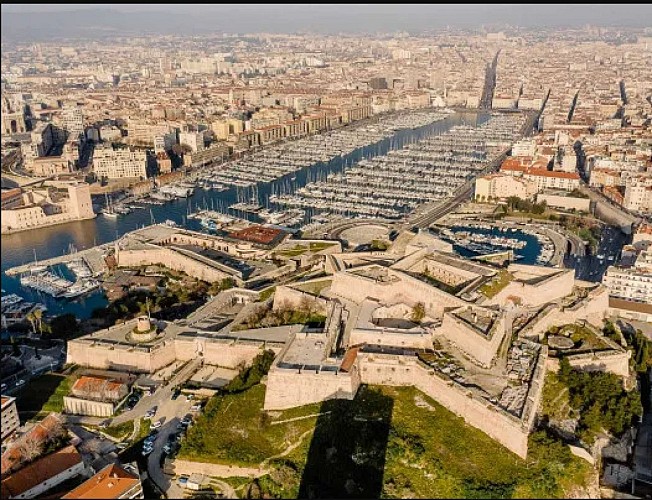
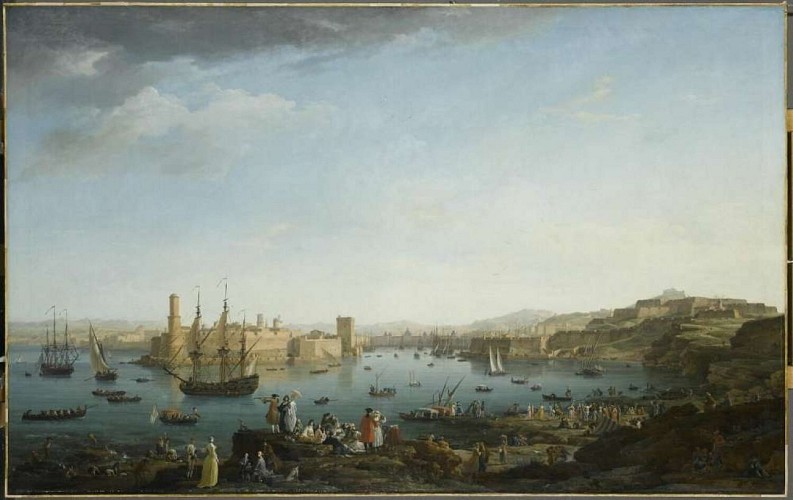
Perched over 50 meters above the waters of the Old Port, Fort Saint-Nicolas was never just a defensive stronghold facing the sea. Its true purpose? To watch over the city itself.
In 1660, a young Louis XIV sought to impose his authority on Marseille—a famously unruly and independent-minded city. Rather than negotiate, he sent an army to encircle it and ordered the construction of not one but two monumental forts at the entrance of the harbor: an expanded Fort Saint-Jean to the north, and a brand-new citadel on the southern promontory of Saint-Nicolas. Thus began an ambitious military—and deeply political—project.
🛡 An architecture designed as a warning
Under the direction of royal engineer Louis-Nicolas de Clerville, the fortress was built in just four years. The chosen site was strategic: a rocky promontory with a freshwater spring and an abandoned medieval chapel. From there, one could dominate the city while controlling the harbor. The message was unmistakable: Marseille must remain loyal to the Crown.
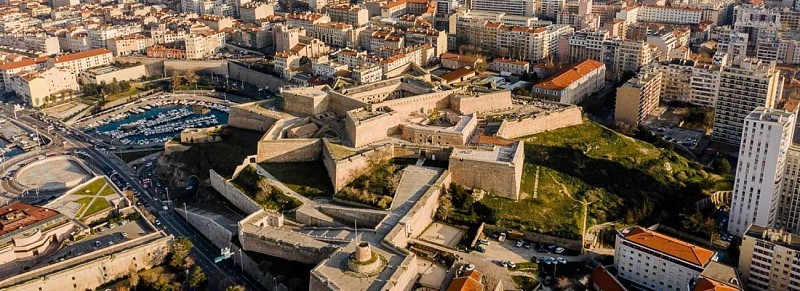
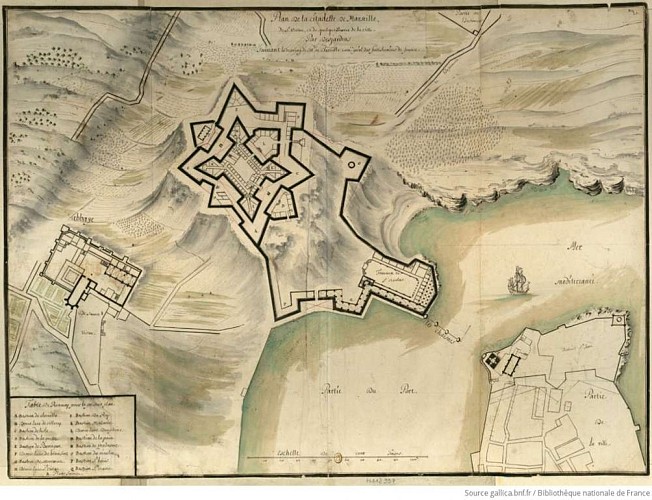
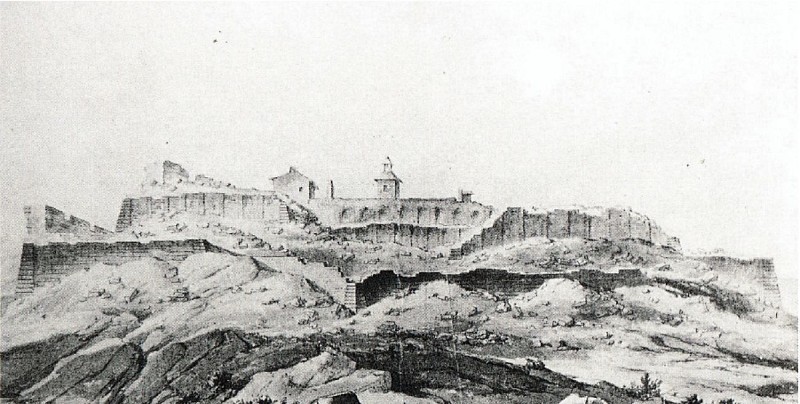
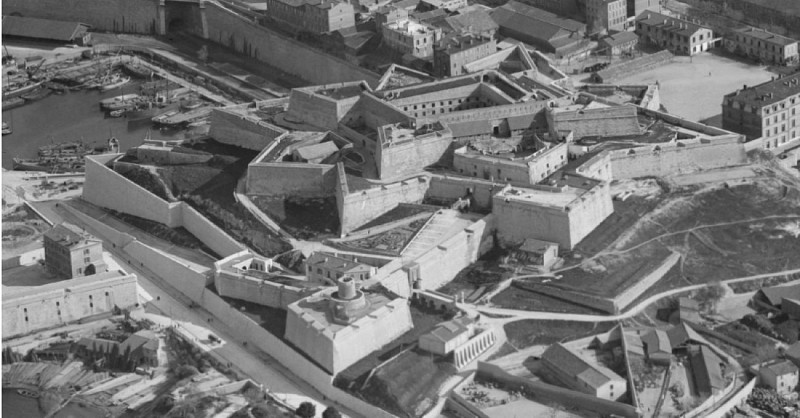
The citadel followed the star-shaped bastioned design typical of 17th-century fortifications, with a double perimeter wall, sharp bastions, ditches, and redans. Built from warm pink stone, the fortress appears to grow naturally from the cliff, like an armored outcrop overlooking the sea and the city.
🏗 A self-sufficient military world
More than just a stronghold, the Citadel was a fully autonomous complex, with:
troop quarters,
underground tunnels and storage rooms,
cisterns, wells, and powder magazines,
a windmill, bakery, chapel,
and even gardens tucked into its flanks.
The underground galleries allowed discreet movement and protected supplies. The fortress could withstand a siege without external support.
🧨 The Revolution: destruction in the name of freedom
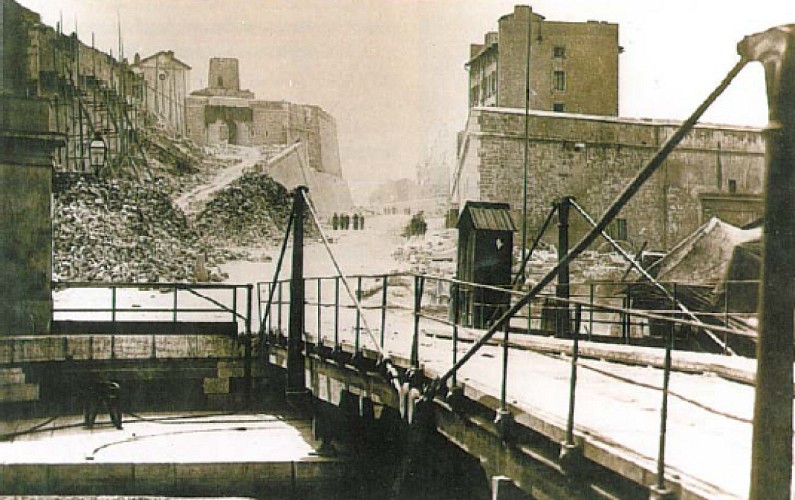
By 1790, the tide was turning. Revolutionary fervor swept through Marseille. After capturing the nearby Notre-Dame de la Garde, a revolutionary militia demanded the surrender of the Citadel. The garrison mutinied, and the fort was handed over to the people. Seen as Marseille’s own version of the Bastille, the upper portion of the fortress was partially torn down by its citizens—especially the sections that had once aimed their cannons directly at the town.
⚔ The 19th century: modernization, division… and a road through the middle
During the 19th century, Fort Saint-Nicolas was partially rebuilt and modernized to adapt to new artillery technology. But in 1862, a bold urban planning decision split the citadel in two: a new boulevard was carved straight through its heart, linking the Old Port with the emerging Catalans district.
The two halves were renamed:
Fort d’Entrecasteaux (the upper section), after the explorer,
Fort Ganteaume (the lower section), after a former naval prefect.
🕳 A prison and witness to the 20th century’s darkest chapters
Over time, the fort became a military prison, housing courtrooms and cells. During WWII, it held political prisoners—among them Jean Giono, Jean Zay, and Habib Bourguiba, future President of Tunisia.
Under Nazi occupation, the fortress was fortified and integrated into the “Southern Wall” of Mediterranean defenses. Anti-aircraft platforms and bunkers were built, and underground tunnels connected the fort to the port.
During the Liberation of Marseille in August 1944, the fort’s guns turned against the city before it was retaken by Moroccan troops. It was a dramatic final act in the fort’s military life.
🌿 From military relic to ecological and cultural beacon
In 1969, the entire complex was listed as a Historic Monument, but it remained closed to the public for decades. Since the early 2000s, the fort has entered a new chapter, led by ACTA VISTA, a heritage preservation association that trains young people in traditional construction techniques.
In 2021, a major milestone was reached: the City of Marseille granted a 40-year lease to the Groupe SOS Culture, with the goal of gradually reopening and rehabilitating the site as a living cultural and social venue.
🌱 A living heritage, from stone to soil
What makes the Citadel unique today is its holistic vision of restoration. Not only are the ramparts being preserved, but so too are the natural ecosystems surrounding them.
The former military glacis on the north and west slopes, once left bare for defensive reasons, have become sanctuaries for native flora and fauna from the Calanques. However, decades of military use left the soil polluted with heavy metals.
Since 2022, the Citadel has partnered with the Population Environment Development Lab at Aix-Marseille University and ecologist Isabelle Lafont-Schwobb to implement nature-based solutions like bioremediation—using plants and natural processes to heal the land.
The gardens themselves are carefully designed to:
respect the historic viewlines,
support climate adaptation,
detoxify the soil,
and remain accessible and educational for the public.
It’s a landscape of resilience and education, where nature, heritage, and science meet.
🧱 Restoration with respect
Led by heritage architects Philippe Matonti and Isabelle Guérin, the restoration embraces traditional materials and local resources (stone, lime, sand, timber), while minimizing energy consumption. Every intervention follows the logic of reuse, minimal impact, and long-term durability.
Rather than rebuilding a postcard version of the past, the goal is to honor the site’s layered history—and ensure its transmission to future generations.
🎯 In short
Once a symbol of royal control, then a silent witness to revolt, war, and imprisonment, the Citadel of Marseille is now coming back to life. No longer closed off, it opens its gates to culture, nature, and the people of the city.
It stands not as a monument to power—but as a place of memory, learning, and renewal.
Technical Information
Altimetric profile
Data author
