Tours
Activities
Places of interest
Where to eat
Where to sleep

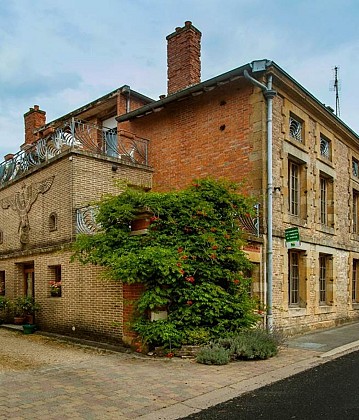
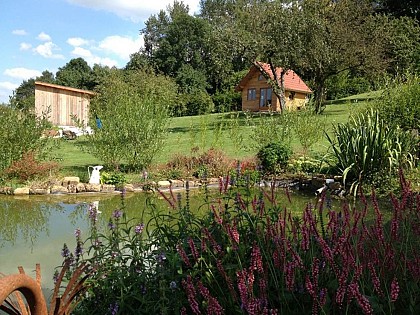
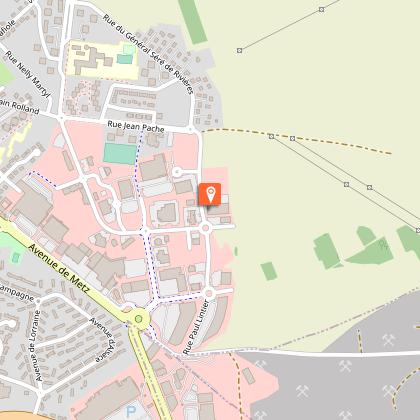
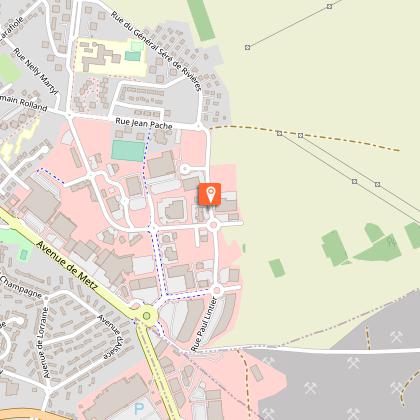
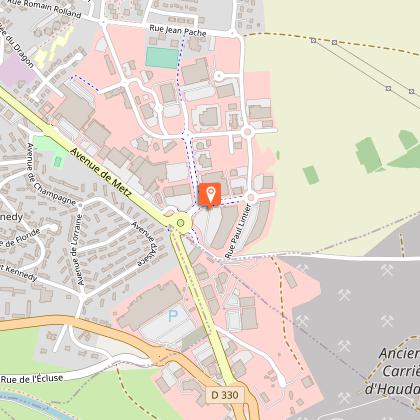
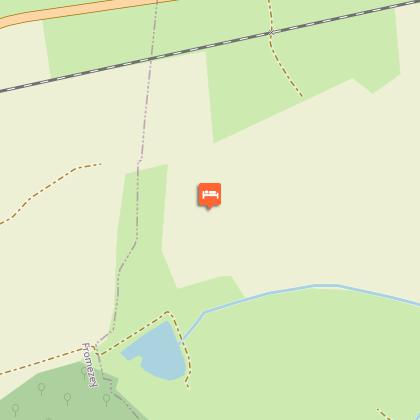
Trompette Guy: Discovering Chatillon-sous-les-cotes

Are you the owner?
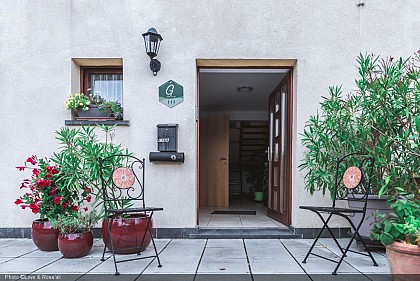
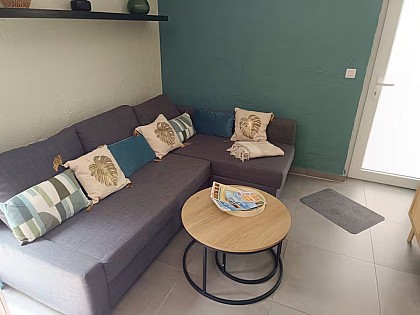
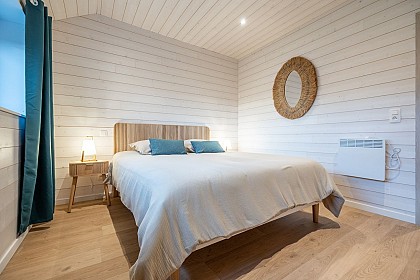
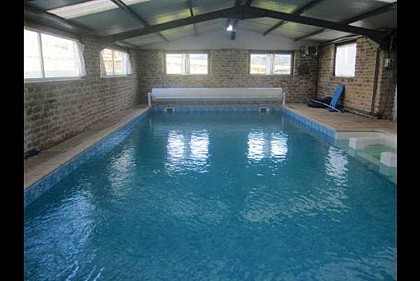
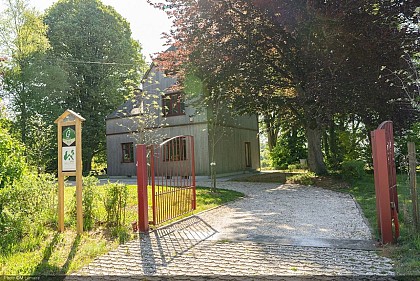
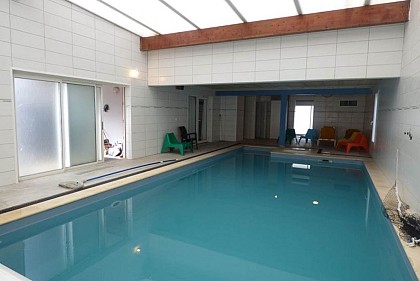
Welcome to Trompette Guy, your perfect starting point to explore Chatillon-sous-les-cotes, a hidden gem nestled in the Meuse region of Lorraine. Embark on an adventure to uncover a wealth of activities and attractions nearby. Stroll along the beautiful hiking trails meandering through the picturesque mountains and valleys of the area. Visit Lake Madine, an ideal spot for water activities or simply...See more
Walking around TROMPETTE GUY

See more suggestions
Explore the parks and paths of TROMPETTE GUY.
See more suggestions
Left bank : through the walking and cycling path
10 km

Left bank : through the walking and cycling path

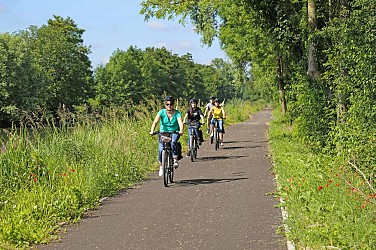
This tour allows you to discover the Left Bank and the beauty of the landscapes of the Meuse Valley along the canal. Dead man’s hill (Le Homme-mort) has suffered some of the most deadliest combats just as much as those on the right bank. Today, it is a pleasant wooded mound that you can enjoy visiting. This course is perfect for a first try of the electric bike. Easy and with little difference in altitude, it will be perfect for a nice stroll with family or friends ! Limited in supply and manpower, the Kronprinz army cannot attack simultaneously on both banks of the Meuse. In order to obtain better results on the right bank, C.Q.G. German prepared the second phase of its offensive whose main objective was to take control of the hills of Mort-Homme (Dead man’s hill) and the Côte 304. These two natural observatories regulated the fires of the French artillery; it is in fact a crucial stake for the offensive continuation. The fighting raged on there for weeks, destroying villages of Esnes-EN-ARGONNE and Chattancourt. Rapidly, the battle peaks became untenable volcanoes; suicidal assaults fade to move on to countless murderous gunshots . To protect themselves from bombing, both sides took refuge on the hillside, digging tunnels. On August 20, 1917, the generals Guillaumat and Pétain begin a to put victorious offensive which has the effect four German divisions attached to the sector Mort-Homme-cote 304 to flight. To the thousands of prisoners, material and armaments captured, must also be added more than twenty thousand victims whose units appear on the current monuments. In this inferno, the village of Cumières will disappear completely and will never be rebuilt.

4 h
48 km
Easy
1 Rue René Panau 55100 Verdun
Show
the city of verdun : 1 000 YEARS OF HISTORY
10 km

the city of verdun : 1 000 YEARS OF HISTORY

This tour is perfect for a first trip uncovering of Verdun city. This route invites cyclists to discover over the many centuries, from 10th to today; the lively city of Verdun with its docks; Medieval period but also the late modern period of Verdun with its facades and its Art deco. An episcopal city, Verdun has a rich religious heritage since the 16th century, it forms with the cities of TOUL and METZ the province of the «Trois Évêchés» (Three Bishops). From the St-Baptiste Church or St-Victor via the St Nicolas chapel, simply walk the streets of the upper town and stroll along the river Meuse to be convinced. Verdun has an episcopal palace (now the World Peace Center), a cathedral, two old abbeys, seven churches and chapels ... 200 m • From the Tourist Office, take the direction of the Pont chaussée. Before the bridge on the right you can see the Children’s Monument. On the other side is the Porte Chaussée, official entrance of the city in the 14th century, and defensive element of the Grand Rempart. 300 m • Go to the right and follow the road to the roundabout. You will pass in front of the « Défense de Rodin » (19th century) the « Monument to women of the rural world » (monument aux femme du monde rural) 650 m • Turn left and pass in front of the subprefecture and Porte St-Paul (19th century). 1 km • Continue on Mazel Street. You can raise to eyes and contemplate the architecture and Art deco of this street (20th century) 1,3 km • At the end of the street, turn left on the bridge, and take the roundabout and the exit on the right to the City Hall then take the first street on the right (17th century). 4.1 km • Continue your tour to Pré l’Evêque Leisure Center. Enjoy this green area to go around the water. You’ll appreciate the calm and the tranquility. Exit the leisure center and take to the left the Pont Ecluse St-Amand (17th century). It allowed the upstream flooding that keep the city out of reach of enemy cannons then head yourself towards your the left to the Underground Citadel. 6,2 km • At the end, stop yourself at the Carrefour des Maréchaux (16 statutes that represent Generals and Marshals of the First and Second Empire). Go around the ramparts of the Underground Citadel and climb the hill to the right to reach the place de l’étoile. Turn left to reach Porte Châtel, the oldest gate of Verdun (18th century). 6,8 km • Go down to the Monument de la Victoire (Victory Monument) to enjoy the view. Retrace your steps and pedal to Notre-Dame of Verdun Cathedral (10th century) and the World Center For Peace (Centre mondiale de la paix), the former episcopal palace (18th century). 7,4 km • Follow the road and go down to the city center. Pass the Princerie Museum (14th century), then turn right to face 200m lower, the Chapelle Buvignier (Buvignier Chapel, 18th century), place of many exhibitions. Continue straight on the sidewalk and pass the Tour chaussée (Pavement Tower) to reach the Tourist Office.

1 h
14 km
Very easy
1 Bis Rue de la Liberté 55100 Verdun
Show
HIGHLIGHTS OF THE BATTLE OF VERDUN
10 km

HIGHLIGHTS OF THE BATTLE OF VERDUN

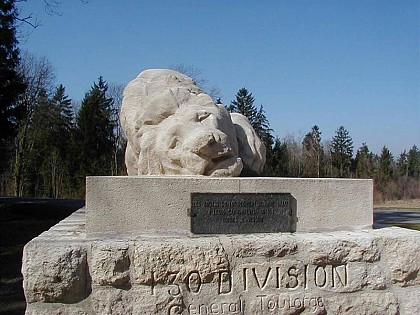
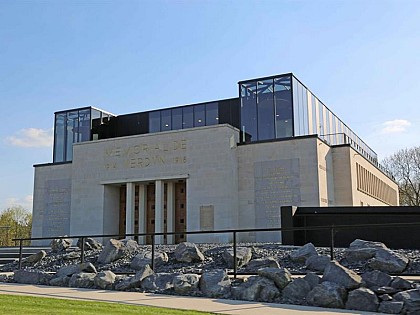
In 1920 the Government decided to create a Red Zone at Verdun, to mark the soil rendered sterile by shell fragments and polluting chemicals. Ten years later, it received its first covering of some 10 million black pines, sent from Austria. The nine destroyed villages included in this Red Zone will never again see the light of day, but the Prefect of the Meuse assures they will be maintained as memorials, by continuing to nominate a mayor to each one. Starting from the Tourism Office, join the Green Way Cycle Path in the Parc Japiot opposite. 4.5 miles. Continue straight on, as far as the Canal Lock at BRAS-SUR-MEUSE. Cross the bridge to reach the opposite bank and follow the canal as far as the next bridge. Leave the Cycle Path, join the road and turn left, to reach the Stop sign opposite the Boulangerie. Turn right onto the main road, then left opposite the restaurant 8.2 miles. Follow the main road and climb up to the Tranchée des Baïonnettes. 8.75 miles. Continue to climb, then after passing the restaurant, turn right and arrive at the Ossuaire de Douaumont. If you climb on foot the 204 steps inside the tower, you will have a 360 degree panoramic view of the entire battlefield 9.25 miles. Retrace your route to the Stop sign. To visit the disappeared village of Douaumont, go left and then immediately right and take the dead-end road to the disappeared village of Douaumont, then return to the main road. Alternatively, to go direct to the Fort de Douaumont, at the Stop sign turn right and descend to the next turning. At the Monument to the Unknown Soldier, turn left, towards the Fort de Douaumont. 9.7 miles. On the road to the Fort de Douaumont, you will cross over the Boyau de Londres. 10 miles. On reaching the Fort de Douaumont, dismount and climb on foot onto the roof of the Fort, where you will have a panorama view of the horizon which in 1916 marked the German frontier. You can also take the path on the left between the shell craters, which in 300 yards leads you to the lookout point. 10.3 miles. Return back to the Monument to the Unknown Soldier and turn left. On your left you will pass Abri (Shelter) 320 and on your right the National Cemetery. 11.8 miles. At the crossroads, turn left and pedal as far as the disappeared village of Fleury-devant-Douaumont. 12.2 miles. Continue straight on and pass the Mémorial de Verdun, dedicated to the Great War 1914-1918. 12.4 miles. Carry on to the Souville Lion, the monument which marks the nearest point to Verdun reached by the Germans in 1916, and where they were finally stopped. 12.75 miles. At the crossroads turn right and descend towards Verdun. You can visit the Souville fortified plateau by taking the small path on the left. There you can visit the unique Bussière twin turret, the Pamart machine gun casemates, and the ammunition shelters. 12.9 miles. On the road descending to Verdun, stop to admire the Maginot Monument on the left. A little further along there is a picnic area in the forest where you can rest. 15.3 miles. After crossing the railway bridge, at the Stop sign, cross over and pass by the Faubourg Cemetery. At the next Stop sign turn right, then immediately left, and pass the Braquier Dragée factory. At the roundabout, turn right and pass the Parc de Londres. Then at the next roundabout, turn left towards the Tourism Office.

4 h
35 km
Medium
1 Place de la Nation 55100 Verdun
Show

What to do in TROMPETTE GUY

See more suggestions
Choose from a variety of activities in TROMPETTE GUY and book your favorites.
See more suggestions

What to visit in TROMPETTE GUY

See more suggestions
Discover the local markets of TROMPETTE GUY.
See more suggestions
Fortified massif of Souville
7.9 km

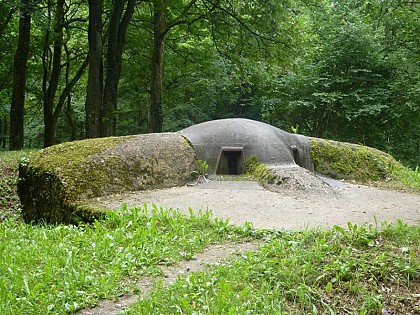
Fortified massif of Souville

A major "first generation" fort built after the Franco-Prussian War of 1870-71, Souville only received concrete protection for its powder magazine, with the rest of the structure being masonry covered with earth, making it terribly vulnerable to large German shells. Although Souville never received Bourges Casemates for flanking fire, it was reinforced in 1890 with the installation of the prototype Bussières retractable turret, armed with two long 155 mm cannons. Unfortunately, the explosion of one of them in April 1916 meant that the turret served only as an observation and command post for the rest of the battle. While possession of the fort was crucial for the French, its capture would also allow the forces of the Crown Prince to take advantage of a final opportunity to advance unopposed into the city. The center of Verdun. On the morning of July 11, the 3rd Company of the 7th Infantry Regiment, commanded by Second Lieutenant Dupuy, entered the fort and found the survivors of the garrison practically incapacitated. The arrival of fresh troops revived the spirits of those who had not been wounded, and the defenses were put back in order. On the slope outside the fort, other elements of the 7th Infantry Regiment gave way under the fierce assault of the Germans, but fortunately, the enemy did not make significant progress before being stopped by the machine guns of the 7th, firing from the roof of the fort. The next day, Souville remained under harassing fire from German artillery, but the crisis had passed and the defenders of Verdun were able to catch their breath. Accessible by gravel paths, the fortified site of Souville today allows visitors to examine remnants such as the Batterie de l'Hôpital, the Pamart Casemates, and the roof of the fort, not to mention the unique Bussières turret. More than just a fort, Souville corresponds to a true fortified massif comprising several elements: Fort: An organic garrison (2 infantry companies and 2 artillery sections) Shelter-cave for 300 men A retractable turret for two 155 mm cannons A terraced fortress battery of 155 mm, located 100 meters from the retractable turret Communication network via trenches. Practical Information: Pedestrian access to the fort Entry into the fort is prohibited

55100 FLEURY DEVANT DOUAUMONT
Show
Destroyed village of Vaux devant Damloup
8 km

Destroyed village of Vaux devant Damloup

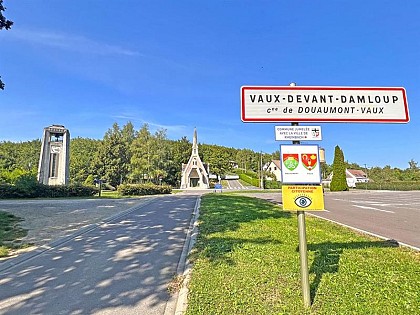
Vaux-devant-Damloup is a unique destroyed village since, being at the edge of the "red zone," it has managed to gradually rebuild a new small village close to the old destroyed village, which shares the same characteristics as its eight unfortunate companions. Belonging to the Chapter of Verdun before the Revolution, it has always been a prosperous village throughout its history. The presence of Fort Vaux nearby has always somewhat disrupted the village's history. Indeed, from its construction between 1881 and 1884, the village was heavily involved in accommodating the numerous workers rotating through; similarly during the significant reinforcement works undertaken on the Fort from 1888 to 1912. In 1915, the decision by the general staff to partially disarm all the forts transferred the defensive effort particularly to the villages. Thus, Vaux, located to the north of its Fort and in contact with the Woëvre plain, naturally became an important point in the defense system of the Verdun entrenched camp. During the great German offensive launched at the end of February 1916, it became one of the major German objectives after the capture of Douaumont, which fell on March 2, and before the capture of Fort Vaux. After fierce fighting within its walls, the village fell into German hands on March 31, 1916. The French bombardments of April then followed the German bombardments of March, only intensifying the complete annihilation of the village. After the village fell, the 50th German division hastened to seize Fort Vaux, which heroically resisted from June 2 to 7, 1916, under the command of Commander Raynal. This tragic episode became a forever famous feat of arms, as the garrison, running out of drinking water and fighting in the fort's galleries for days, eventually surrendered to the Germans, who, admiring the bravery of the surviving soldiers, decided to grant them military honors upon their exit from the Fort. In 1918, the village of Vaux-devant-Damloup found itself within the limits of the infamous "red zone," prohibiting any reconstruction. In 1919, it was also listed among the destroyed villages and, during the interwar period, its war memorial and the Saint Philippe and Saint Jacques shelter chapel were built, similar to the other eight destroyed villages. However, its location at the edge of the zone and the presence of the Eastern Railway Company's railway, which obtained permission to house its ten service agents on the site of Vaux-devant-Damloup, allowed the village to gradually regain new life over the years, starting from the interwar period. It now has a very active life oriented towards the future, especially the Internet, while not denying the tragic past of the old destroyed village, still present at its doorstep and in the memory of its 70 inhabitants. To see: The Saint Philippe and Saint Jacques shelter chapel; The war memorial in honor of the soldiers who died in Vaux (it bears the inscription: "They shall not pass"); Fort Vaux; The Vaux pond; The war memorial of the 1st Battalion of Foot Chasseurs near the pond; The memorial stone for the aviator Dussumier-Latour, shot down on June 2, 1916, on the pond's dam.

55100 DOUAUMONT VAUX
Show
Maginot monument
8.3 km

Maginot monument

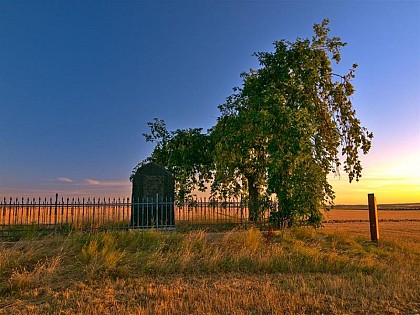
Contrary to the way the mobilisation plans were drawn up, many soldiers in the reserve rubbed shoulders with their comrades in the regular units. There was one regiment, the 44 th Territorial Infantry Regiment, which welcomed into its ranks the Member of Parliament for the Meuse, a certain André Maginot. Joining up as a volunteer in 1914, he quickly rose to the rank of sergeant, and led patrols into enemy territory. His boldness almost cost him his life, on 8 November 1914, near the Bois des Hayes. Seriously wounded, he was saved with difficulty by his men, but had to undergo medical treatment for many long months. After the Armistice, he once more took up his role of parliamentarian, as Minister for Pensions. Thus he presided over the ceremony on 10 November 1920 within the tunnels of the Underground Citadel of Verdun, when the Unknown Soldier was chosen. Falling ill with typhoid fever, he passed away in 1932, at the very time when he was busy preparing the ground for the new line of fortifications, intended to defend the North-East of the country – and which would be named after him. Three years after his death, President of the Republic Albert Lebrun inaugurated the monument by Gaston Broquet, which is let into the massif de Souville. Against the background of a warrior’s shield, the statuary group represents the scene on 8 November 1914, with two of his brave men carrying the wounded Maginot to safety on a Lebel rifle.

55100 FLEURY DEVANT DOUAUMONT
Show

Where to eat in TROMPETTE GUY

See more suggestions
The flavors of TROMPETTE GUY await you.
See more suggestions

Where to sleep in TROMPETTE GUY

See more suggestions
Find an ideal lodging in TROMPETTE GUY.
See more suggestions
Caution!
We have no information on the difficulty of this circuit. You may encounter some surprises along the way. Before you go, please feel free to inquire more and take all necessary precautions. Have a good trip! 🌳🥾