Tours
Activities
Places of interest
Where to eat
Where to sleep

Discover La Vialette Beach in Villeneuve-d'Allier

Are you the owner?
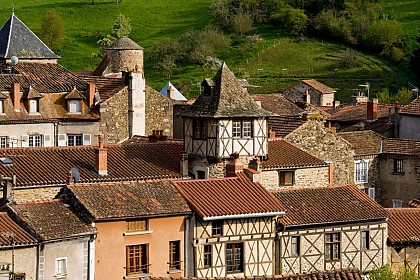
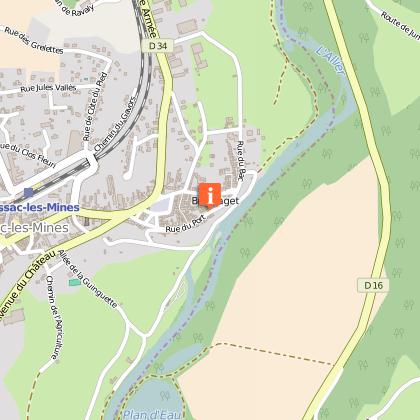
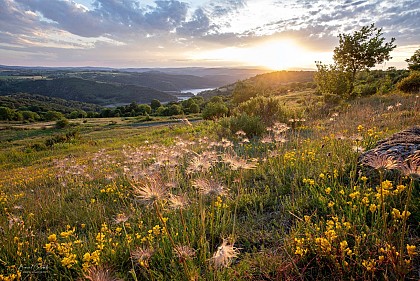
Welcome to the LA VIALETTE BEACH page, your starting point for exploring the wonders of Villeneuve-d'Allier, Haute-Loire in Auvergne! Whether you're a nature lover, history enthusiast, or just looking for relaxation, this region offers a multitude of activities and iconic sites.

Start your adventure with a stroll along the Allier Gorges and be enchanted by the wild beauty of the surrounding lan...
See more

Walking around LA VIALETTE BEACH

See more suggestions
Explore the parks and paths of LA VIALETTE BEACH.
See more suggestions
What to do in LA VIALETTE BEACH

See more suggestions
Book your activities in LA VIALETTE BEACH now and get ready for adventure.
See more suggestions
Auvergne Wildlife Park
30 km

Auvergne Wildlife Park

The Parc Animalier d'Auvergne is a unique reserve for rare and endangered species, with a European reputation. Over a 45-hectare area, you can learn about biodiversity and discover almost 350 endangered animals of 60 different species. Come and meet snow panthers, red pandas, wolverines, tigers, Amur panthers, takins, bears, Rothschild's giraffes, Hartmann's zebras, primates, two-toed sloths, dholes, pygmy hippos, cheetahs and, more generally, 350 rare and endangered animals! The Park is set in an exceptional natural site, where you can admire many incredible views over the Cézallier and discover the various actions put in place for animal welfare and species conservation, while visiting a site that is proving its difference on a European scale. Indeed, the Parc Animalier d'Auvergne stands out in many respects: it is the European park most involved in the conservation of rare and endangered species, with over 80% of the species it hosts being part of a European breeding program. The first park to house Thorold's deer, it also boasts Europe's largest enclosure for Amur panthers. The park was also behind the creation of Science Nature, an association dedicated to ethology, and Biodiv'Educ, another association dedicated to learning about biodiversity through new technologies. Unique mixed-use enclosures and a wide range of immersive activities enable visitors to familiarize themselves with the animals (family safaris, special encounters, vacation courses, etc.). A must-see!

route d'Anzat-le-Luguet 63420 Ardes
Book from 17.9 EURBook
Show
Wine Grower Annie Sauvat
33 km

Wine Grower Annie Sauvat

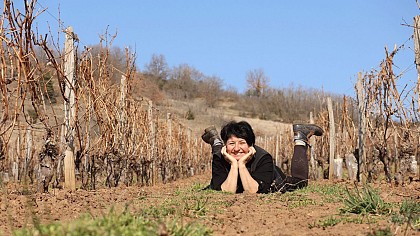
From wine tasting to vineyard walks, come and spend a convivial moment at Domaine Sauvat. Annie, an artisan winemaker, will share her expertise and passion for wine with you in a unique and intimate setting. In the heart of the volcanic landscapes of the Auvergne, I welcome every visitor to Domaine Sauvat as a privileged guest. I'm Annie, and I'm passionate about sharing my terroir and my love of Pinot Noir. I like to take the time to talk, tell and share, whether it's during a free wine tasting all year round at the domaine or a walk through my vineyards. I grow three cuvées of Pinot Noir from our volcanic soil: Anthocyane, a delicate, fruity red, Nymphéa, a more intense, structured red, and Eolia, an airy, gourmet rosé. Each of these cuvées tells a part of my story and that of this unique terroir. In 2026, I've come up with new ways for you to experience the estate. You'll be able to take part in yoga sessions in the vineyards, listen to storytelling walks, learn the art of dowsing, enjoy a romantic starlit evening in the heart of the vineyard or come to an aperitif concert... I want every moment spent here to be an authentic, simple and memorable interlude. I'm also proud that the estate has been awarded the Qualidog, Vignobles & Découvertes and Bienvenue à la Ferme labels, recognizing the value of our welcome, our commitment and the quality of our experiences. I invite you to find me on Facebook and Instagram to follow the life of the estate and discover our upcoming events. I look forward to sharing a warm moment with you.

30 route de Dauzat 63340 Boudes
Book from 0 EURBook
Show
The castle of Villeneuve-Lembron
35 km

The castle of Villeneuve-Lembron

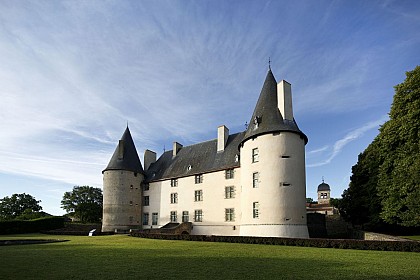
Built at the end of the Middle Ages, this château contains some of the most extraordinary furniture and painted decor from the 16th and 17th centuries, a dazzling illustration of the medieval and early Renaissance imagination. 1-hour guided tour only. Château de Villeneuve-Lembron is a seigniorial residence built at the turn of the 15th and 16th centuries. Reflecting a period of transition between the Middle Ages and the Renaissance, the building shows the importance and wealth that the lord of Villeneuve, Rigaud d'Aureille, derived from royal favor, thanks in particular to the preserved furniture and painted decorations. Rigaud d'Aureille (c. 1450-1517), Baron de Villeneuve, was an important figure who enjoyed many privileges. Captain and butler to the king, he earned the trust of the sovereigns and was entrusted with diplomatic missions. The residence he had built away from the old family mansion where he was born was a vast quadrilateral flanked by massive towers and surrounded by deep moats. The lord did not hesitate to depict himself in murals illustrating "dits", short plays with a moral or satirical tone. At the beginning of the 16th century, the land of Villeneuve became a barony and belonged to the Montmorin family. Gaspard de Montmorin embellished the château with a large-scale painted decor, of which some remarkable examples remain in the ceremonial hall and large stables. In 1643, Villeneuve-Lembron was acquired by Isaac Dufour, Treasurer of France, who transformed the inner courtyard, added a porticoed gallery and decorated the ceilings and fireplaces on the second floor. His descendants, who remained in the castle until the end of the 18th century, sold it to the Pélissier de Féligonde family, who kept it until 1919. By decree of May 25, 1926, the château was classified as a Historic Monument. The last owner, Georges Tixier, donated it to the French government in 1937, which undertook its restoration. It is currently managed by the Centre des Monuments Nationaux.

Château de Villeneuve-Lembron 63340 Villeneuve
Book from 5.5 EURBook
Show

What to visit in LA VIALETTE BEACH

See more suggestions
Explore the cultural heritage of LA VIALETTE BEACH.
See more suggestions
Saint-Ilpize Castle
697 m

Saint-Ilpize Castle

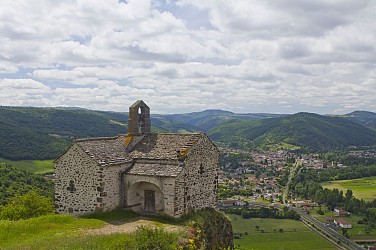
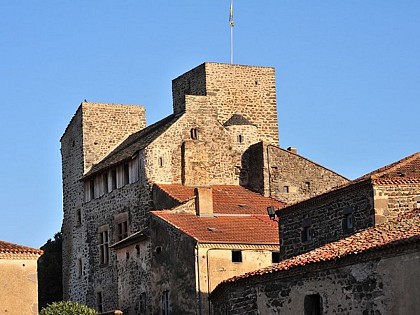
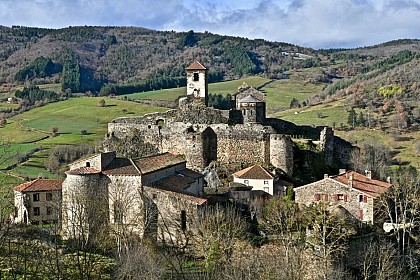
The castle grounds are open to the public, and visitors can download a guided tour app to their cell phones (the QR code to scan is located on a sign across from the church). The grounds are open year-round. Built on a volcanic outcrop, the Château de Saint-Ilpize majestically overlooks the Haut-Allier Valley. Its origins are believed to date back to the 11th or 12th centuries: historical records mention a castrum at this site as early as the 11th century. We also know that at that time there was a large parish, covering an area equivalent to that of the seigneury, as well as a priory. The castle, which served as the residence of the Dauphins of Auvergne for over 150 years, now stands as nothing more than spectacular ruins. Only the castle chapel, a jewel of Romanesque art carved from volcanic stone, has regained its full splendor following a restoration led by the French Historic Monuments Authority and completed in 2001. Its arcaded bell tower, featuring two windows, still captivates visitors. The earliest evidence of a fortification dates back to 1030. Quickly expanded to include several walls, the fortress allowed the Dauphins of Auvergne to keep watch over the Allier Gorges. The walls, crowned by the chapel and a square tower serving as a bell tower, encircled the farmyards and the old quarters of the town, which in the 16th century extended all the way to the river. Only the upper enclosure, housing the seigneurial residence, still retains a cohesive structure. The main entrance is via a ramp on the north side, leading from the church square. It leads to a lower courtyard protected by an ingenious defensive system: chicanes, bastions, posterns, and a pointed-arch gate. Below lies the lower enclosure, reinforced by a turret nicknamed “l’Épaulette.” Inside the main residence, a remarkable 13th-century devotional sculpture remains. Perched at an altitude of between 470 and 770 meters, the site of Saint-Ilpize offers one of the most impressive panoramic views of the Ribeyre region. Its unspoiled surroundings, fresh air, and exceptional microclimate—with nearly 2,200 hours of sunshine per year, comparable to those of the French Riviera—make it a true haven of peace. Combining heritage and nature, it’s a prime destination for lovers of fishing, hiking, kayaking, biking, and horseback riding… and an ideal retreat for anyone looking to escape the daily grind.

Le Bourg 43380 Saint-Ilpize
Show
Blesle, One of the Most Beautiful Villages in France
21 km

Blesle, One of the Most Beautiful Villages in France

Blesle, listed among the Most Beautiful Villages of France, is a medieval gem in the Haute-Loire region that grew out of a Benedictine convent founded around 880 by Ermengarde of Auvergne, mother of William the Pious. Nestled in the Alagnon Valley, on the border with the Cantal department, Blesle is a true treasure of architectural heritage. This village, with its half-timbered houses dating from the 15th and 16th centuries, bears witness to the medieval commercial boom. More than 20 residences, adorned with carved doors and corbelled eaves, exemplify the typical rural architecture of the era, skillfully blending stone ground floors with wooden upper stories. These buildings reflect the artisanal and commercial activity that flourished during that period. Blesle owes its existence and prosperity to its Benedictine abbey, founded in the 9th century. Although only the keep, towers, and surrounding wall remain of the fortress built by the Barons of Mercoeur, half-timbered houses and carved doors still bear witness to the village’s medieval past. The Mercoeur Tower, nicknamed the “twenty-angled tower,” is another iconic symbol of Blesle. This 13th-century remnant represents the power struggles between the Barons of Mercoeur and the Benedictine abbesses. It is the only surviving part of their fortress and embodies the medieval conflicts that shaped the region. Blesle’s Romanesque churches, such as Saint-Pierre and Saint-Martin, add a spiritual dimension to this heritage. The Church of Saint-Pierre, dating from the 12th century, is a former abbey church that combines an early Romanesque nave with an enlarged choir, while Saint-Martin, built in the 14th century, is distinguished by its bell tower and baptismal chapel, highlighting the separation between the monastic parish and the civilian community. Blesle has a rich history, with roots dating back to the 9th century, when the Benedictine abbey was founded by Ermengarde of Auvergne. In the 13th century, Blesle became one of the thirteen “good towns” of Auvergne, playing a key role in the provincial assemblies thanks to its administrative and judicial status. In the 17th century, the village reached its demographic peak with the construction of Renaissance mansions, such as the Hôtel des Ducs de Mercœur. Culture and local life are also vibrant in Blesle. The Musée de la Coiffe, housed in a former 17th-century hospital, preserves an impressive collection of rural costumes, including intricate headdresses from the Massif Central. In addition, the Festival des Apéros Musique brings the medieval squares and cobblestone streets to life every August. It is a place where history and culture come together, creating a warm and welcoming atmosphere.

Le bourg 43450 Blesle
Show
Margeride Mountains
25 km

Margeride Mountains

Let yourself be enchanted by the gentle rolling hills and the mysterious natural beauty of the Margeride Mountains. The Margeride retains an air of obscurity, almost as if it were trying to hide beneath its vast fir forests. A vast granite massif, a remnant of the ancient Hercynian mountain range, the Margeride spans three departments: Cantal, Haute-Loire, and Lozère. At the summit of Mont Mouchet, at an altitude of 1,500 meters, hikers can enjoy a 360° panorama offering breathtaking views of the surrounding mountain ranges. The Grande Traversée du Massif Central mountain bike trail is a wonderful opportunity to enjoy this natural balcony. A land steeped in history where the shadow of the Beast of Gévaudan still looms over these rolling hills. This same mountain was home to the Mont Mouchet Maquis during World War II. A major national site of the Resistance with a memorial worth visiting. A rugged land, granite adorns the facades of farmhouses and can be found near natural wonders that are nothing short of spectacular, such as the Roche Branlante or the Recoux Calvary. A land of foraging and hiking, the Margeride has carefully preserved an eco-museum comprising three sites. As a conduit for knowledge, it fosters intergenerational connections and raises visitors’ awareness of sustainable development issues. Also not to be missed: - The “Secrète Margeride” life-size escape game—a unique adventure to uncover the hidden nature and history of the Margeride. Solve puzzles with family or friends. For more information, contact the tourist offices in Ruynes-en-Margeride and Saint-Flour. - Poetry and dreams? Experience an equestrian show featuring acrobatics and circus arts in Ruynes-en-Margeride, presented by the Diego N’Co Company. A venue for rural and community performances. - The World of Plush Toys, to reconnect with your inner child in Ruynes-en-Margeride - Explore on foot, by mountain bike, or by bicycle along one of the many trails (see the Tourist Office website)

Monts de la Margeride 15320 Ruynes-en-Margeride
Show

Where to eat in LA VIALETTE BEACH

See more suggestions
Come and taste typical dishes of LA VIALETTE BEACH.
See more suggestions
Where to sleep in LA VIALETTE BEACH

See more suggestions
Choose from a variety of lodgings in LA VIALETTE BEACH.
See more suggestions
Chez Perlette
54 km

Chez Perlette

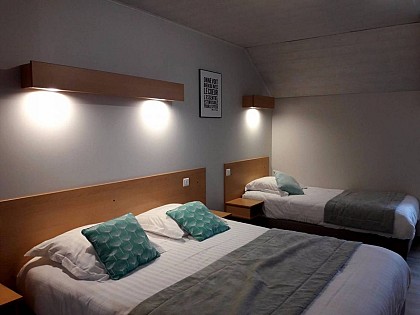
Véronique welcomes you in a rural setting, inside an old building completely renovated. The first traces of the house date from 1299 in the hare (cadastre) of Estivareilles. The traces of the mill can be found in the Napoleonian cadastral plane of 1826. The mill (always existing) was in operation until 1930, and a sawmill was installed to replace the mill shutdown. Located at an altitude of 900 m, come and refresh yourself in this greenery. You will find the grain mill for animal meal, in the center of the house, adjoining the guest rooms; the sawmill dating from the beginning of the 20th century and which stopped in 1985. The Andrable River passes through the house and runs along the rooms. In one of the rooms you will have the pleasure of hearing the sound of the water if you sleep the open window. Three rooms are at your disposal so that you can have a pleasant stay. The “Charbon” room of 20 m2, spacious and clean, will seduce you with its comfortable king size bedding and its modern and functional bathroom. The “Panah” room of 20 m2 will seduce you with its breathtaking view of the Andrable River and its modern and functional bathroom. The “Babet” room of 18 m2 will seduce you with its modern and functional bathroom and warm colors. Each room gives access to a relaxation area and shared kitchen, with the possibility of eating (hotplates, refrigerator, coffee maker). Sweet and/or savoury breakfast (depending on your desires) is served in the kitchen area from 7 a.m. to 10 a.m. If necessary, we can agree on specific timetables.

439 Hameau de la Plagne 42380 Merle-Leignec
Show
Caution!
We have no information on the difficulty of this circuit. You may encounter some surprises along the way. Before you go, please feel free to inquire more and take all necessary precautions. Have a good trip! 🌳🥾