Tours
Activities
Places of interest
Where to eat
Where to sleep

Discovering honguemare-guenouville in haute-normandie

Are you in charge of the destination?
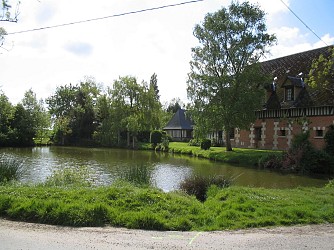
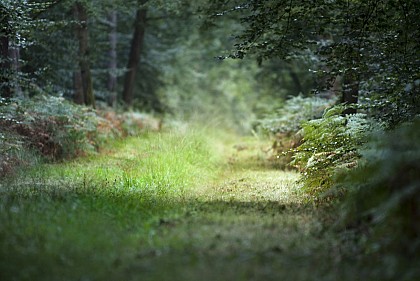
Located in the heart of the Eure department in Haute-Normandie, Honguemare-guenouville is a charming commune that offers visitors a wealth of cultural and natural discoveries. Begin your exploration with a relaxing walk through its green landscapes. This picturesque setting is perfect for hiking and cycling enthusiasts, offering a refreshing break amidst the fresh air of the Norman countryside.

...
See more

What to do in Honguemare-guenouville

See more suggestions
Choose from a variety of activities in Honguemare-guenouville and book your favorites.
See more suggestions
La Maison Fournaise Renoir the immersive experience
113 km

La Maison Fournaise Renoir the immersive experience

The Fournaise museum proposes a meeting with the artist during a show, punctuated by digital animations and videos, in the middle of the atmosphere recreated by the sets of theaters. of the museum. One hundred years after his death, Renoir is back in Chatou hologram! Familiarly, he tells us about his vision of painting, the harsh criticisms of his contemporaries, his workshop secrets, his loves, his relatives ... and the fertile inspiration drawn from the banks of the Seine. At the time of the first scandals, Durand-Ruel and some amateurs give him a decisive support by buying him paintings. Alphonse Fournaise is one of the first! He ordered his portrait and that of his daughter for 200 francs. For more than ten years, Renoir made frequent stays at home and around Chatou where he painted about thirty paintings. Aged nearly forty, he began the ambitious Breakfast of the Boaters. This painting, painted on the balcony of the Maison Fournaise, is the result of long research. The painter feels then that he has arrived "at the end of impressionism". This great admirer of the masters of the Italian Renaissance dreams of making this work a bridge between Veronese, Raphael and the modern life of his century. Retained at the Fournaise by his painting in 1880, he wrote to Monsieur de Bellio: "You will not regret your trip. It is the most beautiful place around Paris. " To complete your experience in the footsteps of Renoir, go back in time on the Fournaise hamlet thanks to the virtual reality helmets, wander among the characters of the Breakfast of the boaters with the tactile tablets or create your own work according to the master in painting Virtual. In this unprecedented show, technology offers an innovative, fun and surprising approach to an immersive journey in the heart of the painter's Impressionist years in Chatou. - Departures of visits every 30 minutes. Come 15 to 20 minutes in advance. - Duration of the show: about 60 minutes

3 rue du bac Île des Impressionnistes 78400 Chatou
Book from 0 €Book
Show
The Petit Trianon
114 km

The Petit Trianon

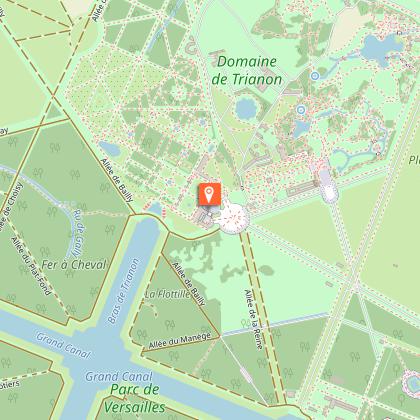
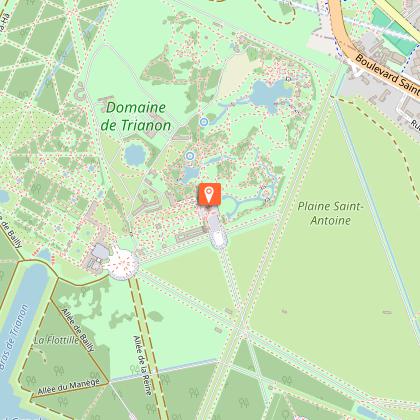
The Petit Trianon was built between 1763 and 1768 by the architect Gabriel, requested by Madame de Pompadour, mistress then friend of king Louis XV. Madame de Pompadour, who wished to “relieve the king’s boredom” — though no longer his mistress, she remained his friend — was the instigator of this small château, built by architect Gabriel between 1763 and 1768. It was erected near the Botanical Garden and the new menagerie, as Louis XV had a keen interest in the sciences. To please the marquise, always at the forefront of fashion, the king’s architect broke away from the rococo aesthetic and adopted a cubic form with very pure lines, in keeping with the brand-new “Greek style” then in vogue. Its simplicity is only apparent, for each façade is different, designed in relation to the space it overlooks: the courtyard, the French Garden with its elegant pavilion, the Botanical Garden, and the Florist’s Garden. Inside, one finds the same modernity of style. Simpler than the rest of the estate, the decoration of the Petit Trianon lies not in lavish materials — gilding is almost absent — but in the refinement of its sculptures, in a château entirely dedicated to nature. Madame de Pompadour died in 1764 and never saw the château completed. Today, it is above all the memory of Marie-Antoinette that it evokes. In 1774, Louis XVI gave the Trianon estate to his wife, who was able to live here a life apart — too much so for some — from the Court.

Château de Versailles 78000 Versailles
Book from 0 €Book
Show
Palace of Versailles All Access Passport Entry with Audioguide
116 km

Palace of Versailles All Access Passport Entry with Audioguide

ArrayYour Experience Use Your Passport to Tour the Château de Versailles Your ticket gives you access to the most famous places within the royal estate including the Royal Palace, the Park, Gardens, Marie Antoinette’s Estate, and entry to any exhibitions on show at the time of your visit. If you plan to visit on a Friday, Saturday or Sunday, it’s worth paying the extra €8 for an upgraded Passport ticket, which includes access to the Musical Fountain and Garden shows. Learn About the French Monarchy with the Help of a Multilingual Audio Guide Upon entering the Palace, collect your complimentary audio guide from one of the two pick-up counters located on the ground floor, one at the entrance to the Apartment Ladies and the other at the entrance to the Gallery of Castles. Audio guides are available in 11 languages: Spanish, Chinese, English, French, German, Italian, Japanese, Korean, Polish, Portuguese and Russian. Begin your visit by exploring the ornate King and Queen's State Apartments. Learn about the French monarchy and peek into the private lives of the infamous King Louis XIV and Marie Antoinette. Next, make your way to the glittering Hall of Mirrors. Designed to protect the ornate walls and ceilings from smoke, the hall’s 357 mirrors were strategically placed to reflect the light of candles. With just a few flames, the reflection from so many mirrors was enough to light up the whole hall! Explore 250 Acres of Gorgeously Landscaped Lawns and Fountains After admiring the inside of the Palace, head outdoors and take in the grandeur of the estate’s impressive architecture. Stroll along the cobblestone grounds, through the beautiful French gardens, and pass by the gorgeous Versailles fountains. Next, stop by the Estate of Marie Antoinette and discover the life and antics of the Queen at the Petit Trianon. Walk around the Village of the Queen and English gardens, then see where Marie Antoinette built her own house, a Mill, a Preparation Dairy, a Cave, a Belvedere and the magnificent Temple of Love where lovers get engage. At the Carrosses Gallery, travel back in time as you explore carriages, coaches, sculptures and other artifacts left behind by the French Monarch. If you’re short on time and would prefer to skip the long lines, a Versailles skip-the-line entry ticket will allow you to save your time. If you’d like to maximize your time at the palace of Versailles and get a more in depth Castle experience, click here. Each year, it is estimated that approximately 5 million people visit the Palace of Versailles, and between 8 and 10 million people walk its gardens. A place of immense beauty, Versailles stands as a symbol of France’s monarchy and its glorious history.

Book from 20 EURBook
Show
Palace of Versailles
116 km

Palace of Versailles

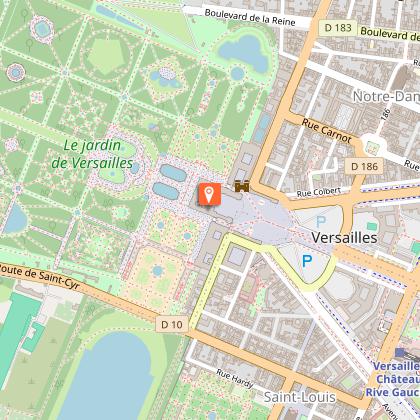
Since 1979, the Palace of Versailles has been listed as a UNESCO World Heritage Site. It stands as one of the finest masterpieces of 17th-century French art. The Palace and the Trianon Estate are open every day, except Mondays. The Palace opens at 9 a.m., while the Trianon Estate opens only from 12 p.m. The Park and Gardens are open daily with free admission (access to the Gardens is ticketed on the days of the Musical Fountains Shows and Night Fountains Shows, as well as during the Musical Gardens). You can only access the Park via: the Queen’s Gate (Grille de la Reine, entrance for pedestrians, cyclists, and vehicles every day), the Saint-Antoine Gate (Porte Saint-Antoine, pedestrians and cyclists every day, vehicles only on weekends and public holidays), the Matelots Gate (Grille des Matelots, pedestrians and cyclists every day), from 7 a.m. to 8:30 p.m., with last entry at 6:15 p.m. in high season, and from 8 a.m. to 6 p.m. in low season. By exploring the Hall of Mirrors, the King’s State Apartments, and the Museum of the History of France, you step into a palace that, until 1789, was the heart of royal power and continued to evolve over the centuries. Originally, Versailles was nothing more than a hunting lodge built by Louis XIII. But it was here that Louis XIV chose to construct the majestic palace we know today, a symbol of absolute monarchy and French classical art. In the 1670s, Louis XIV commissioned the construction of the King’s and Queen’s State Apartments. The most emblematic creation of these ceremonial spaces is undoubtedly the Hall of Mirrors, designed by Mansart. During the following century, the palace kept expanding, with major works such as the Royal Chapel and the Opera. Today, the Palace covers 63,154 m², spread across 2,300 rooms. Although the Palace lost its role as the seat of power in 1789, in the 19th century it was given a new purpose: to become the Museum of the History of France, an idea launched by Louis-Philippe, who ascended the throne in 1830. Many rooms of the palace were then transformed to house collections recounting the great moments of French history, enriched until the early 20th century.

Château de Versailles Place d'armes 78000 Versailles
Book from 0 €Book
Show
Palace of Versailles Entry Ticket with Audioguide
116 km

Palace of Versailles Entry Ticket with Audioguide

ArrayWhat to Expect Begin your visit by exploring the ornate King and Queen's State Apartments. Learn about the French monarchy and peek into the private lives of the infamous King Louis XIV and Marie Antoinette. Next, make your way to the glittering Hall of Mirrors. Designed to protect the ornate walls and ceilings from smoke, the hall’s 357 mirrors were strategically placed to reflect the light of candles. With just a few flames, the reflection from so many mirrors was enough to light up the whole hall! After admiring the inside of the Palace, head outdoors and take in the grandeur of the estate’s impressive architecture. Stroll along the cobblestone grounds and pass by the gorgeous Versailles fountains. At the Carrosses Gallery, travel back in time as you explore carriages, coaches, sculptures and other artifacts left behind by the French Monarch. If you’re short on time or would prefer to skip the long entry lines, a Versailles skip-the-line entry ticket will allow you to save anywhere from 1-3 hours of waiting. If you happen to visit the Palace on a Tuesday, Saturday or Sunday, consider opting for a Versailles Passport ticket and catch one of the famous water fountain and musical shows. Each year, it is estimated that approximately 5 million people visit the Palace of Versailles, and between 8 and 10 million people walk its gardens. A place of immense beauty, Versailles stands as a symbol of France’s monarchy and its glorious history.

Book from 18 EURBook
Show

What to visit in Honguemare-guenouville

See more suggestions
Savor the local cuisine of Honguemare-guenouville.
See more suggestions
Arboretum de la Base de Loisirs de Jumièges
4.5 km

Arboretum de la Base de Loisirs de Jumièges

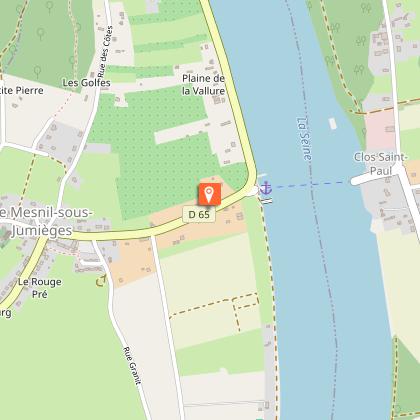
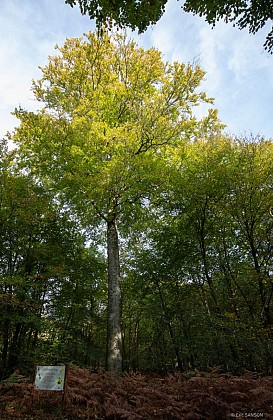
Today, I take the children to the leisure center of Jumièges-le-Mesnil, the ideal place to let off steam and enjoy a nice day with the family under the sun. We can enjoy the many activities offered, and the children are very enthusiastic. In the morning, we make pedal boat, and we even try the paddle, not simple! For the lunch, we go to the beach snack and eat at the edge of the water. In the afternoon program: Planèt? Enigma for the children and relaxation for me in the sun. While they leave for the adventure, I go towards the beach. On my way, I see a sign with a map. I approach it and read "Remarkable trees". Here is an arboretum! I don't say no to a walk among the trees. I discover imposing and majestic trees, such as magnificent oaks and plane trees. As I walk in the shade of the foliage, I look up to admire the sun's rays that delicately rest on them. My sky is no longer blue, it is a cameo of green with brilliant colors. It is magnificent! In the distance, I can hear the laughter of children, but I feel cut off from the world. I concentrate on the sound of the leaves waving in the light breeze, and from time to time I hear twigs breaking under my feet. In the middle of this green landscape, I am wrapped in a bubble of calm and well-being, it is very relaxing. I savor this moment of simple pleasure. The labels at the foot of the trees tell me their name and the family to which they belong. I even discover a ginkgo biloba, also called "tree of the forty écus? which had survived the Hiroshima atomic bomb! I am impressed by the resilience of this species, and more generally of nature in general. This initiative, as instructive as it is unusual, to set up an arboretum in the middle of a leisure facility, pleases me a lot. My stroll brought me back to the beach. This instructive break will have put me in joy before putting my feet in the water!

4 route du Manoir 76480 LE MESNIL-SOUS-JUMIEGES
Show
Église Saint-Valentin
6 km

Église Saint-Valentin

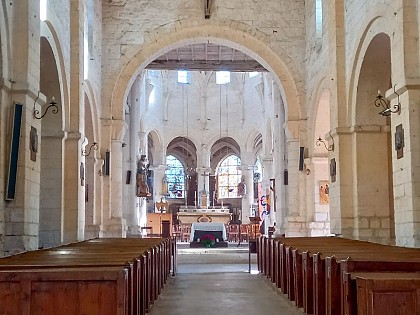
In the Seine Valley, the Abbey Route leads to buildings that are part of the Seine-Maritime region?s religious heritage, such as the Église Saint-Valentin de Jumièges, situated at the top of a gently sloping hill. The history of this church is linked to that of Jumièges Abbey. It is a parish church built at the request of the monks of the Abbey, who no longer wished to be disturbed by parishioners... From the outset, this parish church was placed under the protection of the Abbey. Built in the 11th and 12th centuries near the Abbey, it is dedicated to Saint Valentine. The church bears witness to the evolution of architecture and styles. All that remains of the original Romanesque plan is the central nave flanked by two aisles, two transept pillars and part of the lantern tower. In the 16th century, the Romanesque portal was altered and the choir rebuilt in Renaissance style with nine bays. Also in the choir and in the southern chapel, a remarkable collection of stained glass windows covers the art of stained glass from the 14th to 16th centuries. Scenes are inspired by the Old and New Testaments. Many of the stained glass windows come from the Abbey, and more specifically from Saint-Pierre church. At the same time, the church was enlarged with a twelve-bay ambulatory opening onto eight radiating chapels. The furnishings and decorations come from the Abbey. These include a 15th/16th-century statue of Saint-Etienne as a deacon, and another in polychrome oak depicting the theme of Ecce homo. Numerous other polychrome statues also adorn the building, including the emblematic Saint-Valentin, patron saint of the church. A number of ex-voto statues hang in the church, testifying to the importance of Jumièges? river activity in the days when there was a port. More confidential, but in the same spirit, on the choir walls outside, these ex-votos can take the form of graffiti. During the French Revolution, unlike the Abbey, the building escaped destruction and remained preserved as a parish church. For all these reasons, the Church of Saint-Valentin de Jumièges was listed as a Monument Historique in 1918. The stained-glass windows were listed again in 1978. From the promontory where Saint-Valentin Church stands, admire the view of Notre Dame Abbey and its two great towers that pierce the sky. Then explore the abbey route along the Seine

1307 Rue du Quesney 76480 JUMIEGES
Show

Where to eat in Honguemare-guenouville

See more suggestions
Restaurants in Honguemare-guenouville offer a friendly atmosphere.
See more suggestions

Where to sleep in Honguemare-guenouville

See more suggestions
Choose a comfortable accommodation in Honguemare-guenouville.
See more suggestions
Caution!
We have no information on the difficulty of this circuit. You may encounter some surprises along the way. Before you go, please feel free to inquire more and take all necessary precautions. Have a good trip! 🌳🥾