Tours
Activities
Places of interest
Where to eat
Where to sleep

Discover Coutencon, Seine-et-Marne, Ile de France

Are you in charge of the destination?
Nestled in the heart of Seine-et-Marne, the charming town of Coutencon is a true haven for nature lovers and history enthusiasts. Though relatively small, the town serves as an ideal starting point for many bucolic adventures and cultural discoveries. Visitors can begin their exploration with a leisurely walk through the surrounding countryside, where numerous hiking trails meander through fields ...See more

Walking around Coutencon

See more suggestions
Explore the walking circuits of Coutencon.
See more suggestions
A trendy walk in Brie – Villefermoy (trail no. 2)
6.6 km

A trendy walk in Brie – Villefermoy (trail no. 2)

Set out to explore the Villefermoy Forest, with its old trails and forgotten ruins, where foresters and nature itself, through a series of interviews, bring to life the history of this Briard forest. Whether you’re naturally curious, enjoy short outings, are an experienced hiker, a smartphone user, a novice or a regular, the “Balade Branchée” app offers original walks through natural areas in Île-de-France and Normandy. Offered free of charge by the National Forestry Office, Île-de-France Nature, and the Departments of Seine-et-Marne and Yvelines, the Balade Branchée app is a handy pocket nature guide. 1. Download the “Balade Branchée” smartphone app, available free of charge from: – App Store: apps.apple.com/us/app/balade-branchée/id1236661583 – Google Play: play.google.com/store/apps/details?id=com.onf.fontainebleau 2. Enable the app’s location services on your smartphone. 3. Choose your walk from nearly 100 routes. It couldn’t be simpler: an interactive map or a list of walks organised by department lets you view all the available routes. 4. Download your chosen route to your mobile phone. Enjoy your walk! Towns along the route: Les Écrennes, Échouboulains Distance: 4.8 km – Time: 1 hour 45 minutes – No signposting Access the map: www.cirkwi.com/fr/circuit/1223408-balade-branchee-en-brie-villefermoy-sentier-n-2

2 h
4.8 km
Very easy
Croisement route de Valence et route des Gargots 77820 Les Écrennes
Show
A trendy walk in Brie – Villefermoy (trail no. 1)
6.7 km

A trendy walk in Brie – Villefermoy (trail no. 1)

In the heart of the Villefermoy Forest: hunting with hounds, traditional crafts, remarkable trees and hidden ponds… Let the ONF take you behind the scenes of a vibrant Briard forest, exploring its history and modern-day forest management. Whether you’re naturally curious, enjoy short outings, are an experienced hiker, a smartphone user, a novice or a regular, the “Balade Branchée” app offers original walks through natural areas in Île-de-France and Normandy. Offered free of charge by the National Forestry Office, Île-de-France Nature, and the Departments of Seine-et-Marne and Yvelines, the Balade Branchée app is a handy pocket nature guide. 1. Download the “Balade Branchée” smartphone app, available free of charge from: – App Store: apps.apple.com/us/app/balade-branchée/id1236661583 – Google Play: play.google.com/store/apps/details?id=com.onf.fontainebleau 2. Enable the app’s location services on your smartphone. 3. Choose your walk from nearly 100 routes. It couldn’t be simpler: an interactive map or a list of walks organised by department allows you to view all the available routes. 4. Download your chosen route to your mobile phone. Enjoy your walk! Towns passed through: Les Écrennes – Fontenailles Distance: 9.4 km – Time: 3 hours – No signposting Access the map: www.cirkwi.com/fr/circuit/1224498-balade-branchee-en-brie-villefermoy-sentier-n-1

3 h
9.4 km
Very easy
Croisement RD12 et route du ru Guérin 77370 Fontenailles
Show
Échou Forest
8.3 km

Échou Forest

The monks highlighted the riches of the forest of Échou and the surrounding fields with their cereals. The Ferme de la Recette is a testament to this, among the fortified farms in the region. Certified by FFRandonnée. Route description : 1. With your back to the church, go straight ahead into Rue Jean Haderer, walk past the sports field and turn left, take the path on the right through the fields. It crosses the railway line and the motorway. At the crossroads, turn downhill to the left. 2. The path crosses the Vallée Javot stream and passes through Échou by Rue du Moulin (Ferme de la Recette). Turn left, Rue du Maréchal de Lattre de Tassigny, and right into the street. Climb left along a grassy path and continue to the right along the edge of the forest. Follow the road to the left. Pass the road to Pamfou on your left and take the path on the same side. Turn left twice, then turn right onto the road to Pamfou for 750 m. The wide road becomes a track. Pass the barrier, continue in the same direction for 850 m along a trail then a wide path. At the exit of the forest, turn right, on the edge then in the undergrowth, on a path then along a wide track, go past the monument, turn left. 3. Follow the edge to the left, then leave the forest. Pass under the highway and the railway line and enter Pamfou. On the RD605, make a left-right crossing and take Rue de la Liberté. At the roundabout, turn left onto Rue Tournerie. At the exit of the village a dirt road extends the route. Turn left, go down right. 4. Turn left into the next path. It crosses the Jouannet stream, runs alongside the Vallée Javot stream, then crosses it again to enter Valence-en-Brie by Rue Henri Pelle (RD107). Turn right, into Rue Émile Parquet, then left, Rue Guy Charles Gros. Cross the RD605 and return to the church. Municipalities crossed : Valence-en-Brie, Échouboulains, Pamfou Distance : 13,9 km – Duration : 3h15 – Marked trail : Yellow - Difficulty : Average Access to the map : www.cirkwi.com/fr/circuit/353265-la-foret-d-echou

3 h
14 km
Easy
3 Place de l'Église 77830 Valence-en-Brie
Show

What to do in Coutencon

See more suggestions
Explore the many bookable activities in Coutencon and make the most of every moment.
See more suggestions
Medieval town of Provins
23 km

Medieval town of Provins

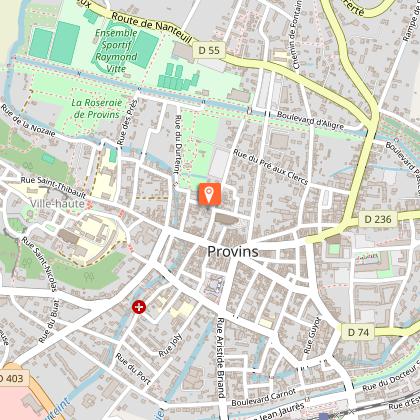
Provins, UNESCO’s World Heritage List! Located 1 hour from Paris in Seine-et-Marne, discover this medieval town offering visits, historical shows & great events... to go back to the Middle Ages! Inscribed on the UNESCO’s World Heritage List on December 2001, Provins is today a wonderfully preserved medieval town. During the 12th and 13th centuries, Provins is at the height of its fame thanks to the famous Trade Fairs of Champagne. The urban structure is organised to accommodate the great number of wholesalers: the wide streets for the transfer of goods and for the stalls, the three level merchant’s houses with sumptuous vaulted low rooms... The presence of water (Durteint and Voulzie rivers) favours also the economic activities and the expansion of many trades such as the woollen cloth manufacturer, the parchment maker, butcher, etc... The impressive fortified wall was built during the 13th century and extended for 5 km (today 1,2 km), and it offers a catalogue of military architecture. Those ramparts protected the inhabitants and the tradespeople, and showed off the power of the Earls of Champagne. Exceptional monuments to visit all year round: > the superb keep of the Cesar Tower with its different rooms and a panoramic view from the top floor, > the Grange aux dîmes (tithe barn), a typical medieval house with an exhibition of merchants and craftsmen of the time to discover with an audio-guided tour available in French, English, German, Spanish and Chinese, > the Museum of Provins and the Provinois, located in one of the oldest houses of Provins, and presenting unique collections since prehistory, > the thousand-year-old and majestic Saint-Ayoul Priory, recently restored, to be visited with an audio guide, Amazing shows of chivalry and falconry, "The Legend of the Knights" and "The Eagles of the Ramparts", will take visitors into the heart of history every day from the end of March to All Saints' Day. Not forgetting the little train, the Provins Rose Garden, guided tours, rental of electric bikes, hiking, major events, and a whole region to discover to prolong the pleasure and the experience, to live with family or friends! Pass Cards formulas allow you to visit the monuments and to benefit from reduced rates for other activities. The Tourist Office team will be happy to offer you the "Visitor's Guide", a very complete brochure to enjoy your stay...

Office de tourisme Intercommunautaire 4 Chemin de Villecran 77160 Provins
Book from 0 EURBook
Show
Palace of Fontainebleau
23 km

Palace of Fontainebleau

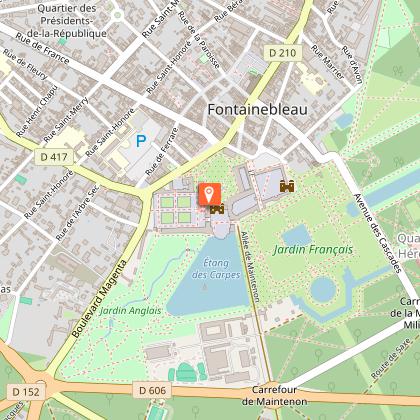
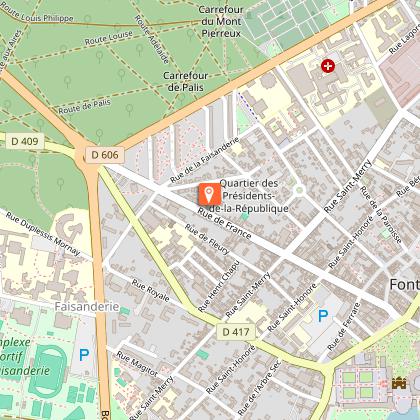
The Château de Fontainebleau is a big part of French history! This vast building, in both classical and Renaissance style, is not only famous for witnessing Napoleon's imperial adventure. From the royal charter of 1137 to the fall of the Second Empire in 1870, the Palace of Fontainebleau saw the lives of the greatest French sovereigns from day to day. The original medieval fortress was replaced by a Renaissance palace under the guiding hand of Francois I. At that time, two Italian artists, Primaticcio and Il Rosso vied in talent and founded the first School of Fontainebleau. The Galerie François I, which leads from the royal apartments to the chapel of the Convent of the Holy Trinity, is most original with its décor of frescoes, stucco and carved wood in praise of François I. The Ballroom was completed at the time of the last Valois kings, under Primaticcio’s direction. With Henri IV, the new Bourbon dynasty took over the palace, and built new rooms with interior decoration placed in the hands of the artists of the second School of Fontainebleau. Louis XIII completed the work started by his father. Under the Sun King Fontainebleau continued to be the royal family home, and the Grand Dauphin was born there in 1661. The king’s nieces were married from Fontainebleau, and the Edict of Nantes was revoked there in 1685. Louis XV and Louis XVI would spend the autumn there and initiated new, large scale building works and interior doing-ups. After the French Revolution, Napoleon I found the palace completely emptied of its furniture but intact. He undertook to refurnish the apartments and brought the palace back to its former glory as the home of the sovereign. Napoleon Bonaparte spent his last days there before his abdication in 1814 and departure for the Elba. Louis-Philippe was the first sovereign to order a complete restoration of Fontainebleau. The restoration of the Empire in 1852 gave renewed importance to the palace, and Napoleon III became strongly attached to this home, staying there regularly with his court. Housed in the Louis XV wing, the Napoleon I museum is dedicated to the Emperor and his family, with a large collection of objects from his everyday life, weapons used in military campaigns and gifts he received. The Chinese museum, created by Empress Eugenie, displays works of art from the Far East. The Jeu de Paume court, thought to be the oldest of the three surviving in France, is open to the public with demonstrations and introductory games. Le Nôtre's French gardens, the Queen’s English garden with its Fountain of Diana, the hedge maze and the Cour des Adieux are open to the public all year round. Boat excursions on the Etang aux Carpes or horse-drawn carriage rides are available. The Domain of the Fontainebleau Palace is inscribed at the UNESCO Humanity World Heritage. There is a little train going around the gardens during the touristic season.

Place du Général de Gaulle 77300 Fontainebleau
Book from 11 EURBook
Show

What to visit in Coutencon

See more suggestions
Attend events organized in Coutencon.
See more suggestions
Domanial Forest of Villefermoy
8 km

Domanial Forest of Villefermoy

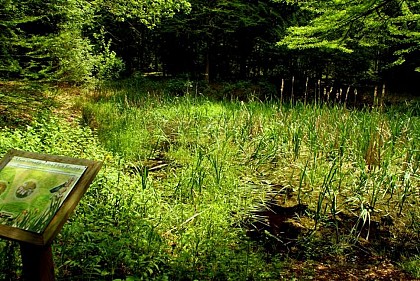
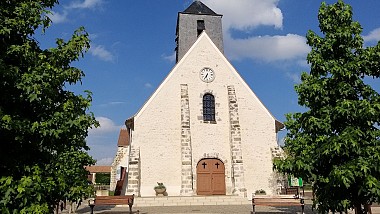
Former ecclesiastical forest and royal hunting ground of King Louis XVI, the Domanial Forest of Villefermoy, in Seine-et-Marne, became state property in the 19th and 20th centuries. It is today a Natura 2000 zone. 60km from Paris and 20km from Melun, located on the municipalities of Échouboulains, Les Écrennes, Valence-en-Brie, Pamfou, La Chapelle-Gauthier, Fontenailles, La Chapelle-Rablais, Coutençon and Laval-en-Brie, this vast and beautiful oak forest is composed of two entities separated by an agricultural zone : the "Forêt de Villefermoy" to the West and the "Bois de Saint-Germain-Laval" to the East. The Villefermoy massif has a long history that can still be found today in the layout of forest roads and above all in the presence of ancient remains. Although its existence has only been attested since the Carolingian era, human activity there is far older. Humans did indeed roam this woodland domain as far back as the Neolithic. It has been inhabited and used, temporarily or permanently, since the Gallo-Roman era. As a former ecclesiastical forest, it was the property of the abbeys of Barbeau, Preuilly, Saint-Germain des Prés and the Commanderie de l'Ordre de Malte de la Croix en Brie before the Revolution. An extension of the Haie de Brie, it served, in the Middle Ages, as a natural boundary between the possessions of the Count of Champagne and the domain of the King of France. The monks exploited it to produce timber and firewood which they used in their abbeys. A forest warden, "Hugues garde des bois" (Hugo custos nemorum), was moreover appointed as early as 1140 in order to oversee the woodland and its exploitation ! The forest gradually became, through exchanges and acquisitions, state property during the 19th and 20th centuries. Its management was then entrusted to the Eaux et Forêts administration and subsequently to the Office National des Forêts (ONF) in 1964. Located at the heart of the humid clay plateau of the Brie, its surface extends over 2641 hetares and presents a fairly flat relief (between 105 and 135m in altitude). It includes a network of ponds and wetlands that shelter a great diversity of amphibians, including several protected species : European tree frog, Grass frog, Spotted salamander, Palmate newt... Rich in more than 120 bird species, it is part of the Natura 2000 zone "Massif de Villefermoy". There are 7 rare and protected nesting species : European honey buzzard, Hen harrier, Black kite, Common kingfisher, Grey-headed woodpecker, Middle spotted woodpecker and Black woodpecker. Populated by roe deer, wild boar and hares, Villefermoy is structured by large straight alleys interspersed with star-shaped crossroads, which bear witness to a long hunting tradition. The fertile soils of the Domanial Forest of Villefermoy are very favourable to the growth of sessile oak. Some of them reach exceptional dimensions. A few remarkable trees are listed and preserved during felling. Since 2006, the living heritage has led the State to classify the entire massif as a Natura 2000 zone (European ecological protection network) for the preservation of birdlife. In total, 4,790 hectares, of which 55% is state forest, are part of the "Natura 2000 Special Protection Zone Massif de Villefermoy" (ZPS). Several kilometers of paved road, gravelled or natural terrain roads are open to the public at Villefermoy. Some paths are marked, such as the long-distance hiking trail of Thibaud de Champagne, the short hiking trails of Grand Grippon and Bois des Moines or walking circuits (paths of the Brie Nangissienne, loop of the 2 massifs). Equipped areas (Huit Routes, Ru Guérin, Pavé de Boulains, Grandvilliers) with car parks, picnic tables, and information points allow walkers to fully enjoy the forest. Other parking areas are also distributed along the roads crossing the massif. (see map)

77820 Les Écrennes
Show
Sensitive Natural Area : Les Bordes Chalonges
14 km

Sensitive Natural Area : Les Bordes Chalonges

The ENS Les Bordes Chalonges, covering an area of 65 hectares, overlooks a meander of the Ancœur stream, a small watercourse that has carved its bed into the Brie plateau. The woodland is part of the Villefermoy forest massif of around a thousand hectares. In old French, "Borde" means a small house or a small agricultural holding, which differs from a farm by the absence of an enclosing wall. The Bombon area has always been dedicated to agriculture : wheat, oats, sugar beet on the richest land, and vines on the sunny slope of the Ancœur. The end of the 19th century saw the rise of large-scale farming. Thus, from 1870 to 1900, the vineyard shrank from 40 to 10 hectares, the woodland reclaimed the fallow land, while cereal crops doubled their surface area and the optimisation of yields reduced the number of farms from 91 to 7 ! It was at this time that the mill, the press and the oil mill, which until then had allowed everyone to process the fruit of the harvests, ceased their activity. The quarrying of millstones from the 17th century in the surrounding area probably explains the presence, not far from the pond, of a broken millstone. But this activity remained minor in comparison with the millstone quarries of La Ferté-sous-Jouarre (departmental ENS of the Bois de la Barre). In the 19th century, several sand and sandstone quarries were in operation for construction and paving. In the course of history, the site has belonged to many families. One of its most illustrious owners was Pierre-Marie Durand, the famous "King of the Kilowatt". In 1941, then mayor of Bombon, he purchased various plots to form an estate of 1,400 hectares, representing 93% of the municipal territory, of which Les Bordes Chalonges forms a part. These were subsequently acquired by the Department in two steps : the northern part in 1992 and the southern part in 2002. Before its acquisition by the Department, it was primarily subject to silvicultural management : the northern part was transformed into a poplar grove in 1977, while, from 1980, the southern part was managed to transition from coppice to an oak high forest, where 11 hectares of ash trees were also planted. Today the management of the site is ensured by the Fédération Départementale des Chasseurs de Seine-et-Marne in partnership with the Office National des Forêts. The forest ponds are home to 7 species of amphibians and certain heritage floristic species such as the bladderwort. The variety of woodland allows for the existence of a rich variety of birds, including in particular the middle spotted woodpecker, the coal tit and the wood warbler. The mown wet meadows along the banks of the Ancoeur constitute a remarkable habitat in Seine-et-Marne. Many butterflies are present there. Two marked trails allow visitors to discover the hidden treasures of the site. Natural environments present : woodland, riverbanks, ponds Site interests : botany, entomology, ornithology, amphibians Particularities : Ancoeur valley Managing and coordinating body : Fédération Départementale des Chasseurs de Seine-et-Marne.

Route Départementale 408 77720 Bombon
Show
Domaine de la Salle
15 km

Domaine de la Salle

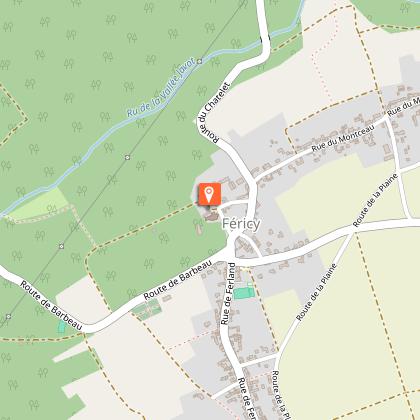
The Domaine de la Salle, in Féricy, brings together a manor house, several buildings, a 9 hectare plot of land and magnificent trees in the park open to the public. The history of the Domaine de la Salle is closely linked to that of the village of Féricy. The history of the Domain begins around 50 BC with the occupation of the Domain by its first owner Fericius or Fericiacus, who is said to have given his name to the village. Around 481, the Domain became the prerogative of the Frankish Kings and was entrusted to a vassal, taking the name of Domaine de la Salle. Pépin le Bref then gave the Domain to the Abbey of Saint-Denis, a donation confirmed in 775 by his son Charlemagne. In 1380, the Domain was sold to the Sainte-Chapelle by Pierre Despoix and Isabelle d'Auxy, his wife. In 1532, by the wish of the Canon of the Chapel, Jehan Parent, it became a parish church. In 1791, Regnaud sold the Domain to Louis Marie Pomponne Pinson de Ménerville, the king’s counsellor. The latter, having emigrated to Brussels during the Terror, returned to France in 1799 and then acquired the presbytery adjoining the church in 1835 and incorporated it into the outbuildings' courtyard. It is to him that we owe the current appearance of the Domaine de la Salle. In 1838 he built the current mansion, a "neo-classical manor" type with 4 levels. Neglected, fallen into abandonment, the Domaine de la Salle could have ended up in ruins, but that was without counting on the determination of the municipality, which acquired the property in 2006 following the death, without an heir of the last owner, and the dedication of the many volunteers who work to bring it back to life. Despite a fire in 2012 that destroyed part of the Manor House, little by little the site is being restored, it is the subject of numerous projects and already hosts a variety of events. The Domaine de la Salle incorporates many heritage and landscape elements : a manor house commonly known as "le château", outbuildings, a pond, a washhouse, the famous Saint-Osmanne spring and a vast tree-filled park. Walkers are invited to discover the variety of fauna and flora throughout the seasons, while respecting the surroundings. Among the spectacular trees, one can note a cedar and a cypress that punctuate the large meadow, a Japanese pagoda tree, a grey poplar, a Virginia tulip tree, a giant sequoia, pedunculate oaks, hornbeams and a sycamore maple (listed as a "remarkable tree of Seine-et-Marne"). Along and to the north of the canal, one can identify a copper beech, bald cypresses, a honey locust, and Italian poplars.

1 rue de l'Église 77133 Féricy
Show
Château des Dames and its park
16 km

Château des Dames and its park

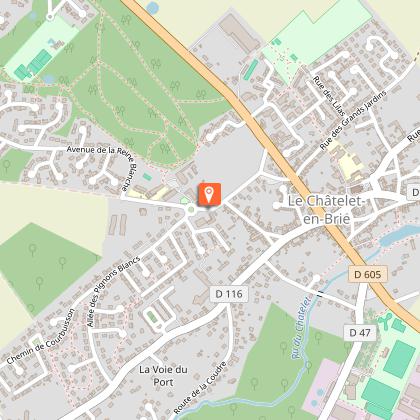
The Château des Dames at Châtelet-en-Brie takes its name from the nuns of the Royal Abbey of Saint-Louis de Poissy, holders of the lordship of the Châtelet lands from the 14th century to the Revolution. The Château des Dames was built in the 14th century following the donation of the estate to the nuns of the Royal Abbey of Saint-Louis de Poissy by King Philip the Fair. They turned it into a fortified farm, with both a defensive and an agricultural role. They kept it until the French Revolution, when the lordship was sold as national property. The property has had a succession of owners, who have run the farm without making any major alterations to the château. In 1861, Polycarpe Maclou Poussié purchased the estate. He was a prosperous notary in Aubervilliers. He was a member of the Municipal Council of Châtelet-en-Brie, a member of the Melun Agricultural Society and vice-president of the Horticultural and Botanical Society. Between 1877 and 1885, he completely renovated the castle with architect Pierre-Victor Cuvillier. He built a castle and modern farm buildings inspired by medieval architecture. These constructions were carried out according to a layout quite close to the pre-existing structure. The Château des Dames then became a family residence enhanced by a park. Through the prosperity of its farm, in operation until the 1960s, it functioned in near self-sufficiency. Between 1965 and 1978, the lands, the farm and the castle were gradually sold. In 1998, the municipality of Châtelet-en-Brie became the owner of the castle, the farm and its park, to enhance the building and turn it into a cultural venue. The Château des Dames now houses : inside the castle, the Media Library, and in the courtyard, the socio-cultural hall "Le Manège". The park is a place for walking open to all.

Rue du 19 mars 1962 77820 Le Châtelet-en-Brie
Show
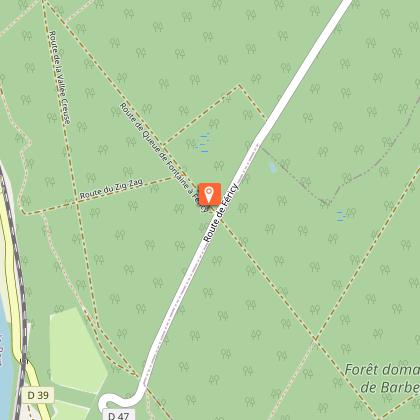
Domanial Forest of Barbeau
16 km

Domanial Forest of Barbeau

Located between Fontaine-le-Port and Féricy, the Domanial Forest of Barbeau offers vast panoramic views of the Seine and the Fontainebleau massif. This forest is home to sessile oaks, dominant, with a hornbeam understory. The massif of approximately 390 hectares has the particularity of being located on a limestone base covered by silt, clay, sand and Brie millstone. The lack of relief of this plateau and the presence of clay mean that rainwater has difficulty infiltrating, stagnates and made necessary the creation of drainage canals. Its other particularity is to still be treated, in almost its entirety, as coppice with standards, a result of its historical heritage. Indeed, it was until the Revolution, an ecclesiastical wood, placed under the authority of the Maîtrise des Eaux et Forêts which authorised it to practice this type of exploitation. The products served to supply Paris with firewood and framework and were transported very easily by the Seine from two landing stages at Fontaine-le-Port, so aptly named. Managed by the Office National des Forêts, the Barbeau forest is a production forest. It hosts several American red oaks and bald cypresses, species native to Florida. In the heart of the Barbeau forest, scientists have installed a measurement station, equipped with sensors that allow the measurement of matter and energy exchanges between the forest ecosystem and the atmosphere. Indeed, since 2003, the Plant Ecophysiology team of the ESE Laboratory (CNRS / Université Paris-Sud / AgroParisTech) has been working on an experimental forest site. Their activities are focused on understanding the processes that govern the functioning of the tree and the forest ecosystem as a whole. Since 2005, a major investment has been undertaken on the site, notably through a measurement station located at the top of a 35-metre-high pylon and dedicated in part to measuring exchanges of carbon dioxide (CO2) and water vapour (H2O) between the forest and the atmosphere. The Barbeau site is part of the ICOS network (Integrated Carbon Observation System), a new European research infrastructure dedicated to the observation and precise monitoring, over the long term (more than 20 years), of greenhouse gas fluxes. ICOS tracks carbon fluxes in Europe and the surrounding areas by measuring ecosystems, the atmosphere and the oceans through a network of integrated measurements.

Route de Féricy 77590 Fontaine-le-Port
Show
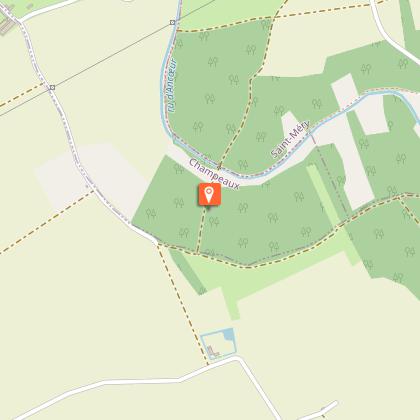
Notre-Dame de Roiblay Chapel
17 km

Notre-Dame de Roiblay Chapel

In the middle of a centuries-old wood in Champeaux, stands a little chapel (property of the municipality of Saint-Méry) implanted at the edge of the GR1. Here existed since the end of the 17th century, a priory with a chapel whose foundations still exist in part today. On the hillside which dominates the Ancœur stream valley, a listed site, stands a little chapel. Located on the municipality of Champeaux, but property of the municipality of Saint-Méry, by a decree of June 24th 1910, it is located at the edge of the long-distance hiking path, the GR1. On this location existed, since the end of the 17th century, a priory with a chapel whose foundations partially still exist today. Prosperous during the 13th and 14th centuries, it suffered the backlash of jurisdictional conflicts in the parish of Blandy and was only served by priests or hermits in the 16th century. The chapel continued, especially during the 16th and early 17th centuries, to be an important place of pilgrimage. In 1789, during the Revolution, community properties were seized and the chapel was sold in 1791 to Mr. Sarrazin de Maraize, Seigneur of Saint-Méry, for 200 livres. Named Mayor of Saint-Méry, Mr. de Maraize died there in 1794. The chapel was demolished during the Convention. The children of Mr. de Maraize had it rebuilt in 1803 and endowed it with a statue of the Virgin. It then served as a burial place for the family. Restored in 1859 by Mr. de Forestier, grandson of Mr. de Maraize through his mother, it remained in this family branch until 1867, then was offered to the municipality of Saint-Méry.

Rue du Moulin de Chaunoy 77720 Champeaux
Show

Where to eat in Coutencon

See more suggestions
Restaurants in Coutencon offer a variety of cuisines.
See more suggestions
Where to sleep in Coutencon

See more suggestions
Stay near Coutencon with our lodging options.
See more suggestions
Hôtel Mercure Château de Fontainebleau
24 km

Hôtel Mercure Château de Fontainebleau

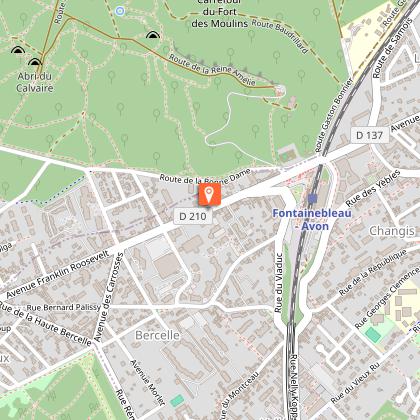
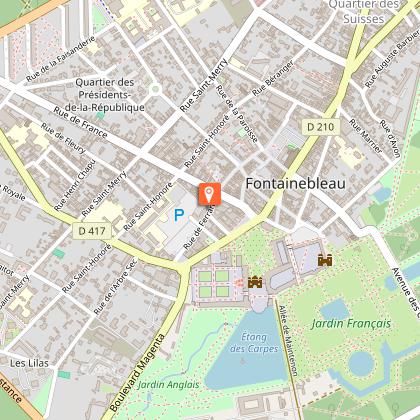
The Royal Mercury Hotel ("Le Mercure Royal") of Fontainebleau. A large private mansion, full of charm and refinement. Ideal for your stay, business or pleasure. 97 bedrooms and suites - Restaurant - Bar - Terrace - wooded park and private car park. 10 minutes walking to the Chateau, it has a perfect position in the quiet and near to the city center. Awarded the Green Key eco-label. HCome and enjoy an unforgettable weekend as a couple or with family in a country house in the heart of Fontainebleau. Of course, visit its must-see château, go climbing, or take a walk on foot or horseback through our ancient forest. Make our Country House your own by enjoying our musical evenings and a wide range of activities designed to help you unwind. Swimming pool, garden, tennis court — in our Country House, you’ll find outdoor activities to breathe, walk, and have fun, as well as indoor activities to play together, read, and learn to cook. There’s something for every taste and every age. The new identity of the Mercure Country House hotel has embraced the symbol of the horse, with a subtle, offbeat, and decidedly modern transformation, bringing a design-led, friendly, open, and warm atmosphere to the shared spaces. A hospitality concept that breaks with traditional codes and embodies a spirit of conviviality and sharing. More than just a hotel and restaurant, it’s a new place to live, relax, and connect... Escape every day in the restaurant. On Friday evenings, enjoy a musical “grazing” night for €25 per person (a cold buffet featuring local and seasonal products), including a glass of wine. A live concert is also आयोजित between 7:00 PM and 10:30 PM. Sleep in and take your time! Discover the restaurant at our Country House every Sunday from 11:30 AM to 2:30 PM (by reservation).

Show
Centre International de Séjour Le Rocheton
25 km

Centre International de Séjour Le Rocheton

The centre is located in La Rochette, on the edge of the Fontainebleau forest and in the heart of a 10-hectare wooded park. Its green, peaceful setting and proximity to many sites of interest make Le Rocheton an ideal base for discovering the region. Whether you're on your own, with family, friends, an association, a school, a work group, a walker or a climber, whether you're coming as a neighbour or from another continent to relax or to work, the whole team at Le Rocheton is here to welcome you and to meet your needs. What's more, Le Rocheton is ideally located close to many sites of interest: exceptional residences, the Châteaux of Fontainebleau, Vaux le Vicomte and Blandy les Tours, the medieval town of Provins, museums, theme parks, etc. Activities : - A covered and fenced volleyball/tennis/archery pitch with a suitable synthetic surface - A city stadium (volleyball / mini football / badminton / handball / tennis / basketball) on an adapted synthetic surface - 4 squash courts are planned for 2017 in collaboration with the French Squash Federation. Services : - Tourist breaks (groups or individuals) - Educational breaks (with a tailor-made programme of activities) - Room hire for private events - Seminars and study days - BAFA training courses Whatever the nature of your project, the teams at Le Rocheton are here to help make it unforgettable. (Tourism & Handicap label since April 2019).

Rue de la Forêt 77000 La Rochette
Show
Caution!
We have no information on the difficulty of this circuit. You may encounter some surprises along the way. Before you go, please feel free to inquire more and take all necessary precautions. Have a good trip! 🌳🥾