Alert
Alerts
Sensitive Natural Area : Les Bordes Chalonges
Description
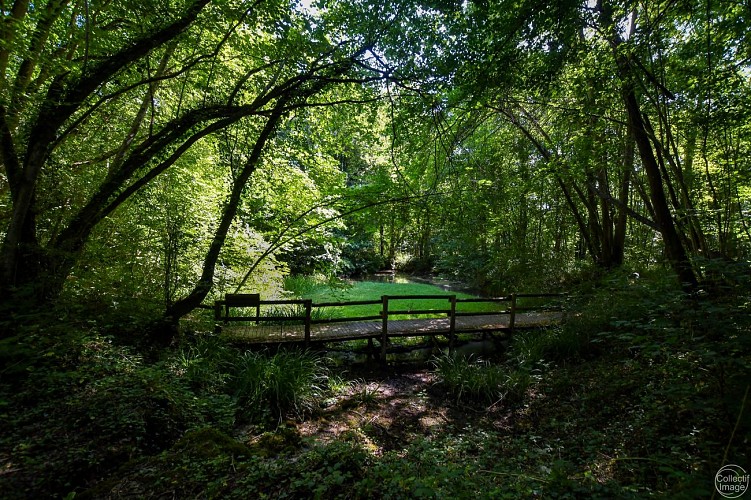
The ENS Les Bordes Chalonges, covering an area of 65 hectares, overlooks a meander of the Ancœur stream, a small watercourse that has carved its bed into the Brie plateau. The woodland is part of the Villefermoy forest massif of around a thousand hectares.
In old French, "Borde" means a small house or a small agricultural holding, which differs from a farm by the absence of an enclosing wall. The Bombon area has always been dedicated to agriculture : wheat, oats, sugar beet on the richest land, and vines on the sunny slope of the Ancœur. The end of the 19th century saw the rise of large-scale farming. Thus, from 1870 to 1900, the vineyard shrank from 40 to 10 hectares, the woodland reclaimed the fallow land, while cereal crops doubled their surface area and the optimisation of yields reduced the number of farms from 91 to 7 ! It was at this time that the mill, the press and the oil mill, which until then had allowed everyone to process the fruit of the harvests, ceased their activity.
The quarrying of millstones from the 17th century in the surrounding area probably explains the presence, not far from the pond, of a broken millstone. But this activity remained minor in comparison with the millstone quarries of La Ferté-sous-Jouarre (departmental ENS of the Bois de la Barre).
In the 19th century, several sand and sandstone quarries were in operation for construction and paving. In the course of history, the site has belonged to many families. One of its most illustrious owners was Pierre-Marie Durand, the famous "King of the Kilowatt". In 1941, then mayor of Bombon, he purchased various plots to form an estate of 1,400 hectares, representing 93% of the municipal territory, of which Les Bordes Chalonges forms a part.
These were subsequently acquired by the Department in two steps : the northern part in 1992 and the southern part in 2002.
Before its acquisition by the Department, it was primarily subject to silvicultural management : the northern part was transformed into a poplar grove in 1977, while, from 1980, the southern part was managed to transition from coppice to an oak high forest, where 11 hectares of ash trees were also planted.
Today the management of the site is ensured by the Fédération Départementale des Chasseurs de Seine-et-Marne in partnership with the Office National des Forêts.
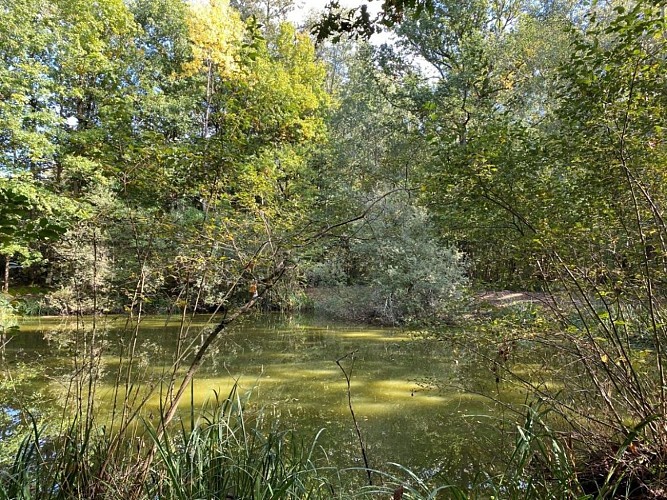
The forest ponds are home to 7 species of amphibians and certain heritage floristic species such as the bladderwort. The variety of woodland allows for the existence of a rich variety of birds, including in particular the middle spotted woodpecker, the coal tit and the wood warbler. The mown wet meadows along the banks of the Ancoeur constitute a remarkable habitat in Seine-et-Marne. Many butterflies are present there.
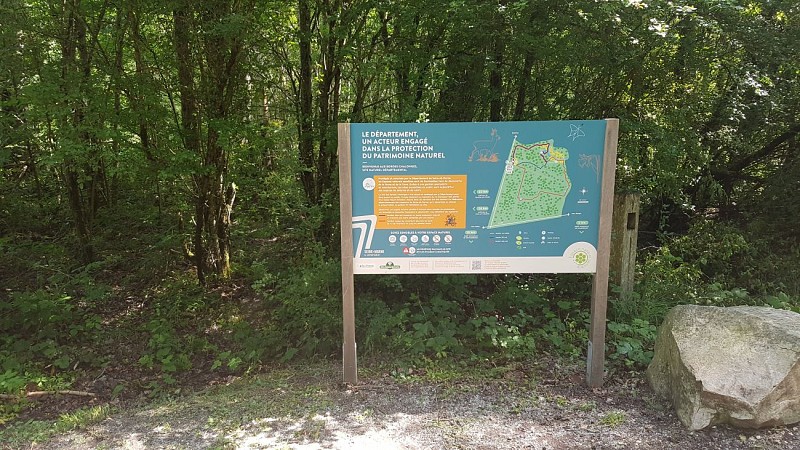
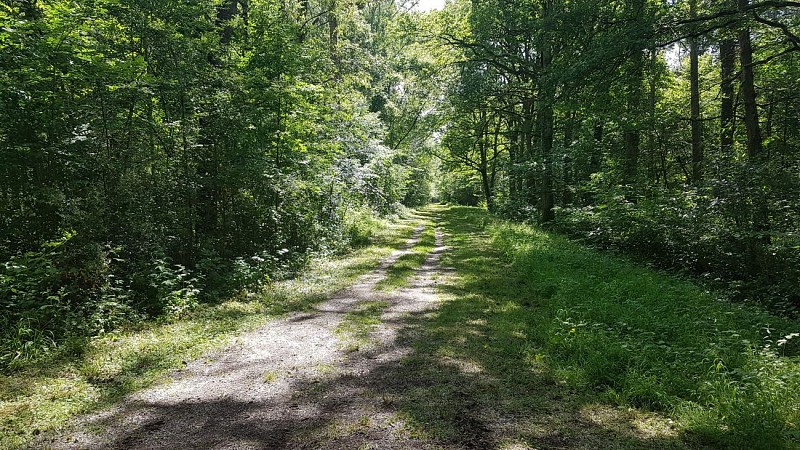
Two marked trails allow visitors to discover the hidden treasures of the site.
Natural environments present : woodland, riverbanks, ponds
Site interests : botany, entomology, ornithology, amphibians
Particularities : Ancoeur valley
Managing and coordinating body : Fédération Départementale des Chasseurs de Seine-et-Marne.
Technical Information
Altimetric profile
Additional information
Price(s)
Free access.
Updated by
Communauté de Communes Brie des Rivières et Châteaux - 04/06/2026
www.briedesrivieresetchateaux.fr
Report a problem
Open period
All year round daily.
Animals
Yes
