Tours
Activities
Places of interest
Where to eat
Where to sleep

Explore Damouzy, a hidden gem in Ardennes

Are you in charge of the destination?
Nestled in the Ardennes region of Champagne-Ardenne, Damouzy offers a plethora of attractions waiting to be discovered. Start your journey with a visit to the Saint-Martin Church, an iconic historical building showcasing the local heritage. For nature lovers, the Sedan Forest and its hiking trails provide invigorating walks. Cyclists will love the Crêtes Trail, which offers panoramic views of the ...See more

Walking around Damouzy

See more suggestions
Discover the trails of Damouzy.
See more suggestions

What to do in Damouzy

See more suggestions
Enjoy the activities available in Damouzy for moments of relaxation and fun.
See more suggestions

What to visit in Damouzy

See more suggestions
Visit the historical sites of Damouzy.
See more suggestions
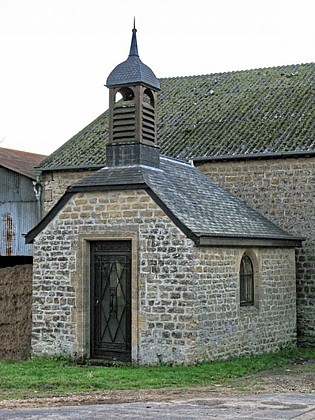
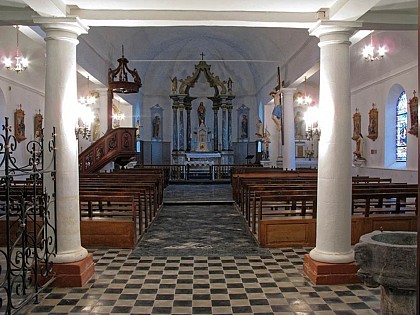
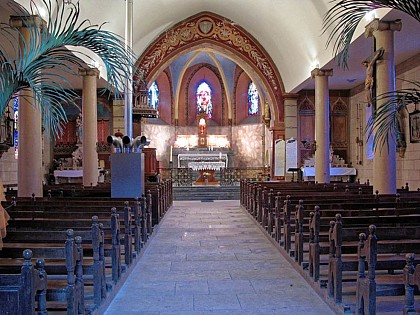
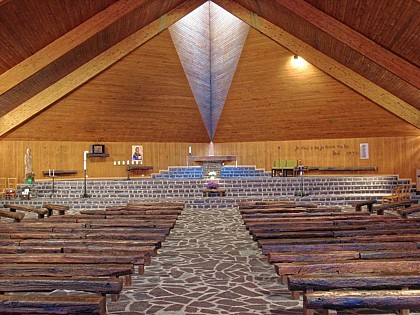
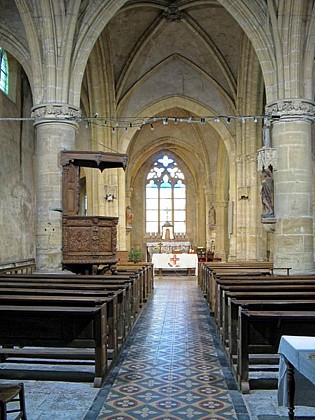
Eglise Saint-Remi de Damouzy
134 m

Eglise Saint-Remi de Damouzy

According to the sources, the church of Saint-Rémi was struck by a storm in 1812 and rebuilt; this may correspond to the nave and choir. In 1839, a new phase of work may have involved the construction of the forecourt with its bell tower. Shortly after 883, Foulques, Archbishop of Rheims, is said to have granted this site to the Chapter of Braux, which remained the benefactor until the French Revolution. The parish of Houldizy was mentioned as early as 1183 in a bull issued by Pope Lucius III. In the 16th century, the old church was fortified, similar to that of Tournes. It was destroyed in 1637 and rebuilt in 1678-79 (nave and bell tower). Climatic disturbances in the late 17th and early 18th centuries (notably the earthquake of 1692) necessitated its restoration in 1744. A bequest from Madame Blanche Duchesnois was used to renovate the church in 2006. The church has an elongated floor plan with a three-bay nave, preceded by a forebuilding. The latter houses a storeroom to the south and a staircase leading to a vast gallery upstairs. The timber-framed bell tower is accessible from the gallery. The choir, comprising a straight bay and a three-sided apse, backs onto a sacristy. The building, built of Romery limestone rubble and Dom-le-Mesnil ashlar, has plastered interior walls and a marble floor in the central aisle. The nave chambers are separated by Tuscan columns and covered with barrel vaults. The whole is covered in slate.

3 rue de l'Eglise 08090 DAMOUZY
Show
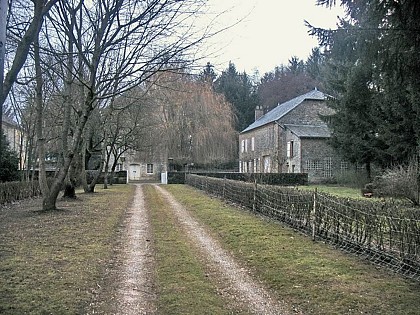
Saint-Luc church in Houldizy
1.5 km

Saint-Luc church in Houldizy

Saint-Luc church, in the centre of the village, has a chancel dating back to the 16th century. In 1843, the nave was enlarged by the addition of side aisles, work carried out by Jean-Louis Nonnon, a carpenter from Renwez. In 1854, the architect Delerue proposed demolishing the Romanesque tower of the bell tower and rebuilding one at the ridge of the nave, with the installation of the bell in 1862. In 1869, the sacristy was built under the supervision of the agent voyer Druart and the mason Jules Drouart. The church also served as a military hospital during the Second World War. The church has an elongated plan and faces north-east. The three-vessel nave has four bays, with an organ loft in the first bay and a spiral staircase in the north-west corner. The chancel comprises two straight bays and a three-sided apse, with a sacristy adjoining the south side and a storeroom on the north side. The timber-framed bell tower is located on the ridge of the nave, on the west side. The building is constructed of limestone rubble and Dom-le-Mesnil ashlar. The interior walls are rendered, and the floor is paved with limestone. The church is single-storey, with round-arched windows in the nave and pointed arches in the chancel. The nave is divided into three naves by Ionic columns. The central nave is covered by a pointed barrel vault, and the side aisles have ceilings. The chancel is rib-vaulted with seven quarters in the apse. The roofs are slate, with long-sloped roofs for the nave and choir, a hipped roof for the apse, long-sloped and hipped roofs for the sacristies, and a polygonal spire on the bell tower.

Place de la République 08090 HOULDIZY
Show
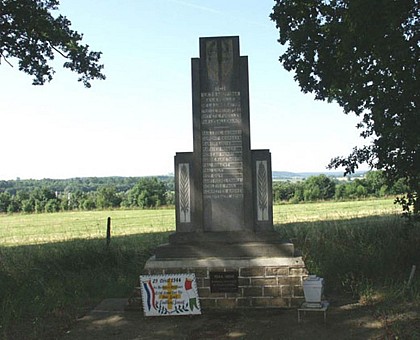
Bois de la Rosière - Resistance 2nd world war
2.7 km

Bois de la Rosière - Resistance 2nd world war

The Bois de la Rosière monument stands on the edge of the wood from which it takes its name, in the commune of Tournes near Charleville-Mézières (Ardennes), where thirteen Resistance fighters were executed without trial on 29 August 1944. On 29 August 1944, a few hours before their departure, the Germans resigned themselves to releasing the patriots held in Charleville prison, Place Carnot, around fifty men and women. But at the insistence of the Gestapo and the French Militia, they decided to shoot some of the hostages beforehand. So it was that the thirteen unfortunates, chosen at random, were taken from their cell and transported by lorry to Rosière Wood (in the commune of Tournes), where they were immediately shot. They had been led to believe that they were going to be freed; among them were two women. The Bois de la Rosière monument was inaugurated on 30 August 1947 in the presence of many prominent members of the Ardennes Resistance and Pierre Schneiter, deputy for the Marne and brother of André Schneiter. The monument was erected on the site of the massacre at the initiative of the commune of Tournes, which had called for public subscriptions. It was designed by Gustave Maily, a sculptor from Reims. It consists of a marble stele erected on the site of a wooden Cross of Lorraine erected the day after the Liberation. Above the names of the thirteen Resistance fighters executed are engraved a Cross of Lorraine and the inscription : ‘Here on 29 August 1944, on the eve of the Liberation, thirteen patriots were shot by the Germans’.

12 rue d'Arreux 08090 TOURNES
Show
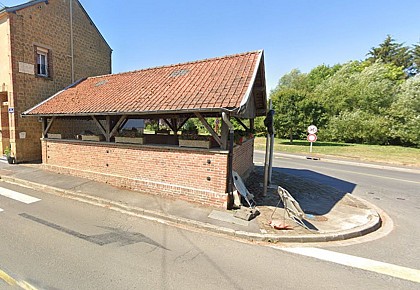
Gallo-Roman thermal baths of Warcq
3.1 km

Gallo-Roman thermal baths of Warcq

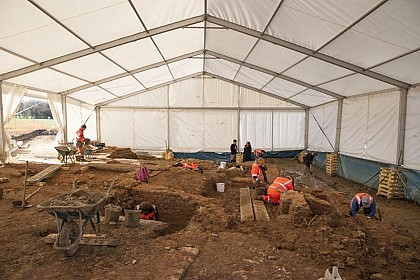
Rare in terms of their luxury and state of preservation, the thermal baths dating from the beginning of our era were discovered on the outskirts of Charleville-Mézières. They bear witness to a rich past buried deep in the Ardennes subsoil. Restoration work will be carried out to keep them in good condition. The site will then be developed to make it a place where science can be passed on and shared, accessible to all. Since 2009, the Ardennes Departmental Council has had an archaeological operations unit, reconciling the safeguarding of the Ardennes' archaeological heritage with the development of new development projects. During the excavation directed by Julien Bruyère in spring 2017 in Warcq, the unit uncovered these thermal baths. This complete complex includes various rooms dedicated to bathing, an ingenious heating system and various ornaments in white and coloured marble. Today, we need to protect these remains so that they can stand the test of time and continue to tell our story. The project involves restoring the site, draining the soil and consolidating the thermal baths so that they can withstand this new open-air exhibition, and then enhancing the site with educational panels and appropriate facilities for future visitors so that they can approach the site without damaging it. If this project appeals to you and you would like to be part of this wonderful adventure and contribute to the enhancement of these thermal baths and, more broadly, to the development of the region, then make a donation!

08000 WARCQ
Show

Where to eat in Damouzy

See more suggestions
The flavors of Damouzy await you.
See more suggestions

Where to sleep in Damouzy

See more suggestions
Explore accommodation options in Damouzy.
See more suggestions

Caution!
We have no information on the difficulty of this circuit. You may encounter some surprises along the way. Before you go, please feel free to inquire more and take all necessary precautions. Have a good trip! 🌳🥾