Tours
Activities
Places of interest
Where to eat
Where to sleep

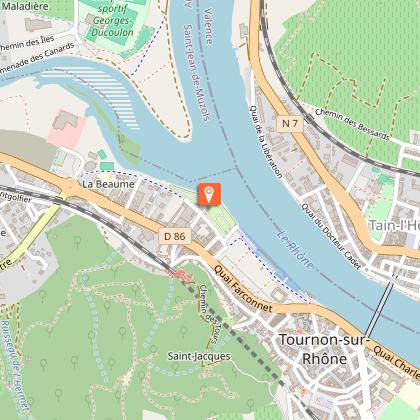
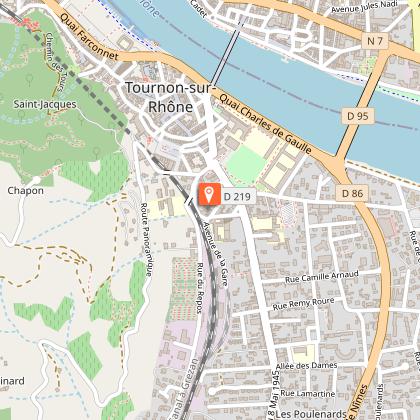
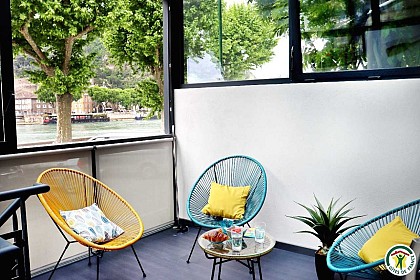
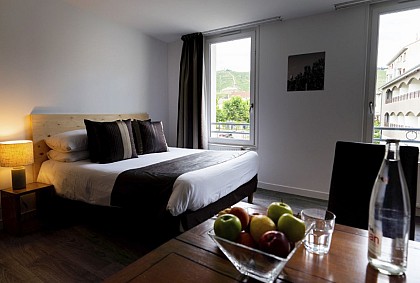
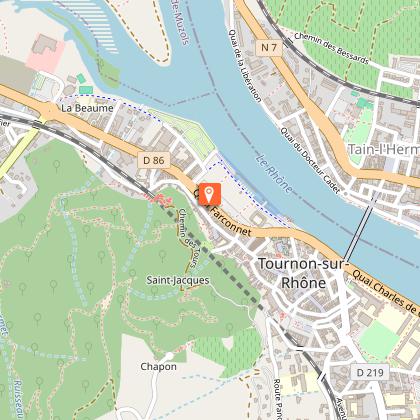
La Boheme - Discover Tournon-sur-Rhone and the Ardeche

Are you the owner?
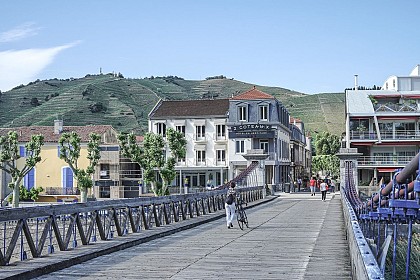
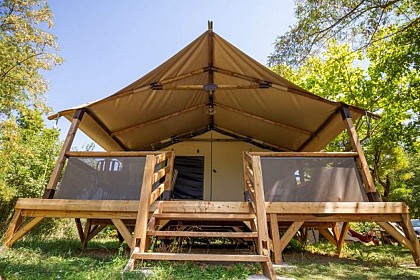
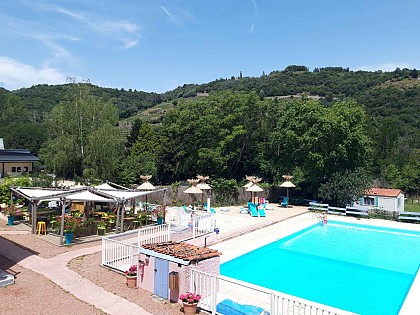
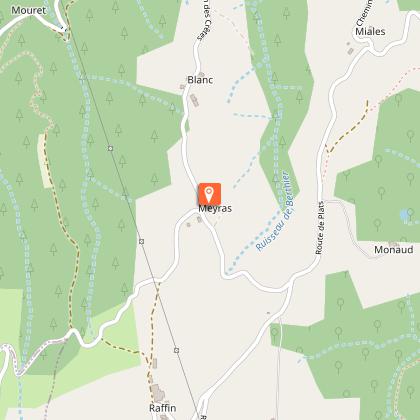
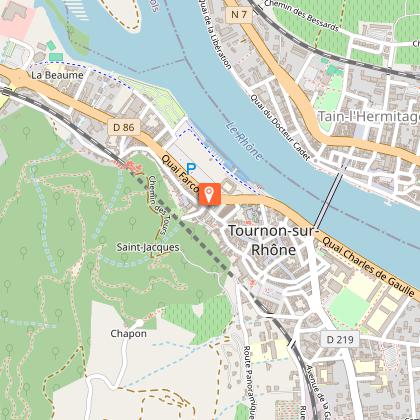
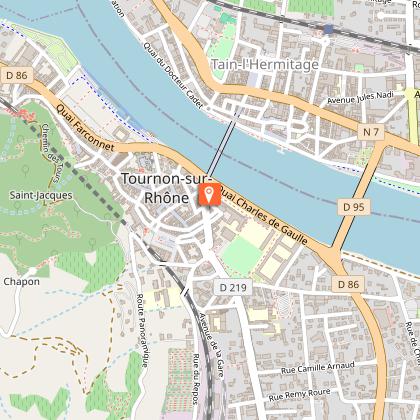
Nestled in the magnificent Rhône Valley, LA BOHEME offers a gateway to an abundance of wonders around Tournon-sur-Rhône, in the Ardèche region of Rhône-Alpes. Take your time to immerse yourself in the rich natural and cultural heritage of the area. Begin your adventure with a stroll through the renowned vineyards where you can taste some of the finest local wines. Don't miss the Château Musee de T...See more
Walking around LA BOHEME

See more suggestions
Embark on a hike in LA BOHEME.
See more suggestions
The heights of Hermitage
3.6 km

The heights of Hermitage

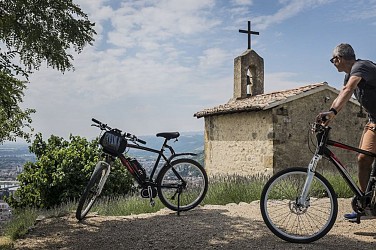
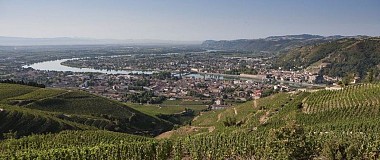
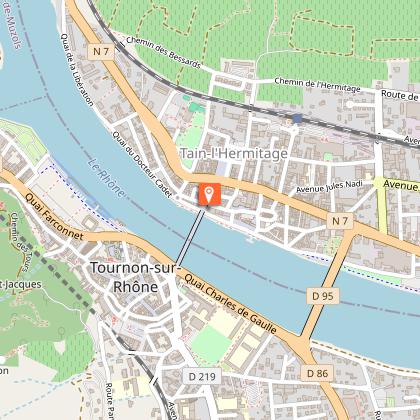
This trail is quite difficult therefore more suitable for the more experienced cyclist. The few uphill sections are steep and the downhill ones, although thrilling, are technical at the same time. Enjoy some magnificent tracks after the strenuous climb uphill towards the start. Take the time for a short detour to visit the chapel and admire the view over the valleys of Hermitage and area around Tournon. Going through vineyards, the terrific downhill section that follows is very technical. Go round the car park and under the railway bridge then turn right. 1 - Chemin de l'Hermitage - 125 m Continue ahead towards the winery (cave à vin). The uphill climb starts on the D241 to your left : Careful traffic ! On the bend come off the road onto the path straight ahead. About 500m further on, before the bend, turn right onto the steep uphill track. Once at the top turn right onto the lane. Follow the signs towards Larnage on the D241 : Careful traffic !2 - Larnage - 207 mIn the centre of the village turn left towards Crozes Hermitage then right uphill on the road towards the housing estate. The road then becomes a track. When you reach the road, turn right and carry on. 3 - Les Méjeans - 348 m Continue ahead. 4 - Les Méjeans Nord - 350 m Take the road on the left and continue for about 200m. Turn left onto the path : a pleasant, fast downhill slope through woodland with no particular difficulty. 5 - Val de Gervans - 190 m Turn left and continue downhill on the wide track. 6 - Gervans Rue du Ruisseau - 140 m Continue ahead.7 - Gervans - 140 m Turn left.8 - Chemin des Voussères - 130 m Take the path on the left going along the railway track for about 1km and leading to the D163. Turn left onto the D163 : Careful traffic ! Head for Crozes Hermitage.9 - Crozes Hermitage - 145 m Just before the bridge, near the townhall, take the road to your right. 10 - Les Pinets Here, the uphill trail starts along the heights of the town of Tain l’Hermitage 11 - L'Hermite - 239 m Continue ahead. Further on, the road becomes track. At the following junction carry on ahead along the path. Enjoy the beautiful panorama here. The downhill section is quite technical going through fields and heading towards Tain l’Hermitage. 12 - Chemin de l'Hermitage - 125 m Turn right back onto the same road as the beginning of the trail and head back to the Velodis car park.

3 h
19 km
Easy
Show
From the vineyards of Tain to the Dancing Rocks
3.9 km

From the vineyards of Tain to the Dancing Rocks

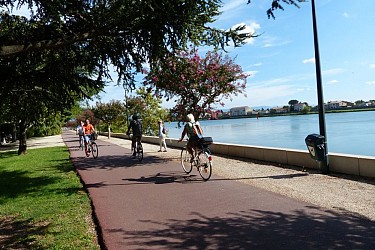
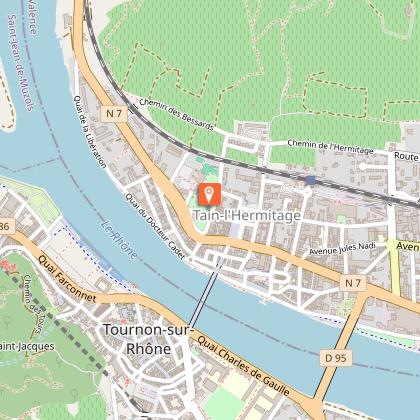
Going through plains and hills, along the rivers Rhône and Isère, enjoy the different landscapes of vineyards and orchards that shape the character of the region. A sporty outing however it remains accessible to all levels. 1 - 0 km Starting from Tain l'Hermitage, the trail climbs up through the Hermitage hillsides giving you an exceptional view over both Valleys of the rivers Rhône and Isère. It then continues along the road on the plateau overlooking the ‘défilé de Saint Vallier” a succession of curves in the majestic Rhône river. 2 – 4.6 km Between dells, glens and gentle hills, the trail heads slowly towards the village of Larnage. 3 – 13.5 km Along the way you will go up and down the hills of Drôme to the Roches qui Dansent (dancing rocks). 4 – 22.1 km An easy journey towards Chantemerle les Blés, with its Roman church offering a remarkably decorative display, before coming to the first hilly areas on the way to Veaunes where you can admire the plains of Herbasse. 5 – 30.5 km After the village of Chanos Curson a route heads south downhill between vineyards and orchards before reaching the banks of the river Isère. 6 – 37.3 km From Châteauneuf sur Isère, the cycling track Vallée de l’Isère (V63) will take you to the edge of the river then along to Pont de l’Isère. 7 – 44.9 km The route follows the river Rhône as far as Tain l’Hermitage (leading to the ViaRhôna).

4 h
56 km
Easy
Show

What to do in LA BOHEME

See more suggestions
Choose from a variety of activities in LA BOHEME and book your favorites.
See more suggestions
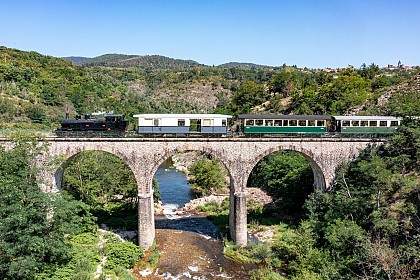
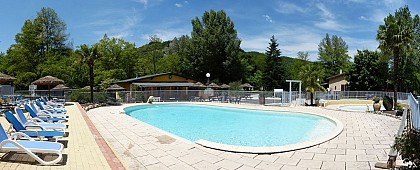
The Train of Ardèche
331 m

The Train of Ardèche

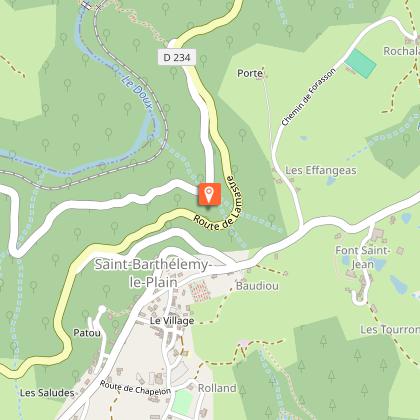
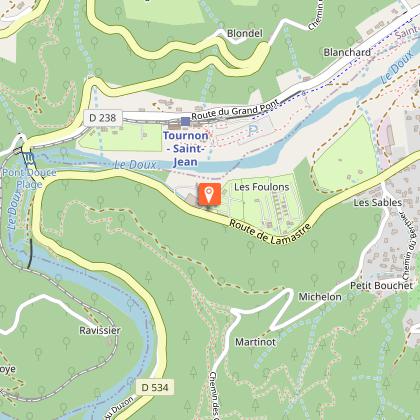
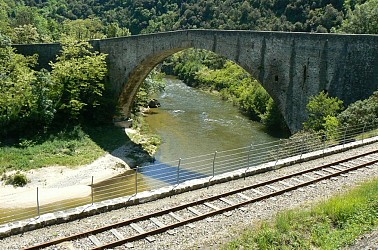
Time for a day or half a day, the Train of Ardèche travels the mountainside railway overlooking the Gorges du Doux. Beautiful views and works of art will follow each other on the way in cars registered as French historical monuments. Several trips are available, depending on the season: Le Mastrou: For 130 years, this is the name of the steam train that runs to Lamastre! Covering the entire 28-kilometer line, this historic journey is an unforgettable experience along the Doux valley. After passing through the gorges, the landscape opens up to the surrounding villages, offering panoramic views of the Ardèche countryside, chestnut groves and orchards. A stop at Boucieu le Roi (midway along the route) allows the locomotive to refuel. At the terminus, passengers watch the locomotive turn around at the turntable, and have 3 hours to visit the town of Lamastre and enjoy its many restaurants. Round trip on the day. Le Train des Gorges : Full steam ahead, travelers discover the wildest part of the Doux Gorges, in the heart of the Doux Valley Sensitive Natural Area. The journey ends at the charming little station of Colombier-le-Vieux / Saint-Barthélémy-le-Plain. At its destination, the 44-tonne locomotive is turned around on the swing bridge, manoeuvred by hand! An impressive sight not to be missed before the return journey. Round trip over a ½ day. Day Train + Velorail: Combine the 2 activities Train de l'Ardèche and Vélorail des Gorges du Doux! Departing from Tournon St Jean station, climb aboard the "Mastrou" for a timeless journey. Discover the Gorges du Doux, classified as a Sensitive Natural Area, as far as the picturesque village of Boucieu-le-Roi. Then climb aboard the "pedal carts" for an 8km tour of the upper Doux valley. Cross orchards and enjoy panoramic views of the valley's villages! From April to October, every day Le Mastrou is open for traffic: 10:15 am: departure from Tournon St Jean by steam train 11:00 am: arrival at Boucieu le Roi; free time to discover the village (former royal bailiwick) and lunch. 1:30 pm: start of the velorail activity (8 km Châtaigniers route in the heart of the Haute-vallée du Doux, ascent by railcar and descent by velorail) followed by a comfort break 4.15pm: departure from Boucieu le Roi by steam train for the return journey 5:00 pm: end of day at Tournon St Jean station Limited number of places - Reservations strongly recommended! The Boucieu Vapeur : This steam train takes you up the Gorges du Doux to Boucieu le Roi, nicknamed the "village of a thousand secrets". Overlooking a wide meander of the Doux, this former capital of the Haut-Vivarais owes its name to Philippe le Bel. The Maison du Bailli (Bailiff's House) bears witness to this rich past: listed as a Monument Historique since 1927, this beautiful house, with its corbelled turret, was the seat of the royal court of justice. The village was deeply influenced by Pierre Vigne (1670-1740), a missionary priest from the Vivarais region, whose tomb is in the church. Pierre Vigne was beatified in 2004 by Pope John Paul II. Boucieu le Roi is one of the most beautiful villages in the Nord-Ardèche region. Tip: a family treasure hunt combines treasure hunting and riddles! Road maps (free) available at the station or at the communal exhibition, open all day. The Lamastre Express: From Lamastre, discover the upper Doux valley as far as Boucieu le Roi. A 14 km rail ride alternating between railcars and steam trains with direct connections! Runs every Sunday in May, June and September, and every day the Mastrou is in operation in July and August. Special for bikes: With the "Accueil Vélo" label, the Train de l'Ardèche offers cyclists bike parks, plug-in sockets for recharging VAEs... and on board the Mastrou, you can take advantage of a specially equipped van to load your bike (€5 per bike or trailer). Ideal for continuing the experience on the DolceVia and ViaRhona! Reservations required. 1st Class cars : Upholstered velvet seats and hushed comfort guaranteed for only €5 extra! Reservations essential - Dogs not accepted in 1st class. Services at Tournon St Jean de Muzols station: - Museum area (free admission): the museum presents the adventure of the railroads, their history and their techniques, with unique collector's items such as the luxurious "Monument historique" lounge car... ideal for prolonging the experience of the epic of the railways! - Viv'arrêt" buffet-buffet area: hot and cold drinks, ice creams and gourmet treats to tantalize the taste buds! - Store area: souvenirs, toys, bookshop and personalized items are on offer, as well as a wide selection of local produce from local partner producers. - Picnic area: sheltered and shaded, the picnic area is continuously accessible to all passengers. - Parking: A large, free parking lot is available for all types of vehicles, with a drop-off point and disabled parking spaces close to the platforms and toilets. Bicycle lockers are available, but you'll need a padlock to secure them. - Greenway link: Tournon St jean station is 4 km from the historic center of Tournon sur Rhône, linked by a greenway directly connected to the ViaRhôna. - PRM access: Tournon St Jean station is accessible to people with reduced mobility. To access the trains, however, it is essential to be able to climb the equivalent of three steps independently.

111 Route du Grand Pont 07300 Saint-Jean-de-Muzols
Book from 0 €Book
Show

What to visit in LA BOHEME

See more suggestions
Stroll through the historic districts of LA BOHEME.
See more suggestions
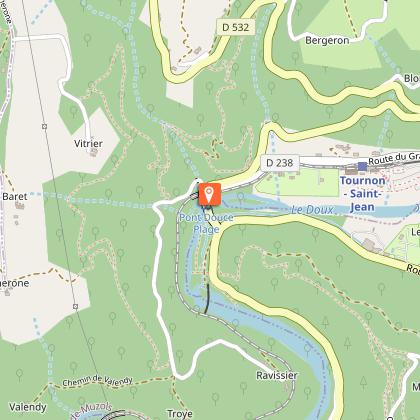
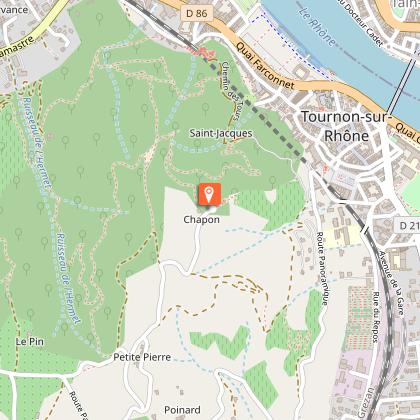
Historical center - Tournon sur Rhône
3.3 km

Historical center - Tournon sur Rhône

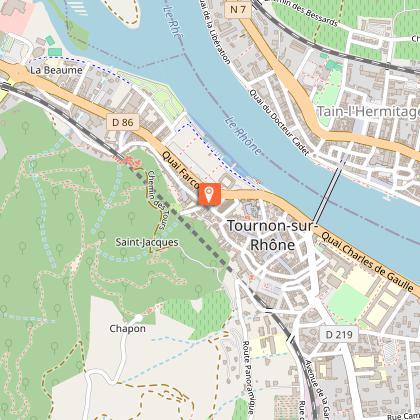
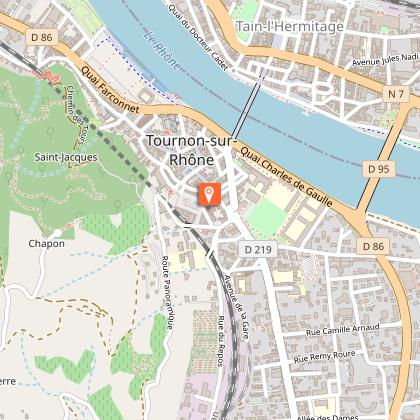
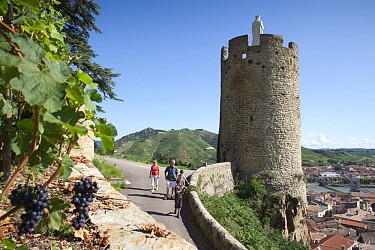
Beautifully situated along the Rhône Valley, nestling amid the vines of a famed winegrowing area, Tournon sur Rhone is a town with a Mediterranean feel. Behind the impressive castle on its granite rock, seigneurial home of the Comtes de Tournon, is a maze of narrow streets meandering through the historic center. Since the Early Middle Ages to the 18th century the Tournons have left a great cultural heritage thanks to different monuments such as the Château de Tournon but also the Collegiate Church Saint Julien. The town is then strongly fortified during the Hundred Years’ War, but it will expand beyond the wall after it quickly became prosperous again. In the south, the Porte de Mauves can be admired, the last stable door which once closed the town (there used to be 4). 2 watchtowers are left in the north and the south of the Sentier des Tours, a marked walking path which goes uphill between the towers. Up Rue Gabriel Faure the Passerelle Marc Seguin, an improved replica of the first cable suspension bridge built on the Rhône in Tournon in 1825 can be seen. Not far from the Passerelle, there is the Lycée Gabriel Faure (high school), “direct descendant” of the Collège founded by François de Tournon at the time of the Renaissance (1536), François I’s counsellor. That made it one of the most ancient high schools in France. It is in 817 that we find the first written trace of Tournon, under the name of " Turnone", thus marking the beginning ot is official history. It was at this time that a rich family of lords later called " Comtes de Tournon" moved in. They will choose to install their fort on this granite rock overlooking the Rhone Valley. In 1308, the northern Vivarais was annexed by the Kingdom of France after having been Empire since the 11th century. The seigneury of Tournon had a very extensive domain and enjoyed a great reputation throughout the region, among other things by the numerous offices that some counts could have left rich testimonies through various monuments such as the castle that stands today masterfully in the heart of the city. They beautifully embellished it from the 13th to the 16th century, the primitive construction of the castle dating back to the year 1000. At the foot is the old towqn with the collegiate Church of St Julien, the Porte de Mauves once marking the southern limit of the city, one of the oldest colleges in France ( today Gabriel Faure High School), the Marc Seguin bridge: 1st bridge suspended by iron cables... From a remarkable point of view, the Tours trail ( connecting the 2 old watchovers of the old ramparts of the 16th century), flanked by hillsides, or the viewpoint even higher with its orientation table where it is easy to contemplate the magnificent panorama of the Rhone Valley. Very recently, the city has just inauguarated the " Chemin de l'Air", a path with small terraces to reach the Tours trail ( behnd the Tourist Office) accessible during the guided tours programmed by the TO).

07300 Tournon-sur-Rhône
Show
Chapel of  the "Lycée Gabriel Faure" (High school)
3.6 km

Chapel of the "Lycée Gabriel Faure" (High school)

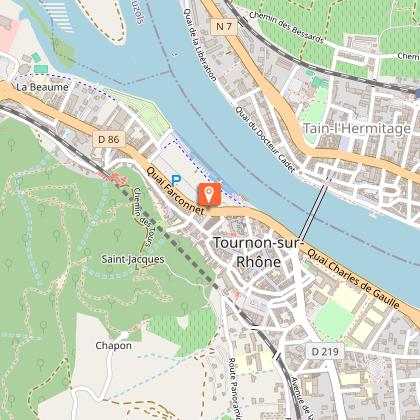
The construction of this chapel lasted from 1673 to 1720. The plans were designed by the architect Martellange from Lyon. The facade is "Jesuit classic" style (classic). It is made of sandstone, which gives it its color. The work took a long time because it was often stopped. The workers , due to religion wars, were usually commandeered to fortify the ramparts. 1673- The first stone was settled. 1707 - Installation of the choir balustrade, altar steps and flagstones 1713: Construction of the bell tower. She is opened for the service because she is almost done. 1714- Capassin's paintings ( Jean Capassin, a pinter from Florence at the 16 century, was hired by the cardinal François de Tournon when he was in diplomatic missions in Roma for François 1er and Henri II) and the tapestry ( Aubuson and Flandres) are inside the chapel, which saved them from the fire of the College. 1720- The ashes of the Cardinal François II de Tournon are put behind the altar. The facade is in the classical Jesuit style, built in molasse, which gives it its colour. It is very elegant with its Doric columns at the base and composite at the top. The interior, with a total length of 26 metres, is in the Renaissance style. The great nave is flanked by chapels and the whole is decorated in trompe l'oeil, which means that this style is sometimes confused with 18th century Baroque. side galleries run above the chapels. The acoustics are remarkable, enhancing the sound of the classical organ installed in the 18th century.

Place Stéphane Mallarmé 07300 Tournon-sur-Rhône
Show
High school Gabriel Faure
3.6 km

High school Gabriel Faure

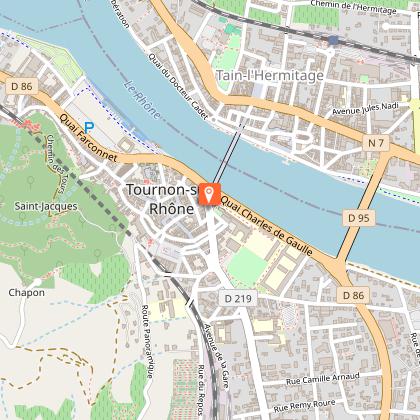
Teaching place since the Renaissance: the "collège" was founded in 1536 by the Cardinal of Tournon, high-school since 1548. Called Gabiel Faure becauce of a local literay man. Including a tapestries galery, a rich historical library and some paintings. Cardinal François de Tournon founded the college in his town in 1536. it was not until 1548 that the first stone of the building was laid; the Collège de Tournon took just six years to complete. In 1552, the institution became a University of Philopsophy and the Seven Liberal Arts. In 1551, François de Tournon entrusted his college to the Society of Jesus, making it the first French Jesuit teaching establishment and a means of countering Protestantism through education in the Scriptures. The buildings of the Collège were transformed. In 1560, a chapel was added to the north and a fifth building to the east of the four main buildings and the bell tower dating from 1554. A medicinal herb garden completed the college's layout untill April 3rd 1714. This was the date of a terrible fire. Far from discouraging the Jesuits, they continued their renovations. A third floor was added to the main building. Construction of a new chapel ( begun in 1673) was completed. The new chapel was larger than the old one, providing a more dignified setting for the Cardinal's remains and the faithful. The Jesuits were expelled from the College in 1762 and replaced by an administration office. Tournon became a Royal Military School, which ensured its longevity. In 1776, the Royal Military School ofr Paris was reformed. Twelve establishments in the kingdom retained the priviledge of training soldiers. The new administrators were the Oratorians. As the existing boarding school was deemed too small to accomodate the students, new buildings were constructed and work was undertaken. The Revolution and the events that followed did little to change the life of the college, apart from the fact that there was no longer any need to mention it as a royal college and the Military School section was abolished at the start of the Academic year in 1793. In 1819, the school once again became a royal college, under the supervision of the Minister of the Interiror: attached to the university, it was first gibven the tittle of Collège Communal and then that of College Royal de troisième classe. The college became the Imperial Lycee and then the Lycée under the Restoration. The Construction of the Rhone dykes in the mid-19th century altered the buildings, as evidenced by the cureent two-storey Cour des classes, the ground floor of which is located under Route Nationale 86. A few years earlier, the Grand Corridor and the lare terrace known as the Infirmary had been built. At the end of the century, part of the lycee grounds were amputated, allowing the construction of the girls lycée, Collège Mare Curie since 1998. It was over 400 years ago that the Lycee de Garçon got its baptismal name: that of a man from Tournon who worked actively to protect, maintain and preserve it. In 1967, it became the Lycee Gabriel Faure. Over the course of the 20th century, the school underwent further transformations with the construction of buildings D ( science buildings), E ( classrooms and new boarding school) and the gymnasium. Since the early 2000s, the lycee had been undergoing restructuring. In addition to the buildings, work has also been carried out on the grounds. Notably, the thirty-three metre long disused swimming pool has been filled in. All that remains of the work carried out in the park since 1781 are a few plane trees, which are now listed as historic monuments, and an idea of the size of the area at the time.

Place Mallarmé BP 116 07300 Tournon-sur-Rhône
Show

Where to eat in LA BOHEME

See more suggestions
Come and taste typical dishes of LA BOHEME.
See more suggestions
Where to sleep in LA BOHEME

See more suggestions
Find a comfortable stay in LA BOHEME.
See more suggestions
Caution!
We have no information on the difficulty of this circuit. You may encounter some surprises along the way. Before you go, please feel free to inquire more and take all necessary precautions. Have a good trip! 🌳🥾