Tours
Activities
Places of interest
Where to eat
Where to sleep

Discover Andenne, Namur, Namur: Treasures and Activities

Are you in charge of the destination?
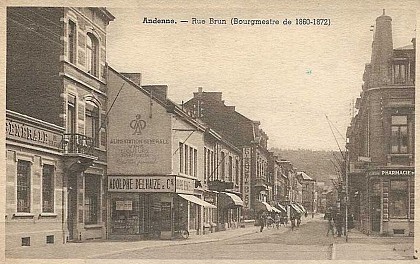
Welcome to Andenne, Namur, Namur! Nestled in the heart of the Namur province, this charming Belgian town invites you to explore its many treasures and activities. Stroll through the historic center to admire the Sainte-Begge Church, which bears witness to the town's rich monastic past. Do not miss the Sainte-Begge Tree, an ancient tree offering a breathtaking view of the Meuse Valley. Outdoor enth...See more

What to do in Andenne

See more suggestions
Discover surprising activities in Andenne and book the ones you like.
See more suggestions

What to visit in Andenne

See more suggestions
Visit the museums and galleries of Andenne.
See more suggestions
The room Léon Godart
1.2 km

The room Léon Godart

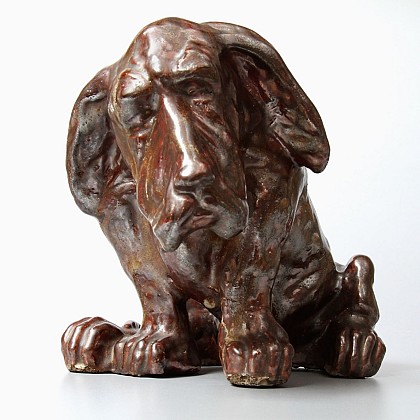
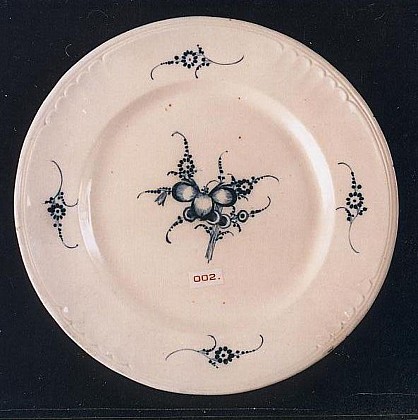
To know a bit more about it…. Showcase 1 The saltcellars and the tea box with lid (level 3) as well as the openwork plate (level 4) are attributed to the first factory of Joseph Wouters. All the other pieces are signed. Showcase 2 All the pieces are signed by J.J.F. Van de Wardt or Mathieu Servais. Showcase 3 The large teapot (level 1) and the vase (level 3) are attributed to the second factory of J. Wouters. The decoration of the soup tureen (level 3) is due to Arnold Bonhivers. The sugar bowl and the dredger (level 4) are attributed to Verdussem and Wouters. All the other pieces are signed from the second factory of J. Wouters or by Verdussem and Wouters. Showcase 4 The sauceboat with lip decorated with bells (level 2), the sauceboat decorated with intertwined lines and the plate decorated with a garland of ears (level 3) as well as the oval draining rack (level 4) are attributed to Bernard Lammens. All the other pieces are signed. Showcase 5 The plate with Masonic patterns and the soup tureen (level 4) are attributed to B. Lammens. All the other pieces are signed. Showcase 6 The basket shaped like a boat (level 3) as well as the oval baskets on the left and in the middle (level 4) are attributed to B. Lammens. Al the other pieces are signed. Showcase 7 The vase decorated with the mask of a lion (level 1) as well as the milk pots and the writing case (level 2) are signed by B. Lammens. The others are indubitable attributions.  Showcase 8 The couple of vases is signed B. Lammens. Showcase 9 The soup tureen (level 2), the chocolate pot with a tray, the small teapot and the sweet box (level 3) as well as the coffeepot and the chocolate pot (level 4) are attributed to Jean-Philippe Becquevort. The plate with the rose (level 3) is signed Jean-François Kreymans. All the other pieces are signed J-Ph. Becquevort. Showcase 10 The plate decorated with stamped rosettes (level 1) is attributed to Antoine-Joseph Lapierre. The teapot (level 2), the teapot, the sugar bowl, the milk pot and the bowl (level 3) as well as the chocolate pot (level 4) are attributed to J-Ph. Becquevort. All the other pieces are signed by him as well. Showcase 11 The soup tureen is signed J-Ph. Becquevort. Showcase 12 The plate decorated with 2 ladies (level 1) is attributed to Antoine Fossion. The shaving mug on the left (level 3) is attributed to Arnold Bonhivers. The shaving mug (level 4) is attributed to Gaspard Dosogne. The pestle (level 4) is attributed to Joseph Nihoul. All the other pieces are signed. Showcases 13 to 17 The pieces are not signed. The black crockery (showcase 15) is attributed to B. Lammens. Showcase 18 The models of the pieces are attributed to the Richardot. Showcase 19 The models of the pieces are attributed to the Richardot except the one of the “kiss” (level 4) which is attributed to Paul-Louis Cyfflé. Showcase 20 The models of the pieces are attributed to the Richardot except those of the busts of Voltaire (level 1). The one in earthenware biscuit is signed P-L. Cyfflé and realized in the earthenware factory of Toul. The other one is not attributed. The making of the statue of Napoleon Bonaparte is attributed to the 2nd factory of J. Wouters. Showcase 21 The models of the pieces are attributed to the Richardot except those of the “young lady with a dove” and the “young lady with a greyhound” (level 3) signed Carrier-Belleuse (Albert Ernst C. de B., 1824-1887) The making of the watch holder (level 3) is attributed to the manufactory Van de Wardt and Co. Showcase 22 The couple of oil lamps (level 1) are attributed to Camille Renard-Steinbach. The small cups (levels 1+2) are signed C. Renard-Steinbach. The pint (level 2) the fruit bowls, the saltcellars and the chemist’s jar (level 3) are not signed. Showcase 23 The female statuette on the right carries the mark of C. Renard-Steinbach associated to a stamp that has not yet been identified (Léonard Jourde?) The female statuette with a vase on her shoulder (level 1) and the sitting greyhound (level 3) are attributed to C. Renard-Steinbach. The child with the bird and the goat (level 4) are not signed. Al the other pieces are signed. Showcase 24 The couple of brocali vases (level 2) are attributed to Winand. The biscuit vase (level 2) and the vase with a landscape (level 3) are not signed.

Show
Sainte-Begge collegiate church
1.3 km

Sainte-Begge collegiate church

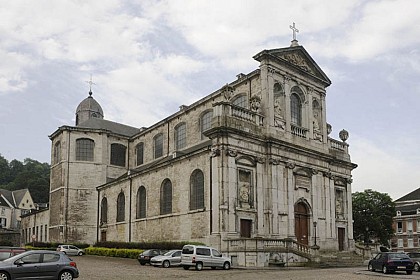
  Sainte-Begge collegiate church was built between 1770 and 1775 by the architect L.-B. Dewez. The building is made up of three naves with five bays, a high and prominent transept and a chancel with three bays and polygonal chevet. It has a barrelled roof with lunettes on joists and a tower situated above the chevet. The façade has two levels. The first level features Ionic pilasters supporting an entablature. This level is decorated with two niches with curved pediment placed either side of a moulded arched door and bearing the chronogram for 1773. The second level has pilasters with Corinthian capitals. It has an arched window flanked by two arched niches. This topped by an entablature and triangular pediment. The nave features arched arcades decorated with pilasters with composite capitals. Above these arcades are a moulded entablature and a clerestory. The nave is flanked by vaulted side aisles with foliage key. Lowered windows light the nave, transept and chancel. The arms of the transept end in an apse with three walls. Above the crossing of the transept is a false dome. The chancel with three bays is enclosed by a polygonal chevet flanked by two apses and annexed to sacristies and a chapter room. The chevet is topped by a high four-level tower, capped with a domed roof. Note the interior in the style of Louis XVI, Renaissance stalls (17th century) in the chancel, the marble altars (18th century) and the tomb of St Begge in the transept, as well as the treasury housing the Renaissance shrine of the saint who founded Andenne abbey and who is the patron saint of the town. Listed (22-021938)  - Exceptional heritage site of Wallonia   

Show
The castle-farm of Haltinne
3.6 km

The castle-farm of Haltinne

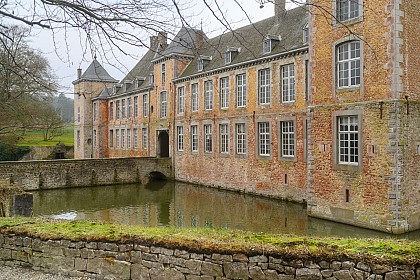
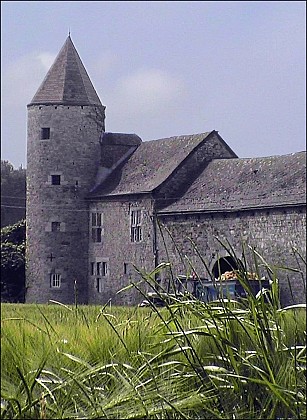
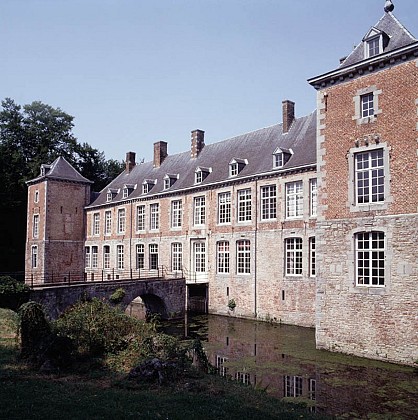
  The castle-farm of Haltinne was built in the fief of "the ditches", owned by Gérard de Groesbeeck since 1635. The property then passed into the hands of Gérard de Mérode, was burnt down in 1674 and refurbished by Jean-Hubert de Tignée in 1684, then sold to Goer de Herve who owned the château until 1814. The castle is rectangular in shape. The four wings on two levels are flanked by square corner towers rising to three levels. Access is through a tower gate located in the centre of the east wing. Note the traces of the drawbridge that once rose before the door (rabbet of the bridge apron, running channels that have been filled in). The south-east corner, with its greater roof height, was occupied by the seigniorial living quarters. The other wings housed the farm buildings required at every fortified farm. During the 17th century, two fires damaged the castle and when it was being rebuilt, a new building in brick and stone was added that was finally enlarged in the middle of the 19th century. This addition demonstrates the redevelopment of the castle, basically dedicated farming pursuits, into a leisure dwelling. At this time the interior had outstanding decoration (medallions, trophies, stucco, red marble, internal joinery, etc.). The centrepiece of this decorative renewal was, the staircase in the style of Louis XIII, which is exceptionally distinctive in Wallonia for its use of bluestone, including bulbous balusters. Listed: 11-08-1981 Exceptional heritage site of Wallonia  

Show
The Scladina cave
4.1 km

The Scladina cave

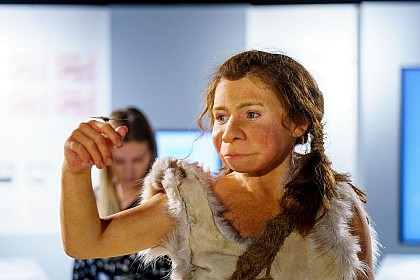
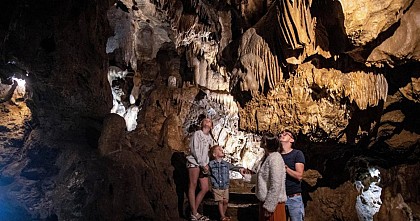
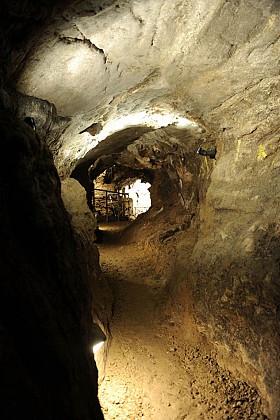
  Discovered in 1971 in the heart of a small valley joining the Meuse, the Scladina caves have been excavated since 1978. In fact, the almost 7 metres of sediment that fill the caves provide an outstanding archaeological and scientific opportunity, making it possible to retrace the history of the climate over 100,000 years, as well as the prehistoric fauna through the several hundred thousand bones discovered here. The presence of man has also come to light, ranging from the Neanderthal to the Neolithic, thanks to the archaeological material found, but also from the discovery of clearly identifiable bones.  The sediment contains tools made in the middle Palaeolithic age (from approximately 300,000 to 35,000 years BC, the period of Neanderthal Man) or upper and final Palaeolithic age (from approximately 35,000 to approximately 8,500 years BC, the beginning of which period marks the arrival of modern man in our region). The most recent occupation at the site takes the form of a collective burial ground from the Neolithic period. However, the major discovery at the site – of international significance – dates from 1993, or almost a century after the last Neanderthal bones discovered.  This discovery consists of twenty or so dispersed bone fragments from a child's jaw.  The good state of preservation of the bony remains of this child no older than ten, who lived 100,000 years ago has enabled scientists to determine the child's diet through laboratory analyses. As a result, the study made possible by the long stratigraphic succession preserved at Scladina enables us to understand how people lived and behaved (transport of raw materials, specialisation of the tooling they used, hunting, etc.) in the heart of their environment. Listed: 19-04-1996 Exceptional heritage site of Wallonia    

Show
Caution!
We have no information on the difficulty of this circuit. You may encounter some surprises along the way. Before you go, please feel free to inquire more and take all necessary precautions. Have a good trip! 🌳🥾