Tours
Activities
Places of interest
Where to eat
Where to sleep

Unveiling the Charms of Ermenonville, Oise, Picardie

Are you in charge of the destination?
Welcome to Ermenonville, Oise, Picardie, an enchanting destination in the heart of the Picardy region. Visitors are invited to explore Parc Jean-Jacques Rousseau, a magnificent landscaped garden celebrating the famous philosopher, offering peaceful walks among meadows, groves, and charming ponds. Take the time to discover Château d'Ermenonville, a historic monument providing a fascinating dive int...See more

What to do in Ermenonville

See more suggestions
Plan a perfect day in Ermenonville with our bookable activities.
See more suggestions
The Museum of the Great War
23 km

The Museum of the Great War

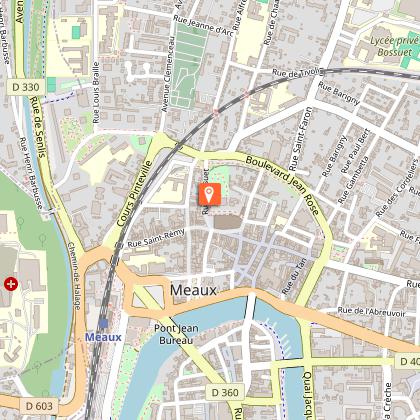
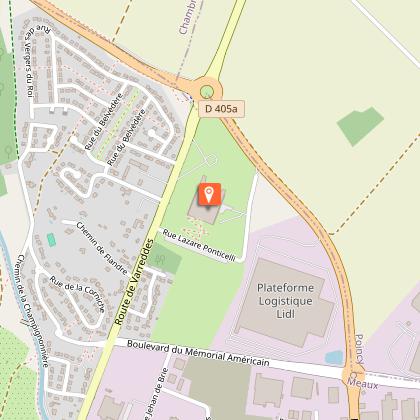
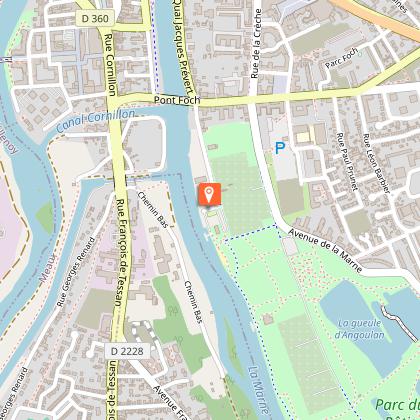
An essential collection on the 1914-18 war. With a collection of almost 70,000 objects and documents tracing the daily and military life of the 14-18 war, the Musée de la Grande Guerre, which opened its doors on November 11, 2011 on the site of the First Battle of the Marne in Meaux, is Europe's largest museum on the First World War. Over 4,000 m², it presents one of the richest and most diversified collections on the First World War, in an attractive and innovative scenography. The Musée de la Grande Guerre is the ideal place for a family visit. A veritable educational treasure trove through the collection: see, hear, touch, handle.... A playful itinerary accessible to visitors aged 5 and over: projections of archive images, trench reconstructions, a video space in which visitors are immersed among the soldiers in the trenches or on the battlefield, games to discover the composition of uniforms, the sounds of war, the geographical evolution of conflict zones... Several audio tours are available free of charge on your cell phone or tablet; ask for instructions at reception. Since November 2024, come and discover an installation never seen before in France: an open-air trench. This new space in the museum grounds offers a unique immersive experience accessible to all, not to be missed. Transport yourself to the heart of the trenches of the First World War. At once educational, accessible and didactic, this trench is a unique device where you are the actor in the discovery. Complementing the permanent exhibition and the museum's collections, this scenography gives an insight into what man can experience, at the heart of tragedy, whatever his camp or nationality.

Rue Lazare Ponticelli 77100 Meaux
Book from 0 €Book
Show
Royaumont - abbey & fondation
23 km

Royaumont - abbey & fondation

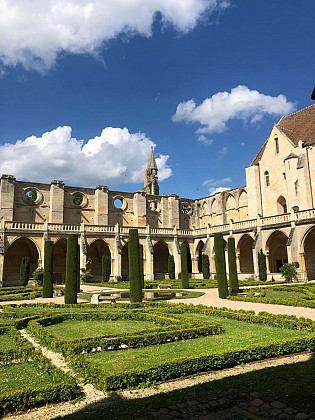
In 1228, Saint Louis and his mother Blanche de Castille established the Abbey of Royaumont, today still the largest Cistercian abbey of Ile-de-France. Listed as a historical monument, the abbey has one of the most beautiful examples of Gothic refectory in France. The 7 hectares park, crossed by canals, is labelled "Remarkable garden" by the French Minister of Culture. It has conserved some of its medieval features and today has three gardens: an experimental vegetable garden, opened in 2014, a medieval inspiration garden, and the garden of the monastery transformed into a ravishing French garden in 1912. The abbey is open every day, from 10 am to 6 pm (5:30 pm between November and March). Royaumont Abbey also offers guided visits, heritage and garden activities for children and families every Sunday throughout the year, and holds a music and dance Festival every year in September and October. In 1228, Saint Louis and his mother Blanche de Castille established the Abbey of Royaumont, today still the largest Cistercian abbey of Ile-de-France. Listed as a historical monument, the abbey has one of the most beautiful examples of Gothic refectory in France. The 7 hectares park, crossed by canals, is labelled "Remarkable garden" by the French Minister of Culture. It has conserved some of its medieval features and today has three gardens: an experimental vegetable garden, opened in 2014, a medieval inspiration garden, and the garden of the monastery transformed into a ravishing French garden in 1912. The abbey is open every day, from 10 am to 6 pm (5:30 pm between November and March). Royaumont Abbey also offers guided visits, heritage and garden activities for children and families every Sunday throughout the year, and holds a music and dance Festival every year in September and October.

3 Jard de l’abbaye de Royaumont 95270 Asnières-sur-Oise
Book from 0 €Book
Show
Grand-Voyeux Regional Nature Reserve
25 km

Grand-Voyeux Regional Nature Reserve

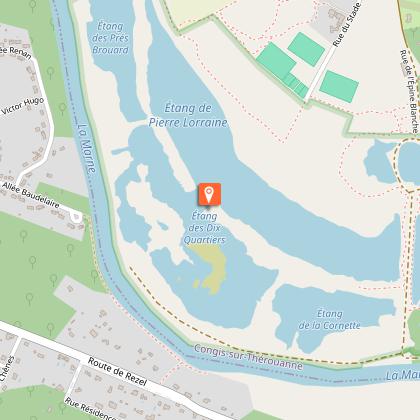
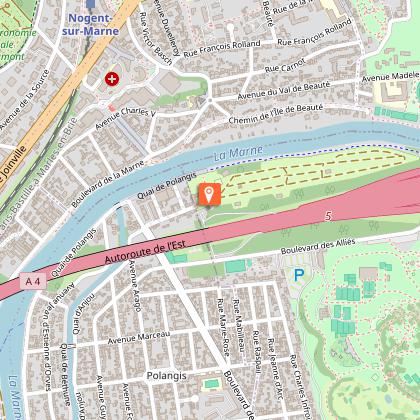
As if it were the Baie de Somme... Its 241 hectares, 60% of which are covered by water, offer visitors a patchwork of amazing landscapes located in the immediate vicinity of the Marne: ponds, reed beds, meadows and groves provide shelter and food for more than 225 species of birds, some of which are endangered in the region, and which are undoubtedly the most remarkable wealth of the reserve ... Exceptional for the fauna and flora it shelters, it is part of the Natura 2000 site "Les Boucles de la Marne". Not so long ago, the Grand-Voyeux Regional Nature Reserve was still a quarry, where conveyors extracted sand and gravel with a crunch of grains. Excavated in the 1970s, the cavities were gradually transformed into waterholes, quickly colonised by reeds and birds, thus allowing nature to take over. The Maison du Grand-Voyeux is open to the public two days a week, with the aim of helping visitors discover the Grand-Voyeux while preserving biodiversity and the balance of the ecosystems. A discovery trail and observatories allow visitors to discover the incredible landscapes of the site and the multitude of bird species that have found refuge there. Nature activities, workshops and thematic conferences are also organised regularly and free of charge (see programme online at www.maisondugrandvoyeux.fr). Managed by the Agence des espaces verts (AEV) of the Île-de-France Region since 1999, it was classified as a Regional Nature Reserve in 2012. A partner of the AEV, the Association pour la Valorisation des Espaces Naturels du Grand Voyeux is responsible for the scientific monitoring of the site and for certain activities.

Parking Rue du Stade 77440 Congis-sur-Thérouanne
Book from 0 €Book
Show

What to visit in Ermenonville

See more suggestions
Engage in outdoor activities in Ermenonville.
See more suggestions
Sensitive natural area of the hill of Montassis
19 km

Sensitive natural area of the hill of Montassis

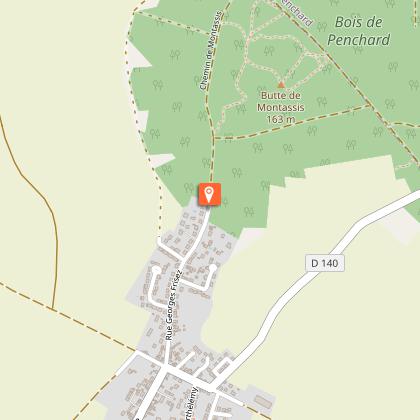
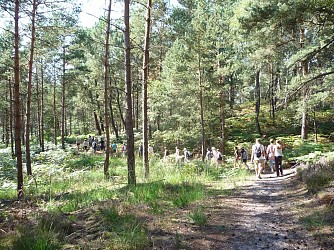
The sensitve natural area of the hill of Montassis, with a surface area of ​​46 hectares, culminates at 164 m and dominates the country of France to the south and the Multien plateau to the north. The site is part of a set of witness mounds*, called the Goële hills, which form a striking axis in the landscape of the North of Seine-et-Marne. Like most nearby hills, the Montassis hill has only been fully wooded for a relatively recent past. At the beginning of the 20th century, its southern and western flanks were planted with vines and orchards. Its strategic location quickly gives it importance to communicate or observe the surroundings. In the first half of the 19th century, the high point of the hill was equipped with a Chappe telegraph, named after its inventor. With a long distance communication mechanism, this is the quickest way to transmit messages. The wood of the telegraph, as it is still called today, no longer has any traces: the telegraph has been replaced by a geodesic chimney built by the Geographical Service of the army (SGA), ancestor of the Institute national geographic (IGN). At the beginning of the 20th century, it enabled cartographers to carry out precise surveys for the establishment of staff maps. It was this same strategic position that made the hill the scene of a bloody episode at the start of the First World War. On September 5, 1914, a brigade of Moroccan troops attempted to take the hill held by the German army. The assault, in the open, was terrible and the brigade suffered heavy losses before being supported by French troops from the west. The German troops end up turning back. These battles will forever be associated with the first battle of the Marne, which prevented the capture of Paris. The wood subsoil, rich in gypsum *, was exploited from 1971 to 1986, mainly towards Penchard. Apart from some marked depressions, resulting from the obstruction of the galleries by caving *, this underground exploitation has left few visible traces in the perimeter of the ENS. The Municipality of Chauconin-Neufmontiers has long valued this hill which dominates the village, in particular with the opening of a historic circuit and the restoration of part of the paths which cross the wood. In order to strengthen the protection of heritage and the natural environment on the site, the Department decided to classify it as a sensitive natural area in 2007.

77124 Chauconin-Neufmontiers
Show

Where to eat in Ermenonville

See more suggestions
Savor culinary specialties in Ermenonville.
See more suggestions
Where to sleep in Ermenonville

See more suggestions
Find lodging to suit your needs in Ermenonville.
See more suggestions
Caution!
We have no information on the difficulty of this circuit. You may encounter some surprises along the way. Before you go, please feel free to inquire more and take all necessary precautions. Have a good trip! 🌳🥾