Tours
Activities
Places of interest
Where to eat
Where to sleep

Explore Montigny at RELAIS DE MONTIGNY LE

Are you the owner?
Welcome to Montigny, a charming commune in the Seine-Maritime, Haute-Normandie. Staying at RELAIS DE MONTIGNY LE places you perfectly to explore the many local attractions.
Immerse yourself in the natural beauty of the region by visiting the Forêt Domaniale de Roumare, a true haven for nature and hiking enthusiasts. Traverse the marked trails and enjoy moments of relaxation amidst the serene Nor...
See more

Walking around RELAIS DE MONTIGNY LE

See more suggestions
Accessible hikes near RELAIS DE MONTIGNY LE.
See more suggestions
26. Three Steeples Trail – Starting point: Village Square of Flancourt-Catelon or Community Hall Car Park in Illeville-sur-Montfort
22 km

26. Three Steeples Trail – Starting point: Village Square of Flancourt-Catelon or Community Hall Car Park in Illeville-sur-Montfort

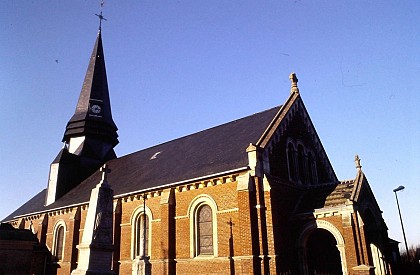
This route brings together three villages, three church steeples and a remarkably diverse architectural heritage. In Illeville-sur-Montfort, the Saint-Médard Church, dating largely from the 16th century, features an elegant stone porch blending Gothic and Renaissance styles, crowned with finely sculpted gargoyles. Nearby stands a discreet yet remarkable 18th-century octagonal half-timbered dovecote, a gem of rural architecture located on private property. In Catelon, the Saint-Lubin Church combines Romanesque elements from the 11th century with later 18th-century alterations. Its Romanesque portal opens onto a churchyard shaded by cypress trees and a magnificent yew. The Manor of Candos and the Manor of Landry further enrich the local heritage. The former showcases traditional 18th-century half-timbering, while the latter combines brick, stone and timber framing and includes a round medieval stone tower dating from the 11th to the 16th century. In Flancourt-Catelon, the Saint-Ouen Church surprises visitors with a dormer window near the bell tower, an unusual feature for a religious building. Its old cemetery is enclosed by a traditional earthen wall. At the entrance to the village, a statue of the Virgin and Child quietly commemorates the Liberation. The Montfort State Forest provides a short but beautiful section of tall mature woodland, offering a striking contrast to the open countryside and bocage landscapes that dominate most of this route. A walk through churches, manor houses and living memories, where every village tells a different chapter of Norman history.

3 h
11 km
Easy
321 Route de Bourg Achard 27310 Flancourt-Crescy-en-Roumois
Show
28. Hyacinth Trail – Starting point: Community Hall of Illeville-sur-Montfort
25 km

28. Hyacinth Trail – Starting point: Community Hall of Illeville-sur-Montfort

This route invites walkers to explore a landscape where deep forest, medieval heritage and a thousand years of history come together. It takes place in Illeville-sur-Montfort, one of the oldest settlements in the region. The village name dates back to the Norman period, long before the conquest of England. Originally known as the estate (villa) of Wila (William) or Withlac, it became Willerville in the 16th century before evolving into Illeville. The same Viking-derived name can still be found in many English place names such as Illingham and Wilton. Archaeological remains and ancient fragments found in the area reveal an even older occupation dating back to the Gallo-Roman period, when this land was gradually reclaimed from the Montfort Forest. The architectural highlight of the route is Saint-Médard Church, built mainly during the 13th century. Its low square tower, nave, choir, transept and original vaults are complemented by a remarkable 16th-century porch blending Gothic and Renaissance influences, whose elegance never fails to impress visitors. The wooded grounds of the Château du Courant offer a few botanical surprises, including blue cedars and giant sequoias. Meanwhile, the Montfort State Forest unfolds across four long undulating sections of the route, with varied woodlands forming the backbone of this walk. A journey through Viking memories, medieval stonework and the timeless beauty of the Norman forest.

3 h
12 km
Easy
10 Rue Sainte Bernadette 27290 Illeville-sur-Montfort
Show
36. Malhortie Trail – Starting point: Touville-sur-Montfort Town Hall
25 km

36. Malhortie Trail – Starting point: Touville-sur-Montfort Town Hall

This route offers a generous introduction to the Norman countryside, combining unexpected heritage, contrasting landscapes and intriguing architectural features. In Touville-sur-Montfort, the built heritage is remarkably diverse. Opposite the church stands a Renaissance half-timbered manor house with an elegant and imposing silhouette, while near the end of the route a Belle Époque villa evokes the refined atmosphere of Deauville. Two distinct eras and two very different worlds, separated by only a few hundred metres. The church itself is well worth a visit: its Romanesque nave dates from the 13th century and was enhanced in the 16th century with beautiful Flamboyant Gothic twin windows and an elegant half-timbered porch. Manor houses and traditional thatched cottages further enrich this varied architectural landscape. The scenery changes constantly throughout the walk. Forest covers around a quarter of the route across two long sloping sections, before giving way to sunken bocage lanes, open farmland and inhabited hamlets. The trail also features two unexpected engineering structures. One bridge crosses a normally dry stream that can become a rushing torrent during heavy storms, while the other spans a railway line on an attractive stone-and-brick viaduct. These discreet yet elegant structures add an extra touch of interest to a walk full of surprises. A Norman hike where architecture, nature and hidden curiosities combine to create a memorable experience.

2 h
5.5 km
Medium
63 Route de Saint-Léger 27290 Thénouville
Show
34. Lovers’ Trail – Starting point: Town Hall Car Park, Écaquelon
27 km

34. Lovers’ Trail – Starting point: Town Hall Car Park, Écaquelon

Alternating between woodland, bocage countryside and open plateaus, this varied walk offers a rich combination of landscapes and heritage. Along the way, hikers can admire three castles and manor houses from a distance, as well as traditional half-timbered buildings and a historic cart shed. The route unfolds through a beautifully preserved Norman setting where every turn reveals something new. Forests accompany nearly a third of the trail across two long sloping sections, including two magnificent beech groves located on the edge of the state forest and near the village. The bocage landscape then takes over, with sunken lanes lined by pollarded trees, before the rolling plateau opens onto wider views and more expansive horizons. Three historic residences can be seen from the path. The Château du Bois Héroult, an elegant 18th-century residence, stands alongside the Manor of La Hennière and the Manor of La Ferté, which belonged in the 19th century to the writer Henri Lavedan. Each reflects a different period of local history, though all remain private properties. The Church of Saint James (Saint-Jacques), built on a medieval motte, is a rare architectural curiosity well worth a stop. Traditional Norman heritage is also represented by a fine cart shed and several thatched cottages, discreet reminders of a rural building tradition that combines practicality and elegance. Between forests, manor houses and bocage landscapes, this route perfectly captures the authentic spirit of Normandy.

2 h
7.4 km
Easy
1 Place de la Mairie 27290 Écaquelon
Show
35. Dours and Valleys Trail – Starting point: Town Hall Car Park, Écaquelon
27 km

35. Dours and Valleys Trail – Starting point: Town Hall Car Park, Écaquelon

This route takes its name from a natural phenomenon typical of Normandy: the dour. This seasonal stream remains dry throughout the summer before suddenly becoming a rushing torrent during periods of heavy rainfall, much like a Norman wadi. Its unpredictable presence gives the surrounding valleys a constantly changing character throughout the year. The landscapes along the trail are remarkably diverse. The hilly sections are dominated by bocage scenery, with sunken lanes bordered by hedgerows and tree-lined embankments. Woodland then takes over, offering pleasant shaded stretches, including a particularly magnificent beech forest near the village. Further on, the landscape opens onto gently rolling farmland, always framed by wooded horizons in the distance. The built heritage is equally impressive. No fewer than four churches can be discovered along the route, in Saint-Léger-du-Genetey, Bosc-Regnoult-en-Roumois and Écaquelon, including the remarkable Saint-Jacques Church, built on a medieval motte and considered a rare architectural curiosity. The Manor of La Hennière and several traditional half-timbered buildings further enrich the walk. At Les Épinays, a beautiful cart shed stands beside a square dovecote, forming a charming and authentic rural ensemble. With its four churches, majestic beech woodland and seasonal Norman streams, this route offers a rich and deeply local experience.

2 h
9.1 km
Easy
1 Place de la Mairie 27290 Écaquelon
Show

What to do in RELAIS DE MONTIGNY LE

See more suggestions
Experience unique moments with the bookable activities in RELAIS DE MONTIGNY LE.
See more suggestions
La Maison Fournaise Renoir the immersive experience
106 km

La Maison Fournaise Renoir the immersive experience

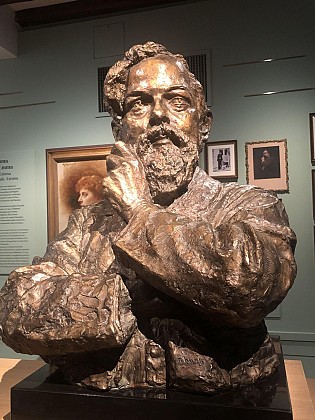
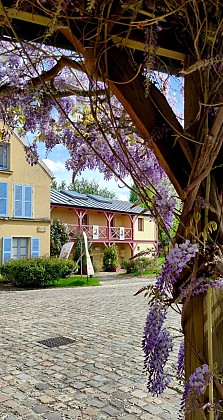
The Fournaise museum proposes a meeting with the artist during a show, punctuated by digital animations and videos, in the middle of the atmosphere recreated by the sets of theaters. of the museum. One hundred years after his death, Renoir is back in Chatou hologram! Familiarly, he tells us about his vision of painting, the harsh criticisms of his contemporaries, his workshop secrets, his loves, his relatives ... and the fertile inspiration drawn from the banks of the Seine. At the time of the first scandals, Durand-Ruel and some amateurs give him a decisive support by buying him paintings. Alphonse Fournaise is one of the first! He ordered his portrait and that of his daughter for 200 francs. For more than ten years, Renoir made frequent stays at home and around Chatou where he painted about thirty paintings. Aged nearly forty, he began the ambitious Breakfast of the Boaters. This painting, painted on the balcony of the Maison Fournaise, is the result of long research. The painter feels then that he has arrived "at the end of impressionism". This great admirer of the masters of the Italian Renaissance dreams of making this work a bridge between Veronese, Raphael and the modern life of his century. Retained at the Fournaise by his painting in 1880, he wrote to Monsieur de Bellio: "You will not regret your trip. It is the most beautiful place around Paris. " To complete your experience in the footsteps of Renoir, go back in time on the Fournaise hamlet thanks to the virtual reality helmets, wander among the characters of the Breakfast of the boaters with the tactile tablets or create your own work according to the master in painting Virtual. In this unprecedented show, technology offers an innovative, fun and surprising approach to an immersive journey in the heart of the painter's Impressionist years in Chatou. - Departures of visits every 30 minutes. Come 15 to 20 minutes in advance. - Duration of the show: about 60 minutes

3 rue du bac Île des Impressionnistes 78400 Chatou
Book from 0 €Book
Show
Royaumont - abbey & fondation
106 km

Royaumont - abbey & fondation

In 1228, Saint Louis and his mother Blanche de Castille established the Abbey of Royaumont, today still the largest Cistercian abbey of Ile-de-France. Listed as a historical monument, the abbey has one of the most beautiful examples of Gothic refectory in France. The 7 hectares park, crossed by canals, is labelled "Remarkable garden" by the French Minister of Culture. It has conserved some of its medieval features and today has three gardens: an experimental vegetable garden, opened in 2014, a medieval inspiration garden, and the garden of the monastery transformed into a ravishing French garden in 1912. The abbey is open every day, from 10 am to 6 pm (5:30 pm between November and March). Royaumont Abbey also offers guided visits, heritage and garden activities for children and families every Sunday throughout the year, and holds a music and dance Festival every year in September and October. In 1228, Saint Louis and his mother Blanche de Castille established the Abbey of Royaumont, today still the largest Cistercian abbey of Ile-de-France. Listed as a historical monument, the abbey has one of the most beautiful examples of Gothic refectory in France. The 7 hectares park, crossed by canals, is labelled "Remarkable garden" by the French Minister of Culture. It has conserved some of its medieval features and today has three gardens: an experimental vegetable garden, opened in 2014, a medieval inspiration garden, and the garden of the monastery transformed into a ravishing French garden in 1912. The abbey is open every day, from 10 am to 6 pm (5:30 pm between November and March). Royaumont Abbey also offers guided visits, heritage and garden activities for children and families every Sunday throughout the year, and holds a music and dance Festival every year in September and October.

3 Jard de l’abbaye de Royaumont 95270 Asnières-sur-Oise
Book from 0 EURBook
Show
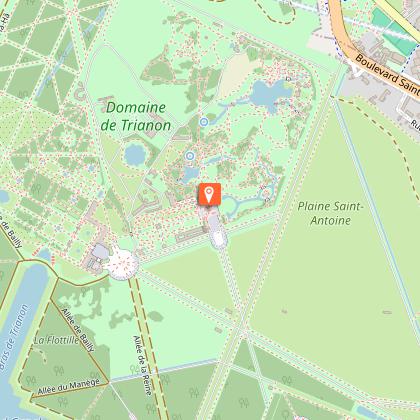
The Petit Trianon
108 km

The Petit Trianon

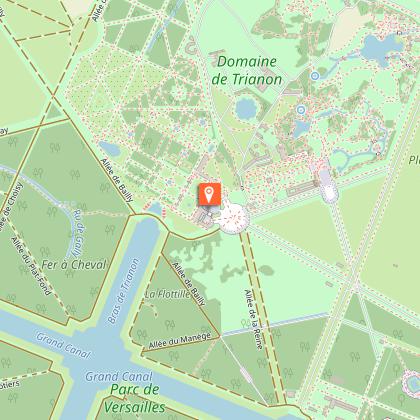
The Petit Trianon was built between 1763 and 1768 by the architect Gabriel, requested by Madame de Pompadour, mistress then friend of king Louis XV. Madame de Pompadour, who wished to “relieve the king’s boredom” — though no longer his mistress, she remained his friend — was the instigator of this small château, built by architect Gabriel between 1763 and 1768. It was erected near the Botanical Garden and the new menagerie, as Louis XV had a keen interest in the sciences. To please the marquise, always at the forefront of fashion, the king’s architect broke away from the rococo aesthetic and adopted a cubic form with very pure lines, in keeping with the brand-new “Greek style” then in vogue. Its simplicity is only apparent, for each façade is different, designed in relation to the space it overlooks: the courtyard, the French Garden with its elegant pavilion, the Botanical Garden, and the Florist’s Garden. Inside, one finds the same modernity of style. Simpler than the rest of the estate, the decoration of the Petit Trianon lies not in lavish materials — gilding is almost absent — but in the refinement of its sculptures, in a château entirely dedicated to nature. Madame de Pompadour died in 1764 and never saw the château completed. Today, it is above all the memory of Marie-Antoinette that it evokes. In 1774, Louis XVI gave the Trianon estate to his wife, who was able to live here a life apart — too much so for some — from the Court.

Château de Versailles 78000 Versailles
Book from 12 EURBook
Show
Palace of Versailles All Access Passport Entry with Audioguide
109 km

Palace of Versailles All Access Passport Entry with Audioguide

ArrayYour Experience Use Your Passport to Tour the Château de Versailles Your ticket gives you access to the most famous places within the royal estate including the Royal Palace, the Park, Gardens, Marie Antoinette’s Estate, and entry to any exhibitions on show at the time of your visit. If you plan to visit on a Friday, Saturday or Sunday, it’s worth paying the extra €8 for an upgraded Passport ticket, which includes access to the Musical Fountain and Garden shows. Learn About the French Monarchy with the Help of a Multilingual Audio Guide Upon entering the Palace, collect your complimentary audio guide from one of the two pick-up counters located on the ground floor, one at the entrance to the Apartment Ladies and the other at the entrance to the Gallery of Castles. Audio guides are available in 11 languages: Spanish, Chinese, English, French, German, Italian, Japanese, Korean, Polish, Portuguese and Russian. Begin your visit by exploring the ornate King and Queen's State Apartments. Learn about the French monarchy and peek into the private lives of the infamous King Louis XIV and Marie Antoinette. Next, make your way to the glittering Hall of Mirrors. Designed to protect the ornate walls and ceilings from smoke, the hall’s 357 mirrors were strategically placed to reflect the light of candles. With just a few flames, the reflection from so many mirrors was enough to light up the whole hall! Explore 250 Acres of Gorgeously Landscaped Lawns and Fountains After admiring the inside of the Palace, head outdoors and take in the grandeur of the estate’s impressive architecture. Stroll along the cobblestone grounds, through the beautiful French gardens, and pass by the gorgeous Versailles fountains. Next, stop by the Estate of Marie Antoinette and discover the life and antics of the Queen at the Petit Trianon. Walk around the Village of the Queen and English gardens, then see where Marie Antoinette built her own house, a Mill, a Preparation Dairy, a Cave, a Belvedere and the magnificent Temple of Love where lovers get engage. At the Carrosses Gallery, travel back in time as you explore carriages, coaches, sculptures and other artifacts left behind by the French Monarch. If you’re short on time and would prefer to skip the long lines, a Versailles skip-the-line entry ticket will allow you to save your time. If you’d like to maximize your time at the palace of Versailles and get a more in depth Castle experience, click here. Each year, it is estimated that approximately 5 million people visit the Palace of Versailles, and between 8 and 10 million people walk its gardens. A place of immense beauty, Versailles stands as a symbol of France’s monarchy and its glorious history.

Book from 20 EURBook
Show
Palace of Versailles
109 km

Palace of Versailles

Since 1979, the Palace of Versailles has been listed as a UNESCO World Heritage Site. It stands as one of the finest masterpieces of 17th-century French art. The Palace and the Trianon Estate are open every day, except Mondays. The Palace opens at 9 a.m., while the Trianon Estate opens only from 12 p.m. The Park and Gardens are open daily with free admission (access to the Gardens is ticketed on the days of the Musical Fountains Shows and Night Fountains Shows, as well as during the Musical Gardens). You can only access the Park via: the Queen’s Gate (Grille de la Reine, entrance for pedestrians, cyclists, and vehicles every day), the Saint-Antoine Gate (Porte Saint-Antoine, pedestrians and cyclists every day, vehicles only on weekends and public holidays), the Matelots Gate (Grille des Matelots, pedestrians and cyclists every day), from 7 a.m. to 8:30 p.m., with last entry at 6:15 p.m. in high season, and from 8 a.m. to 6 p.m. in low season. By exploring the Hall of Mirrors, the King’s State Apartments, and the Museum of the History of France, you step into a palace that, until 1789, was the heart of royal power and continued to evolve over the centuries. Originally, Versailles was nothing more than a hunting lodge built by Louis XIII. But it was here that Louis XIV chose to construct the majestic palace we know today, a symbol of absolute monarchy and French classical art. In the 1670s, Louis XIV commissioned the construction of the King’s and Queen’s State Apartments. The most emblematic creation of these ceremonial spaces is undoubtedly the Hall of Mirrors, designed by Mansart. During the following century, the palace kept expanding, with major works such as the Royal Chapel and the Opera. Today, the Palace covers 63,154 m², spread across 2,300 rooms. Although the Palace lost its role as the seat of power in 1789, in the 19th century it was given a new purpose: to become the Museum of the History of France, an idea launched by Louis-Philippe, who ascended the throne in 1830. Many rooms of the palace were then transformed to house collections recounting the great moments of French history, enriched until the early 20th century.

Château de Versailles Place d'armes 78000 Versailles
Book from 22 EURBook
Show

What to visit in RELAIS DE MONTIGNY LE

See more suggestions
Discover the local markets of RELAIS DE MONTIGNY LE.
See more suggestions
Manoir de l'Aumônerie
3.7 km

Manoir de l'Aumônerie

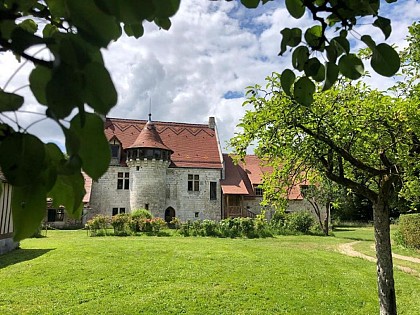
Discover this historic site through : - Saint-Gorgon Chapel - The wells - The kennel - The Longère - The Pressoir - Le Fournil - The Charretterie - The medieval garden The construction of the Manoir de l'Aumônerie takes us back over 800 years. Did the Templars really build the Manoir de l'Aumônerie? That's the question we're currently trying to answer by delving into every possible document and archive. Research in progress? to be continued! In fact, the Knights Templar built the Manor around 1214. Having become very wealthy, they built estates to protect the roads and to welcome travelers, Crusaders and pilgrims. The dissolution of the Order at the Council of Vienna and the death of Grand Master Jacques de Molay, burned at the stake in 1314, led to the demise of the Order of the Temple. All Templar assets were then devolved. In the 15th century, the farm and clearing came under the control of Saint-Georges Abbey, in Saint-Martin-de-Boscherville. This Benedictine abbey was founded in 1112 with the support of the powerful de Tancarville family. The Benedictine monks turned it into the Abbey?s Chaplaincy. They installed farmers in the manor, while also receiving guests of the monks. The 16th century saw the construction of Le Pressoir, La Longère, Le Chenil and Le Four à Pain, as well as a chapel dedicated to Saint-Gorgon, a Roman martyr. During the French Revolution, the property was confiscated from the monks and bought by private individuals. In the 19th century, the creamery and barn were built. The estate changed hands several times over the course of the twentieth century, and in the 1960s the land was gradually sold off as building plots. In 1970, Michel and Josette Ratier bought the property from the descendants of the last farmers and had it listed as a Monument Historique. In 2018, Erwan and Sophie-Isabelle de Saint-Seine took over the restoration of the Manoir de l'Aumônerie.

54 Chemin Saint-Gorgon 76840 SAINT-MARTIN-DE-BOSCHERVILLE
Show

Where to eat in RELAIS DE MONTIGNY LE

See more suggestions
Establishments in RELAIS DE MONTIGNY LE offer dishes for all tastes.
See more suggestions

Where to sleep in RELAIS DE MONTIGNY LE

See more suggestions
Discover the best lodging options in RELAIS DE MONTIGNY LE.
See more suggestions
Caution!
We have no information on the difficulty of this circuit. You may encounter some surprises along the way. Before you go, please feel free to inquire more and take all necessary precautions. Have a good trip! 🌳🥾