Tours
Activities
Places of interest
Where to eat
Where to sleep

Discover Marseille 5th with Ibis Hotel

Are you the owner?
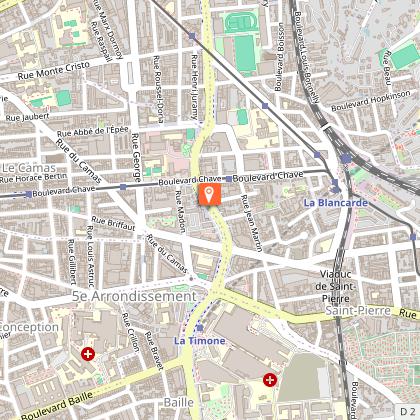
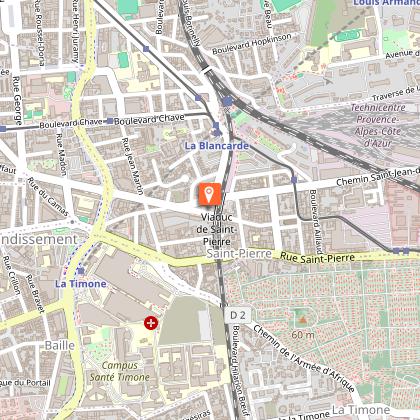
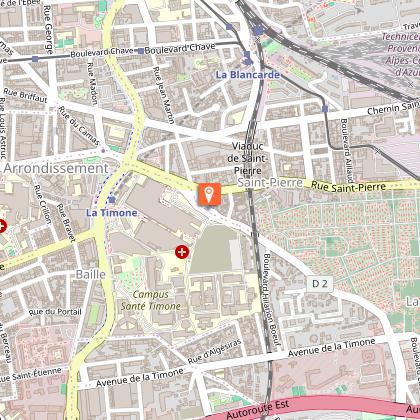
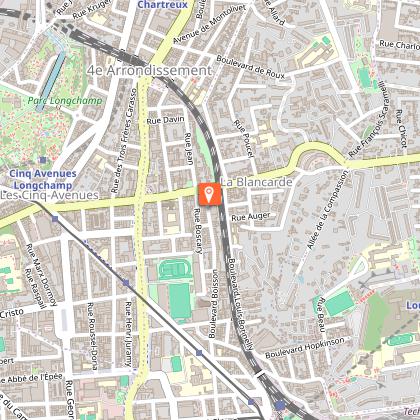
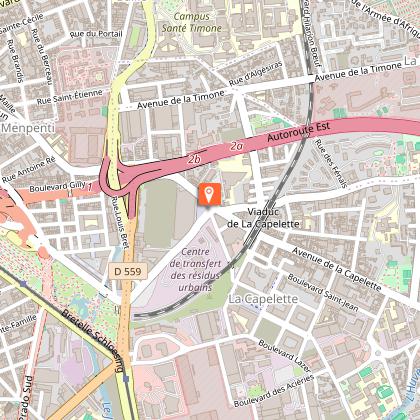
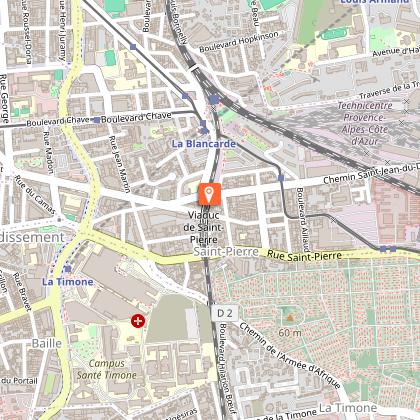
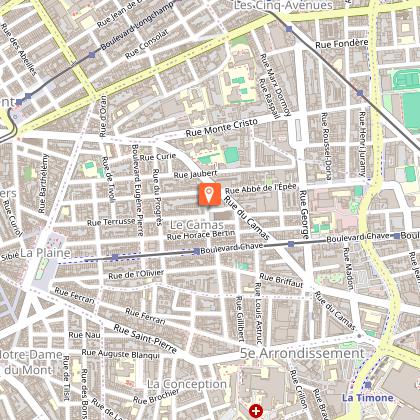
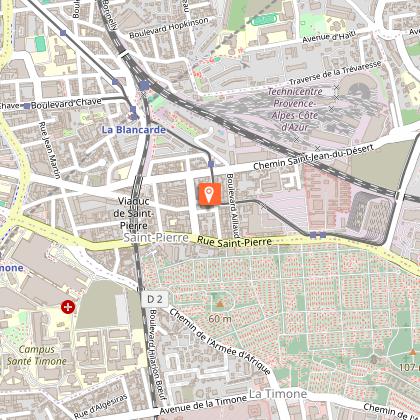
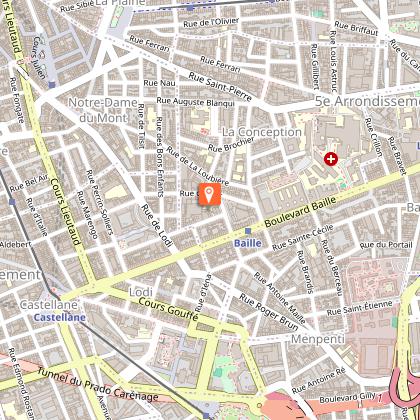
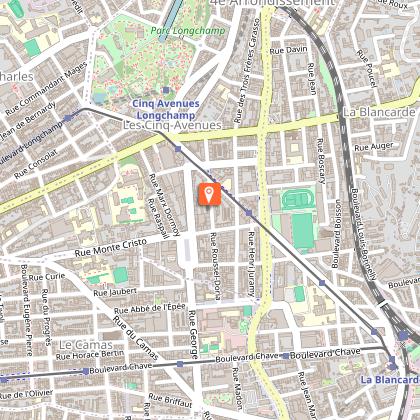
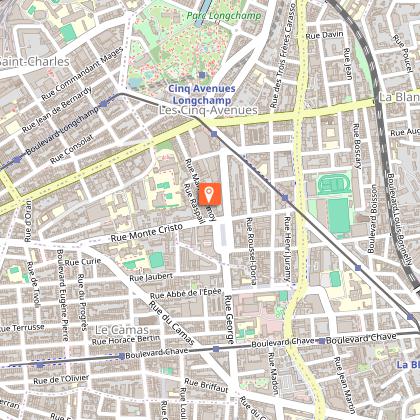
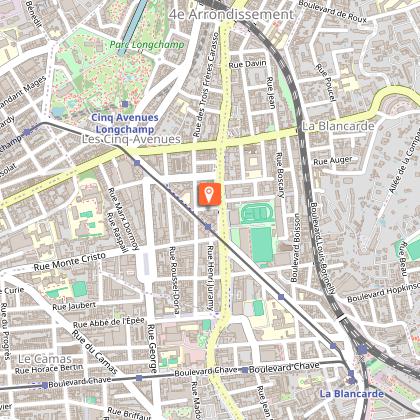
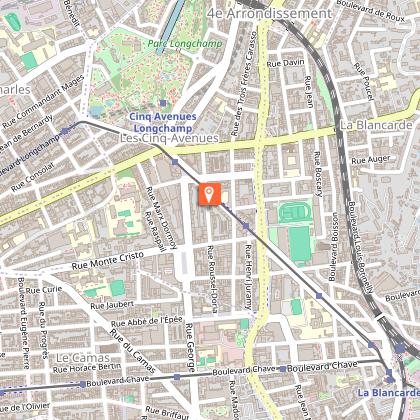
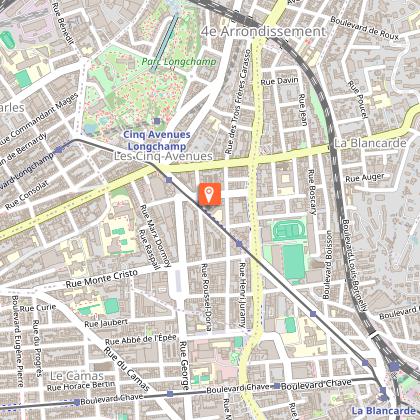
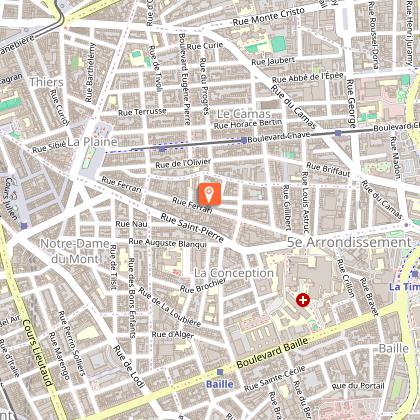
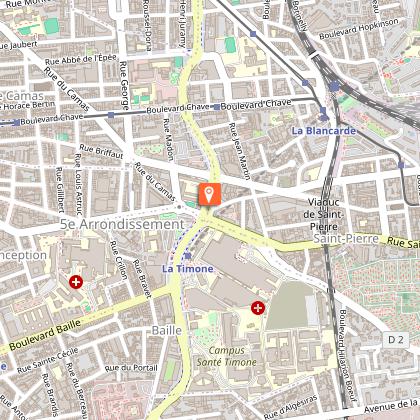
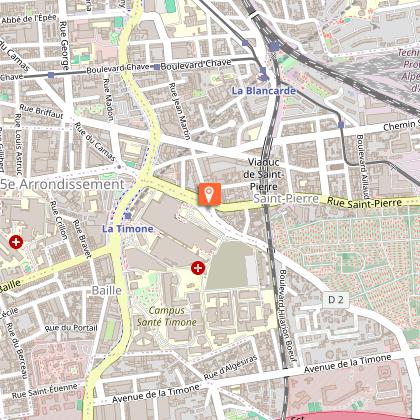
Welcome to Marseille's 5th arrondissement! Situated close to the IBIS HOTEL, this vibrant neighborhood is the perfect starting point to explore Provence and the beautiful city of Marseille, known for its rich historical and cultural heritage. Marseille is a bustling port city that invites leisurely strolls.

The Basilica of Notre-Dame-de-la-Garde, affectionately known as 'la Bonne Mère', is one of...
See more

Walking around IBIS HOTEL

See more suggestions
Embark on a hike in IBIS HOTEL.
See more suggestions
Stroll through the Saint-Pierre district
692 m

Stroll through the Saint-Pierre district

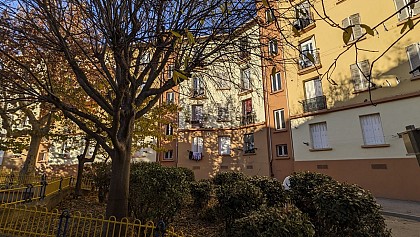
This walk takes you through the peaceful Saint-Pierre district, in the heart of the city of Marseille. It's best known for its cemetery, established in the mid-19th century. Today, families love the area, which boasts schools, numerous shops, a village atmosphere and good transport links (tramway, metro, bus and main roads). The starting point for this exploration of the neighborhood is the "Sainte-Thérèse" streetcar stop, on the T1 line towards "les Caillols". Follow Boulevard Sainte-Thérèse until you reach the rear of the Saint-Pierre church (1). Join the church square and admire the Art Deco facade on your right. At the corner of the square, turn right into rue Pascal Ruinat, which leads to the Louis Loucheur housing complex (2). After crossing the housing estate, whose facades are painted in a monochrome of orange, follow the railroad tracks to reach boulevard Daumas. At the end, turn right under the arch. You're now on the chemin de Saint-Jean du Désert. When you reach the traffic circle, turn left onto boulevard Jeanne d'Arc and walk back towards the railroad (3). You'll pass the Cristal Limiñana company (4) and the cabaret l'étoile bleue (5). Continue straight ahead on boulevard Jeanne d'Arc (6) until you come to the church of Saint-Pierre, then turn right. Rue Ruinat (7) leads to Rue Saint-Pierre (8). If you're observant, you'll notice that the Saint-Pierre district is home to many small buildings with tiled roofs, representative of traditional Marseille architecture. Turn left into rue Saint-Pierre and drive 300 meters to the main entrance to the cemetery (9). It's like entering a hemicycle extended by a vast magnolia-lined avenue. On either side of the alley are the tombs of the Marseilles bourgeoisie, who made Marseilles famous from 1850 onwards (10). Walk straight ahead to reach a little-known site: a military crypt (11). Continue straight ahead until you reach the 4th intersection (12), then turn left until you reach the depository. Turn right and climb the stairs. On the way, you'll come across several remarkable graves (13) and (14). Go straight on until you reach a staircase, then turn left to reach a secondary gate which takes you out of the cemetery. Go left down rue Saint-Pierre until you reach the remains of an aqueduct on your right (15). Continue straight ahead, skirting the streetcar tracks (16) and (17). The walk ends at the "Saint-Pierre" stop on tramway T1, which takes you back to the city center.

2 h
3 km
1 rue Moreau Point de départ : en sortant du Tramway T1, arrêt Sainte-Thérèse 13005 Marseille
Show
A stroll through the Réformés district
1.3 km

A stroll through the Réformés district

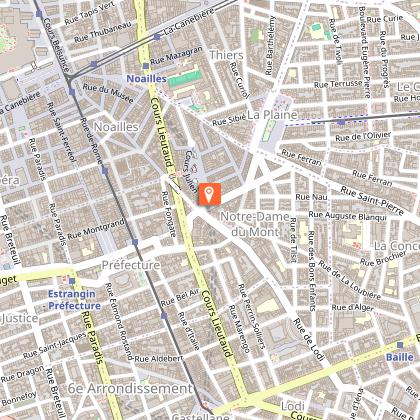
This itinerary lets you explore the Réformés district on foot, ideally located in Marseille's 1st arrondissement. Come and discover the many architectural curiosities hidden within. In the Réformés district, you'll have to look up to see the sights we're about to show you. The starting point for this walk is opposite the Eglise des Réformés (1), built in neo-Gothic style. Although its spires rise to a height of 75 meters, it holds no special place in the hearts of Marseillais. Walk up the Cours Franklin Roosevelt until you come to the Maison Castel (2). Retrace your steps and turn right into rue Saint-Savournin. Cross Boulevard de la Libération and continue straight ahead on Rue Bernex. When you reach boulevard Longchamp, walk a few meters down the boulevard to stop briefly at number 18. This is where you'll come across the first high relief dedicated to the Virgin Mary (3). Cross Boulevard Longchamp and take Boulevard National almost opposite to reach the building at number 9 (4). Continue along rue de la Rotonde, which runs along the north side of the Picon factory. Number 63 is the birthplace of Gaby Deslys, the internationally-renowned (in her day) singer and music-hall star who owned a sublime "folie" on the Corniche, the Villa Gaby (285 Corniche Kennedy). Admire the decorative elements of the entrance porch at number 16, headquarters of the "Les Excursionnistes de Marseille" association (5). A few more steps and you'll arrive at Place Alexandre Labadie (6). Turn right into Rue des Héros and follow it all the way up. At the far right, you'll see a large statue of a golden Virgin (7). Staying on the sidewalk on the Virgin's side, walk down Boulevard de la Liberté, looking up to admire the richly-decorated façade with its expressive faces and cat's mouths. The entrance, at number 46, is also adorned with two atlatls. However, we can't tell you the name of the architect. It's not known. At 23 rue de la Grande Armée, you'll discover a Greek Orthodox church (8). Then you reach Square Stalingrad, where you'll find a beautiful Art Nouveau fountain, the Danaïdes fountain (9). This square is particularly pleasant, as it is well shaded. Go downhill a little further and take the allée Gambetta. Three points of interest stand side by side: The Monument des Mobiles (10), the Byzantine building (11) and the Zarafa giraffe (12). The stroll ends on the upper part of the Canebière, renowned for its cultural and leisure establishments: the Artplexe cinema (13), with its rooftop café-restaurant, the Théâtre de l'Odéon (14) and the Théâtre du Gymnase (15).

2 km
Very easy
2 Cours Franklin Roosevelt 13001 Marseille
Show
A stroll through the Saint-Charles district
1.8 km

A stroll through the Saint-Charles district

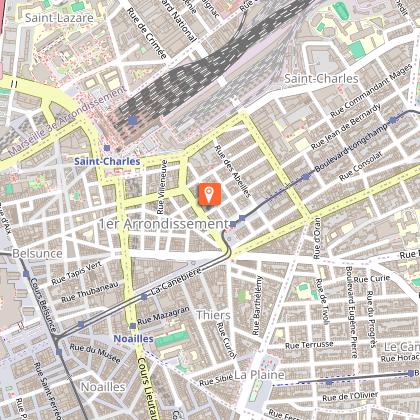
Follow this short stroll to discover the Saint Charles neighbourhood. When one mentions the name Saint-Charles, the SNCF station (1) is the first thing that comes to mind. Indeed, it stands out for several reasons. But it is also a neighborhood that has been transforming for several years and is becoming an university hub that we will introduce to you. We suggest arriving at Saint-Charles by metro and crossing the hall to reach Narvik Square (where the current drop-off point for motorists is located). On your left, first notice a stele (2). If you look further to the left, there is a large 15-story building in yellow/beige. In front of it stands the Golden Virgin (3). Cross the square to access the station's "masterpiece": its staircase and panoramic view of part of the city (4). Admire the sweeping view of Boulevard d'Athènes, the street art mural (5), and Notre-Dame de la Garde Basilica. Walk along the other side of the station to reach stairs that lead to Boulevard Maurice Bourdet. Cross and descend Boulevard Charles Nédélec. At the third intersection, turn right onto Rue Joseph Biaggi where you'll find the Bourse de Travail (6). Continue straight and skirt around the EMD Management School. Go up Rue Frédéric Ozanam until you reach Avenue du Général Leclerc, which you descend on the left. On the other side of the boulevard, you'll see the Saint-Charles campus, the original university site. Notably, there is a large rectangular peristyle building (7). Then you pass by a stele dedicated to General Leclerc (8). A flight of stairs takes you to the foot of the Toyoko Inn hotel (9). Enter on the left into Porte d'Aix Park (10). Follow the central path to reach the forecourt of the Arc de Triomphe (11). As you can see, this area designed by Euroméditerranée has undergone a major transformation over the past decade. Until recently, the A7 motorway divided the neighborhood in two, as it ended at the triumphal arch. The area is transforming with the construction of new student residences, numerous schools, the consolidation of three universities (specifically, the faculties of architecture, landscape, and urban planning), the creation of an inter-university library, and most importantly, the addition of a major asset: the inauguration of a brand new park in the heart of the city. The Saint-Charles district now positions itself as an urban campus. For more information: www.euromediterranee.fr In line with the Arc de Triomphe, cross Boulevard Charles Nédelec. In front of you, Rue d'Aix descends, which changes names several times over more than 6 kilometers, to reach the Mazargues district. It is one of the main north-south axes of the city. Sharpen your gaze, you should at least see the column of the fountain in Place Castellane, located 2 kilometers away. Finish your visit at the forecourt of the Regional Hotel, Place Gilberto Bosques. The Regional Council consists of two buildings that were built between 1984 and 1991 in the Butte des Carmes district. The forecourt of the Regional Hotel houses 3 remarkable elements (12).

1.7 km
Very easy
Square Narvik, gare Saint-Charles 13001 Marseille
Show
A stroll through the Noailles district
1.9 km

A stroll through the Noailles district

Take a free tour of the Noailles district, also known as the belly of Marseille. Noailles is made up of narrow streets where Marseillais come to stock up on spices, condiments, flavors and fragrances of all kinds! You'll find ingredients from all over the world. Exoticism guaranteed. The discovery of the Noailles district begins on the Cours Saint-Louis (2), Marseille's "ground zero". Since 1927, it's here, precisely at the corner of the Canebière and Cours Belsunce, that the numbering of buildings along all the city's streets has been determined. It's also kilometer zero for measuring the distance between Marseille and other French cities. Cours Saint-Louis extends into rue de Rome. Turn left into rue Méolan, where you'll find the famous shop founded by Père Blaize (3). At the end of the street, turn right onto rue d'Aubagne. At the next street, turn right again onto rue Vacon. On your left is rue Halle Delacroix, with its outstanding exotic goods merchants, such as Tam-Ky. Cross the square to reach rue Rouvière and continue up it to the left. Turn left down rue d'Aubagne to the crossroads with rue Longue des Capucins. This is where you'll find Saladin's cave of 1,000 spices (5). Continue straight on to the district's only fishmonger, du Lamparo, at the corner of Marché des Capucins and Marché de Noailles. Turn left down Rue des Feuillants onto La Canebière (1). Walk down the Canebière, then turn left into rue des Récolettes, where you'll discover another of the city's outstanding shops: the "Empereur" hardware store (8). Take time to explore this store, which is approaching 100 years of existence. There's a beautiful section of antique toys upstairs. As you leave the store, the neon sign of the Cours Saint-Louis pharmacy will lead you back to the starting point of this tour.

45 min
1 km
Very easy
Le point de départ de cette visite en boucle, se trouve sur le Cours Saint-Louis Cours Saint-Louis 13001 Marseille
Show
Stroll along the south shore of the Old Port
2 km

Stroll along the south shore of the Old Port

This easy walking tour combines beautiful facades along the streets with panoramic views and grand monuments. The route is suitable for strollers. * The itinerary begins on the Canebière, a mythical and historic artery, lined with majestic facades, which in its heyday was home to grand hotels and the most beautiful cafés in Marseille. At number 9 is the Palais de la Bourse, the chamber of commerce and industry. Rue Beauvau leads to the Opera House. It was partially destroyed by fire in 1919, hence its Art Deco facade. At the back of the building. * Turn right onto rue Francis Davso which leads to the Cours Estienne d'Orves. A real city within the city, the Arcenaulx were the former warehouses of the arsenal of the royal galleys at the time of Louis XIV. Today, this Italian-style square is an attractive district with its cafés, restaurants and artists' galleries. * Parallel to this is the Rue Sainte, which leads to the Abbaye Saint-Victor, join it. Stop at the Four des Navettes, the oldest bakery in Marseille (1781) where you can taste the navettes, a dry orange blossom cookie typical of Marseille and very popular with gourmets. To the right of the Bertie Albrecht square, enjoy the panoramic view of the Old Port and the old city. * Then head for Fort Saint-Nicolas (17th century), the work of the Chevalier de Clerville. During the construction of the Palais du Pharo, the fort was cut in two, in order to create an access road and that is why today, Fort Saint-Nicolas is composed of Fort d'Entrecasteaux for the upper part and Fort Ganteaume for the lower part. * When you arrive in front of the gates of the Palais du Pharo, cross the public garden which offers other magnificent views of Marseille.

45 min
2.5 km
Very easy
11 La Canebière 13001 Marseille
Show
A stroll through 19th-century Marseille
2 km

A stroll through 19th-century Marseille

This urban walk starts on the Canebière: it will lead you to the Palais Longchamp and its monumental fountain. The route follows the Cours Saint Louis, the "Petit Cours" which takes its name from Louis d'Anjou. This is where the first santon fair was held in 1803. Then we enter the Noailles district. In a colorful effervescence, dive into the Mediterranean cultures and discover the different stalls. Once you have crossed the boulevard Garibaldi, you reach the rue du Théâtre Français. Italian style theater and baptized for a time "French theater" to mark its vocation dedicated to the French literature. Then you reach the upper part of the Canebière again. There we find a self-service book terminal in the shape of a giraffe to pay homage to the famous Zarafa, evoked in the urban stroll that leads to the Prefecture and the Monument aux Mobiles which celebrates the soldiers of the Garde Mobile of the Franco-Prussian war of 1870. At the very end of the Canebière, you find yourself facing the Saint-Vincent de Paul church, nicknamed "les Réformés" because it is located on the site of the chapel of the Augustins Réformés. Its 2 spires rise 70 meters above the Canebière. As you walk up the majestic avenue of plane trees on boulevard Longchamp, you will see on your right the mansion that houses the Grobet-Labadie museum. To end this urban stroll, you can discover the Palais Longchamp which was built to celebrate the arrival of the waters of the Durance in Marseille. Discover also its museums and its English garden.

1 h
2.1 km
Very easy
Départ Office Métropolitain de Tourisme et des Congrès 11 La Canebière 13001 Marseille
Show
Marseille Between Sea and Landmarks: An Unforgettable Bike Ride
2.1 km

Marseille Between Sea and Landmarks: An Unforgettable Bike Ride

🔧 Practical Info Before You Go : Start: Indigo Parking – Centre Bourse Duration: 1h30 (non-stop, without visits, swims, or breaks) up to 5 hours if taking your time Distance: 18 km Bring: Water, sunscreen, sunglasses, swimsuit !!   🗺️ Step-by-Step Itinerary : Start from Indigo Parking – Centre Bourse, right in the city center. A few turns of the pedals take you down to the waterfront and the striking Mucem and Cosquer Cave exhibit on J4 Esplanade, a wide open space facing the Frioul Islands. Continue up toward the imposing Cathedral of La Major, then wander through the colorful alleyways of Le Panier, the oldest and most picturesque district in Marseille. Cruise down to the Ombrière by Norman Foster, the mirrored canopy that hovers above the Old Port, then cross over to reach the elegant Palais du Pharo, offering a superb view over the harbor. Ride along the sea to the Plage des Catalans, then head to the charming Vallon des Auffes, a tiny traditional fishing port carved into the coastline. Keep going through Malmousque, then Maldormé, and skirt the Anse de la Fausse Monnaie — peaceful coves with crystal-clear water. Pedal up through Parc Valmer, then take on the iconic Corniche Kennedy, a scenic balcony overlooking the Mediterranean, lined with villas, carved stone walls, and sweeping sea views. Take a refreshing break at the Plage du Prophète, one of Marseille’s most popular beaches: shallow water, a relaxed family vibe, and perfect for a quick dip. Then comes the climb to Notre-Dame-de-la-Garde, affectionately called La Bonne Mère. It’s the steepest part of the route — but also the most rewarding. From the esplanade, the 360° view over the city, islands, port and sea is truly breathtaking. Descend through Parc Puget, a quiet green escape, before stopping at the historic Abbaye Saint-Victor, a powerful monument to 15 centuries of Christian presence. Finally, wrap up your journey at the Citadel (Fort Saint-Nicolas). Entry is free, and a small hidden bar at the top offers a stunning view over the Old Port — the perfect place for one last drink to celebrate your ride. 🌇 Don’t Miss: One Last Drink with a View Over the Old Port Climb up to the Citadel (free access) and grab a seat at the small bar perched on top. The view is incredible, the vibe is peaceful… A perfect ending to your Marseille cycling adventure.

4 h
24 km
Easy
28 Rue Reine Elisabeth 13001 Marseille
Show

What to do in IBIS HOTEL

See more suggestions
Make your stay in IBIS HOTEL special by booking activities.
See more suggestions
Adagio Marseille Timone
524 m

Adagio Marseille Timone

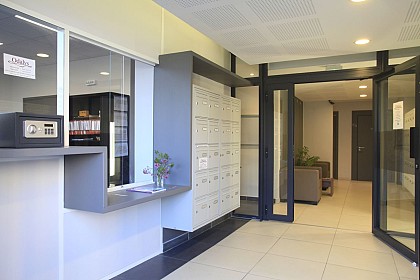
Adagio Marseille Timone has 114 flats including 92 studios and 22 suites. The flats have been decorated by the designer Didier Gomez who wanted to offer a place of excellence so that everyone feels better than in a hotel. Elegant and practical, each flat has a calm, contemporary feel. And because your sleep is precious, we have taken particular care in choosing your bedding. Studios: ranging in size from 20 to 31 m², the studios offer a well-equipped living space, office area, kitchen and bathroom. They are very comfortable and fully equipped with twin or king-size beds. Studios are designed for a maximum occupancy of 2 people. Suites: 22 spacious suites ranging from 31 to 36 m² can accommodate up to 4 people. They feature a beautiful bedroom with its own bathroom, a living room with an office area and a fully-equipped kitchen opening onto a dining area. With its resolutely contemporary and refined design, this residence is first and foremost comfortable, practical and pleasant to live in. Located close to the Dôme, Parc Chanot and Orange Velodrome stadium, Adagio Marseille Timone is ideally situated just off the A50 motorway. Marseille city centre is just 50 metres away by metro. 114 flats await you for your short, medium and long stays. Facilities and services. The bathrooms have a bath/shower, heated towel rail and hairdryer. Bath products are designed by perfumer Blaise Mautin. The kitchens are equipped with crockery and cutlery, dishwasher, grill and microwave, kettle and ceramic hob. Each flat has wired broadband internet, a flat-screen TV, a safe and individually dimmable air conditioning. Baby cots are not included in the maximum occupancy of the flats. Hot buffet breakfast service with access to the terrace. Fitness centre and sauna with free access. Wi-Fi access throughout the residence. Free Wi-Fi throughout the residence and in all flats. Private, secure car park.

21 Chemin De l'Armée d'Afrique 13005 Marseille
Book from 0 €Book
Show

What to visit in IBIS HOTEL

See more suggestions
Visit the iconic landmarks of IBIS HOTEL.
See more suggestions
Palais Longchamp Park
1.1 km

Palais Longchamp Park

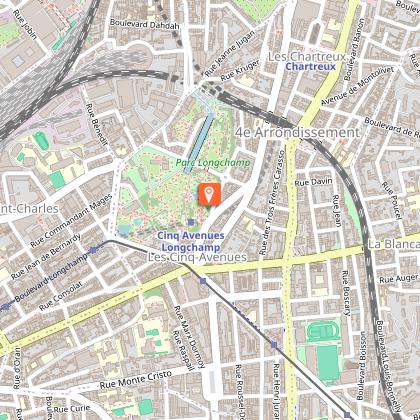
Palais Longchamp : under the sign of culture and nature . In some squares, the playgrounds can still be used but are placed under the responsibility of parents who must ensure that sanitary instructions are respected and, in particular, that the children are physically distanced. Protected as a Historic Monument, Parc Longchamp, which is currently being reconstructed, has been built up over time through the stratification of different projects, imagined or carried out on the site, since the 19th century. The Longchamp Park, the Borély Park, the Magalone Garden and the 26th Centenary Park were awarded the "remarkable garden" label by the Ministry of Culture in 2005. In Marseille, as in all of Provence, water control remained a major problem until the construction of the Marseille canal to supply the city with water from the Durance. On July 8, 1847, the water arrived on the Longchamp plateau, following the canal traced by the Ponts et Chaussées engineer, Frantz Major de Montricher, transforming at the same time, the Marseilles landscape. To celebrate this event, the architect Henry Espérandieu conceived in 1862 a large-scale project including a monumental fountain surrounded by two wings, one housing the Museum of Natural History and the other the Museum of Fine Arts. He then designed a double staircase encircling the fountain to access his museums, behind which are three gardens. The public garden called "du plateau" was inaugurated in 1869, at the same time as the water tower, while the "jardin de l'Observatoire" was created between 1863 and 1864. Under the garden of the plateau, two superimposed rooms were built to collect the waters of the canal of Marseille which were decanted there before being redistributed in the city. These basins, an essential element of the hydraulic system, buried and supported by a forest of pillars, will soon be restored. Finally, the Zoological Garden, open to the people of Marseille since 1854, illustrates the passion of the Second Empire for exoticism and travel. A victim of public disaffection, the zoo closed in 1987. The cages, now deserted, evoke the great era of the zoo, in which the big cats themselves only had a few square meters to escape their boredom. Of the three gardens created, only two are open to the public today: the "plateau garden" and the "zoological garden". The "jardin du plateau", conceived by Espérandieu as a setting for the "Palais Longchamp" and created behind the water tower, was laid out in the French style, in the spirit of Edouard André. The wide, winding paths highlight the sculpted group representing the Durance River and the stalactite-adorned waterfall celebrating the arrival of the Canal in Marseille. The transparency of the central body of the water tower allows a perspective view of the city. The zoological garden belongs to the current of "picturesque" or "English" gardens integrating a reconstituted nature and giving pride of place to decorative elements. One can still observe a bandstand, some orientalist structures (the giraffe and elephant pavilions and the wild animal cages decorated with turquoise ceramics), rock garden elements (the seal cascade, the aviary and the bear cage) and a "rustic" hut, formerly occupied by ostriches. Other cages are adorned with naïve paintings and feature decorated fences and brick houses.

Boulevard du Jardin zoologique 13004 Marseille
Show
The palais Longchamp
1.2 km

The palais Longchamp

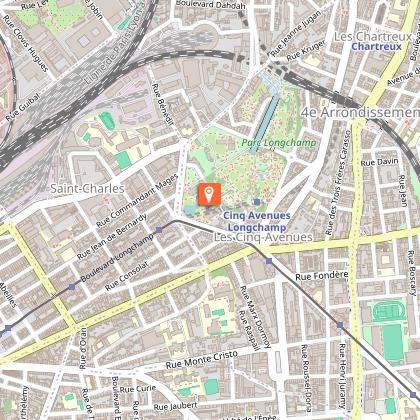
The boulevard Longchamp. This boulevard with its plane trees was created by an association of owners who, after having left it to the city to open the boulevard in the 1830s, built apartment buildings and private mansions. The boulevard Longchamp with its plane trees was created by an owners association. They let the city open the boulevard in the 1830s and then built apartment buildings for rent and private mansions. This was an immediate success, and soon a quarter with a very homogenic architectural style developed. Here can be found the typical " three-window " building, a design often repeated in several quarters of Marseille. The observatory, the oldest scientific establishement of Marseille, will soon celebrate its 300th birthday. Before the transformation of the Longchamp plateau, it was installed in the Accoules quarter, in the old part of Marseille in the Collège de Sainte-Croix, where it was created in 1702 by the Jesuits by royal order. The observatory is attached to the Ministry of National Education and the CNRS research organization. Today it is a processing centre for data obtained from the largest telescopes of the world and from sclale space experiments, and also a laboratory for the development of instruments. The main research themes are at present aimed at the study of galaxies and interstellar environment. Since January 2000, the observatory has expanded by becoming, together with the Laboratoire d'Astronomie Spatiale at Trois Lucs in Marseille and the Observatoire de Haute Provence, the Observatoire Astronomique Marseille Provence attached to the University of Provence. Apart from its research activity, the observatory is open to the general public and school groups and regularly proposes educational activities on astronomy. The association Andromède organizes exhibitions, school visits, group visits (children and adults), lectures, sky observations and planetarium shows. Furthermore, the observatory has a very fine room of old instruments which the Patrimoine group presents to the general public and school groups. The Palais Longchamp. The city had a shortage of water and since the 16th century, there had been a plan to dig a canal to supply Marseille with water from the river Durance. The water problem became an obsession for the municipality in the 19th centuury, aggravated by a cholera epidemic in 1835. From 1838 onwards, projects for the digging of this canal were designed finally the plan of the public works engineer Franz Mayor de Montrichier was adopted. To dig this canal of 85 kilometres, underground ducts and 18 aqueduct bridges had to be made. This took 10 years, helped by the tenacity of certain councillors like Mayor Consolat. Right from the beginning of the works in 1839, a monumental reservoir to celebrate this so precious water was planned. After several projects, the design of the architect of Notre-Dame de la Garde, Henry Espérandieu, was chosen to build the most remarkable of all edifices constructed during the Second Empire. Usually, the front is 7 metres wide and the depth of the building is 14 metres. According to the means and the wishes of the client, the buildings are more or less decorated especially around the entrance doors and the window frames. Sometimes, the three-window module was doubled and some buildings can have six windows, but these were built later. Apart from the three-window type, you can see private mansions built for only one family with very fine decoration. Most of these buildings have a garden, and those with even numbers open towards the south. This shows that the quality of living was already one of the preoccupations of 19th century architects. This historic building, inaugurated in 1869, commemorates the arrival of the water of the canal between the river Durance and Marseille. On the same site, it brought together the Museum of Fine Arts, which before was in the former Bernadines chapel, the Museum Natural History, a botanic park and a zoo. The rich decoration of the building evokes the abundance and fertility brought by the water of the canal. Here sculpture has a dominating role, and this work was entrusted to the greatest artists of that period. The famous animal sculptor Antoine Louis Barye created the lions and the tigers of the entrance, and the monumental fountain in the centre of the row of columns is the work of Jules Cavelier. It represents the river Durance surrounded by figures symbolizing the vines and wheat on a cart pulled by the bulls of Camargue. The interior decoration of the museums is also remarkable. The main stairs of the Fine Arts Museum are adorned by two large painting by Puvis de Cavannes, commissioned in 1867: Marseille, the Greek colony and Marseille, Gateway to the Orient. In the Provence room, painted by Raphaël Ponson, the museum has preserved a fine example of historical museography. The Fine arts Museum, installed in the left wing of the building. In the right wing of the building the Museum of Natural History has been instaled since 1869.

Place Henri Dunant Bd de Montricher 13233 Marseille
Show

Where to eat in IBIS HOTEL

See more suggestions
Restaurants in IBIS HOTEL are ready to welcome you.
See more suggestions

Where to sleep in IBIS HOTEL

See more suggestions
Choose from a variety of lodgings in IBIS HOTEL.
See more suggestions
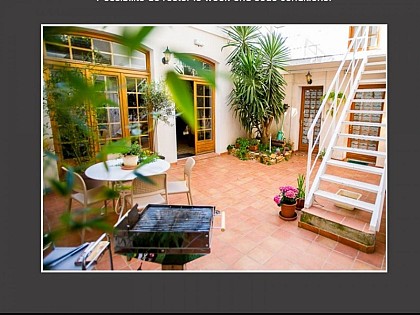
Adagio Marseille Timone
524 m

Adagio Marseille Timone

Adagio Marseille Timone has 114 flats including 92 studios and 22 suites. The flats have been decorated by the designer Didier Gomez who wanted to offer a place of excellence so that everyone feels better than in a hotel. Elegant and practical, each flat has a calm, contemporary feel. And because your sleep is precious, we have taken particular care in choosing your bedding. Studios: ranging in size from 20 to 31 m², the studios offer a well-equipped living space, office area, kitchen and bathroom. They are very comfortable and fully equipped with twin or king-size beds. Studios are designed for a maximum occupancy of 2 people. Suites: 22 spacious suites ranging from 31 to 36 m² can accommodate up to 4 people. They feature a beautiful bedroom with its own bathroom, a living room with an office area and a fully-equipped kitchen opening onto a dining area. With its resolutely contemporary and refined design, this residence is first and foremost comfortable, practical and pleasant to live in. Located close to the Dôme, Parc Chanot and Orange Velodrome stadium, Adagio Marseille Timone is ideally situated just off the A50 motorway. Marseille city centre is just 50 metres away by metro. 114 flats await you for your short, medium and long stays. Facilities and services. The bathrooms have a bath/shower, heated towel rail and hairdryer. Bath products are designed by perfumer Blaise Mautin. The kitchens are equipped with crockery and cutlery, dishwasher, grill and microwave, kettle and ceramic hob. Each flat has wired broadband internet, a flat-screen TV, a safe and individually dimmable air conditioning. Baby cots are not included in the maximum occupancy of the flats. Hot buffet breakfast service with access to the terrace. Fitness centre and sauna with free access. Wi-Fi access throughout the residence. Free Wi-Fi throughout the residence and in all flats. Private, secure car park.

21 Chemin De l'Armée d'Afrique 13005 Marseille
Book from 0 €Book
Show
Caution!
We have no information on the difficulty of this circuit. You may encounter some surprises along the way. Before you go, please feel free to inquire more and take all necessary precautions. Have a good trip! 🌳🥾