Tours
Activities
Places of interest
Where to eat
Where to sleep

Explore Taluyers with LE TALLUY Hotel: An Unforgettable Stay

Are you the owner?
Welcome to the heart of the Rhône-Alpes region, in Taluyers, where LE TALLUY Hotel becomes your starting point for unforgettable adventures. Begin your exploration with a visit to the charming village of Taluyers, rich in history, featuring an ancient church and picturesque streets. Wine enthusiasts will be delighted to discover local vineyards, known for their quality wines and friendly tastings....See more

Walking around LE TALLUY

See more suggestions
Hiking routes in LE TALLUY.
See more suggestions
Vineyard path
16 km

Vineyard path

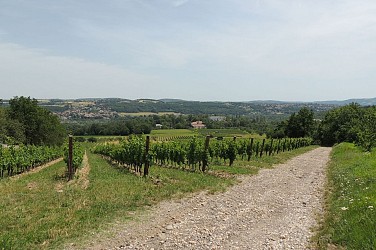
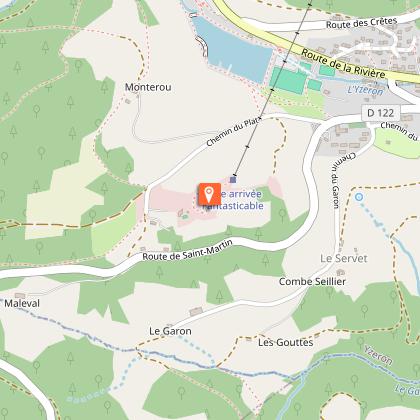
Set off on a stroll through the prestigious vineyards of Côte-Rôtie, with the majestic Rhône River providing a spectacular backdrop. A hike through the vineyards DETAILED ITINERARY: 1 - START - Follow the road down towards Tartaras. After 100 m, take the dirt track on the left. - Cross the stream, go through the valley and then climb up to the left to reach the Tartaras plateau. 2 - HAMLET OF TARTARAS - In the village, turn left onto the local road. - Continue for 1 km, then take the dead-end road. - At the end of the tarmac road, we recommend stopping to enjoy the superb view of the hillsides, the village, the Rhône and the market garden area. 3 - TOWARDS THE MILL - Take the dirt track on the left and descend into the heart of one of the oldest and most prestigious vineyards in France. The path leads to a restored building: the Mill, where the Fongeant and Reynard streams meet. 4 - TOWARDS THE RHÔNE - Follow the stream to the D386, cross the square in front of the church, then follow Rue du Port to the Rhône. (PS: every first Sunday and Monday in September, water jousting competitions are held here, featuring passes from Lyon and Givors). 5 - RETURN THROUGH THE VILLAGE - Go up Impasse du Port, continue along the small Rue du Port, then turn right in front of the château onto Rue du Grand Pré. - At the intersection with Rue des Coutures, turn left onto Rue du Trièves and cross the railway line via the underpass. - Continue along Impasse du Trièves until you reach the D386. 6 - FINAL ASCENT - Cross the road and take Rue de Ritolas opposite. - At the crossroads with Rue du Jarre and Route de la Brocarde, continue straight ahead along the dirt track. - Go around the house and follow the Ritolas path. The path is initially dirt, then tarmac. 7 - CROSSING THE HAMLETS - Follow the local road for 2.5 km through the hamlets of Ritolas and Giraud to reach the car park.

3 h
6.9 km
Easy
Parking du Giraud au croisement de la RD45 et de la route de Tartaras 69420 Ampuis
Show
The Balmes Viennoises
16 km

The Balmes Viennoises

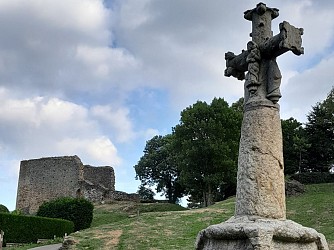
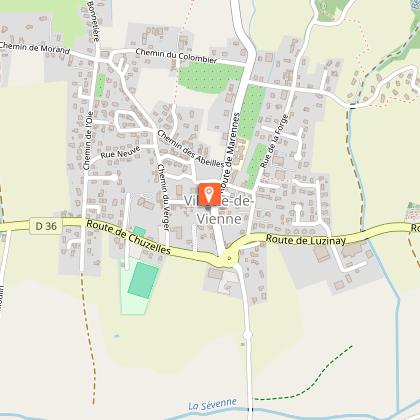
Circuit that lets you discover the château and medieval chapel of Illins, as well as the "Colombier" pear brandy distillery, while offering views of the Alps and Mont Blanc. DETAILED ITINERARY 1 - START - Villette-de-Vienne - From the start sign, turn left onto Rue des Serventières. - At the Villette de Vienne signpost, follow the signs for Chuzelle on the left until you reach Cugnet, then continue left until you reach the Morand signpost. 2 - TOWARDS BONNETIÈRE - Turn right towards Bonnetière. - At the Chemin des Vignes junction, take the path on the left until you reach a road. - Follow the road on the left to the Bonnetière signpost, then continue right to the Taillis de Mure signpost. 3 - TOWARDS MARENNES - Continue straight ahead on the track towards Marennes, cross the D150A and take the track opposite. - When you reach a small road, turn left, pass the Bois des Fauries signpost and continue to the Le Coin signpost. 4 - BOIS DE THOLOMÉ AND LA PLATIÈRE - Turn right towards Bois de Tholomé, pass the signpost and continue towards La Platière. - Pass through the houses, turn left then right at the crossroads. 5 - VILLENEUVE AND ILLINS - In Villeneuve, cross the hamlet in a straight line, then turn right into the cul-de-sac. - At the Illins signpost, continue right towards Villette de Vienne. - Cross the hamlet on the left, then turn right at the chapel. 6 - CHÂTEAU D'ILLINS & RETURN - Follow the road to the château farm on the hillside. - Take the track on the left, pass in front of the Château d'Illins, then descend to the Les Brigands signpost. - Continue to the Cugnet signpost and return to the starting point via the same route.

4 h
13 km
Easy
38200 Villette-de-Vienne
Show

What to do in LE TALLUY

See more suggestions
Organize your days in LE TALLUY with bookable activities for the whole family.
See more suggestions
The Church "Saint-Clair"
4.5 km

The Church "Saint-Clair"

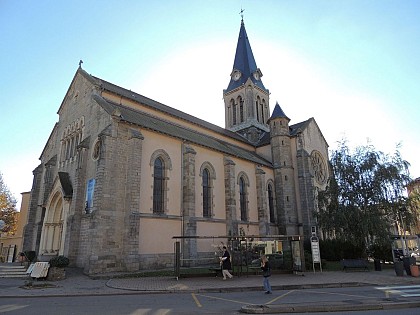
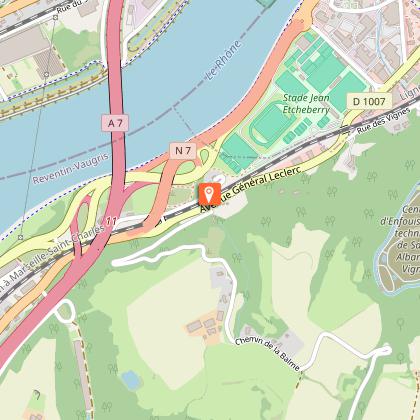
This church (19th century) is the most beautiful monument of the artistic heritage of Brignais. You can notice the bell, the organ, the woodword and the stain-glass windows. This church is the most beautiful monument of the artistic heritage of Brignais. Dedicated to Saint-Clair (590-660), patron saint of the blind and partially sighted persons, its first foundations dated from 1859. It was built on the place of the former feudal church and of the former cemetery. This church was built thanks to public subscriptions and town funds. The architect, Claire Tisseur, born in Sainte-Foy-lès-Lyon (writer of the "Littré de la Grand'Côte"*, and more famous, in France, under its pseudonym Nizier du Puitspelu.) and the abbot Rival, priest of the parish, presided the building of the monument. Thanks to its architecture and its furnishing, the monument forms a remarkable unity of ogival style of the 13th century, modernized in the 20th century. The woodwork (the pulpit, the confessionals and the stalls of the choir) is realised by sculptor Aubert from Lyon. The bell, dated from 1492, was listed in the "Inventaire des Monuments Historiques", on 27th November 1905. The organ was built by organ makers of the Jura mountains, Hartmann and Deloye, for the Benedictine community of Pradines (near the town of Roanne) in 1972. As it was for sale, the association "Les Amis de l'Orgue de Brignais", helped by the town hall, bought it in 1955. The size of the organ is fairly important (20 timbers). It integrates harmoniously the west transept of the church due to its dimensions. The organ builder, Hervé Clénet (from "Bectave-Aguin" - Gers department) and his assistant Jean Boissonade (from "Séverac l'Eglise" - Aveyron department), restaured the organ. The assembling, after restauration, was made by Jean Boissonade, helped by Maurice Crouzet and Jean-Marie Royet, from Brignais. The stain-glass windows : the five large stained-glass windows of the choir and the eight smaller windows of the lateral chapels were made by Mr Mauvernay, a glass-worker for Saint-Galmier. One of the roses represents the virtues of the Virgin, the other, the virtues of Saint-Clair. The stained-glass windows of the lawer naves represent scenes of Christian life. The designs were made by the abbot Rival. * a famous book encyclopedia with many humorous and picturesque anecdotes, inspired by the true and viviacious spirit of Lyon and its people.

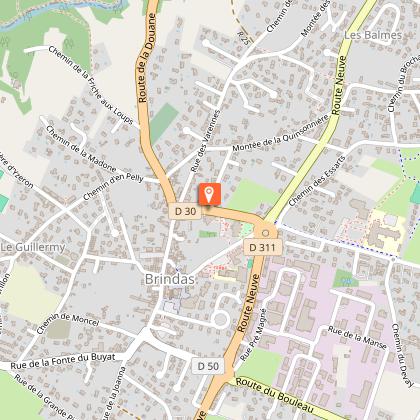
1 avenue de Verdun 69530 Brignais
Book from 0 €Book
Show

What to visit in LE TALLUY

See more suggestions
Take a boat tour around LE TALLUY.
See more suggestions
The Church "Saint-Clair"
4.5 km

The Church "Saint-Clair"

This church (19th century) is the most beautiful monument of the artistic heritage of Brignais. You can notice the bell, the organ, the woodword and the stain-glass windows. This church is the most beautiful monument of the artistic heritage of Brignais. Dedicated to Saint-Clair (590-660), patron saint of the blind and partially sighted persons, its first foundations dated from 1859. It was built on the place of the former feudal church and of the former cemetery. This church was built thanks to public subscriptions and town funds. The architect, Claire Tisseur, born in Sainte-Foy-lès-Lyon (writer of the "Littré de la Grand'Côte"*, and more famous, in France, under its pseudonym Nizier du Puitspelu.) and the abbot Rival, priest of the parish, presided the building of the monument. Thanks to its architecture and its furnishing, the monument forms a remarkable unity of ogival style of the 13th century, modernized in the 20th century. The woodwork (the pulpit, the confessionals and the stalls of the choir) is realised by sculptor Aubert from Lyon. The bell, dated from 1492, was listed in the "Inventaire des Monuments Historiques", on 27th November 1905. The organ was built by organ makers of the Jura mountains, Hartmann and Deloye, for the Benedictine community of Pradines (near the town of Roanne) in 1972. As it was for sale, the association "Les Amis de l'Orgue de Brignais", helped by the town hall, bought it in 1955. The size of the organ is fairly important (20 timbers). It integrates harmoniously the west transept of the church due to its dimensions. The organ builder, Hervé Clénet (from "Bectave-Aguin" - Gers department) and his assistant Jean Boissonade (from "Séverac l'Eglise" - Aveyron department), restaured the organ. The assembling, after restauration, was made by Jean Boissonade, helped by Maurice Crouzet and Jean-Marie Royet, from Brignais. The stain-glass windows : the five large stained-glass windows of the choir and the eight smaller windows of the lateral chapels were made by Mr Mauvernay, a glass-worker for Saint-Galmier. One of the roses represents the virtues of the Virgin, the other, the virtues of Saint-Clair. The stained-glass windows of the lawer naves represent scenes of Christian life. The designs were made by the abbot Rival. * a famous book encyclopedia with many humorous and picturesque anecdotes, inspired by the true and viviacious spirit of Lyon and its people.

1 avenue de Verdun 69530 Brignais
Book from 0 €Book
Show

Where to eat in LE TALLUY

See more suggestions
Come and taste typical dishes of LE TALLUY.
See more suggestions

Where to sleep in LE TALLUY

See more suggestions
Book a pleasant stay in LE TALLUY.
See more suggestions
Caution!
We have no information on the difficulty of this circuit. You may encounter some surprises along the way. Before you go, please feel free to inquire more and take all necessary precautions. Have a good trip! 🌳🥾