Tours
Activities
Places of interest
Where to eat
Where to sleep

Uncover local gems at camping des Barolles in Saint-genis-laval

Are you the owner?
Nestled in the beautiful Rhône-Alpes region, Saint-genis-laval is the perfect destination for nature and culture enthusiasts. From camping des Barolles, venture out to explore numerous local attractions. Start with Beauregard Park, a green space ideal for a relaxing walk with family or friends. Not far away, the charming city of Lyon, renowned for its gastronomy and architectural heritage, awaits ...See more

Walking around CAMPING DES BAROLLES

See more suggestions
Hikes for all levels in CAMPING DES BAROLLES.
See more suggestions
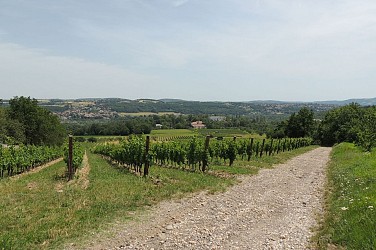
The Balmes Viennoises
15 km

The Balmes Viennoises

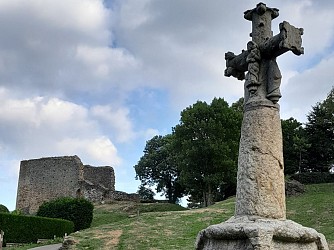
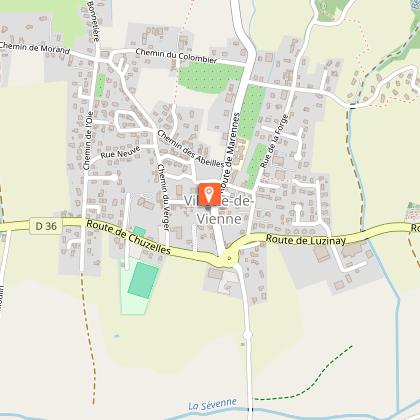
Circuit that lets you discover the château and medieval chapel of Illins, as well as the "Colombier" pear brandy distillery, while offering views of the Alps and Mont Blanc. From the "Villette de Vienne" starting sign, turn left into Rue des Serventières. At the post "Villette de Vienne", follow Chuzelle on the left to reach "Cugnet" and continue left until the "Morand" post. Turn right towards "Bonnetière". At the crossroads of Chemin des Vignes, take the path on the left. Follow it until you reach a road and follow it to the left until you reach the "Bonnetière" sign. From there, follow right until the "Taillis de Mure" post. Continue opposite on the trail to "Marennes", cross the D150A. Take the track in front of you to reach a small road, turn left, pass the "Bois des Fauries" post and continue to the "Le coin" post. From there, turn right towards "Bois de Tholomé". Pass the post and continue towards "La Platière". When you reach the houses, turn left then right at the crossroads. When you arrive at Villeneuve, go straight through the hamlet and turn right into the dead end. At the "Illins" post, turn right towards Villette de Vienne. Pass through the hamlet on the left then, at the chapel, turn right. Pass through the village and stay on the road until you reach the château farm up on the heights. From there, continue left on the trail past Château d'Illins before descending to the "Les Brigands" post. Continue until the "Cugnet" post and return to the starting point, by the outward journey route.

4 h
13 km
Easy
38200 Villette-de-Vienne
Show
Stroll through the historical centre of Vienne
20 km

Stroll through the historical centre of Vienne

This walk in the historical centre of Vienne lets you discover the town’s main sites. Passing along the Pipet belvedere involves a good climb, but offers a splendid view of the town, the Rhône Valley and the Pilat. 1- From the station, take Cours Brillier, which joins the Rhône River, on the left walkway, passing in front of the Post Office. When you reach Cours de Verdun, Place des Allobroges, turn left and cross the median strip diagonally to enter the public garden. In front of you is an imposing statue (Michel Servet - 1515/1553). Go round to the left to see a particularly well-preserved part of the Roman road. Exit the public garden through the same gate, to return to Cours Brillier and cross to take the narrow Rue Boson opposite, which leads to the foot of the stairs of the Cathedral of Saint-Maurice. Take time to climb the steps and enter this imposing monument. The interior is amazing as the sparse decoration contrasts with the sophistication of the building. Exit the cathedral, then cross Rue Boson and head towards the Rhône, via Place Saint-Maurice. Cross the river on the pedestrian bridge that leads to Sainte-Colombe. At the end of the footbridge, take the steps on the left that lead to Quai d'Herbouville and continue on the left (North). Pass the Tour des Valois. A little further on, take the pedestrian ramp that goes up on the left with the sailing stadium on the right. Go around it to reach a large parking area. Head towards the middle of its northern side, at the foot of an overhanging track. 2- Pass under the road via a pedestrian tunnel. At the exit, immediately go up the steps on the right. Take the time to look at the Gallo-Roman site on the left. Opposite, the Gallo-Roman Museum of Saint-Romain-en-Gal is worth a visit (especially with children). At the museum, cross the road to change pavements and then cross the river again. At the crossroads, continue to the right and very quickly take the steps that go down to the right towards the river. Taking this underpass, you can cross the crossroads in complete safety from the traffic. Come out at Place du Jeu de Paume, in front of Saint-André-le-Bas Church (museum and cloister). Go up the steps on the left and walk around the church. Once you reach a small square, take Rue des Clercs (signposted "Temple d’Auguste et de Livie"). Behind the facades of the buildings hide some splendid Renaissance courtyards, now protected by digicodes. 3- Enter the small square of Général de Gaulle, almost entirely occupied by the beautiful Temple of Augustus and Livia. Take the time to walk around this square and view Vienne’s old court, a bookshop which, if you’re a reader, is sure to impress, as well as several café terraces very popular with the locals. Once your tour of the square is completed, go back to Rue de la Chaîne, perpendicular to Rue des Clercs (heading East). Come out onto Place de l'Hôtel de Ville. Pass it and continue straight until you reach a T-junction: turn right into Rue des Orfèvres. Look across the street at what must be one of the oldest houses in Vienne (half-timbered). Go past it to reach Place du Pilori, which is occupied by numerous Roman remains. Turn left towards the Vienne Theatre. It’s a small Italian-style theatre, rather ordinary on the outside, but delightful on the inside. At the entrance to the theatre, turn right and then left to get to Rue Victor Hugo. Cross it to take Montée Saint-Marcel opposite. Pass Rue des Célestes to go up a short staircase on the left a little further on, which leads to Rue du Cirque. 4- Take it to get to the ancient theatre, which you can see from the street; except in summer, when the stage set up for the Jazz à Vienne festival blocks the view. At the stop sign, at the end of the street, turn right onto Rue de Pipet. It's a tough climb, but you just have to take your time... On the left, the immense Pipet cemetery. In the middle of the hill, there’s a bench to take a break. Take the first street on your right (sign for "Belvédère de Pipet"). 5- Arriving at the Esplanade de Pipet, admire the view of Vienne and the Rhône Valley, particularly rich and interesting. Find the Cathedral, the Valois Tower, the Museum, the unmissable Château de la Bâtie and, just in front, the gigantic Ancient Theatre. Further on, to the North-West, on the right, the Monts du Lyonnais, and to the South, the Pilat foothills. Retrace your steps to Rue de Pipet, which you take on the right. Very quickly, take, on the right again, Chemin des Amoureux (beware, you might miss it, which would be a shame...). It goes up a little at the start, to very quickly head down sharply to Montée Saint-Marcel, which you cross, to take Montée des Tupinières, opposite. Follow it to take, after a while, on the right again, Montée Réaumur, which you then go down... A little further on, follow it to the left, then left again, to arrive at Montée de Coupe Jarret, which you take on the right. Come out onto Rue Victor Hugo (traffic lights) and cross it to take the 2nd street on the right (Rue Peyron). 6- Come out onto Place de Miremont. Turn left to take another left onto Cours Romestang, with its central tree-lined avenue, which leads to the station and the starting point.

2 h
5.8 km
Easy
Gare SNCF 38200 Vienne
Show
Vineyard path in Ampuis
20 km

Vineyard path in Ampuis

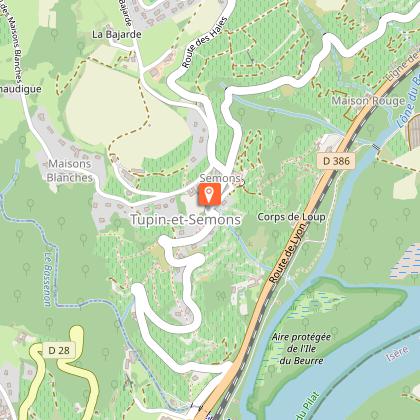
This walk takes you through the prestigious vineyards of Côte-Rôtie overlooking the majestic Rhône River. Go down the road towards Tartaras, and after 100 metres, take the dirt road on the left. Cross the brook and then the valley. Go up the path on the left to reach the Tartaras plateau. At the hamlet of Tartaras, take the municipal road on the left. Go downhill for 1 km and take the dead-end road. At the end of the paved section, stop to enjoy the hillsides, village, Rhône and the market gardening area. Then, take the dirt road on the left, and go down to the heart of one of the oldest and most prestigious vineyards in France. The path reaches a restored building: it's the Mill. Here, the Fongeant and Reynard streams become one. Follow the path and the stream in parallel to the D 386 road, then cross the square in front of the church. Return to the stream and take Rue du Port straight ahead to the Rhône. Here, every first Sunday and Monday of September, you can applaud the jousters and their Lyon or Givordine combat. On the left, go up the dead end by the port, continuing via Petite Rue du Port. Turn right and pass in front of the château, by Rue du Grand Pré. At the junction with Rue des Coutures, turn left onto Rue du Trièves. Take the underpass to cross the railway tracks. Then go up Impasse du Trièves to the D 386 road. Cross it and take Rue de Ritolas, opposite. At the crossroads, Rue du Jarre and Route de la Brocarde, take the dirt road opposite. Go around the house and you’ll find Coursière de Ritolas on your left. Up to the middle of the hill, the path is dirt and then tarred. Go straight up the municipal road for 2.5 km, and cross the hamlets of Ritolas and Giraud before arriving at the car park.

3 h
6.9 km
Easy
Parking du Giraud au croisement de la RD45 et de la route de Tartaras 69420 Ampuis
Show

What to do in CAMPING DES BAROLLES

See more suggestions
Activities for all tastes await you in CAMPING DES BAROLLES, book them today.
See more suggestions
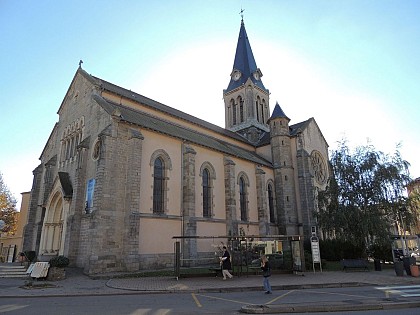
The Church "Saint-Clair"
2.8 km

The Church "Saint-Clair"

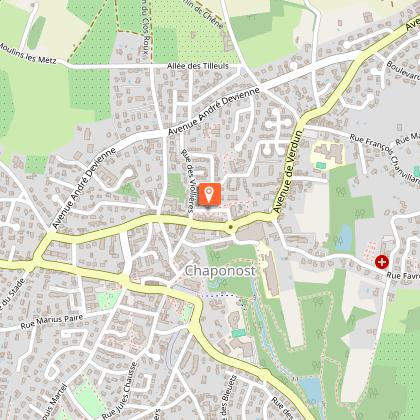
This church (19th century) is the most beautiful monument of the artistic heritage of Brignais. You can notice the bell, the organ, the woodword and the stain-glass windows. This church is the most beautiful monument of the artistic heritage of Brignais. Dedicated to Saint-Clair (590-660), patron saint of the blind and partially sighted persons, its first foundations dated from 1859. It was built on the place of the former feudal church and of the former cemetery. This church was built thanks to public subscriptions and town funds. The architect, Claire Tisseur, born in Sainte-Foy-lès-Lyon (writer of the "Littré de la Grand'Côte"*, and more famous, in France, under its pseudonym Nizier du Puitspelu.) and the abbot Rival, priest of the parish, presided the building of the monument. Thanks to its architecture and its furnishing, the monument forms a remarkable unity of ogival style of the 13th century, modernized in the 20th century. The woodwork (the pulpit, the confessionals and the stalls of the choir) is realised by sculptor Aubert from Lyon. The bell, dated from 1492, was listed in the "Inventaire des Monuments Historiques", on 27th November 1905. The organ was built by organ makers of the Jura mountains, Hartmann and Deloye, for the Benedictine community of Pradines (near the town of Roanne) in 1972. As it was for sale, the association "Les Amis de l'Orgue de Brignais", helped by the town hall, bought it in 1955. The size of the organ is fairly important (20 timbers). It integrates harmoniously the west transept of the church due to its dimensions. The organ builder, Hervé Clénet (from "Bectave-Aguin" - Gers department) and his assistant Jean Boissonade (from "Séverac l'Eglise" - Aveyron department), restaured the organ. The assembling, after restauration, was made by Jean Boissonade, helped by Maurice Crouzet and Jean-Marie Royet, from Brignais. The stain-glass windows : the five large stained-glass windows of the choir and the eight smaller windows of the lateral chapels were made by Mr Mauvernay, a glass-worker for Saint-Galmier. One of the roses represents the virtues of the Virgin, the other, the virtues of Saint-Clair. The stained-glass windows of the lawer naves represent scenes of Christian life. The designs were made by the abbot Rival. * a famous book encyclopedia with many humorous and picturesque anecdotes, inspired by the true and viviacious spirit of Lyon and its people.

1 avenue de Verdun 69530 Brignais
Book from 0 €Book
Show
Guided Tour by Electric Bike with Food Tasting
9 km

Guided Tour by Electric Bike with Food Tasting

Discover the Canuts' area of Lyon as well as its city centre. Your guide will tell you all about these historic neighbourhoods, then treat you to some local specialities. Your electric bike will make this city tour completely effortless! THIS PLEASANT BIKE RIDE THROUGH LYON IS A PERFECT CHANCE TO DISCOVER WHERE THE CANUT SILK WORKERS LIVED! Along with your guide you will effortlessly cycle up the Croix-Rousse hill on your electric bike. Once you reach the top, you will be able to enjoy breathtaking panoramic views over the city. Pedal a little further to come across the famous traboules, the secret passages that were historically used by the silk workers (canuts) to get to the centre of Lyon.  Throughout the tour your guide will tell you all about the unusual history of this neighbourhood which was the stage of several historical strikes held by the silk workers. Having explored the Croix-Rousse hill, you will head back towards Vieux Lyon, where you will be able to admire the typical Lyonnais architecture, before reaching the Presqu'île. Your tour will end along the banks of the Rhône, a calm and peaceful area where you can admire Lyon's barges and the Presqu'île. Let yourself be swept away by the historic charm of the Gauls' capital city! During this two-and-a-half-hour tour you will also get to sample some delicious local specialities! Make the most of this bike tour through the heart of Lyon to discover the history of the city while tasting some of its famous local specialities!

Book from 50 EURBook
Show

What to visit in CAMPING DES BAROLLES

See more suggestions
Learn the history of CAMPING DES BAROLLES through its museums.
See more suggestions
The Church "Saint-Clair"
2.8 km

The Church "Saint-Clair"

This church (19th century) is the most beautiful monument of the artistic heritage of Brignais. You can notice the bell, the organ, the woodword and the stain-glass windows. This church is the most beautiful monument of the artistic heritage of Brignais. Dedicated to Saint-Clair (590-660), patron saint of the blind and partially sighted persons, its first foundations dated from 1859. It was built on the place of the former feudal church and of the former cemetery. This church was built thanks to public subscriptions and town funds. The architect, Claire Tisseur, born in Sainte-Foy-lès-Lyon (writer of the "Littré de la Grand'Côte"*, and more famous, in France, under its pseudonym Nizier du Puitspelu.) and the abbot Rival, priest of the parish, presided the building of the monument. Thanks to its architecture and its furnishing, the monument forms a remarkable unity of ogival style of the 13th century, modernized in the 20th century. The woodwork (the pulpit, the confessionals and the stalls of the choir) is realised by sculptor Aubert from Lyon. The bell, dated from 1492, was listed in the "Inventaire des Monuments Historiques", on 27th November 1905. The organ was built by organ makers of the Jura mountains, Hartmann and Deloye, for the Benedictine community of Pradines (near the town of Roanne) in 1972. As it was for sale, the association "Les Amis de l'Orgue de Brignais", helped by the town hall, bought it in 1955. The size of the organ is fairly important (20 timbers). It integrates harmoniously the west transept of the church due to its dimensions. The organ builder, Hervé Clénet (from "Bectave-Aguin" - Gers department) and his assistant Jean Boissonade (from "Séverac l'Eglise" - Aveyron department), restaured the organ. The assembling, after restauration, was made by Jean Boissonade, helped by Maurice Crouzet and Jean-Marie Royet, from Brignais. The stain-glass windows : the five large stained-glass windows of the choir and the eight smaller windows of the lateral chapels were made by Mr Mauvernay, a glass-worker for Saint-Galmier. One of the roses represents the virtues of the Virgin, the other, the virtues of Saint-Clair. The stained-glass windows of the lawer naves represent scenes of Christian life. The designs were made by the abbot Rival. * a famous book encyclopedia with many humorous and picturesque anecdotes, inspired by the true and viviacious spirit of Lyon and its people.

1 avenue de Verdun 69530 Brignais
Book from 0 €Book
Show

Where to eat in CAMPING DES BAROLLES

See more suggestions
Savor culinary specialties in CAMPING DES BAROLLES.
See more suggestions
Where to sleep in CAMPING DES BAROLLES

See more suggestions
Find an ideal lodging in CAMPING DES BAROLLES.
See more suggestions
Caution!
We have no information on the difficulty of this circuit. You may encounter some surprises along the way. Before you go, please feel free to inquire more and take all necessary precautions. Have a good trip! 🌳🥾