Alert

Alerts

To see around
See more
Open
Close
Show
Show
Show
Show
Show
Show
Show
Show
Show
Show
Show

Oups... It would appear that Cirkwi does not have permission to use your location.

Presentation
Description
Map
Points of interest
Ratings and reviews
See around

In the Land of Stone, the Parmilieu Tower via the Sentier des Bigues trail

Description

Quarries have been in operation in Parmilieu since 1740 to extract Villebois stone.
This walk, where stone is everywhere, will give you the chance to find out more about this quarrying area, where heritage and the landscape are closely intertwined.

Technical Information

Walking
Difficulty
Very easy
Duration
1h45mn
Dist.
6.2 km
Show more

Altimetric profile

Starting point

Place de la Mairie , 38390   Parmilieu
Lat : 45.839337Lng : 5.354261

Points of interest

image du object

Parmilieu

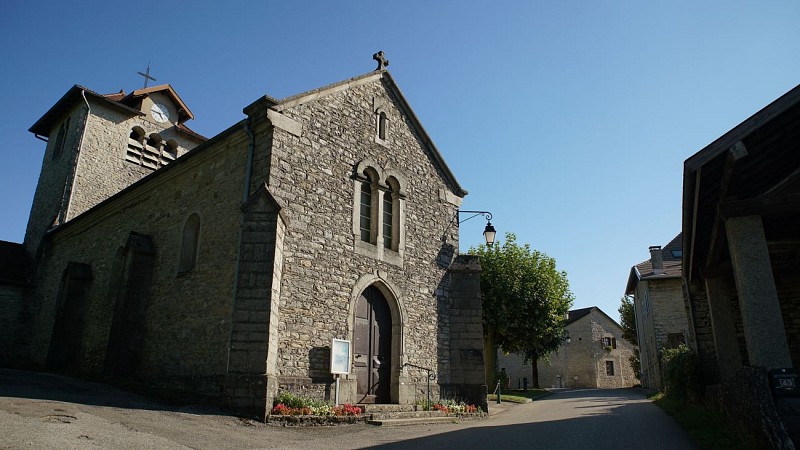
Bienvenue à Parmilieu, village situé au nord des Balcons du Dauphiné. Si l'histoire de cette commune est intimement liée à l'exploitation de la pierre, sans doute, le sait-on moins, c'est aussi un village où ont séjourné de nombreux écrivains.Il est important de souligner tout d’abord que la présence de sites de peuplements gallo-romains y a été attestée ainsi que des traces archéologiques datant de l’âge de bronze. Ces signes montrent à l’évidence la permanence de sociétés humaines à Parmilieu depuis la préhistoire. 1. La pierre Parmilieu est situé sur la pointe nord du plateau calcaire de l’Isle-Crémieu. Sur toute son étendue, ce village offre une grande pluralité de paysages : des espaces boisés du Serverin au nord aux exploitations agricoles au sud-est. C’est de ce gisement calcaire qu’on extrait la pierre de Parmilieu appelée « pierre » ou « choin » de Villebois. Reconnue pour sa résistance et sa facilité à être polie, ses qualités intrinsèques en font tout naturellement un matériau de prédilection pour les constructeurs y compris de nos jours et à l’international ! On la retrouve ainsi au sein d’édifices ou d’infrastructures prestigieux tels que l’entrée du tunnel de la Croix-Rousse, les quais de Lyon, le hall de la bourse de Wall Street à New-York et le Stade de France ! Jusqu’en 1830, l’activité principale de Parmilieu reste l’agriculture comme c’est le cas pour la majorité des villages en France. C’est néanmoins à partir de cette année charnière que l’on va recenser les premières demandes d’ouverture de carrières. Une nouvelle ère économique s’ouvre alors pour Parmilieu avec le début de l’exploitation des carrières de pierre de taille : Allardon, Chavant, Dechanaux, Gerbod, Grivet, Guillet. C’est à cette même époque que les maisons dites de carriers apparaissent ; ce sont des maisons simples, en pierre, construites autour d’anciennes fermes. Il n’est pas rare, en effet, qu’au sein d’une même famille les hommes occupent une activité liée aux carrières, tandis que les femmes se consacrent aux activités agricoles. Certaines maisons typiques de Parmilieu illustrent parfaitement cette double activité. Au XXIe siècle, Parmilieu a compté jusqu'à 30 carrières de pierre calcaire jouant un rôle important dans le développement économique et démographique du village. A la fin du siècle, on note le déclin de cette activité, notamment à cause de l’arrivée du béton sur le marché. 2. Le patrimoine - L'église Saint-Pierre de Parmilieu. On estime que sa construction a débuté à la fin du XVIe siècle. L’église est placée sous le vocable de Saint Pierre et Saint Paul. Au début du XVIIe siècle, l’église est très pauvre et possède très peu d’objets de culte. Cette situation évoluera positivement au cours du siècle notamment grâce à la reprise des chapelles latérales rendue possible par le curé de la paroisse en 1666, Pierre Mugnier de Boulieu. En 1801, le Concordat (traité entre la République française de Bonaparte et le Saint-Siège de Pie VII organisant les relations entre l’Etat et les religions) réduit considérablement le nombre de paroisses. Parmilieu se retrouve dès lors rattaché à la paroisse d’Amblagnieu. L’église de Parmilieu souffre de cet abandon puisque la population doit désormais se rendre à Amblagnieu ou à La Balme pour certains sacrements notamment les baptêmes. La municipalité va donc demander en 1829, que son église soit érigée en succursale afin que l’Etat puisse en assurer la charge financière. Cette demande n’aboutira qu’en 1846 ! Durant ces années transitoires, c’est la population qui, à partir de 1831, financera l’affectation d’un prêtre à Parmilieu. L’église reste néanmoins un édifice sous-dimensionné : selon un rapport de visite de l’évêque de 1856, un tiers de la population n’a pas accès aux offices par manque de places. Aucun agrandissement ne sera pourtant réalisé, faute de moyens financiers. En 1869, la veuve de Joseph Allardon va honorer une promesse faite à son mari et fait un don qui va permettre l’achat d’une horloge monumentale. En 1871, l’état de l’église est enfin jugé satisfaisant ! Elle a alors l’apparence qu’on lui connait aujourd’hui : 24 m de long pour une largeur de 5 m, selon une disposition en croix latine avec deux chapelles. Elle dispose d’un maître-autel en bois verni et doré ainsi que d’une quantité importante d'ornements sacerdotaux. Pourtant, de nouveau, en 1901 son état va être jugé alarmant et dangereux. Après une mise en demeure de la municipalité en 1909, des travaux de sécurité vont être effectués. Il faudra néanmoins attendre la dernière grande restauration des années 1970-80 pour que l’église parvienne à l’état qu’on lui connait. En 1976, une nouvelle cloche baptisée « Clotilde » est installée. Elle inspirera même le poète G. Clopeau : « Ame de bronze du clocher Qui nous appelle à la prière Dans l'accueillante nef de pierre, Aux sons de tes proches voisines Porcieu, Charette, Montalieu, Mêle la voix de Parmilieu Par-dessus combes et collines. » - Le domaine du Serverin entouré par la forêt éponyme : après avoir été une fabrique de traverses de chemin de fer et une magnanerie avec les familles Tabard puis Thomann, le domaine sera transformé en un centre d’accueil pour colonies de vacances entre 1895 et 1913. En 1920, il deviendra la propriété de la ville de Lyon qui l’utilisera pour scolariser des enfants en classes spécialisées. Le patrimoine vernaculaire : Le paysage agricole de la région est marqué par : - Les chapits : ces abris pastoraux, composés de trois pierres verticales surmontées d'une quatrième en toit, permettaient aux bergères et ouvriers agricoles de se protéger des intempéries. - Les bigues : utilisées comme piquets de vigne, ces solides structures taillées dans la pierre locale sont les témoins d’une période révolue de culture viticole. - Le réseau bocager : formé de prés clos par des haies et des murets de pierres sèches, ce paysage est typique de Parmilieu. Il est complété par les pierres plantes aussi appelés palis. Ces larges pierres plantées dans le sol servaient à délimiter les propriétés (1/3 de la pierre est cachée dans la terre). - Les marinières ou confonds : énormes monceaux de pierre qui sont les pierres de moins bonne qualité qui ne sont pas utilisées par les industries et constituent les déchets de la carrière. - La magnanerie de Pressieu : cette ancienne ferme, témoigne de l'histoire de la sériciculture locale (l'élevage du ver à soie) et offre un aperçu de cette activité très répandue au XIXe siècle. Souvent effectuée par les femmes, elle permettait un complément de salaire appréciable aux familles des « Pierreux ». Outre la magnanerie, de nombreux greniers étaient réservé à l’élevage du vers de soie dont les cocons étaient ensuite envoyés aux tisseurs de soie à Lyon. - Le village compte aussi 3 fours banaux, 3 lavoirs dont le lavoir de Senin taillé à même la roche, ainsi qu’un puit et des croix de missions. 2. Littérature Parmilieu peut s’enorgueillir à juste titre du fait que des écrivains de renom y ont séjourné : Paul Claudel, Alphonse Lamartine, Prosper Mérimée… Parmi eux, l’illustre Louis Aragon (1897-1982) dont le poème Le conscrit des cent villages, évoque Parmilieu. Cette œuvre écrite clandestinement en 1943, en pleine période d’Occupation allemande, parait tout d’abord dans la revue résistante Messages, avant d’être incluse au recueil La Diane française. A travers ce poème, Aragon s’adresse à tous les conscrits qui traversent les campagnes et les villages de France pour entrer dans la Résistance au nombre duquel se trouve Parmilieu ! [J’emmène avec moi pour bagage Cent villages sans lieu sinon L’ancienne antienne de leurs noms L’odorante fleur du langage Une romance à ma façon Amour de mon pays mémoire Un collier sans fin ni fermoir Le miracle d’une chanson Un peu de terre brune et blonde Sur le trou noir de mon chagrin J’emmène avec moi le refrain De cent noms dits par tout le monde Adieu, Forléans, Marimbault, Vollore-Ville Volnérange Avize Avoine Vallerange Ainval – Septoutre Mongibaud Fains-La-Folie Aumur Andance Guillaume – Peyrouse Escarmin Dancevoir Parmilieu Parmain Linthes – Pleurs Caresse Abondance] On note aussi l’écrivain Henri Béraud, enfant de Parmilieu dont certains personnages de roman sont intimement liés au passé carrier de Parmilieu. Frédéric Dard, dans ses romans C’est mort et ça ne sait pas et Fleur de nave vinaigrette, évoque aussi les carrières de Parmilieu et de Montalieu-Vercieu. 4. Randonnée : "Au pays de la pierre, tour de Parmilieu par le sentier des Bigues" (6,2km - 1h45 - 80m d+) : cette randonnée où la pierre est omniprésente, vous permettra d’en savoir plus et d’entrer sur ce bassin carrier. (Rando fiche en vente à 1€ dans les bureaux de l'Office de Tourisme des Balcons du Dauphiné).
- OFFICE DE TOURISME DES BALCONS DU DAUPHINE -
Consulter
image du object

Quirieu, medieval site

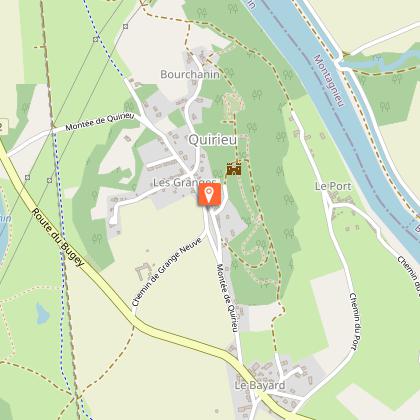
The village of Quirieu stands out for its unique landscape, where nature and vegetation have reclaimed their rights. This ‘ghost village’ offers an enchanting setting worthy of a fairytale, combining poetry, imagination and history.Quirieu is a sleepy town that looks like something out of a fairytale. It lies on the northern border of the Dauphiné region, and is now part of the commune of Bouvesse-Quirieu (Isère) and the Communauté de Communes des Balcons du Dauphiné. The site extends over a 4-hectare limestone hillock forming a small, elongated and naturally steep plateau. On its eastern flank, Quirieu overlooks the Rhône and its alluvial terraces by almost 100 metres. To the east, opposite the site on the other side of the river, rise the first powerful foothills of the southern Bugey. To the west, Quirieu opens onto the cold lands of the Bas Dauphiné. In the Middle Ages, it was one of the main strongholds of the Dauphiné. Quirieu enjoyed a privileged position of control over a territory, a river route and a border (the Rhône, which separated Dauphiné and Bugey until 1601). After its heyday between the 14th and 16th centuries, Quirieu was gradually abandoned. But the streets and houses of the old urban fabric are still very much in evidence. The landscape character of this abandoned village, where nature and vegetation have reclaimed their rights, gives Quirieu its originality. This "ghost village" takes on the appearance of a fairytale setting, where dreams, imagination and poetry rub shoulders with history. The site is dotted with themed panels, allowing you to explore Quirieu in complete freedom. Take a stroll along the paths of the Quirieu site and head for the orientation tables, where you'll discover the breathtaking panorama of the medieval site. As you look down on the land below, you'll realise how man has shaped this landscape through his skills: Traces of the tramway on the Rhône, multinational cement works (Vicat), quarrying, vineyards (Syndicat des Vins du Bugey, Montagnieu), the hydraulic (CNR) and nuclear (EDF) industries, leisure centres (Vallée Bleue, Montalieu-Vercieu), crafts (Moulin d'Arche, Bouvesse-Quirieu) and luxury furniture factories (Ligne Roset, Briord) etc. Today, Quirieu is coming back to life thanks to occasional events organised as part of a gentle tourism initiative based around storytelling or musical and historical walks (storytelling evening in the moonlight at the end of June, Concordia construction site in July).

Montée du lavoir Quirieu 38390 Bouvesse-Quirieu
- OFFICE DE TOURISME DES BALCONS DU DAUPHINE -
Consulter
image du object

The Caves of La Balme

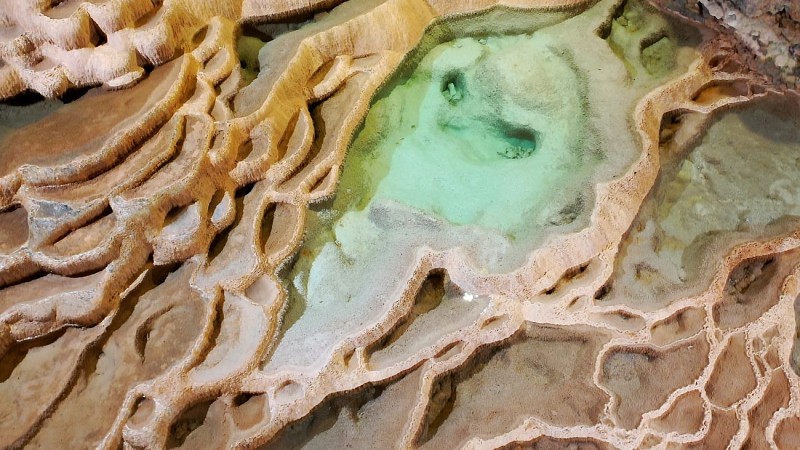
Small pools, labyrinths, concretions and a lake: the Grottes de La Balme, located 40 minutes from Lyon, are rich in what nature has shaped. Discover a rare and exceptional natural site offering an unusual insight into the underground world!Arrive under this impressive porch and enter the bowels of the cliff to discover labyrinths, an underground lake, stalactites and stalagmites, an amphitheater of small pools... that's what the Grottes de La Balme have to offer. Take your time on a self-guided tour lasting around 1 hour 15 minutes, or take a guided tour (booking required). Visited since 1807, the Grottes de La Balme reveal their history and mysteries as you explore 1,000 meters of underground galleries. Located in the Nord-Isère region, in the center of the village of La Balme-les-Grottes, the caves are an exciting detour in the Balcons du Dauphiné region. Round off your day with a free visit to the Espace Naturel Sensible “Les Coteaux de Saint-Roch”, with its signposted path and discovery booklet. This protected natural area allows you to observe the particular features of the cliffs, forest and dry grasslands surrounding the Grottes de La Balme, home to numerous species of protected plants and animals. Become true adventurers with our 100% family-friendly activities! A playful visit with Archibalme's Investigation: young and old alike will be delighted. Summer and winter alike, the underground world never ceases to amaze! The souvenir store is open at the same time as the caves, and offers a wide range of gifts: crockery, textiles, stones, a selection of books and other must-have items for yourself or as a gift.

Rue des Grottes 38390 La Balme-les-Grottes
- OFFICE DE TOURISME DES BALCONS DU DAUPHINE -
Consulter
image du object

Le Marché Balmolan

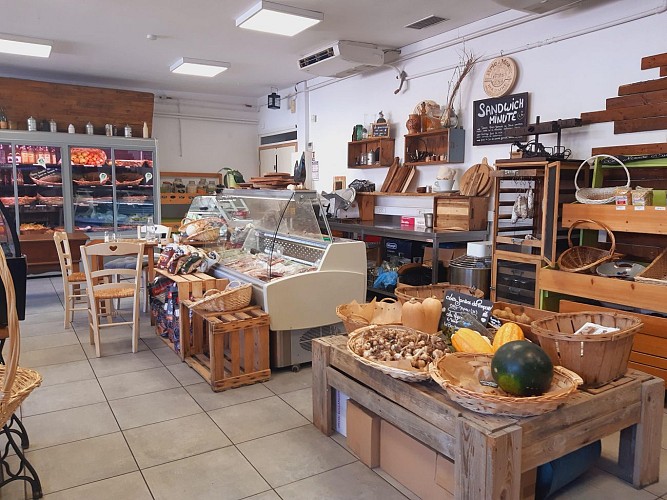
Céline Mollon and her team welcome you to this ‘grocery store, restaurant and catering service’ located in the heart of the village of La Balme-les-Grottes, a stone's throw from the Grottes de la Balme caves. The products are selected from 22 committed local producers.When you walk through the door of Marché Balmolan, you'll meet Céline, a passionate young woman who is committed to cooking up delicious dishes using local produce. The menu, which changes with the seasons and daily supplies, gives pride of place to local specialities, including the famous Cocotte Iséroise: pork cooked at low temperature with organic potatoes, cep sauce and walnuts, all gratinated over a wood fire! There is also something to satisfy vegetarians and vegans. The restaurant is located in the heart of the grocery store, between the wine, local spice, jam, craft beer, spread and cheese sections. In season, you can also enjoy the outdoor terrace overlooking the cliffs of Isle-Crémieu. The bread that accompanies the menus and is also available for purchase is baked every Sunday over a wood fire. An oven is installed in front of the grocery store. It is also possible to stop at the Balmolan market for a sweet break, as the grocery store also serves as a tea room. You can enjoy one of the many homemade pastries accompanied by tea, coffee or even a beer. For cyclists, hikers or visitors passing through the Balcons du Dauphiné, freshly made sandwiches and gourmet platters are also available, featuring seasonal produce. Located close to ViaRhôna, Marché Balmolan has been awarded the Accueil Vélo label. A range of services are available to make your cycling trip easier. The restaurant also offers a catering service for individuals as well as local communities and businesses.

1 Place Colonel Pition (sur la place du village) 38390 La Balme-les-Grottes
- OFFICE DE TOURISME DES BALCONS DU DAUPHINE -
Consulter
image du object

Le Val d'Amby

The Le Val d'Amby restaurant offers 2 gourmet settings: a bistronomic table for lunch during the week and gastronomic cuisine for lunch and dinner. In the kitchen, Dominique Grisoni, Maître Restaurateur, creates a creative menu that reflects the seasons.Located in Hières-sur-Amby, less than an hour from Lyon, Le Val d'Amby restaurant invites you to discover authentic, refined cuisine full of character. In a warm setting, two dining rooms welcome guests for a gourmet experience, complemented in fine weather by a pleasant flower-filled terrace. The menu changes with the seasons, with a gastronomic menu available for lunch and dinner, and a bistronomic menu served for lunch on Mondays, Tuesdays and Fridays. Fresh produce, generous plates and meticulous presentation delight both regulars and visiting guests. Chef Dominique Grisoni, Maître Restaurateur and member of the Toques Blanches Lyonnaises, has almost 40 years' experience in the kitchen. A native of the Var and Compagnon du Tour de France since 1989, he has forged his style on his travels in France, Switzerland and Italy. His cuisine is modern and creative, but always respectful of local produce. His signature dish, the Lamb Mouse, is a must-try for even the most demanding palates. An artist at heart, Dominique also expresses her sensibility through painting. Her watercolours, inspired by her career and the landmark establishments of her career, decorate the walls of the restaurant, adding a personal and artistic touch to the culinary experience. Le Val d'Amby is a must in the Balcons du Dauphiné, where you can savour sincere, inventive and generous cuisine in a convivial setting.

2 place de la République 38118 Hières-sur-Amby
- OFFICE DE TOURISME DES BALCONS DU DAUPHINE -
Consulter
image du object

Hôtel Restaurant du Val d'Amby

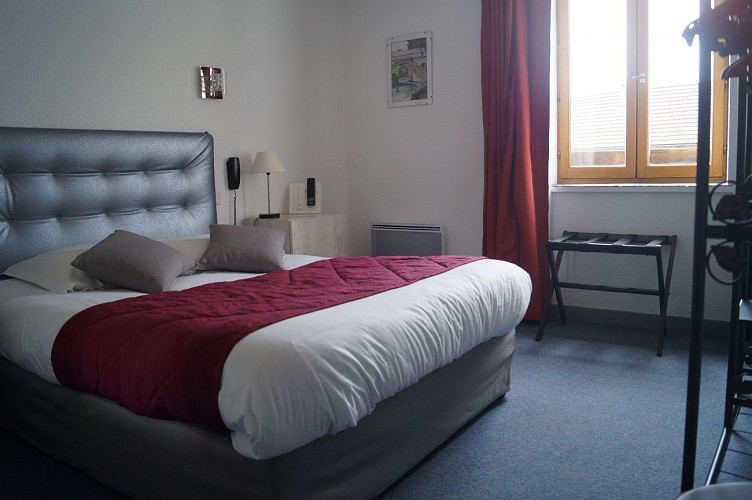
Located in Hières-sur-Amby, between nature and heritage, this establishment welcomes you for a stopover or a warm stay. The hotel has comfortable, tastefully decorated rooms and a refined restaurant.Less than an hour from Lyon, in the heart of the characterful village of Hières-sur-Amby, the Hôtel-Restaurant du Val d'Amby welcomes you to an authentic setting between the Rhône and the cliffs of the Isle-Crémieu. Situated on the ViaRhôna route near the Balme caves and the Larina archaeological site, the establishment is ideal for a tourist break, an evening stopover or a business trip in Isère. Katie and Dominique Grisoni welcome you to a beautiful stone building, housing 13 comfortable rooms with contemporary decor spread over two floors. Each room offers a comfortable setting and facilities designed to make your stay as comfortable as possible. There is a choice of standard and superior rooms, as well as triple and quadruple rooms, perfect for families. The gastronomic restaurant offers seasonal cuisine, with a pleasant terrace lined with flowers in fine weather. The menus are prepared by Dominique, a recognised Maître Restaurateur and member of the Toques Blanches Lyonnaises. Whether you're travelling with family, friends or on business, Val d'Amby is a friendly, relaxing place to stay, ideal for discovering the natural and cultural riches of the Balcons du Dauphiné.

2 place de la République 38118 Hières-sur-Amby
- OFFICE DE TOURISME DES BALCONS DU DAUPHINE -
Consulter
image du object

Le Relais du Destin

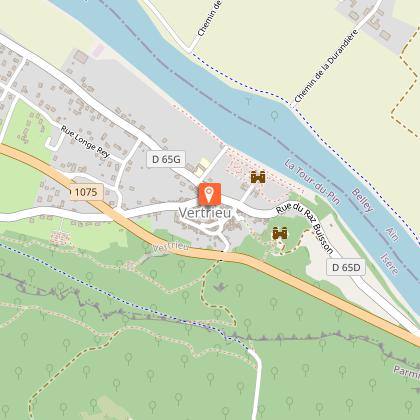
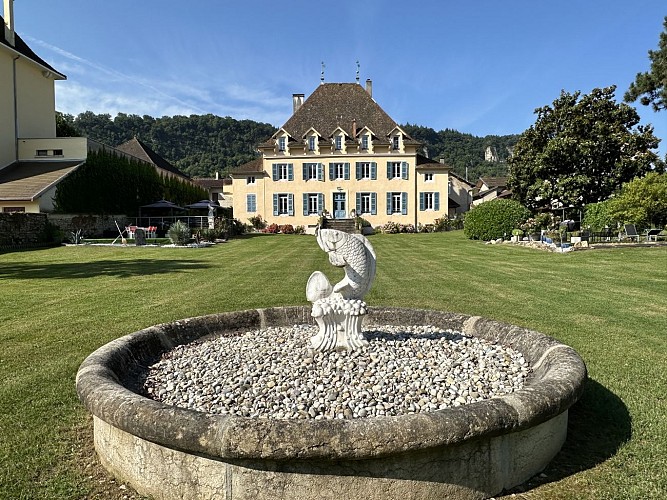
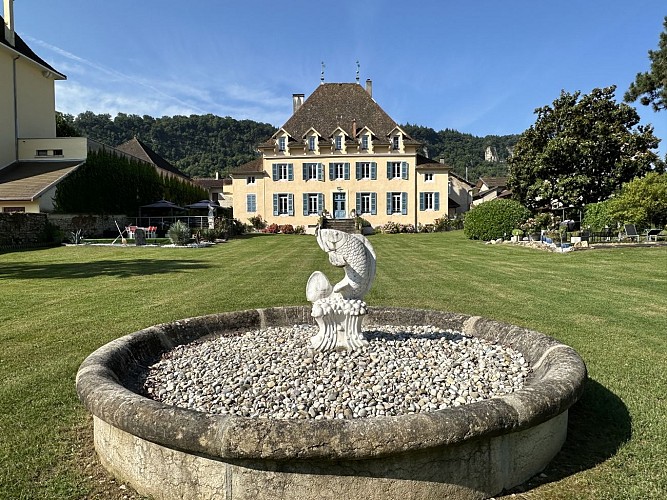
Horia and Francis have blended the past with the present and the future of this magnificent 17th century building. Composed of 5 guest rooms, with different decorations and themes and 2 gites, this accommodation exudes warmth and cosiness.Located on the banks of the Rhone charming Dauphinoise residence dating from 1680 with the small chateau de Vertrieu, this village has 2 other chateaux the earliest dating from the 13th century. Our house is composed of 2 apartments and 5 guest rooms including a suite, with relaxing views of the Monts du Bugey. It is surrounded by a park of more than 8000m2, on the banks of the Rhone, in absolute calm. 3 years of work turned this pleasant and functional residence into a real haven of peace. The different types of accommodation allow guests to relax in a contemporary or more elegant world. I worked as a decorator for more than 30 years and my partner for over 12 years. Through our numerous journeys, we have created cocooning ambiences while retaining the practical element, using materials mostly made in France and of proven, unmatched quality. Our linen is our CASSIOPEE Home Collection, chosen for luxury boats, homes, prestigious hotels, with the Oeko tex label. The decorative objects, paintings and sculptures are by well-known artists with increasing reputations. All the decorative objects and the majority of the paintings or sculptures are for sale. Customers can appreciate the pieces in a real context and imagine them in their interior.

110 rue des écoles 38390 Vertrieu
- OFFICE DE TOURISME DES BALCONS DU DAUPHINE -
Consulter

Additional information

Tips

Plan to stop off at the old Brosses quarry (stage 2 of the walk). Don’t miss the Carriers’ Spring, and take the time to enjoy this unusual spot.

Updated by

Office du Tourisme Les Balcons du Dauphiné - 07/08/2026
www.balconsdudauphine-tourisme.com/
Report a problem

Environments

Mountain view
Panoramic view
In the country

Distinctions

Listed PDIPR

Open period

All year round daily.

Subject to favorable weather.

Topo guides and map references

Topo guides references :
The "Walks & Hikes" guidebook for the Balcons du Dauphiné is on sale for €14.90 at the tourist information offices in Crémieu, Morestel, Les Avenières Veyrins-Thuellin, and Saint-Chef. A walking guide entitled “Au Pays de la pierre” (FFR – Balcons du Dauphiné collection) is on sale for €1 at the Tourist Information Offices in Crémieu, Morestel, Les Avenières Veyrins-Thuellin and Saint-Chef.

Type of land

Stone
Ground
Not suitable for strollers

Guidebook with maps/step-by-step

1 - From the town hall square, head towards the war memorial. Continue to the left, passing in front of the church, until you reach the signpost marked ‘La Bascule’ (320 m). Carry on to the left along the pavement until you reach the ‘Chonou’ crossroads (329 m).

2 - Follow the road to the left, which turns into a wide track, to reach “Pressieu” (322 m).
Turn left towards the centre of the hamlet. At the next junction, turn right and then immediately left. Follow the track to the signpost marked “Les Brosses” (267 m).

3 - Follow the path on the left towards Chanoz (signposted 3). Continue along the path until you reach the departmental road. Walk along the left-hand side of the road as far as the cross, then turn right to cross through the hamlet.

4 – At the ‘Chanoz’ signpost (282 m), head towards Parmilieu. After a few metres, turn off the road to the right and take the track. This will take you back to the Senin at the Route du Puits Jacob.

5 - Continue straight on and, after the village, at the wash house, take the Chemin des Pierres Plantées on the left. Continue along the track until you rejoin the D52j road. Then follow the pavement on the right
until you reach the “Parmilieu” signpost (332 m). You will then reach the starting car park on the left.

Animals

Yes

Data author

Ratings and reviews

To see around
See more
Open
Close
Show
Show
Show
Show
Show
Show
Show
Show
Show
Show
Show
Caution!
We have no information on the difficulty of this circuit. You may encounter some surprises along the way. Before you go, please feel free to inquire more and take all necessary precautions. Have a good trip! 🌳🥾