Waarschuwing
Waarschuwingen
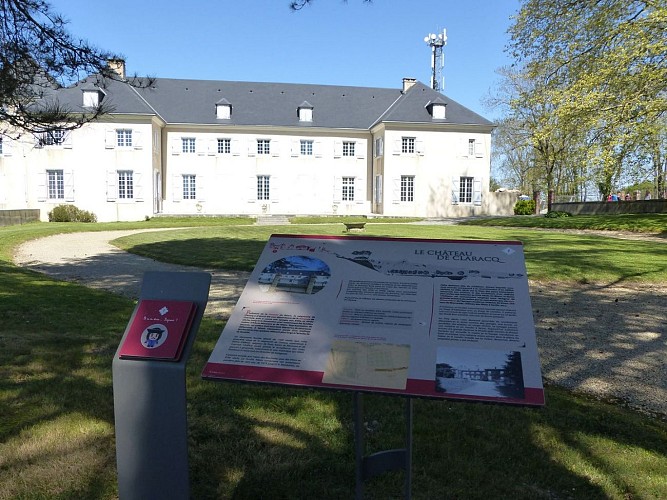
Claracq Castle (Built heritage)
Beschrijving
It stands out because it bears witness to history, that of the families who ruled it, from the most prestigious to the most modest. It also speaks to our memory through its outbuildings: the farmstead, part of the Ribère development initiated by the ancient villa; the communal mill, a privilege of aristocratic houses modernised during the industrial era; and the Sarraute house, coveted for its heritage and strategic value in relation to the estate enclosure. The history of the château is also the history of its lands. As far as we know, certain plots of land have always remained within its domain. One of these in particular catches our attention. This is the casau de Menge, an enclosure with power stakes, which would later be integrated into a larger estate known as ‘Lanouguère’, where vines would occupy a prominent place.
Technische informatie
Hoogteprofiel
Gegevensauteur
