Alert
Alerts
Maison Diamanté
Description
🏛️ The Maison Diamantée
📍 Rue de la Prison, 13002 Marseille (just behind City Hall)
✨ A façade that truly shines — for over 400 years
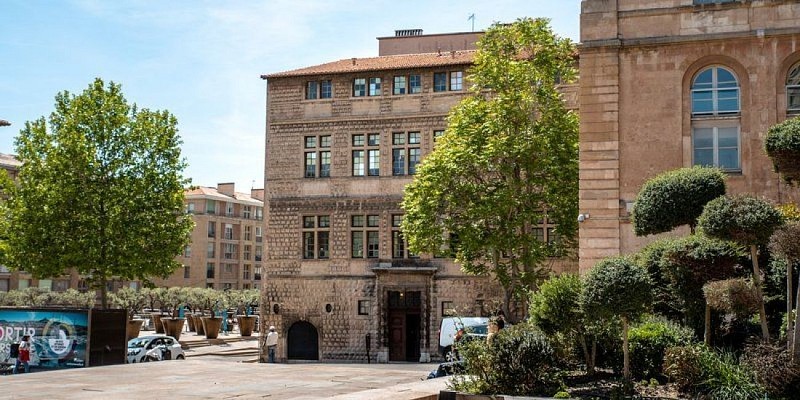
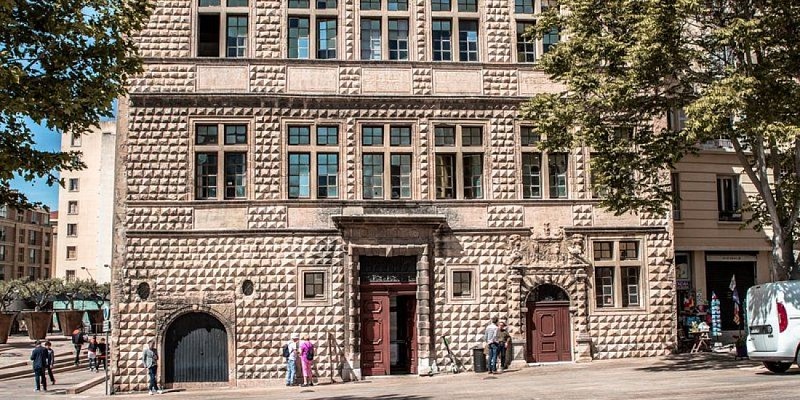
You can’t miss it: the faceted façade carved in diamond-shaped stones makes the building look like something straight out of Renaissance Florence. This technique, known as prismatic rustication, wasn’t just decorative — it was a statement of wealth and modernity… and yes, it helped rainwater run off more easily too!
Inspired by Medici-style Italian architecture, this house was built by wealthy Spanish and Italian merchants who were thriving in Marseille — then a major hub of Mediterranean trade.
🕰️ One of the oldest surviving houses in Marseille
Built between the late 16th and early 17th century (possibly as early as 1570, though it remains uncertain), the Maison Diamantée stands on the site of the former gardens of the Palace of the Counts of Provence. According to local tradition — although it's more legend than fact — it was once the palace of King René, Count of Provence.
Together with the Hôtel de Cabre, it's considered one of the oldest surviving private residences in Marseille.
👑 From noble families to immigrant dockworkers
Over the centuries, the house has hosted several great Marseille families, including the Saboulin Bollena (a lineage of city magistrates, or échevins) and the Castellane Majastre.
But by the late 19th century, the house had become a modest residence, home to dockworkers and Italian immigrants — a classic Marseille story of transformation and resilience.
💥 Narrowly escaped destruction in 1943
During the Nazi occupation in 1943, when entire sections of the Saint-Jean district were destroyed, the Maison Diamantée miraculously survived. And even before that, in 1914, the building was already in danger of collapsing.
Thankfully, the cultural association Art et Charité purchased and saved it, eventually transferring ownership to the Comité du Vieux Marseille, a group dedicated to preserving the city's heritage.
🏺 From museum to administration… and back to cultural debates
Classified as a Historic Monument since November 10, 1925, the building became the Museum of Old Marseille in 1967, hosting collections, a library, and its absolutely stunning interior staircase.
In 2009, the museum closed, and the building was repurposed to host offices, including those for the Marseille-Provence 2013 European Capital of Culture project.
Since then, the Comité du Vieux Marseille has campaigned for the building to return to its original cultural purpose, even launching legal action in 2019 to reclaim it.
🌀 A hidden interior masterpiece
If you’re lucky enough to step inside, don’t miss the monumental staircase: twisted columns, intricate vaulted ceilings, and exquisite stone details make it one of the most beautiful Renaissance interiors in the city — and yet most locals have never seen it!
🎯 Nearby and worth the detour
Rarely open to the public – check for cultural events or special openings.
Just a 1-minute walk from City Hall and 3 minutes from the Old Port.
Steps away from Fort Saint-Jean, the Mucem, and the Hôtel de Cabre — perfect for a heritage stroll!
Navia tip: Start at the Old Port, walk or cycle up Rue de la Loge, stop at the Maison Diamantée, and climb toward Le Panier via the Montée des Accoules. Ideal with an e-bike 🚲 or on foot.
🧠 Navia’s fun fact corner
➡️ This is the oldest city-owned building still standing in Marseille.
➡️ The diamond rustication wasn’t just for show — it was also said to deter vandals or… discourage certain "public relief" habits! 😅
➡️ It was never actually a royal palace, but its majestic look certainly inspired the legend.
Technical Information
Altimetric profile
Data author
