Alert
Alerts
La Vieille Charité
Description
La Vieille Charité
📍 2 Rue de la Charité, 13002 Marseille – Le Panier / Grands-Carmes District
🕰 From the 17th century to today: from confinement to culture
🧭 INTRODUCTION
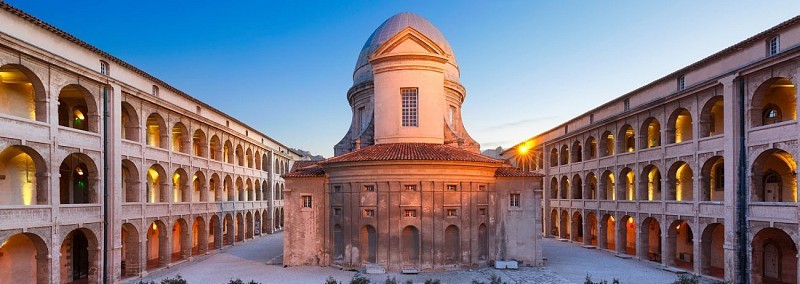
Right in the heart of Marseille’s oldest neighborhood, La Vieille Charité is a baroque architectural gem with a deeply layered history. This exceptional site tells the story of how Marseille’s relationship with poverty, social control, and culture has dramatically evolved over four centuries.
📜 A PLACE LIKE NO OTHER
⚖️ The Age of “Great Confinement”
In 1640, following a royal decree ordering the confinement of beggars and the poor, the city of Marseille launched the construction of a charitable institution called Notre-Dame de la Charité. Its purpose? To isolate the city’s indigents under the guise of social order.
The first building went up in 1641, on land near La Major Cathedral.
⚠️ Fun fact: Marseille hired guards known as "chasse-gueux" (literally "beggar hunters") to round up mendicants. Locals were locked up, foreigners were expelled.
👷♂️ The Vision of Pierre Puget
In 1671, Marseille entrusted the design to local-born architect Pierre Puget, who was also working for King Louis XIV.
Alongside his brother Jean and mason Jacques Borély, Puget brought to life a bold project blending military rigor with baroque elegance.
1678: North wing completed
1704: Chapel finished
1745: Entire complex completed by Puget’s son, François
🏚 Decline, decay, and repurposing
After the Revolution, the site became a home for the elderly and orphans.
In 1905, it was handed over to the military, then converted into low-income housing.
By the 1940s, over 150 impoverished families lived inside in extremely poor conditions — some even worked inside packing bananas and anchovies!
🧨 During WWII in 1943, families evacuated from the Old Port took refuge here after the Nazis blew up parts of the city.
🏛 Rescued by Le Corbusier
Famed architect Le Corbusier sounded the alarm in the 1950s about the building’s state of decay.
Thanks to André Malraux, Minister of Culture, Marseille began an extensive restoration in 1961.
➡️ It took 25 years to fully restore the complex, completed in 1986.
🏅 Classified as a Historic Monument since 1951.
🧱 REMARKABLE ARCHITECTURE
🔲 A perfect quadrangle
Exterior size: 112 x 96 m
Central courtyard: 82 x 45 m
Four wings built with pink and white stone from La Couronne quarry
No windows on the outer façades, to cut off inmates from the outside world
🏛 Central chapel & arcaded galleries
Three levels of open arcaded galleries surround the courtyard
A baroque chapel with an oval dome stands at the very center
The entrance portico, built later in the 1860s, features two pelicans feeding their young — a classical symbol of charity
🧑🏭 LIFE INSIDE THE HOSPICE (18th century)
A social prison
Armed guards (“chasse-gueux”) maintained strict control
Inmates were required to work in onsite workshops
Children were sent out as domestic servants, apprentices, or ship boys
The number of inmates grew to over 1,000 by 1760
By the late 1700s, the practice of locking up the poor came under public scrutiny. By 1781, the number of residents dropped to just 250.
🏗 RESTORATION & REBIRTH AS A CULTURAL LANDMARK
1968: First emergency repairs begin
1981: Chapel restoration completed
1986: Full site reopened
Meticulous work restored the pink stone arcades and interiors, damaged by time and sea air
🎭 A LIVELY CULTURAL HUB TODAY
🏺 1. Museum of Mediterranean Archaeology (1st floor)
Features three key collections:
Ancient Egypt: sarcophagi, mummies, funerary objects
Classical Antiquity: Greek, Roman, Etruscan, and Middle Eastern artifacts
Local archaeology: Pre-Roman Provence and Celtic-Ligurian culture
🌍 2. Museum of African, Oceanian & Amerindian Art (2nd floor)
Rare and sacred objects from three continents, including:
African reliquaries and masks
Oceanian skulls and ritual dance masks
Mexican and Brazilian ceremonial figures
💎 Fun fact: Some objects were donated by explorers, physicians, and filmmakers from Marseille — including François Reichenbach.
🎬 3. Le Miroir Art Cinema
A small, refined screening room for festivals, documentaries, and lectures.
📚 A CENTER FOR RESEARCH AND KNOWLEDGE
EHESS & CNRS – Social Sciences Campus
The École des Hautes Études en Sciences Sociales (EHESS) hosts research teams and PhD students in disciplines like anthropology, history, and sociology.
The Norbert Elias Center (UMR 8562)A multidisciplinary lab working on:
Culture and digital heritage
Visual and sound-based research
Professional health risks
International partnerships in humanities
Over 18,000 books
365 academic journals
Accessible to the public for consultation
✒️ POETRY AND CONTEMPORARY LITERATURE
Centre International de Poésie Marseille (CIPM)
Founded in 1990
Hosts readings, exhibitions, residencies, and international poetry exchanges
Over 1,500 poets welcomed
Also houses a specialized poetry library and small publishing house
👀 WHAT TO DO DURING YOUR VISIT
✅ Must-sees:
Climb the arcades for stunning views of the chapel and Panier rooftops
Step into the chapel at sunset: the light is magical
Look closely at the stone façades to spot the differences between original and restored sections
Technical Information
Altimetric profile
Animals
No
Data author
