Alert
Alerts
Laon Cathedral | The Rose of the Liberal Arts
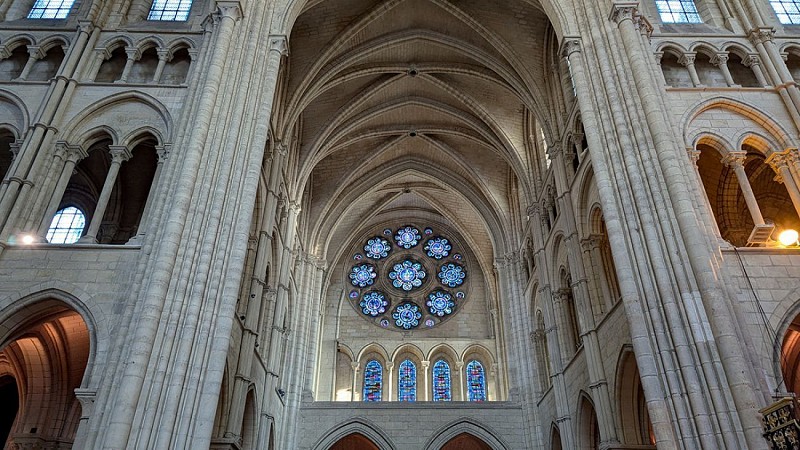
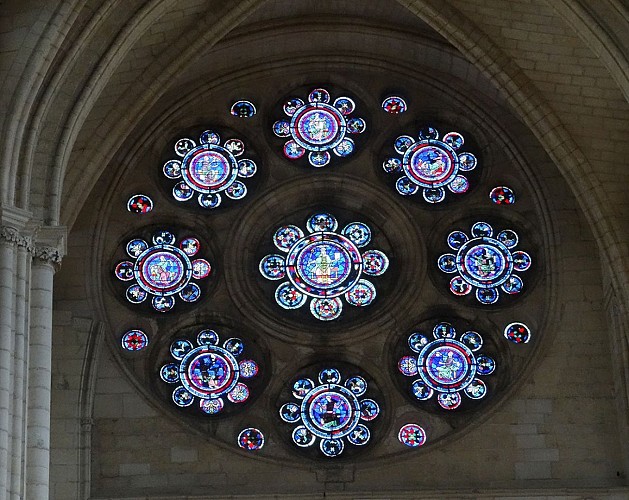
Description
The seven Liberal Arts have been defined since Antiquity (and were later discovered by Alcuin, Charlemagne's adviser), usually divided into :
- Trivium (study of ‘voces’, words, language): Grammar / Dialectics / Rhetoric
- Quadrivium (study of ‘res’, things, numbers): Arithmetic / Music / Geometry / Astronomy.
Here in Laon, there are some slight modifications: firstly, in the treatment of the arch, Medicine and Architecture are added to the 7 Liberal Arts; and also for the Rose, Medicine is also present, and the central medallion is occupied by Philosophy (‘Wisdom and her seven daughters’).
The climate surrounding the construction of the cathedral in the late 12th century was imbued with the thought of Hugues de Saint-Victor (1096 - 1141, theologian and philosopher), who emphasised the importance of the so-called Mechanical Arts (such as architecture and medicine) elevated to the level of knowledge considered necessary.
However, even though medicine was not officially one of the 7 Arts, it was increasingly linked to them in the Middle Ages, as it was beginning to become a science in its own right.
Technical Information
Altimetric profile
Data author
