Alert
Alerts
Laon Cathedral | Side chapels in the nave
Description
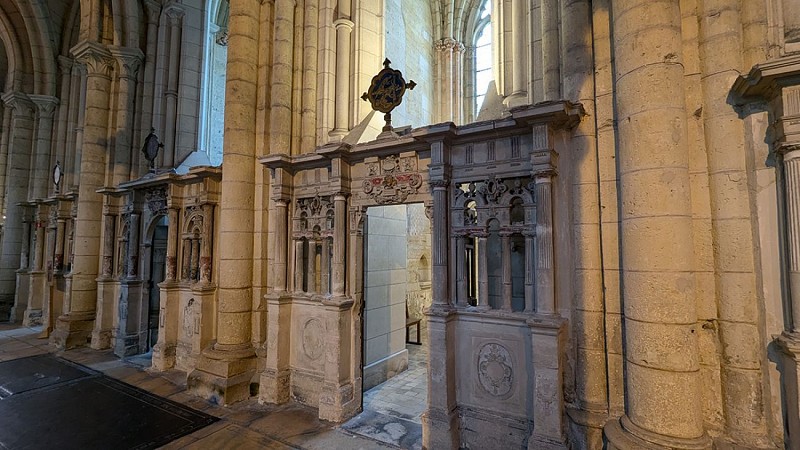
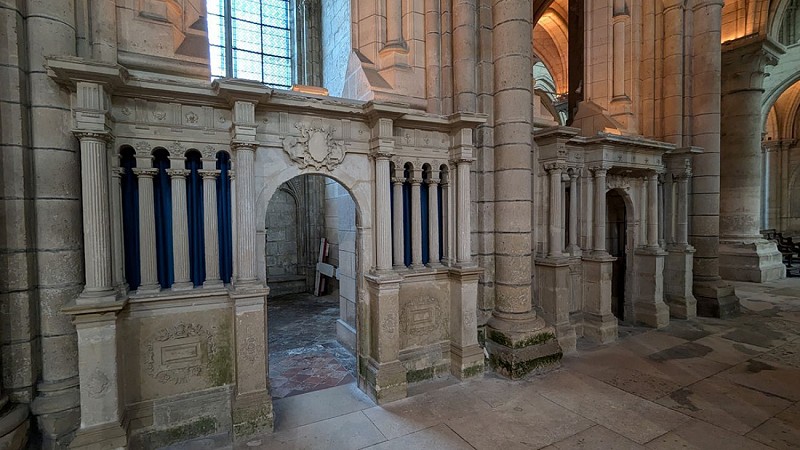
You will notice that the aisles contain numerous chapels. These chapels were added between 1294 and the mid-14th century to meet the growing demand from brotherhoods and guilds. Each chapel was dedicated to a patron saint and was used for private masses, and above all as a reminder of the power of Laon's most important families.
Throughout the Middle Ages, these chapels were decorated with objets d'art, polychrome murals and altarpieces.
At the end of the Renaissance, the chapels were enclosed by stone fences. These fences follow an identical construction model: a base sculpted with bas-reliefs, a clerestory with Doric columns and four pilasters framing a sculpted oak door. Such an ornamental ensemble is unique in France today.
These chapels lost most of their decoration and furnishings during the French Revolution...
Technical Information
Altimetric profile
Data author
