Alert
Alerts
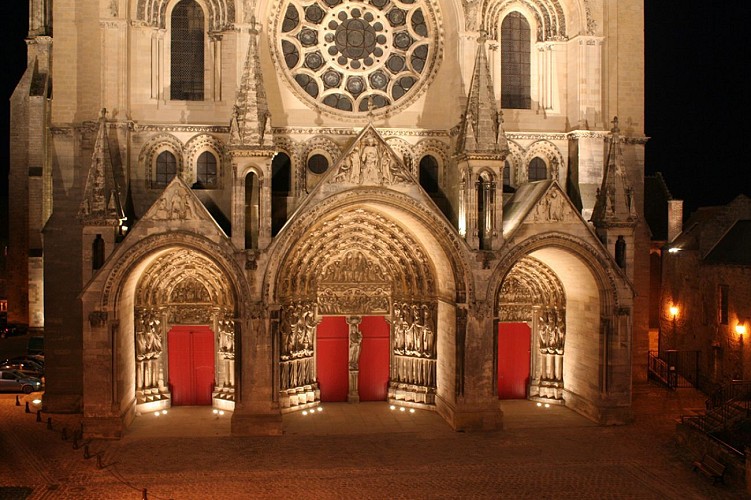
Laon Cathedral | Sculpture as a way of teaching
Description
In the Middle Ages, the Church dominated society, and life was organised around the major Christian festivals. The faithful went to mass on Sundays and listened to sermons. But at a time when the majority of the population was illiterate and did not understand Latin, Christianity was taught through images. So the main episodes in the lives of Christ and the Virgin Mary were sculpted on the portals of cathedrals and churches. The didactic intent was clear: the message of God had to be brought to life, and the faithful had to be imbued with the lessons of the Church.
Some major themes were constantly repeated from one cathedral to the next: the Christ of the Last Judgement, as at Saint-Denis or Laon, which announces the end of time and the resurrection, or the Coronation of the Virgin, as at Paris or Senlis, which appeared as early as the end of the 12th century.
Although religious sculpture reached its apogee in the early 13th century, it was not an invention of Gothic architecture. It already existed in Romanesque art. But what was new in the 12th century was that religion was becoming more human and moving away from the fears of the year 1000. Sculpture softened the face of Christ, associated the Virgin with her Son and consecrated the advent of a pacified Christianity.
Technical Information
Altimetric profile
Data author
