Alert
Alerts
Laon Cathedral | The major stages in its restoration
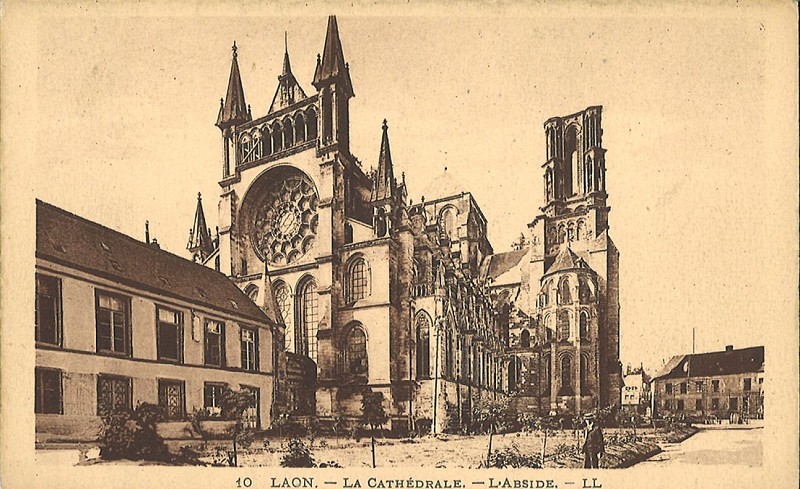
Description
From its foundation until the end of the 18th century, the cathedral was very regularly maintained. But after the French Revolution, Notre-Dame de Laon lost its status as a cathedral and became a simple parish church. During the first half of the 19th century, it was abandoned. So much so that its general condition became worrying: the two towers on the west façade were in danger of collapsing, major cracks were discovered in the vaulting, and the sculpted decoration was crumbling everywhere. In 1840, the church was listed as a Historic Monument. The first restoration work then began. But it wasn't until the work of Émile Boeswillwald, a close friend of Eugène Viollet-le-Duc, in 1853, that Notre-Dame de Laon finally underwent a complete restoration of its vault and the sculpted decoration of its portals. For almost fifty years, Boeswillwald supervised the work. It was his life's work. On the central portal, beneath the gargoyle, his sculpted head is a reminder of his tireless dedication to saving the building. On the eve of the First World War, it was the second largest restoration project in France, after Notre-Dame Cathedral in Paris.
Technical Information
Altimetric profile
Data author
