Tours
Activities
Places of interest
Where to eat
Where to sleep

Explore Marcenat, Cantal, Auvergne's hidden gems

Are you in charge of the destination?
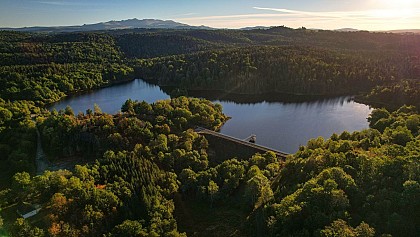
Nestled in the heart of the Auvergne region, Marcenat, Cantal captivates with its authentic charm and breathtaking landscapes. For nature lovers and cultural explorers, this picturesque village serves as the ideal starting point for uncovering hidden wonders. Begin your journey with a hike in the Cantal Mountains, where the peaks offer a spectacular panoramic view of the Auvergne volcanoes. Then i...See more

Walking around Marcenat

See more suggestions
Explore the natural surroundings of Marcenat.
See more suggestions

What to do in Marcenat

See more suggestions
Discover surprising activities in Marcenat and book the ones you like.
See more suggestions
Auvergne Wildlife Park
25 km

Auvergne Wildlife Park

The Parc Animalier d'Auvergne is a unique reserve for rare and endangered species, with a European reputation. Over a 45-hectare area, you can learn about biodiversity and discover almost 350 rare and endangered animals of 60 different species. Come and meet snow panthers, red pandas, wolverines, tigers, Amur panthers, takins, Tibetan black bears, Rothschild's giraffes, Hartmann's zebras, primates, two-toed sloths, dholes, pygmy hippos, cheetahs and, more generally, 350 rare and endangered animals! The Park is set in an exceptional natural site, where you can admire many incredible views over the Cézallier and discover the various actions put in place for animal welfare and species conservation, while visiting a site that is proving its difference on a European scale. Indeed, the Parc Animalier d'Auvergne stands out in many respects: Europe's largest enclosure for Amur panthers and, new for 2024, the first park to house Thorold deer, the integration of an animal nutritionist and an educational manager into the team, the creation of an association dedicated to ethology and another to learning about biodiversity through new technologies, the offer of novel mixed-use enclosures and a wide variety of immersive activities to familiarize visitors with the animals (family safaris, special encounters, vacation courses, etc.)...). A must-see! Enjoy spectacular enclosures where you can walk right up close to the animals: chamois/bouquetins, lemurs or sika deer, and numerous walkways allowing you to get up close to the animals (red pandas, bears, wolves, giraffes). The Parc Animalier d'Auvergne is deeply involved in the conservation of endangered species around the world, including in Auvergne, notably through the Play for Nature endowment fund, and participates in numerous international breeding programs for endangered species. Located in Ardes-sur-Couze in the Puy-de-Dôme region, the park is just 45 minutes from Clermont-Ferrand and Besse/St Nectaire/Murol, and 15 minutes from exits 15 and 17 of the A75, near Issoire. For the 4th year running, it has been awarded the TripAdvisor certificate of excellence. It has also been awarded the Qualité Tourisme label, and is starred in both the Michelin Auvergne guide and Le Petit Futé. A company with a mission, it received two trophies for its concrete commitment to the environment in 2023, and joined the "Entreprise engagée pour la nature" program.

route d'Anzat-le-Luguet 63420 Ardes
Book from 0 €Book
Show

What to visit in Marcenat

See more suggestions
Walk along the picturesque streets of Marcenat.
See more suggestions
Saint-Jean-Baptiste Church
14 km

Saint-Jean-Baptiste Church

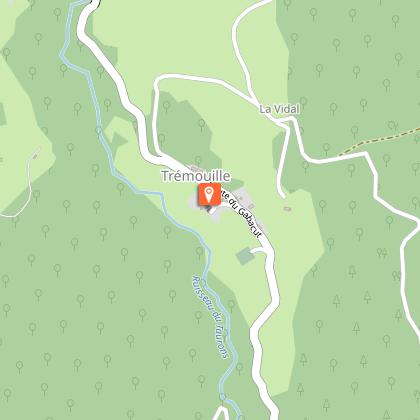
The 14th-century Church of Saint Jean-Baptiste is Gothic in style. However, the wooden gallery of the bell tower is remarkable. The "Saint Martin's wheel": according to a local tradition, young unmarried girls would spin the wheel. If the biggest bell stopped at the top, they would find a husband within the year! This well-preserved wheel is known as the "Saint Martin" wheel. It was used for weddings and christenings, as well as for the patron saint's day. The bell wheel in the Trémouille church. Let's take a trip to the northern Cantal region, where the church of Trémouille conceals a curiosity known locally as "Saint Martin's Wheel". This bell wheel, listed on the Inventaire Supplémentaire des Monuments Historiques in 1975, hangs 3.50 m high in the choir of the church. Resting on a stone support, it comprises an ironwork base in the shape of an inverted heart, ending in a fleur-de-lys at the top. The base supports a metal wheel, approximately 50 cm in diameter, placed vertically and with its axis fixed to the wall for greater stability. The wheel is surrounded by bells of different sizes. A rope-operated lever turns the wheel and rings the bells. Originally there were probably 16 bells, but today only 15 remain. One of the bells - perhaps the oldest - bears inscriptions in Gothic letters, while others bear the names of the founders: "Louis Dubois" (practicing in the 18th century), "Dubois Robert" (practicing in the late 18th and early 19th centuries) and "Jan Driac", all of whom made clarines in Le Puy en Velay. The Cantal Department of Antiquities and Works of Art dates this work to the late 16th or early 17th century. It is highly probable that some of the bells were replaced in later periods. The Gothic lettering on one of the bells suggests the existence of a previous wheel whose bells were reused. It was a local tradition for unmarried girls to turn the wheel. If the biggest bell stopped at the top, they would find a husband within the year! This well-preserved wheel is known as the "Saint Martin wheel". It was used for weddings and christenings, as well as for the patron saint's day. What's more original is a local tradition whereby unmarried girls would spin the wheel and wait for the largest bell to come to rest in the upper position. If it did, they were supposed to find a husband within the year! In the national inventory of bell wheels The inventory by Messrs Fabre and Sutter has identified and studied four Saint Martin's wheels in Auvergne, all of which are in Cantal (at Trémouille, Coltines, Villedieu and Virargues). Two others in the department have since disappeared. This inventory tells us a great deal about the existence of bellwheels, attested in archives as far back as the 9th century. Placed in the choir for greater sound range, the wheels were used as a musical instrument during liturgical times. However, we don't know if they existed in all churches. They may have been replaced by the altar bell, which is smaller and easier to move around the building. Bell wheel, Musée dOrosi Costa Rica. Photo credit Pascale ChappotBellwheels were found all over Europe; they still exist in France, Italy, Spain, Germany and Portugal, as well as in the New Orleans church, and in South and Central America (we "discovered" one in a small museum in Costa Rica). In France, many are to be found in Brittany, Savoie and the Pyrénées Orientales. The wheels we found are made of iron or wood (some are solid), or a combination of the two. They measure between 30 cm and 1.70 m in diameter, and bear different names depending on the region: "rodella" in Roussillon, "roue de guérison" in Brittany, "rouelle" in Savoie, "roue de prière et de vœux" in Burgundy, "roue de saint Martin" in Auvergne. The number of bells varies according to instrument and region, ranging from 6 to 24 for the wheels inventoried. The wheel's circular shape is symbolic, recalling the solar or lunar disk, the cult of Isis or the Gallic sun god. It represents perfection and universal harmony. The wheel's rotation generates cycles and eternal recommencement. Pascale Chappot, tour guide

Le Bourg 15270 Trémouille
Show

Where to eat in Marcenat

See more suggestions
The flavors of Marcenat await you.
See more suggestions

Where to sleep in Marcenat

See more suggestions
Choose from a variety of lodgings in Marcenat.
See more suggestions
Caution!
We have no information on the difficulty of this circuit. You may encounter some surprises along the way. Before you go, please feel free to inquire more and take all necessary precautions. Have a good trip! 🌳🥾