Tours
Activities
Places of interest
Where to eat
Where to sleep

Discover Tachoires, Gers, Midi-Pyrénées

Are you in charge of the destination?
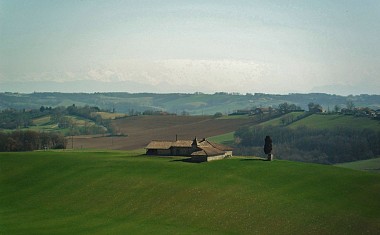
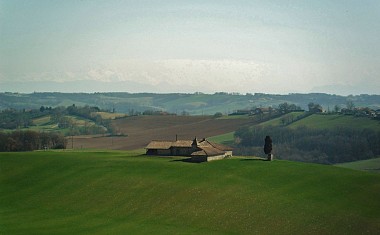
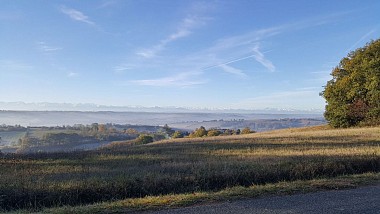
Nestled in the heart of Gers, within the stunning Midi-Pyrénées region, Tachoires is an ideal destination for nature lovers and history enthusiasts alike. Start your journey with a walk across the rolling green landscapes surrounding the village. The walking trails will lead you to hidden natural gems and breathtaking views.

Gers is renowned for its bastides, and nearby Grignols and Lombez w...
See more

Walking around Tachoires

See more suggestions
Explore the natural surroundings of Tachoires.
See more suggestions
Sentier a p'Art
6.2 km

Sentier a p'Art

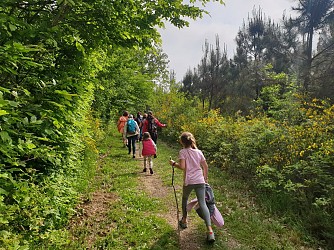
Works of art are installed in the middle of nature, on a hiking trail, for the pleasure of young and old curious. This walk invites you to take a close and artistic look at the natural environment. The artistic creation was entrusted to Coline Vergez, a local artist already well known in Simorre. His reflection on rural art and environmental concerns lead him to work with local artists and artisans for the realization of his 5 works and the signage of the course, using sustainable materials and/ or recovery. Collaborations: Jean-Michel Carcy, ironman of art in Seissan realized the arrows, Kriss Fabr'Hic, artisan of art recycler in Biran created the birds, Crhistophe Moine "Xof" recuperist diverter has realized the "Cycloraptosaurus", Aliénor Rajade glass artist in Simorre has realized "Insects in light", Jeff Cervera, cabinetmaker in Simorre has directed "La Pause des deux horizons", Stéphane Vincent carpenter of marine in Simorre, has realized "L'oeil du cocon", Juju and Dédé (MH Services) in l'Isle-en-Dodon have realized "The flight of flavors". A dossier "under the magnifying glass" gives you all the details about the artists, as well as the small exhibition presented in the tourist information office of Simorre. Discover or rediscover the p'Art trail with a series of audio guides. Along the trail, discover the explanations of Coline Vergez, the creator of the trail. Get on the trail using the materials available at the tourist information offices of Gimont and Simorre and flash the QR code of the document as you go. The audio files are also available for online listening on our website. Starting point at the car park of the railway in Simorre Distance: 4 km (walking time 1h-1h30) Detailed file on the Path to p'Art available at the Tourist Office Coteaux Arrats Gimone.

2 h
4 km
Very easy
Parking du Foirail 32420 Simorre
Show

What to do in Tachoires

See more suggestions
Enjoy unforgettable moments in Tachoires by booking activities for everyone.
See more suggestions

What to visit in Tachoires

See more suggestions
Discover the nightlife of Tachoires.
See more suggestions
Village of Simorre
6.2 km

Village of Simorre

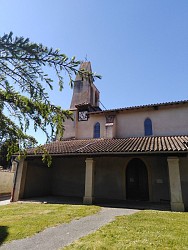
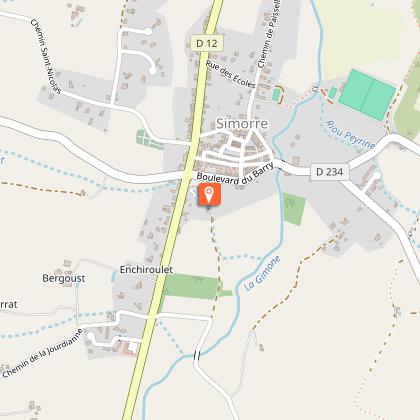
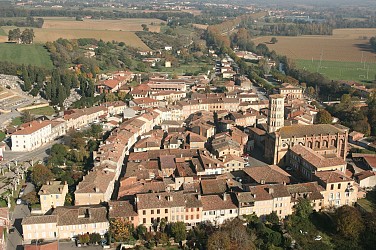
A charming village, with its fortified church, its old central market hall, its museum, its half-timbered and corbelled houses, its foirail and shady squares that invite you to visit. Simorre surprises and amazes. The atmosphere of this small village is pleasant, as well as the musical and convivial nights on the square in front of the Bouche à Oreille. A bit of History: The village with its picturesque alleys is particularly surprising for its impressive fortified church that rises between the roofs of houses and gives the impression of taking a journey into the heart of the Middle Ages. After a devastating fire in 1141, the village, formerly capital of Astarac, is rebuilt all around the abbey and the whole fortified in the 12th century. To resist the Count of Astarac, the abbots constantly improve their abbey which will be endowed with a cloister, an octagonal bell tower then extended to the west. The city of Siabais has 2 churches. The Abbey Church, architectural jewels: A masterpiece of brick lost in the Astarac of stone. Dedicated to Our Lady, it was erected on the site of the previous church which extended perhaps further towards the west because work carried out in 1900 brought to light the remains of construction in the extension of the current nave. Major restoration work was carried out between 1844 and 1858 under the direction of Viollet-le-Duc. The roof, which covered the walls was lowered so as to rest directly on the vaults and a crenellation was established around the building. The second church is that of Saint Valentin of Baillasbats. Baillasbats was an old commune which was attached to Siabais in 1838. It is dedicated to Saint Valentine, the patron of winemakers. It is a rural church, very little influenced by external artistic currents. It is built by builders with materials extracted on site. The economy of the parish was essentially based on the vine. In 1590 a vine is bequeathed to the brotherhood of Saint Valentine under the condition that the wine produced be drunk by its members on Saint Valentine’s Day. Following abuses that occurred during these wine-sharing transactions, the Archbishop of Auch decided in 1673 that the money derived from the product of the vine would be used for the maintenance of the vineyard. Another important religious monument, the chapel of Saintes. In 1680, there was a small church in Saintes. In 1793, the church and the chapel were destroyed. Faced with the growing influx of pilgrims coming from the valley of the Gimone, from Saint Bertrand du Comminges etc., it was decided to rebuild a chapel. In 1844, the new chapel is blessed. Around 1900, the church of Saintes and the adjoining presbytery were again destroyed. The chapel contains the tomb of Saint Cerat. Saint Cerat is one of the first apostles to have evangelized the country. Towards the end of his life, he retreats to a forest north of Sidéclarant. It is at this moment that miracles begin (miraculous cures, resurrection of a dead person,...). Saint Cerate died in Saintes. He was transported in a marble coffin to the church of Saint Andrew. This church was originally located at the cemetery of Siéchapper. She then fell into ruin. The monks therefore brought back the body of Saint Cerate to Saintes. It was placed near the fountain. The water passing through this relic becomes a remedy for the sick. Silows has a washhouse built in 1951 as a measure of health and progress. Until that date, laundry was done directly by the river on a washboard. The municipality has a rich natural heritage, with the presence of a Natura 2000 site "La vallée et coteaux de la Lauze" and 4 ZNIEFF, two type 2 and 2 type 1. "Siéchapper, slow and committed municipality! It belongs to the national label network Cittaslow"

32420 Simorre
Show
Notre-Dame Abbey Church
6.2 km

Notre-Dame Abbey Church

The Church of Simorre is a 14th-century abbey church built on a 5th-century oratory created by Cérats, who became the patron saint of Simorre. The History of the Abbey Church: Founded, according to tradition, in 507 by Clovis, the Benedictine abbey of Simorre was one of the most important in the region. The convent buildings, once attached to the north of the church, disappeared after being sold as national property during the French Revolution. At the end of the 13th century, a conflict between the Abbot of Simorre and the Count of Astarac, with the support of King Philip IV the Fair, enabled the church's reconstruction to be financed. Construction began around 1290, and the building was consecrated in 1309, which explains its remarkable architectural unity. Built primarily of brick, the church adopts a Latin cross plan, typical of Toulouse Gothic architecture, with a flat apse inspired by Cistercian architecture. Its finely sculpted Gothic stone portal is protected by a fortified porch, recalling the monument's defensive role in the Middle Ages. Inside, admire the octagonal vault surmounted by a lantern tower, the 14th-century murals in the former sacristy, the stained-glass windows dating from the 14th to the 19th centuries, and the choir stalls dating from the early 16th century. Classified as a Historical Monument in 1843, the abbey church was restored by the architect Eugène Viollet-le-Duc, who gave it its current fortified appearance. Restoration campaigns in the 20th century enhanced the brickwork and interior decorations. The stained-glass windows: The abbey church preserves a remarkable collection of stained-glass windows from the 14th to the 19th centuries. Nine windows, dating from 1357, depict, among other things, the Crucifixion, Saint Sernin, Benedictine monks, and Saint Louis. Their style, devoid of perspective, is comparable to that of the medieval stained-glass windows of Narbonne Cathedral. Other 15th-century stained-glass windows introduce perspective and warmer colors. They depict the martyrdom of Saint Catherine and Saint James as a pilgrim. At the beginning of the 16th century, Renaissance-style stained-glass windows appeared, representing Saint Cérats, the evangelizing bishop and patron saint of Simorre, as well as the Virgin and Child and Saint Dode, likely influenced by the workshops of Auch Cathedral. 19th-century stained-glass windows complete the ensemble. The choir stalls: The 38 choir stalls, dating from the early 16th century, are in the Flamboyant Gothic style, restrained and elegant. Donated by Bishop Jean Marre, a native of Simorre, they feature a rich sculpted program blending biblical scenes (Genesis, baptisms, martyrs) with more secular, sometimes humorous, motifs. The abbot's stall, adorned with an Annunciation scene, occupies the central position. The Sacrament Room: This 14th-century vaulted room housed the relics venerated by pilgrims. Its murals, rediscovered in 1964, depict, among others, Saint Benedict and Saint Scholastica, Saint Michael slaying the dragon, a Crucifixion, and Saint Sernin. The Crossing and Architectural Details: At the crossing of the nave and transept, an impressive octagonal dome illustrates Gothic craftsmanship and a spiritual symbolism evoking the ascent to the heavenly Jerusalem. On the walls, one can also see putlog holes, remnants of the scaffolding used during construction. The church is open during the day for self-guided visits. A descriptive document is available on site, as well as information panels installed inside the church. An audio tour is also available to visitors free of charge (press the button on the wall to the left upon entering)

32420 Simorre
Show
Artistic Structures with Vegetable Use
6.3 km

Artistic Structures with Vegetable Use

This artistic project was born out of the desire of the ‘Food’ collective of the Bouche A Oreille cooperative to bring art to the ‘village kitchen garden’. The idea was not just to bring gardeners, villagers and visitors into contact with artistic works, but for them to be a vehicle for questioning and reflecting on the environment in which they are displayed: the kitchen garden. The artistic work of Coline Vergez, scenographer, is always a witness to the environment in which it takes place. She seeks to highlight and question it, while integrating her pieces within it. In this way, the works fit into a logic of harmony between materials, images that make sense and/or their utility. She created her first work ‘MMMMH!’ in the village of Simorre, as well as 5 ½uvres that make up the Sentier à p'Art - a 4km walking trail starting from Simorre based on the principle of Land'Art. ‘In this project, I want to remain faithful to this way of working and propose works that are fully integrated into the intention of the vegetable garden; that respect its gesture, reveal it and serve it. My artistic approach is intended to be accessible to everyone, in a language that is clear and easy to understand, and that does not compartmentalise. I want to speak to everyone and I want my work to speak to everyone". A little corner of the kitchen or...behind the scenes of life. This first work, installed in May 2020, highlights a central element of the kitchen that plays as essential a role in the processing of food as it does in that of the people who live there: its table. ‘I chose it for its most basic function. It's the heart of the kitchen, the place where food is cut and chopped, de-boned, sorted, cleaned, weighed, pressed... The place where food becomes a meal. But it's also the place where people reveal themselves, alone or to each other. I love the idea that a single edge of the kitchen table could have witnessed the birth of love, the passing of culinary or family secrets, the tearing apart of people, the making of major decisions, the creation of projects, the growth of children, the sharing of desires... No matter how insignificant, this little corner of the table works on living things, transforms them and makes them evolve. Its scale has been enlarged to emphasise its importance, but also to make it a useful structure in the vegetable garden. Both the chair and the table can accommodate climbing plants and cucurbits, and their heights allow the gardener to pick fruit with ease, while creating a shady spot in summer. In winter, the table is covered in strips of woollen fabric coloured with plants from the garden or picked nearby. Artistic structures for kitchen use. Un petit coin de cuisine ou...les coulisses de la vie’ is part of an overall concept that will see other installations created in the same spirit. The idea is that each artistic installation should be made up of three essential elements: it should provoke questioning, it should be useful and it should be legible. These elements will be developed in different ways for each piece. In this context, Coline's work will question what is not visible to the naked eye: the purpose of market gardening (for what purpose do we cultivate, how do we transform what grows there, what is the future of what we create there? etc.) or will highlight the invisible but essential players in the life of the vegetable garden (its microcosm: earthworm, beetle, lucanus, dragonfly, etc.). The works will all have a real function within the garden, whether in the gardening process, in providing amenities for native flora or fauna, or in improving the living spaces for gardeners or visitors. This work will be aimed at a lay audience and is intended to speak to everyone. Each person will interpret the works in their own way, depending on who they are and what their artistic background is, but the creations will use a very direct and clear visual language. To facilitate this, humour and paradox will be used to demystify art and make it accessible to everyone.

Place de la mairie 32420 Simorre
Show
Bouche a Oreille kitchen garden
6.3 km

Bouche a Oreille kitchen garden

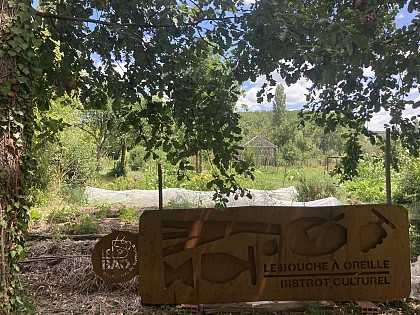
You can visit the vegetable garden at Le Bouche à Oreille restaurant, to the delight of young and old alike! Le Bouche à Oreille (‘BAO’ for those who are used to it) is a SCIC, a not-for-profit structure, bringing together more than 120 cooperators around 4 colleges: 1- Food, from the vegetable garden to the plate. 2- Culture and popular education. 3- Development of local economic initiatives. 4- Ethics and transmission, which drives the project's democracy. In addition to delicious meals and cultural events throughout the year, Le Bouche à Oreille has created its own vegetable garden in the village of Simorre. Situated along the footpaths, the kitchen garden is open to the public and allows visitors to discover the many and varied vegetables, herbs and edible flowers that have been carefully cultivated to create the sublime menus proposed by chef Séverine. The kitchen garden is accessible by a few wooden steps from a footpath, and is open to the curious. The names and varieties of the plants are listed on small slates that sometimes reveal surprises. Take your time on site, as wooden chairs and tables have been set up for resting, picnicking, chatting, watching the frogs or admiring the portraits of the women vegetable gardeners! The ‘Structure artistique à utilité potagère’ project was born out of a desire on the part of the BAO's ‘Alimentation’ collective to bring art to the ‘village kitchen garden’. The idea was not just to bring gardeners, villagers and visitors into contact with artistic works, but to use them as a vehicle for questioning and reflecting on the environment in which they live: the vegetable garden. Trained as a scenographer, Coline Vergez's artistic work always bears witness to the environment in which it is set. She seeks to highlight and question it, while integrating her pieces within it. In this way, the works fit into a logic of harmony between materials, in images that make sense and/or in their utility. The first work, ‘Un petit coin de cuisine ou...les coulisses de la vie’, is part of an overall concept that will see other installations created in the same spirit. Coline Vergez has also created an installation in the heart of the village and, in 2019, the ‘Sentier à p'Art’, a 4km walking trail made up of 5 works based on the principle of Land'Art, starting in Simorre. To get to the kitchen garden, ask for directions at the Bouche à Oreille in the village square, or from the Foirail car park, follow the signposted footpaths and the artistic signposts of the Sentier à p'Art to find the kitchen garden (100m on your left).

32420 Simorre
Show
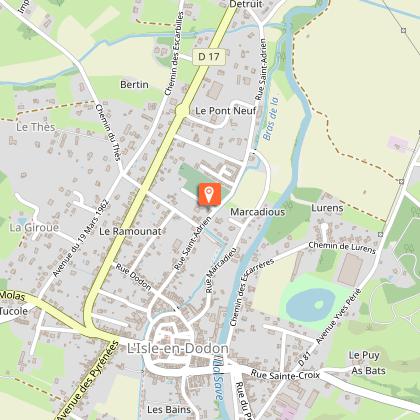
COMMUNE DE L'ISLE EN DODON
17 km

COMMUNE DE L'ISLE EN DODON

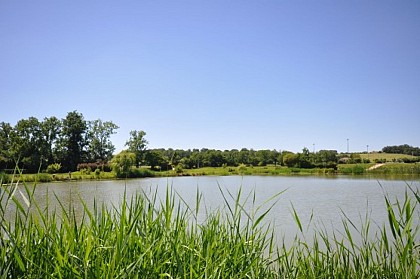
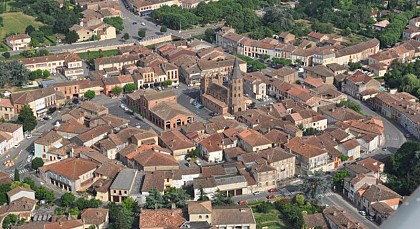
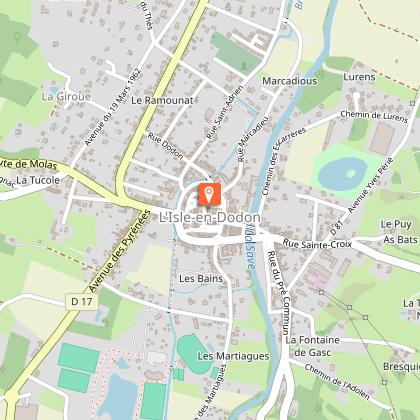
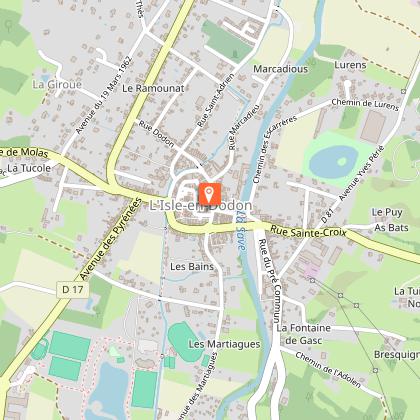
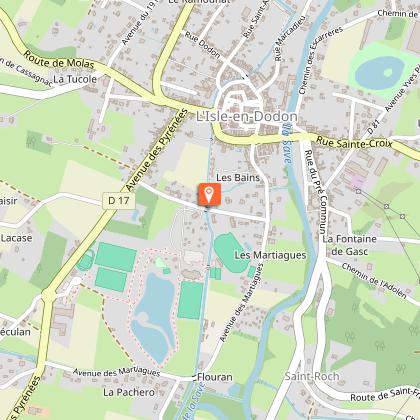
1 hour from Toulouse and the Pyrenees, L' Isle-en-Dodon offers on the heights of its hillsides a breathtaking view of the Pyrenees. Labeled Station Verte for nature holidays! Situated in the heart of the Comminges region, L’Isle-en-Dodon is the ideal town for enjoying the pleasures of the countryside whilst remaining close to all the amenities of the major cities. Awarded the ‘Station Verte’ label, its two associated events (the Ecotourism Festival in spring and the Local Produce Festival in autumn) showcase further attractions of this ancient town of the Counts of Comminges. Its 11th-century fortified medieval town centre, with its red brick, is reminiscent of the bastides of the Toulouse region. The town centre has retained its historic and architectural character: its boulevard (which was once the town’s moat), its narrow streets, and its old half-timbered houses typical of the Gascon region… Of the castle of the Counts of Comminges, a few remains of the walls can still be seen on private property, including one visible to all on Rue Maubec, and the church, built between the 14th and 16th centuries, with its fortified chancel constructed on the remains of the castle’s 12th-century chapel, its Gothic porch and its 33-metre-high bell tower dating from the 16th century. It was extended in the 19th century when part of the nave collapsed. Inside, admire the stained-glass windows with their intense, deep colours from the 16th-century school of Arnaud de Moles, a 16th-century wooden Pietà and a 19th-century Magen-built organ, which is a listed monument. Restored between 2010 and 2012, you can see the frescoes discovered during the restoration in the church’s chancel, and in a room at the rear – during Heritage Days – the treasure chamber! In the town centre, you’ll also discover the town hall and market hall, an imposing building constructed between 1852 and 1854. Built entirely of brick, it comprises two symmetrical market halls with the town hall at its centre. In the Town Council Chamber of the town hall, you can admire the magnificent frescoes by René Gaston-Lagorre, which depict life in L’Isle-en-Dodon, farming and traditions throughout the four seasons, with a reference to a myth that you can discover by scanning the QR code on site. You can also admire Lagorre’s triptych paying tribute to the martyrs of the Maquis de Meilhan. The lake area and its sports complex, where the holiday village is situated, featuring an outdoor fitness circuit, a swimming pool, a pump track, rugby and football pitches, as well as a multi-purpose sports ground. A cinema showing three screenings a week and hosting themed evenings… and local organisations that bring the community to life with a wealth of sporting and cultural activities, as well as charitable initiatives. The Charron and Sewing Machine Museum, Jean-François Coutens invites you to visit his grandfather’s workshop and learn about the wheelwright’s trade, as well as to explore his collection of antique sewing machines, which tell the story of what everyone in his family experienced from the 19th century to the 1970s. The surrounding villages also hold a few hidden gems. For example: In Agassac, the ‘PIERRE BLANCHE’, a Gallo-Roman stele carved from Saint-Béat marble, on display at the town hall. In Saint-Laurent, the ruins of the Priory and the frescoes by the painter René Gaston-Lagorre in the church (currently closed until 2029 for restoration) Also worth exploring: Puymaurin (the village, its church, and the Rando Comminges walking route), Saint-Frajou (the art museum, the miraculous fountain and the lake, which make for a lovely walk), the Labastide-Paumès Rural Museum, the St Pé-d’Arès Chapel in Fabas… But all this heritage doesn’t mean you should overlook the local cuisine: several restaurants serve traditional dishes that are highly regarded. You can also easily meet producers of fattened ducks, cheese, vegetables or meat – whether organic or not – at the market or on their farms. There are numerous signposted walking trails through the hillsides, offering breathtaking views of the Pyrenees. Discover our landscapes using the “RANDO COMMINGES” app There’s a botanical trail in the Saint-Pierre neighbourhood of L’Isle-en-Dodon where you can explore the local flora; you’ll come across it on the walk starting from the lake. In April, local producers showcase their finest produce at the Spring and Taste Fair.

31230 L'ISLE-EN-DODON
Show

Where to eat in Tachoires

See more suggestions
Discover the local flavors of Tachoires.
See more suggestions
Where to sleep in Tachoires

See more suggestions
Choose from a variety of lodgings in Tachoires.
See more suggestions
LE PIED DU RIST
24 km

LE PIED DU RIST

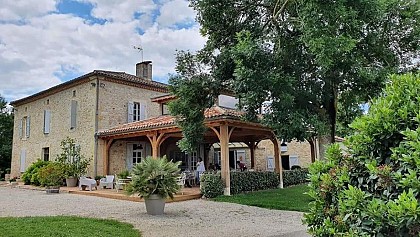
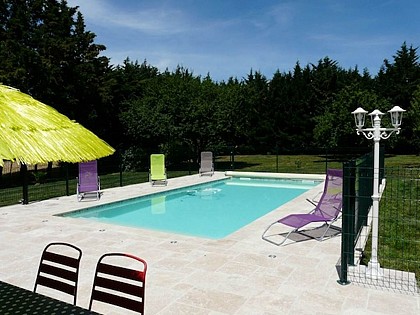
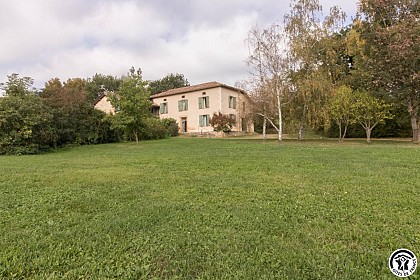
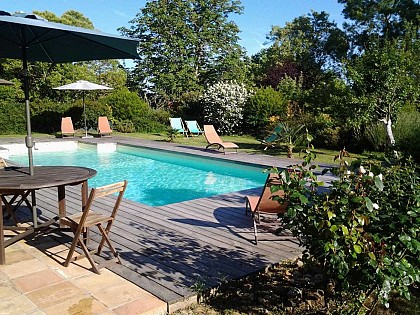
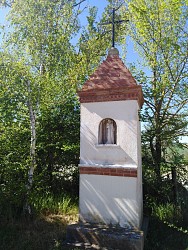
Renovated old farmhouse away from the village with swimming pool, in the middle of meadows, on the edge of a wood with a private garden, 15km from the Gimone swimming lake, at the gateway to the Hautes-Pyrénées. Group gîte with character, combining traditional materials (stone, earth, wood) with contemporary features (large picture windows, staircases, fireplaces, metal...). Good tips nearby : swimming at the Gorges de la Save 5km away, Boulogne-sur-Gesse 6km away (restaurants, shops, market), Gallo-Roman village and museum at Montmaurin 8km away, restaurant inn at Escanecrabe 13km away, Cardeilhac forest arboretum 14km away, Gimone swimming lake 15km away, 25km north of Saint-Gaudens (train station, Garonne river), Montréjeau 27km away (swimming lake, train station, golf course), Saint-Bertrand-de-Comminges (France's favourite village and Grand Site Occitanie) 36km away, Auch (Gers department) 52km away, Tarbes (Hautes-Pyrénées department) 65km away, Bagnères-de-Luchon (skiing and thermal baths) 67km away and Toulouse 90km away. Gîte on 2 levels: - Ground floor: traditional kitchen with separate washing-up area (dishwasher and washing machine) and large fireplace. Dining room of 85 m² with fireplace and TV/reading area for 40 people, with access to the outside. 2 bedrooms, each with 2 twin beds (90*200cm). Spacious toilets for communal areas (2 washbasins, 2 WCs, 2 mirrors, 1 shower). Accessible to the disabled. - Upstairs, under-roof function room with ping-pong table, exposed roof frame (meetings, seminars, parties...), accessible from the ground floor dining room, direct access to the swimming pool. 4 bedrooms (1 bed 140*190cm)(1 bed 140*190cm)(1 bed 140*190cm and 1 bed 90*190cm on the mezzanine, steep staircase and low ceiling)(1 bed 140*190cm and 2 beds 90*190cm, bunk beds). Each bedroom has a shower and washbasin opening onto the sleeping area, and a separate closed WC. 5 foldaway beds are also available.

Route de Lannemezan 31350 BLAJAN
Show
CAMPING PRE FIXE
29 km

CAMPING PRE FIXE

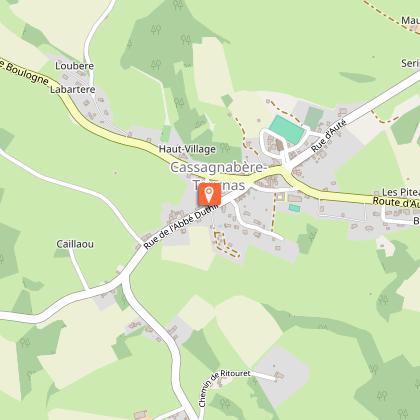
Come and melt into a green environment facing the Pyrenees mountain range. You'll discover a soothing setting that respects nature, where parents and children can enjoy a truly relaxing and friendly atmosphere. Camping Pré Fixe is a 4-star campsite with 43 pitches located in the Occitanie region, between Toulouse and the Pyrenees, in a small Comminges village just a few minutes from Aurignac. It is part of a respectful approach to the environment (member of La Via Natura campsites). The geographical location of the Pré Fixe campsite offers the advantage of proximity to the Pyrenees and the towns of Toulouse, Albi and Lourdes, while guaranteeing the peace and quiet of the Pyrenean foothills. Our campsite in Gascony offers you: heated swimming pool, fresh produce restaurant, wine bistro (carefully selected), free Wi-Fi around the bistro, grocery shop, games for young and old... The accommodation is surrounded by lush vegetation. There are several options for nature lovers: pitches for tents, caravans, motorhomes or unusual accommodation such as our luxury lodges, wooden chalets and unusual accommodation, which are very popular with our campers. The grounds, planted with trees, are laid out in terraces and offer a lovely view of the Pyrenees and the surrounding valleys. You'll enjoy quiet, shaded areas, separated by hedges to ensure your privacy. At Camping Pré Fixe, you'll get to know a magnificent region still unspoilt by mass tourism, and discover all its facets: hiking, cycling, mountain activities... Your hosts, Céline and Cyril, will give you a warm welcome and all the ingredients are there to make your stay a relaxing one.

175 Rue de l'Abbé Duthil 31420 CASSAGNABERE-TOURNAS
Show
LES BICHOUS
35 km

LES BICHOUS

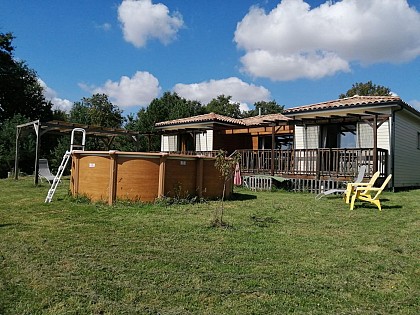
Eco-responsible, single-storey, detached wood-frame house with all comforts. Above-ground swimming pool, 35km west of Toulouse, at the gateway to the Gers. Situated in the heart of the countryside, just outside the small village of Saint-Thomas, this brand-new timber-frame house has been built to welcome you! Timber-frame construction is ecological and economical: low CO2 emissions, 12 times better insulation than concrete, warm and welcoming. Nothing has been left to chance for your comfort and to minimise the impact of this activity on the planet; materials and heating methods have been carefully chosen with eco-responsibility in mind. The house has a gravelled courtyard at the front where cars can be parked, and an enclosed lawned garden at the rear. From the gîte, it's easy to get to the hiking trails on site, including the famous GR86 Toulouse Luchon trail, just 1km away. For walking and fishing, the Sainte-Foy-de-Peyrolières lake is 5 km away. Swimming pool and shops in Saint-Lys, 7 km away. Téoula golf course and African Safari zoo in Plaisance-du-Touch, 15km away. Toulouse, the Cité de l'Espace, the Halle des Machines, Aéroscopia... Entrance hall, storeroom/laundry room, large living room with open-plan kitchen and dining area, and sitting area with pellet stove, protected by a fence. On one side of the living room: 2 bedrooms for 2 people (2 single 80cm beds in each) and a shower room/WC. On the other side: 1 bedroom (2 twin 80cm single beds + 1 90cm single bed), shower room, separate WC with washbasin. Enclosed garden, covered terrace and private courtyard. The owners, Sébastien and Carole, live in the house next door, at the same address. Arrivals between 4pm and 6pm and departures before 11am. TELETRAVAIL: a desk and a lamp are available (close to an electrical socket for plugging in a laptop, extension cord and power strip on request). High-speed internet connection (wifi). 4G telephone coverage (operator: SFR)

928 route de Saint-Lys 31470 SAINT-THOMAS
Show
EN POUILLAC
36 km

EN POUILLAC

House in the countryside, ideal for relaxing breaks and close to the GR 86 hiking trail. Bonus: garden and terrace, shared swimming pool. The gîte is 29 km from the centre of Toulouse and 5 km from the shops. This gîte, adjoining the owners' house, is ideal for a peaceful, green break. Small terrace in front of the door (not very busy cul-de-sac) and garden at the back accessible from the outside. Private enclosed garden and terrace behind the house, accessible via the carport shared with the owners. Covered parking. Views of the Pyrenees on a clear day. Accessible swimming pool to be shared with the owners. The price is degressive according to the number of occupants. In the hamlet of En Berduquet, the gîte is located 1km from the GR86 (Toulouse - Aurignac), 2km from the village of Saint-Thomas, near Saint-Lys (8km), less than 30 minutes by car from Muret (22km), Tépacap (accrobranches park in Rieumes, 17km), Plaisance-du-Touch zoo and golf course (17km), Samatan fat market (20km), Isle-Jourdain leisure centre (wake-boarding, swimming) (15km), La Ramée leisure and swimming centre (25km). and 55km from Auch in the Gers department. Muret railway station is 18 km from the gîte, providing access to Toulouse station in 18 minutes. Ground floor: direct access to the living room with kitchenette, sofa, shower room and separate WC. Upstairs: mezzanine, 2 bedrooms (1 double bed 160cm) (1 double bed 140cm + 1 single bed 90cm). Electric heating, wood-burning stove. TELETRAVAIL: a desk with chair and lamp is available in the double bedroom, as well as fibre-optic internet access. Minimum nights: 2 except summer red period 7 and Christmas holidays 5

150 Impasse En Pouillac En Berduquet 31470 SAINT-THOMAS
Show
OASIS DE POUL'ART - CAMPING LA FORET
36 km

OASIS DE POUL'ART - CAMPING LA FORET

In a soothing natural setting, enjoy a comfortable pitch (250 m²) close to the forest in an old orchard. The Poul'Art campsite welcomes visitors and holidaymakers for varying lengths of time. We try to respond to every request as best we can by keeping a reception schedule that tries to meet different needs. The concept of the campsite is based on ecology and quality of life. Rather than get rid of these old, very vintage bungalows, we've decided to keep them and convert them into eco-friendly accommodation. We're just at the beginning of a process that will involve optimising the various components of a functional, low-energy habitat, where we're relearning to live in happy simplicity. Yurts are being added to the accommodation structure (traditional yurts, contemporary yurts, etc.) and over time we are looking into the possibility of extending the potential for discovering other light habitats by diversifying the types of accommodation (caravan, tinyhouse, etc.). Campsite residents enjoy a friendly, meaningful atmosphere in the midst of nature, in the company of farm animals. They have access to the restaurant, the reading café, the media library, the games library, the organic shop, the co-working area, the yoga room, the outdoor games area and, on request, to treatments and massages. The surrounding countryside is ideal for walks, particularly along the municipal footpath that runs alongside the River Bure. A relaxation area in the forest is currently being developed. Guests can take part in the life of the oasis by signing up for workshops run by local professionals. The Poul'Art campsite is an ideal place to organise meetings, seminars, gatherings, events, etc. Reservations must be made several months in advance.

140 Avenue de la Forêt 31370 RIEUMES
Show
Caution!
We have no information on the difficulty of this circuit. You may encounter some surprises along the way. Before you go, please feel free to inquire more and take all necessary precautions. Have a good trip! 🌳🥾