Tours
Activities
Places of interest
Where to eat
Where to sleep

explore saint-jean-soleymieux and its surroundings

Are you in charge of the destination?
Tucked away in the picturesque landscapes of the Loire, Saint-jean-soleymieux, Rhône-Alpes, is a quaint village offering charm and discoveries for those in search of peace and authenticity. Begin your exploration with a stroll through the village's quiet streets, where traditional architecture transports you back in time. The rich heritage of Saint-jean-soleymieux is also reflected in its historic...See more

What to do in Saint-jean-soleymieux

See more suggestions
Explore the bookable activity options in Saint-jean-soleymieux for all tastes and ages.
See more suggestions

What to visit in Saint-jean-soleymieux

See more suggestions
Learn the history of Saint-jean-soleymieux through its museums.
See more suggestions
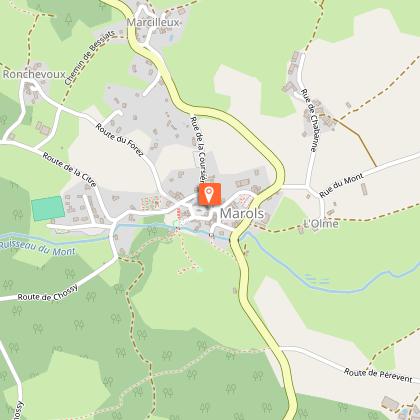
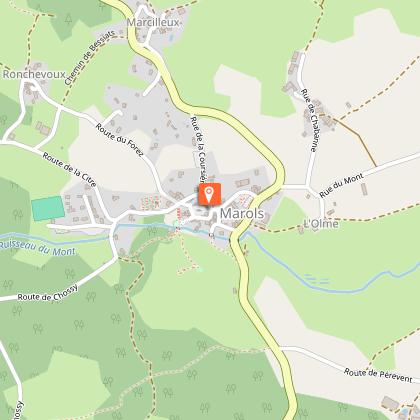
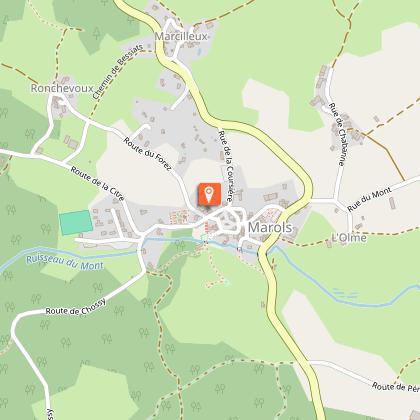
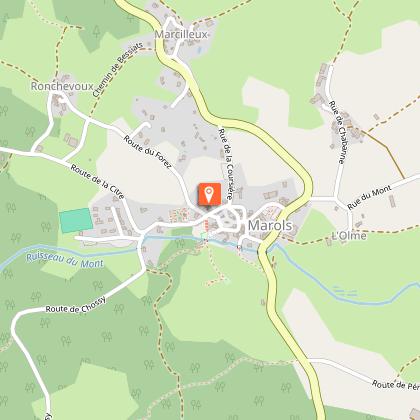
Marols, village of character
2.8 km

Marols, village of character

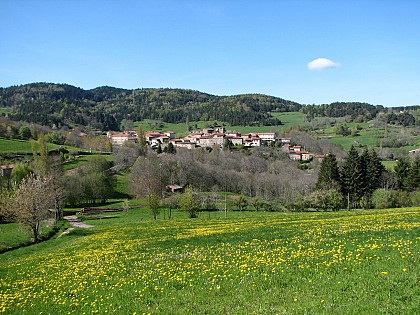
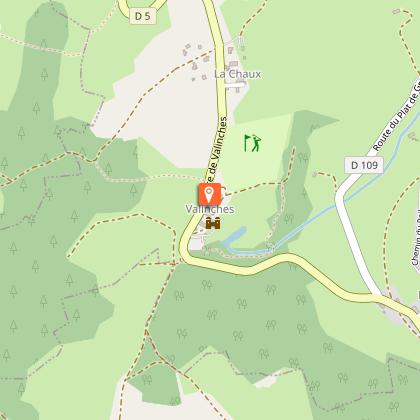
Located in the Forez mountains, Marols is a thousand-year-old city built around its hamlets. Facing a majestic panorama, the fortified church now marks the center of a land of encounters, between traditions, modernity and the sweetness of life. Marols is a thousand-year old town built around a number of hamlets. Between its fortified church in the heart of the town and the recently magnificently renovated Domaine de Valinches lie 15 sq km of lovely countryside for local inhabitants and visitors to enjoy. With this remarkable heritage it was one of the first villages in the Department to earn the coveted title of "village of character". Marols takes its name from a combination of Celtic words meaning ‘a large clearing’ (maros ‘large’ and ialo ‘clearing’). The village developed in the Middle Ages thanks to its advantageous position close to an ancient Roman military road, the Bolène Way, which linked Lyons with Toulouse via Feurs and was still being used by medieval merchants and pilgrims on their way to Le Puy-en-Velay and Saint-Jacquesde-Compostelle. Plentiful woods, fertile farmland, lush pastures and willing workmen made Marols an attractive site for the Benedictine monks of Saint-Romain-le-Puy to build, under the authority of the Abbot of Ainay, their little priory in the 12th century. Marols Priory was a modest affair. The monks spent their time working the land and praying for mankind’s salvation. After a period of prosperity the priory fell into decline around AD 1280. In the following years Marols entered a sombre period marked by the Black Death and the famine, disease and insecurity which resulted from the Hundred Years’ War. The first chapel was of modest size, a single nave in the Romanesque style, and run by a chaplain and perhaps a couple of monks. The principal preoccupations of the little priory were to develop local agricultural resources and a simple religious environment. The village began to take shape in this period. The 12th and 13th centuries were prosperous. The 14th century was however blighted by the Black Death which ravaged the district of Saint-Bonnet-le-Château (in 1348) and various other troubles caused by the kings of England and France locking horns in the Hundred Years’ War. It was during this period that the village and the church were fortified to protect their inhabitants from marauders. In the 15th century the Benedictine monks from Ainay Abbey were replaced by the canons of Saint-Just from Lyons, a noble religious order whose lofty authority sowed discontent among the inhabitants of Marols. In the 16th century, during the Wars of Religion, Protestant troops under the direction of Baron des Adrets razed the village.

42560 Marols
Show
Village of Character
6 km

Village of Character

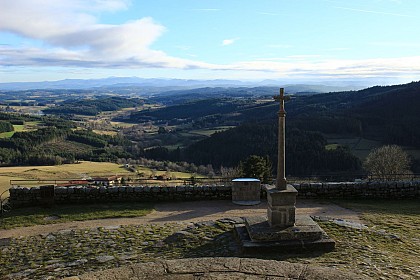
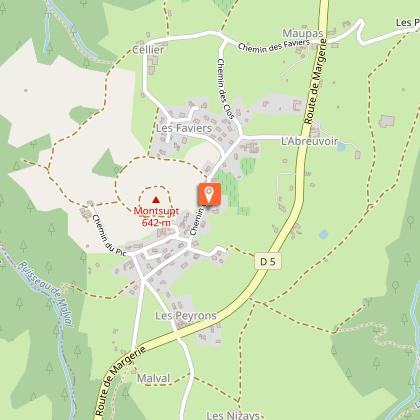
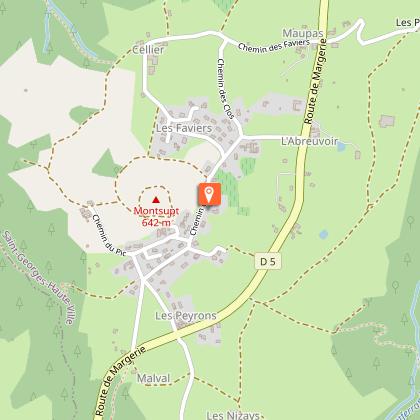
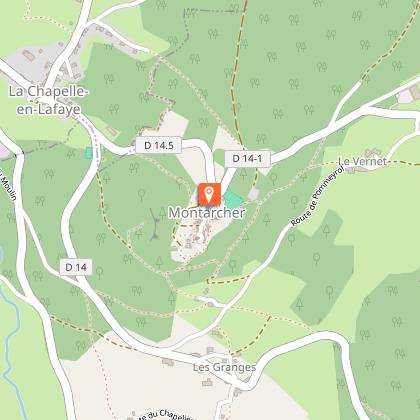
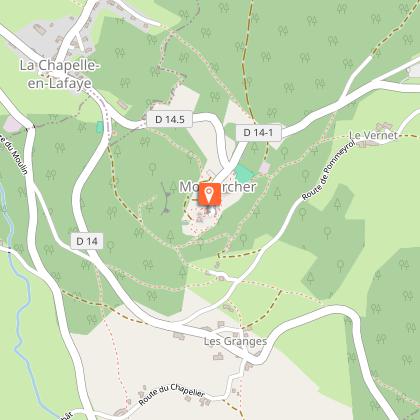
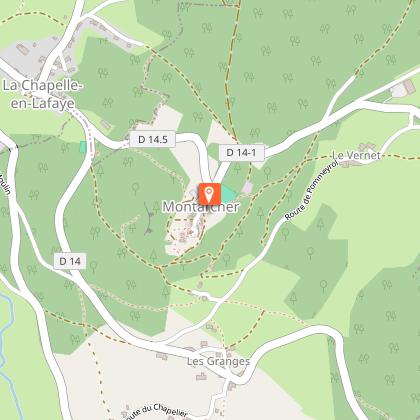
Montarcher lies between the Velay and Forez Mounts, and the Livradois Mountains. This village, perched at 1160 metres above sea level, offers an uninterrupted 360° view from the mound of the old fort. Perched at a height of 1,160 meters, Montarcher proudly displays its heritage charged with a tumultuous history. Already populated before the invasion of the Celts, it was in turn refuge, stronghold and place of worship. Visitors can discover an outstanding panorama and a source of fresh air. The village dominates Andrable Valley from a lofty granite peak 1,150 metres above sea level and affords the visitor an uninterrupted 360° view from the mound of the old fort. The faraway silhouettes of Pierre-sur-Haute, the highest peak in the Forez group (1634 m), Le Velay, Les Cévennes and even Mont Blanc can be seen from the village. In the 13th century the castle passed from the Counts of Forez into the hands of a wealthy family called Baffie and then later to the Saint-Bonnet and eventually the Rochebaron families. In the 15th century the castle was abandoned by its owners because of its lack of comfort. In 1452 Montarcher became a parish. Father Ferrier was the first person in Montarcher to maintain a register of births, marriages and deaths and his book has become one of the oldest documents of its kind in France. In 1536 Francis I took the county of Forez for the Crown; from then on Montarcher and Le Forez were most definitely part of France...

42380 Montarcher
Show
Church
6 km

Church

The church was originally a simple caste chapel with a Bizantin-styl chancel and a semi-domed apse. The nave was build in the 12th century and is flanked by two chapels. Some 17th century painting were uncoverded during restoration work in the chancel in 1935. The right-hand chapel contains a keystone decorated with the arms of Rochebaron (Lords of Montarcher from 13th to the 17th century), hatchments on a back stripe, and a mural dating from the 15th century. Montarcher priests used to be burried in the left-hand chapel and such headstone shows Father Claude Ferrier wearing a dalmatic tunic. The road-screen separating the chancel from the nave was installed in the 15th or 16th century and symbolizes the creation of the world. The porch and the bell-tower date from the 16th or 17th century. The church was originally a simple caste chapel with a Bizantin-styl chancel and a semi-domed apse. The nave was build in the 12th century and is flanked by two chapels which were added in the 15th century. Some 17th century painting were uncoverded during restoration work in the chancel in 1935, showing flower and vase motifs in the ochre tones. The right-hand chapel contains a keystone decorated with the arms of Rochebaron (Lords of Montarcher from 13th to the 17th century), hatchments on a back stripe, and a mural dating from the 15th century depicting a procession of angels. Montarcher priests used to be burried in the left-hand chapel and such headstone shows Father Claude Ferrier wearing a dalmatic tunic. The road-screen separating the chancel from the nave was installed in the 15th or 16th century and symbolizes the creation of the world. The porch and the bell-tower date from the 16th or 17th century.

le bourg 42380 Montarcher
Show

Where to eat in Saint-jean-soleymieux

See more suggestions
Chefs in Saint-jean-soleymieux will delight you.
See more suggestions

Where to sleep in Saint-jean-soleymieux

See more suggestions
Discover popular accommodations in Saint-jean-soleymieux.
See more suggestions
Caution!
We have no information on the difficulty of this circuit. You may encounter some surprises along the way. Before you go, please feel free to inquire more and take all necessary precautions. Have a good trip! 🌳🥾