Tours
Activities
Places of interest
Where to eat
Where to sleep

Explore Saint-deniscourt, Oise, Picardie and its wonders

Are you in charge of the destination?
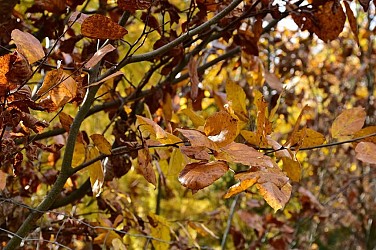
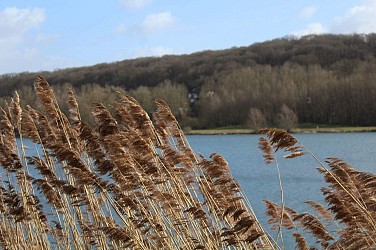
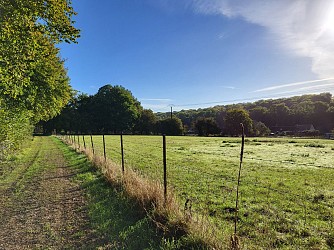
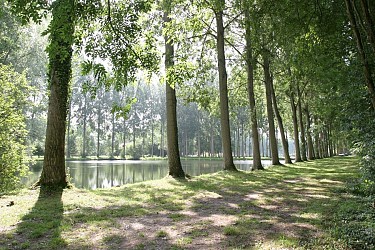
Nestled in the heart of the Oise region in Picardie, Saint-deniscourt offers visitors an authentic charm with a variety of discoveries. Begin your exploration by strolling through its picturesque streets, where every corner tells a story.

The surrounding region is a true haven for nature and tranquility lovers. The regional natural park is a must; embark on a hike amidst pastoral landscapes an...
See more

Walking around Saint-deniscourt

See more suggestions
Hikes for all levels in Saint-deniscourt.
See more suggestions
What to do in Saint-deniscourt

See more suggestions
Explore Saint-deniscourt through its many bookable activities.
See more suggestions
Royaumont - abbey & fondation
63 km

Royaumont - abbey & fondation

In 1228, Saint Louis and his mother Blanche de Castille established the Abbey of Royaumont, today still the largest Cistercian abbey of Ile-de-France. Listed as a historical monument, the abbey has one of the most beautiful examples of Gothic refectory in France. The 7 hectares park, crossed by canals, is labelled "Remarkable garden" by the French Minister of Culture. It has conserved some of its medieval features and today has three gardens: an experimental vegetable garden, opened in 2014, a medieval inspiration garden, and the garden of the monastery transformed into a ravishing French garden in 1912. The abbey is open every day, from 10 am to 6 pm (5:30 pm between November and March). Royaumont Abbey also offers guided visits, heritage and garden activities for children and families every Sunday throughout the year, and holds a music and dance Festival every year in September and October. In 1228, Saint Louis and his mother Blanche de Castille established the Abbey of Royaumont, today still the largest Cistercian abbey of Ile-de-France. Listed as a historical monument, the abbey has one of the most beautiful examples of Gothic refectory in France. The 7 hectares park, crossed by canals, is labelled "Remarkable garden" by the French Minister of Culture. It has conserved some of its medieval features and today has three gardens: an experimental vegetable garden, opened in 2014, a medieval inspiration garden, and the garden of the monastery transformed into a ravishing French garden in 1912. The abbey is open every day, from 10 am to 6 pm (5:30 pm between November and March). Royaumont Abbey also offers guided visits, heritage and garden activities for children and families every Sunday throughout the year, and holds a music and dance Festival every year in September and October.

3 Jard de l’abbaye de Royaumont 95270 Asnières-sur-Oise
Book from 0 EURBook
Show
Eglise Saint-Acceul
75 km

Eglise Saint-Acceul

An architectural and artistic gem of the Renaissance, the Church of Saint-Acceul is listed as a historic monument. This church is the only one in France to bear this name, and it is the only church in the Val-d’Oise to still have its original stained-glass windows. Listed as a historic monument, this church is the only one in France to bear this name, which remains a mystery, even though it is often associated with Saint-Andéol, the evangelizer of Languedoc, who was martyred in the 3rd century. Saint-Acceul is depicted on the church’s façade holding a saw (Saint-Andéol’s skull was sawed off by the Romans). An architectural and artistic gem of the Renaissance, the Church of Saint-Acceul in Ecouen is a major tourist attraction for the town. Construction of the Saint-Acceul Church began in 1536 under the direction of Constable Anne de Montmorency (builder of the Château d’Ecouen), who wished to make this imposing monument a symbol of the Montmorency family’s status and power. The choir was completed in 1545. The building underwent numerous modifications thereafter: the nave was constructed in the early 18th century and the façade in the mid-19th century. The combination of these various periods, each with its own artistic and architectural style, gives the church its unique character; it is also known for its stained-glass windows. Inside, visitors can see the altar and its imposing painting—a copy of Raphael’s “Transfiguration”—as well as an organ. The bell tower contains three bells, the largest of which—weighing over 1,400 kg—bears the coat of arms of Anne de Montmorency. The other two bells weigh 850 kg and 600 kg, respectively. The architect, Jean Bullant, is said to have been buried in the church. The main feature of the church in Ecouen lies in its stained-glass windows, which have survived intact since the Renaissance. Indeed, in many churches from that era, the stained-glass windows were shattered during wars, broken by accident, or even stolen. The stained-glass windows in those churches are therefore later reproductions, sometimes with dull colors. In contrast, the rich stained-glass windows of Ecouen, dating from the 16th century (the period when the castle was built), hold many surprises for visitors... The ten stained-glass windows, funded by the Montmorency family, are believed to have been created between 1544 and 1587. They depict not only the powerful family but also the Passion of Christ, incorporating more contemporary themes (as the period marked the outbreak of the Wars of Religion).

2 Rue Jean Bullant 95440 Écouen
Book from 0 EURBook
Show

What to visit in Saint-deniscourt

See more suggestions
Discover the nightlife of Saint-deniscourt.
See more suggestions
Le Monument aux Morts
17 km

Le Monument aux Morts

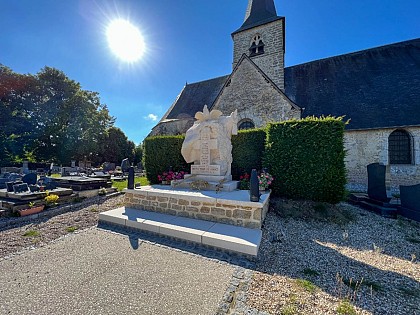
It is in the heart of the Pays de Bray, that the Department of Seine-Maritime has granted in 2021 its label "Rural Heritage" to the war memorial of the charming village of Cuy-Saint-Fiacre. Let's go for its discovery! I set off early on the roads of Bray to enjoy the spectacle of undulating landscapes, green fields where cows and other animals graze, real postcards of Normandy. As a history and geography teacher, the study of international conflicts and the duty of remembrance is a regular part of the lessons I give to my students. Also, the discovery of this war memorial which recently obtained a distinction makes me curious. When I arrived in Cuy-Saint-Fiacre, I perceived the town as a place where life is good. Indeed, everything is superbly arranged; and I only have to follow the directional signs to find the church with the war memorial. I pass in front of the town hall and park on the parking lot of the community hall. I enjoy the scent of roses along the low wall of the church which leads me to the gate of the cemetery. I push one of the doors and in front of me, placed on its pedestal, I discover the monument in homage to the soldiers of Cuy-Saint-Fiacre who died for France. This is the one that has just been labeled "Rural heritage of the Seine-Maritime". After the armistice of 1914, all the villages of France wished to pay tribute to their children who died during the First World War by erecting monuments to the dead. I walk slowly and remember as a child with my classmates in the cemetery of my town. On November 11, the day of the Armistice, we would go one by one to lay our bouquet of flowers at the foot of the war memorial. There, we listened with attention to the speech of the Mayor! What memories! I suppose and hope that the children of the commune of Cuy-Saint-Fiacre continue to come to pay homage to these men who gave their lives for the nation. On the pedestal, I see the four shells linked by chains, completed by two steps which form the base of the monument. Three golden sprays placed at the foot of the monument complete the decor. I note the presence of many symbols related to the theme of war: a flag, a war cross, palms, military ornaments. The Latin cross on which are engraved the names of the children of the village sacrificed for France is topped by an Adrian helmet, symbol of the modern war. At the top, as if ready to fly away, I can see the rooster with its wings open. All this has an impressive side! The singularity of this monument is in its sobriety, its purity of lines, its smooth and round forms and its immaculate hard stone from Euville in the Meuse. The realization of this work is extraordinary. Its sculptor is none other than François Pompon, an animal artist who owns a house near the church and the cemetery of Cuy-Saint-Fiacre. The career of this sculptor is very prestigious: originally from Burgundy, he worked in many sculptors' studios, notably that of Rodin, and his works can be found in the most beautiful museums in the world, both in Europe and in the United States. I understand better the distinction obtained by this monument, which differs from many other commemorative sculptures that I have seen. I take a few pictures to illustrate my next classes and I take a few minutes to read the information given by the interpretation totem next to it. This discovery made me curious to discover the other sites labeled "Rural Heritage" by the Department. And I hope to discover some other nuggets!

Rue Roger Cressent 76220 CUY-SAINT-FIACRE
Show

Where to eat in Saint-deniscourt

See more suggestions
Come and taste typical dishes of Saint-deniscourt.
See more suggestions
Where to sleep in Saint-deniscourt

See more suggestions
Discover the best lodging options in Saint-deniscourt.
See more suggestions
Caution!
We have no information on the difficulty of this circuit. You may encounter some surprises along the way. Before you go, please feel free to inquire more and take all necessary precautions. Have a good trip! 🌳🥾