Tours
Activities
Places of interest
Where to eat
Where to sleep

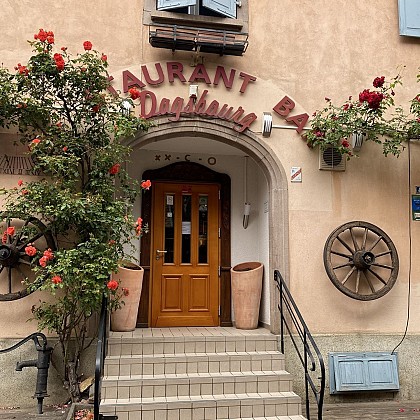
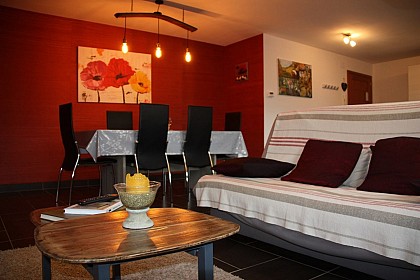
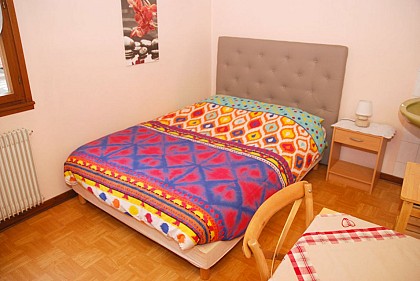
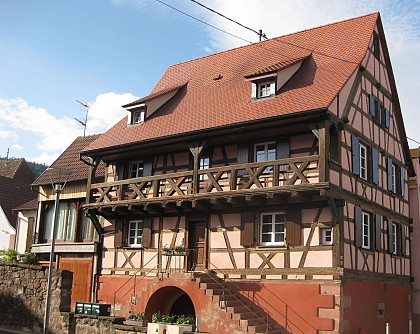
Explore Riquewihr from D'BRENDEL STUB

Are you the owner?
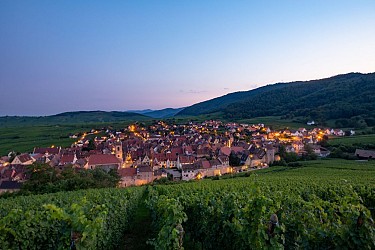
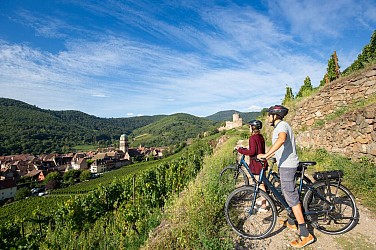
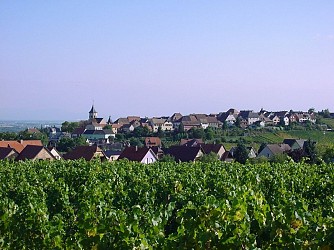
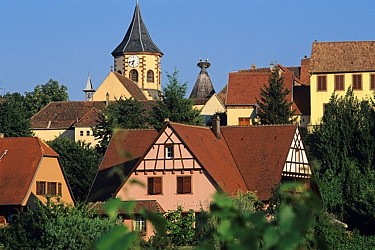
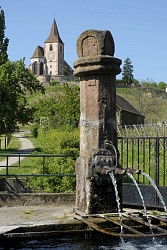
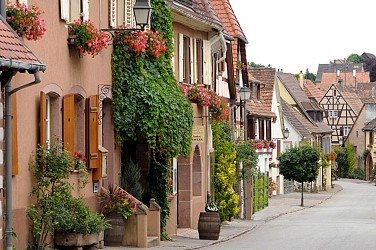
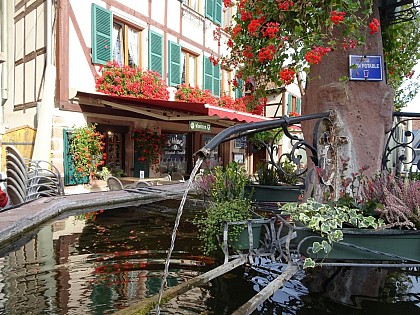
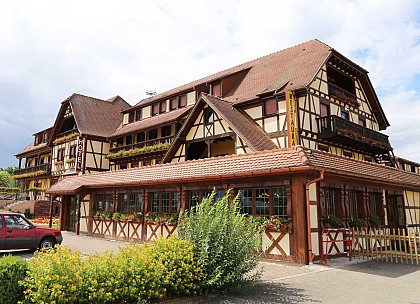
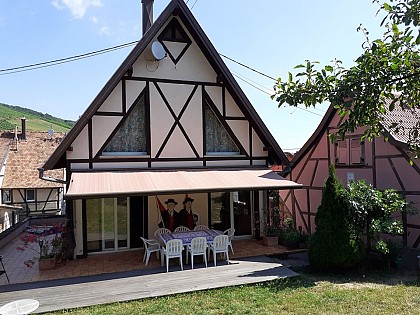
Immerse yourself in the heart of Riquewihr, Haut-Rhin, Alsace, and uncover the hidden treasures around D'BRENDEL STUB. Known for its charming medieval architecture, this quaint village is nestled amongst the Alsatian vineyards and features vibrant half-timbered houses and picturesque cobblestone streets. Start your journey with a stroll through the historic lanes, where every corner tells a story....See more

Walking around D'BRENDEL STUB

See more suggestions
Walks and discoveries in D'BRENDEL STUB.
See more suggestions
Cirduit de découverte de Zellenberg
1.8 km

Cirduit de découverte de Zellenberg

Located on the Alsace Wine Route between Ribeauvillé and Riquewihr, the village of Zellenberg is perched on a hill overlooking the plain of Alsace, a true natural promontory and exceptionally strategic site. The houses in the old part of Zellenberg huddle closely together along the 2 parallel roads (rue de la Fontaine and rue du Schlossberg) that run through the village. The market town is laid out in a rectangular pattern with a tower at each corner of the village: - 2 towers, located to the east have survived up to now (northeast tower and southeast tower), - of the 2 towers located to the west no trace remains now and they were not shown on the etching made by the engraver and cartographer from Basel, Mathias Merian, in 1640, visible from the Schlossberg (location of the old Zellenberg fortified castle). The first record of the name ”Celeberch”, whose etymological translation is ”a mountain of the monk’s cell”, goes back to the beginning of the 9th century. Owned by the Bishop of Strasbourg, the village of Zellenberg which formed part of the Seigneurie of Riquewihr, was granted to the counts of Horbourg as a fiefdom. From 1252, Walter III of Horbourg converted the manor house located at the southern end of the village of Zellenberg into a forti¬ ed castle and surrounded the entire market town with a fortified wall. In about 1324, the counts of Horbourg who had no male descendants, sold their properties (including the Seigneurie of Riquewihr that had been granted to them as a fiefdom but did not belong to them) to count Ulrich of Wurttemberg, their cousin. In 1332, the Bishop of Strasbourg decided to attack the town of Riquewihr in order to recover the Seigneurie of Riquewihr that included the villages of Riquewihr, Ostheim, Mittelwihr, Beblenheim, Aubure, Zellenberg, Bennwihr and Hunawihr. This attack caused Bennwihr and Zellenberg to be returned to the Bishop of Strasbourg by the Wurttemberg family in exchange for a sum of money. The village of Zellenberg was then granted as a fiefdom to the Ribeaupierre family who became its owner in 1436; the village remained in the hands of their successors (the Dukes of Birkenfeld-Deux-Ponts) until the French Revolution. During that period, Zellenberg was one of the principal towns of the Birkenfeld-Deux-Ponts family bailiwick, which comprised Bennwihr, Houssen, Wihr-en-Plaine and Zellenberg. At the end of the 18th century, the forti¬ ed castle had become uninhabitable and was purchased as a national asset by a tiler from Ribeauvillé and the stones used in the construction of the château were sold one at a time.

1 h
680 m
Very easy
68340 Zellenberg
Show
Discovery circuit of Hunawihr
1.9 km

Discovery circuit of Hunawihr

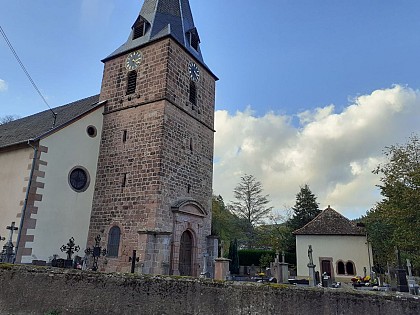
Located on the Alsace Wine Route, Hunawihr is a typical Alsace village set against a background of vineyards. Overlooking the village, the church of Saint-Jacques-le-Majeur (15th-16th centuries), surrounded with its walled cemetery, preserves an environment which remains intact and provides the perfect setting for this exceptional whole. The village consists of winegrower houses with their gable ends stretching out over the street. Most of these houses were built in the 16th to the 18th centuries (although there are a few dating back to the 15th century). In these houses, the stone-built ground floor served as a storeroom while the upper floor, usually timber-framed, was the dwelling. This landscape and architectural heritage makes Hunawihr one of the ”Most Beautiful Villages in France” (Plus Beaux Villages de France) . A little history... As legend would have it, Hunawihr was founded in the 7th century by Hunon and his wife Hune to whom Hunawihr owes its name. Hunon left the village to the Saint-Dié monastery in the Vosges. During the 13th century, Hunawihr formed part of the lands of the Lord of Riquewihr*, owned by the Bishops of Strasbourg who had granted it as a fiefdom to the lords of Horbourg*. In about 1324, the counts of Horbourg* sold their assets to the Count Ulrich of Wurttemberg*, their cousin. In 1397, count Eberhard II of Wurttemberg*, through his marriage to the heiress to the county of Montbéliard, enabled the powerful counts of Wurttemberg-Montbéliard* to remain owners of the Riquewihr seigneurie up until the French Revolution. The county of Wurttemberg was elevated to the rank of Duchy in 1495. On the 15th April 1520, the village church was designated as a pilgrim centre at the behest of Duke Ulrich VIII of Wurttemberg*, responding to a request from his subjects who sought to show their devotion to Hune. Hune was raised to the rank of saint because of her work with the poor (the legend tells us that Saint Hune would wash the clothes of the poor in the fountain that bears her name. She has also been attributed with miracles such as causing the fountain to spout wine during a bad grape harvest year). The church of Saint-Jacques-le-Majeur in Hunawihr became a pilgrimage centre focusing on the relics of Saint Hune which were then kept in the church’s crypt. In 1534, Georges of Wurttemberg* introduced the Protestant religion into Hunawihr. Initially, the village followed the Zwingli (Swiss) inspired Reformation promoted by father Nicolas Koenig who had become a pastor (this pastor significantly helped propagate this movement to neighbouring villages). Georges of Wurttemberg’s successor imposed the Lutheran religion in 1559. In 1687, under Louis XIV, it again became possible to be a practicing Catholic in Hunawihr: the simultaneum was put in place and, to this day, the church is still in dual use by both the Protestant and Catholic communities. * lord(s) of the Holy German Roman Empire.

1 h
1.3 km
Very easy
68150 Hunawihr
Show
Beblenheim Discovery Tour
2.4 km

Beblenheim Discovery Tour

The origin of the name of the locality does not have an obvious explanation. The most likely theory is one that attributes the name to one of the first leaders of a “ Dinghof ”, an ancient Germanic institution, located in Beblenheim. The name of Babilenheim can be found in 1128, followed by a number of variants till the current name was settled upon. Like many neighbouring villages, Beblenheim changed hands often in the Middle Ages, between the Lords of Horbourg and the Dukes of Württemberg. The village experienced several difficult and tumultuous times, the first of which came with the black plague, the great calamity that hit Alsace from the mid-14th century. In 1525, some of the people of Beblenheim also got caught up in the Great Peasants’ War, which was sparked by their excessive labour obligations and the ever increasing strain of taxes. It ended with the battle of Scherwiller, won by the troops led by the Duke of Lorraine. Lastly, the village also experienced the horrors of the Thirty Years’ War and later on, as it was overrun by many armies, till Alsace was made part of France by Louis XIV in 1680. That period of war, plague and famine was so difficult that the village lay empty for seven consecutive years. The village went through another difficult period at the time of the fighting in and around Colmar, as it was on the front line from early December 1944 to the end of January 1945. It was miraculously spared the destruction that was seen in some of the neighbouring villages. Since that time, the village has been thriving around its traditional activity of wine-growing.

1 h
1.6 km
Very easy
68980 Beblenheim
Show

What to do in D'BRENDEL STUB

See more suggestions
Enjoy the activities available in D'BRENDEL STUB for moments of relaxation and fun.
See more suggestions
Comprehensive Strasbourg rickshaw tour - 1 hr 20 mins
57 km

Comprehensive Strasbourg rickshaw tour - 1 hr 20 mins

Enjoy this guided rickshaw tour to discover all of Strasbourg! Your driver and tour guide will let you in on the city's secrets! Rickshaws are a unique way to get around and see all the key sites of Strasbourg in just 1 hour and 20 minutes! Your driver will do the pedalling while you enjoy the city's key sites. Once you are comfortably seated on your rickshaw, you will start your tour by discovering the Palais Rohan. This magnificent monument with a classical façade has been classified as a historic monument. In 2009, it opened its doors to the most powerful world leaders on a NATO summit. You will then be taken to the Place Broglie to marvel at Strasbourg's stunning opera house. You will be captivated by its neoclassical façade, which has been classified as a historic monument! Your visit will continue with the Place de la République, where you will admire the relics of German architecture. This stunning square is home to the German imperial district's most iconic monuments. You will then enter into the heart of the German neighbourhood to discover its Haussmann-style avenues, the European sites and the Orangerie district. You will also get a glimpse at the headquarters of the French-German cultural TV channel: Arte.   Your tour will end by a ride through the "Petite-France" neighbourhood, at the heart of the old town. Marvel at typical half-timbering houses built right above the water. You will enjoy an exceptional scenic view on the terrace of the Barrage de Vauban. Let this quaint neighbourhood - which is a UNESCO World Heritage Site - captivate you! Pick this tour and visit all the key places of Strasbourg in an unusual and pleasant way!

Book from 90 EURBook
Show

What to visit in D'BRENDEL STUB

See more suggestions
Visit the museums and galleries of D'BRENDEL STUB.
See more suggestions
Where to eat in D'BRENDEL STUB

See more suggestions
The flavors of D'BRENDEL STUB await you.
See more suggestions

Where to sleep in D'BRENDEL STUB

See more suggestions
Choose from a variety of lodgings in D'BRENDEL STUB.
See more suggestions
Caution!
We have no information on the difficulty of this circuit. You may encounter some surprises along the way. Before you go, please feel free to inquire more and take all necessary precautions. Have a good trip! 🌳🥾