Tours
Activities
Places of interest
Where to eat
Where to sleep

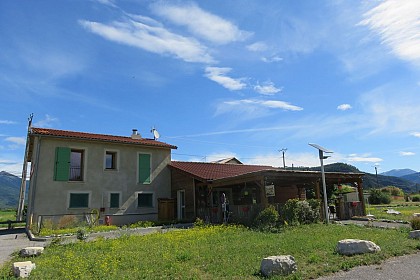
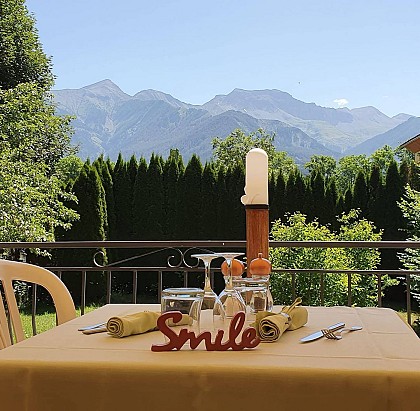
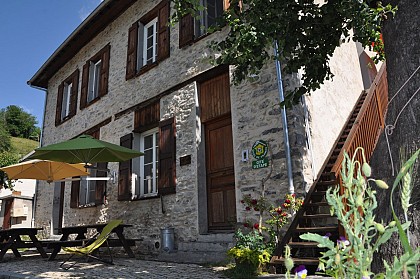
Explore Peone at Chalet Suisse: nature and culture

Are you the owner?
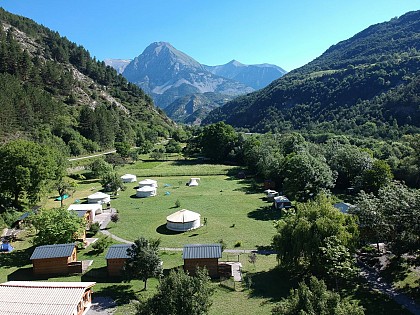
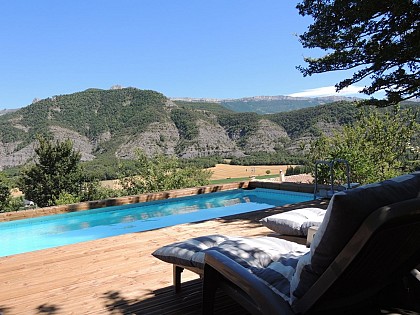
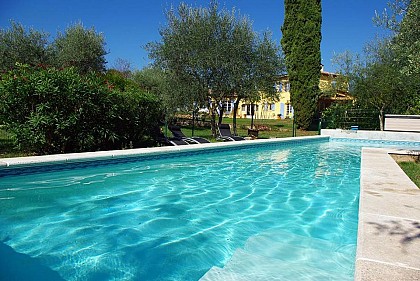
Welcome to Chalet Suisse, your gateway to exploring the wonders of Peone and its surroundings in the Alpes-Maritimes, Provence-Alpes-Côte d'Azur. Nestled in the heart of nature, Peone offers a multitude of activities for all tastes. Hike the picturesque trails of the Mercantour National Park and marvel at the diverse local wildlife and flora. In winter, enjoy the ski slopes of the nearby Valberg a...See more

Walking around LE CHALET SUISSE

See more suggestions
Discover the walking paths of LE CHALET SUISSE.
See more suggestions
Pas de Belon
15 km

Pas de Belon

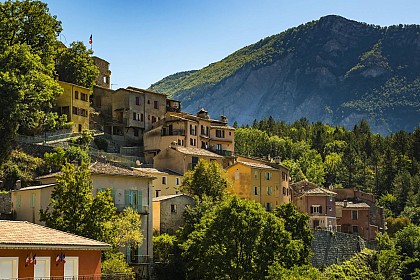
You'll straddle the 1860 border before the Comté de Nice became part of Provence. A milestone marking this boundary can still be seen at Col St Pons. Cross the small bridge towards the village exit, and turn right towards the cemetery and the small Notre-Dame chapel. Follow the road for about 50 m, then take the path that climbs to the right towards Castellet-lès-Sausses. The path winds its way up a fairly steep slope to a crossroads, where you need to turn right. Continue along this path for about 1.5km before joining a track in the woods called "Le Chabanal". Follow this track for about 2.3km until you rejoin the path at an altitude of 1436m. On the left, you can admire the pretty rounded summit of Mourre-Frey. The trail then continues to climb slightly for around 500m, before descending into the Belon ravine. Cross the Petit Riou and continue along the path until you reach the ridge of the same name. From here, admire the pretty view to the north-west, towards the tête de Travers. Reach the Pas de Belon at 1263m and continue down the path below, on the side of the Saint-Pons ravine. Turn right at the first junction, then right again at the second junction. The path then leads to the Col de Saint Pons, where you can admire an ancient boundary marker between the Kingdom of France and the County of Savoy. From this pass, descend below towards Sausses. The path has some slightly steeper sections in marl and limestone. It eventually leads to the small, asphalted Colette road, which winds its way down to the village center. At this point, reach the small Riou de Sausses bridge.

6 h
13 km
Hard
Montée de l'Auberge 04320 Sausses
Show
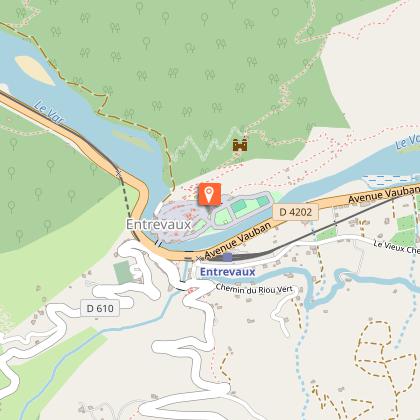
Parcours Chemin de Ronde
19 km

Parcours Chemin de Ronde

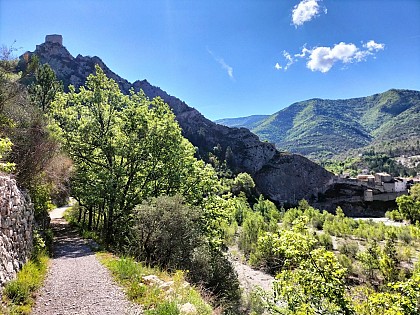
Sheltered behind the walls of the city's fortifications and along the Var river, several exhibitions bear witness to the traditions, customs and history of the people of Entrevalais. During the medieval period, the present fortified town of Entrevaux formed a sort of "castral town" located in a meander of the Var, which provided an excellent natural entrenchment. It is dominated from above by the castle, but without direct communication with it. However, this settlement is neither the only one, nor the oldest known settlement on the site, which is divided into three interdependent and more or less intertwined toponymic and topographic entities. Originally Entrevaux was a civitate in the High Middle Ages, the seat of a diocese, known as Glandèves, but whose prestige clearly declined in the Low Middle Ages. The site of the cathedral church and the diocesan house was then distinct from the walled town, located a few hundred metres downstream in the Var plain at a place called La Seds. You will take many vaulted passages along the old walkway which once linked the Porte de France to the Porte d'Italie. This walk, thanks to numerous exhibitions, is also the testimony of the traditions, customs and history of the people of Entreval, inhabitants, artists or even soldiers who lived or passed between the walls of the City. Your visit will end by crossing one of the 2 bastions created by Vauban. Every year an exhibition loaned by the Ecomusée Roudoule en Terre Gavotte is installed there. Various themes are thus approached presenting the history, the ways of life and the traditions of the inhabitants of our valleys. Photographic walk of an Entrevalais 1900-1937 As you walk along the Chemin de Ronde, discover the life of the Entrevalais and the landscapes of the Var valley at the beginning of the 20th century, captured with emotion by the amateur and inspired photographer Désiré Sic. The man was born on 29 June 1883. As a young man, he discovered photography and devoted most of his life to it, taking a wide variety of pictures ranging from landscapes to portraits and from ceremonial reportage to art photography. More than a hundred photographs chosen from several thousand glass plates, deposited by his descendants in the Archives Départementales des Alpes de Haute-Provence, evoke his deep attachment to his village and its inhabitants. His long military career began in Nice in 1909 and ended in 1934 in Morocco. He then returned to his native town for an active retirement, before passing away on 29 September 1972.

45 min
219 m
Very easy
04320 Entrevaux
Show
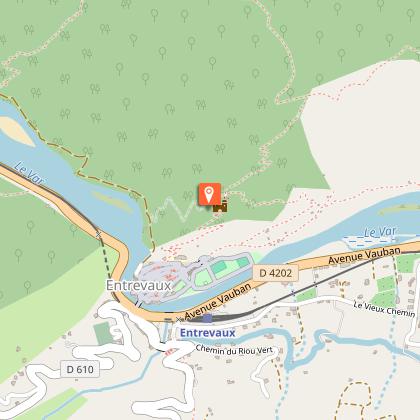
The Citadel
19 km

The Citadel

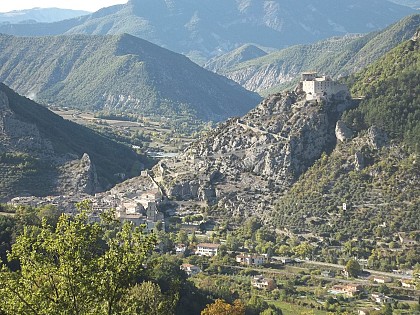
In the 16th century, France was at war with Europe. The development of artillery and the siege of Charles V's troops in 1536 showed the inadequacy of Entrevaux's ancient medieval fortifications Louis XIV entrusted Vauban with the creation of a fortified line of which Entrevaux was a part, thus locking the access to the middle of Provence. Access : The communication path from the town to the castle, whose 9 zig-zag ramps cut through the Entrevaux rock in such a characteristic way, was built on Vauban's orders from 1693. Before his intervention, the Citadel could only be reached by leaving the town, via the mountain, which made communication impossible for men and animals in the event of a siege. The powder magazine (on the left after the entrance) Now transformed into a museum retracing the "military" history of Entrevaux, its 58m2 could once hold 9,000 kg of gunpowder. This is far too much for the square of Entrevaux and extremely dangerous. The Path The path starts in front of the powder magazine, the 2nd and 3rd ramps lead to the 2 "forts" called Fort Langrune and Fort Pandol, named after their builder. The "grande rampe" and the following ramps offer beautiful views over the territory of Entrevaux. At the end of the last ramp, the entrance to the castle is guarded by a small redoubt with a drawbridge dating from 1693. On the right are the solitary confinement cells built during the First World War for the recalcitrant prisoners of the disciplinary companies from 1917 to 1922. The emergency gate (at the rear), with its guardhouse, communicates with the countryside via a drawbridge and a standing bridge over an impressive moat. This was also created by Vauban, as the medieval city only had one entrance accessible by a ladder! An underground access dug under the citadel connects 2 sides and could protect the garrison in case of bombardment. To the left of the last ramp, you go up to the entrance of the castle. This includes 3 barracks, a bakery and the commander's house, also called the keep because it is situated at the highest point. Large cellars and 3 cisterns gave the castle a resistance capacity of several months in case of siege. Today, the ensemble is more or less in the same state as when Vauban discovered it around 1700, as the major transformations he envisaged were never carried out.

55 min
1.7 km
Very easy
04320 Entrevaux
Show
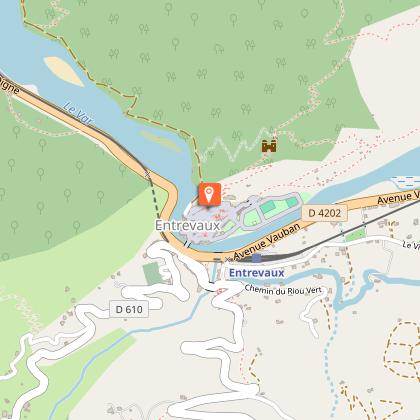
Heritage
19 km

Heritage

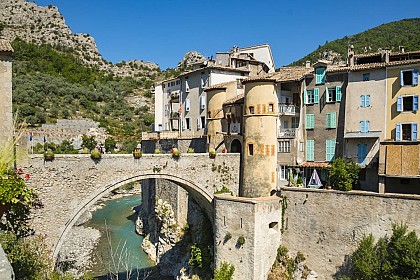
1 Royal Gate, Machicolation Redoubt Main entrance to the village since 1658 with 18th century machicolation redoubt with openings on the road side. The machicolations made it possible to throw all sorts of projectiles at the attackers. 2 Drawbridge and towers In 1690, two rounded towers were built on either side of the bridge, as well as a machicolation barrier located above the bridge, which housed the two arrows of the drawbridge, known as the "bascule" bridge, which was raised at night until the middle of the 19th century. 3 Guardhouse This vast room once enabled the soldiers guarding the entrance to the village to communicate with the covered way. 4 Jail This police room was used to isolate suspects, petty criminals or as a "sobering up" room. 5 Hôtel du Commandant de la Place Residence of the officer who commanded the fortress or governor. Monumental two-leaf door with glass transom, Triple row of spires and rounded roof corners symbolising the homes of the nobility. 6 Bastioned tower of the Portette This bastion and that of the barracks were artillery towers. The roof, which is quite exceptional in Vauban constructions of this period, characterises these two bastions. 7 Balcony from the 17th century The wrought iron balcony is typical of the houses of the nobility. This was the residence of the Counts of Grasse-Briançon. It has been altered, but it still shows the poor fortune of the rural nobility. 8 Hotel of the Barons of Glandèves The Glandèves were lords of Entrevaux until 1542 and kept this hotel until the Revolution. With its triple row of windows, vast and numerous windows and monumental staircase, this hotel was transformed into a barracks in 1823. In front, on the rampart side, is the "bastion of the barracks". 9 School of Charity Known as the "Brothers' Schools", they were created in the 17th century for the instruction of boys. They were used as barracks during the Revolution. 10 Cathedral Built from 1604 to 1667, in Provençal Gothic style with a baroque heart, it is dedicated to "Notre-Dame de l'Assomption". Located at the eastern end of the city, it has been part of the fortifications since the end of the 17th century. 11 Gate of Italy A classic point of attack, including that of Charles V's troops in 1536. This gate, a weak point, was powerfully fortified by Vauban: guardhouse with watchtower (of which only traces remain), drawbridge, artillery loops. 12 Double horn This rampart (triangular M-shaped) protected the first drawbridge, itself overhung by a wall of skirmishers and the Pandol fort. The path known as the "olive trees" led to Italy and was an invasion route for Savoyard troops. Savoyard troops. 13 Canons' Chapter The canons assisted the bishop in his duties. The door is in the Renaissance style, with keel-shaped elements carved on the straight legs. 14 Episcopal Palace Residence of the bishop within the walls. Note the triple row of genoese, the double door with a glass transom and the large windows. The bishops were all members of the nobility. 15 Renaissance door Beautiful 15th century doorway with stone lintel (late gothic, early renaissance). 16 Clock tower With its wrought iron bell tower, a classic in Provence. 17 Banal oven Bread ovens were generally the property of the lords, their use was subject to a fee, hence their name. Private individuals who owned an oven still had to pay a fee to the lord. 18 Medieval market stall Characterised by the two merchandise stands on either side of the door. Many stalls have been transformed, and you will find traces of them along the streets. 19 Former St. James' Hospice In the Middle Ages, the hospice was both a hotel for travellers and a care facility for the sick. It served as a hospital until the 1960s. 20 Porte de France With drawbridge and adjoining guardhouse. 22 Armoury Reserve shop, armoury. 23 Access to the citadel and the Poudrière Museum To reach the fortress: 25 minutes' walk, 800 m of path divided into 9 successive ramps, 156 m difference in height. The powder magazine museum retraces the military history of the village. These 58 m2 could hold 9 tons of powder. This was far too much for Entrevaux and extremely dangerous.

1 h
897 m
Very easy
04320 Entrevaux
Show

What to do in LE CHALET SUISSE

See more suggestions
Plan a perfect day in LE CHALET SUISSE with our bookable activities.
See more suggestions

IGN cards

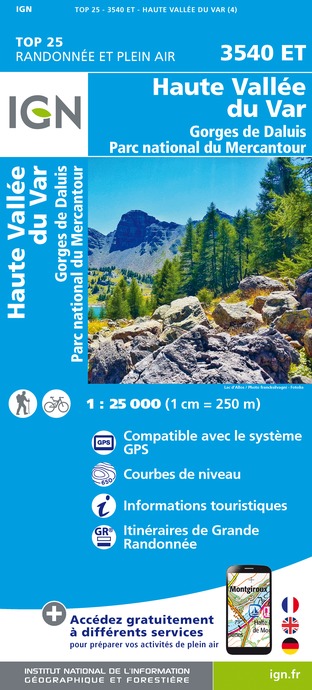
3540ET - HAUTE VALLÉE DU VAR GORGES DE DALUIS PARC NATIONAL DU MERCANTOUR
Editor : IGN
Collection : TOP 25 ET SÉRIE BLEUE
Scale : 1:25 000
13.90€
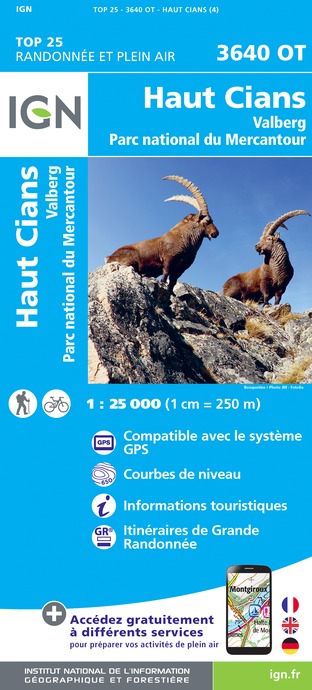
3640OT - HAUT CIANS VALBERG PARC NATIONAL DU MERCANTOUR
Editor : IGN
Collection : TOP 25 ET SÉRIE BLEUE
Scale : 1:25 000
13.90€
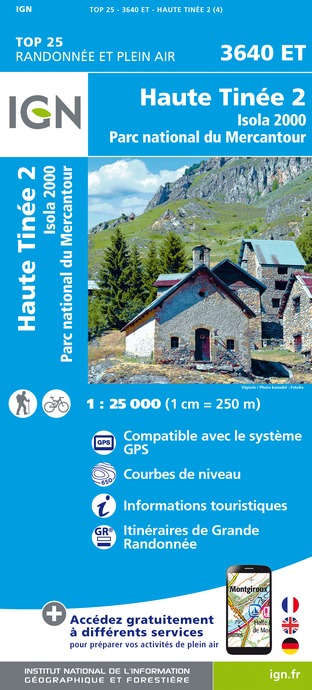
3640ET - HAUTE TINÉE 2 ISOLA 2000 PARC NATIONAL DU MERCANTOUR
Editor : IGN
Collection : TOP 25 ET SÉRIE BLEUE
Scale : 1:25 000
13.90€
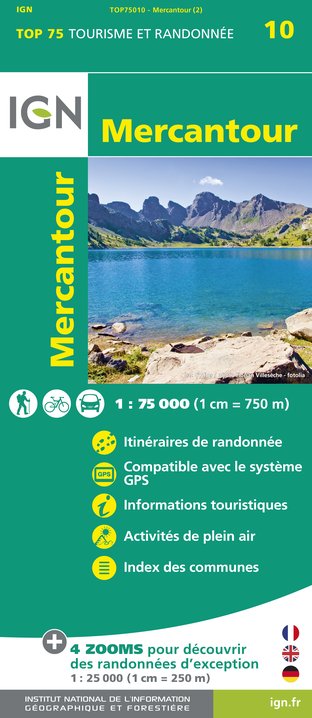
TOP75010 - MERCANTOUR
Editor : IGN
Collection : TOP 75
Scale : 1:75 000
9.80€
TOP100D06 - ALPES-MARITIMES NICE CÔTE D'AZUR PARC NATIONAL DU MERCANTOUR PNR DES PRÉALPES D'AZUR
Editor : IGN
Collection : TOP 100
Scale : 1:100 000
8.40€
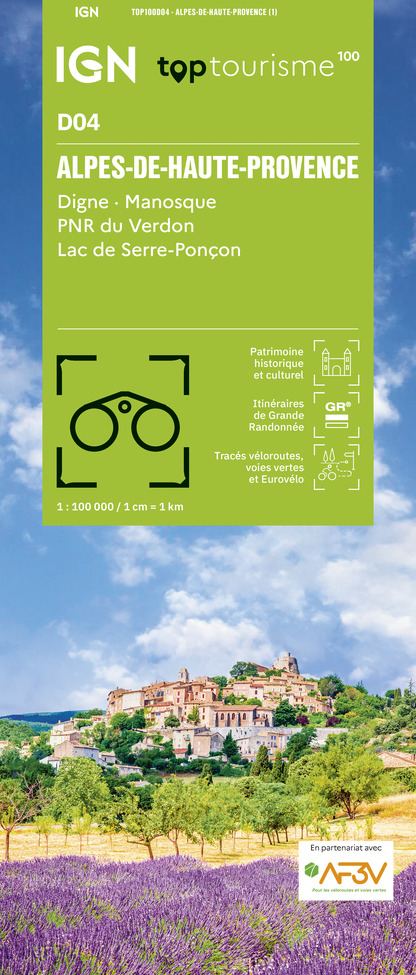
TOP100D04 - ALPES-DE-HAUTE-PROVENCE DIGNE MANOSQUE PNR DU VERDON LAC DE SERRE-PONÇON
Editor : IGN
Collection : TOP 100
Scale : 1:100 000
8.40€
D83 VAR
Editor : IGN
Collection : CARTES DÉPARTEMENTALES IGN
Scale : 1:150 000
5.90€
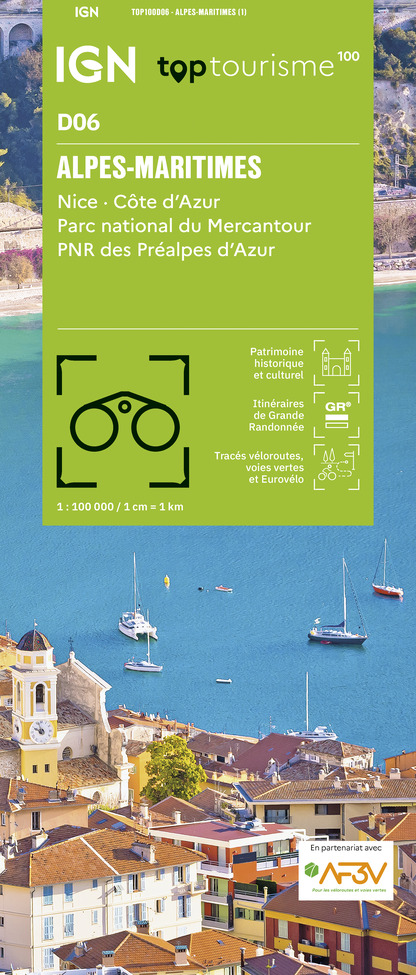
D06 ALPES-MARITIMES
Editor : IGN
Collection : CARTES DÉPARTEMENTALES IGN
Scale : 1:150 000
5.90€
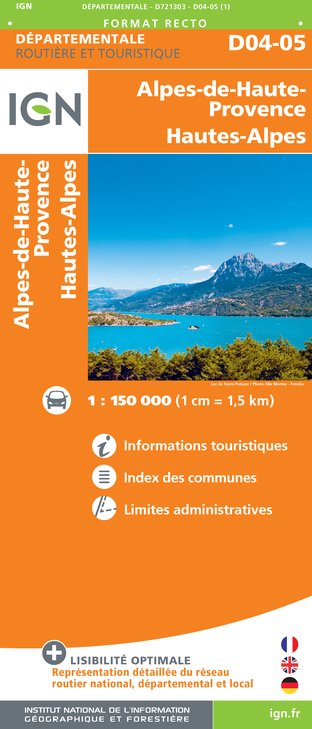
D04-05 ALPES-DE-HAUTE-PROVENCE HAUTES-ALPES
Editor : IGN
Collection : CARTES DÉPARTEMENTALES IGN
Scale : 1:150 000
5.90€
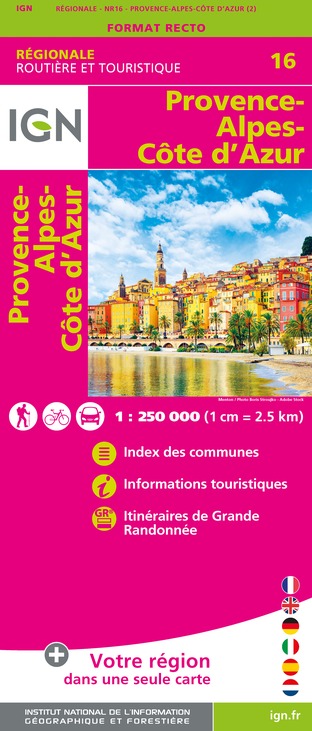
NR16 PROVENCE-ALPES-CÔTE D'AZUR
Editor : IGN
Collection : CARTES RÉGIONALES IGN
Scale : 1:250 000
6.80€
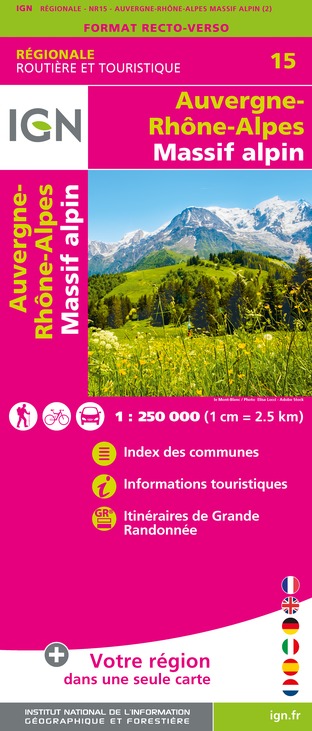
NR15 AUVERGNE-RHÔNE-ALPES RECTO/VERSO MASSIF ALPIN
Editor : IGN
Collection : CARTES RÉGIONALES IGN
Scale : 1:250 000
6.80€
NR14 AUVERGNE-RHÔNE-ALPES RECTO/VERSO MASSIF CENTRAL
Editor : IGN
Collection : CARTES RÉGIONALES IGN
Scale : 1:250 000
6.80€
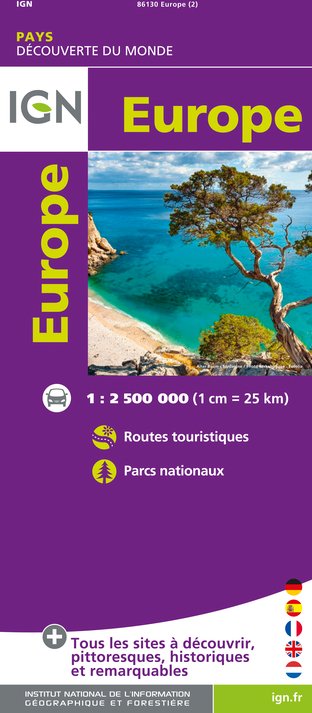
EUROPE
Editor : IGN
Collection : DÉCOUVERTE DES PAYS DU MONDE IGN
Scale : 1:2 500 000
7.00€

What to visit in LE CHALET SUISSE

See more suggestions
Relax in the parks of LE CHALET SUISSE.
See more suggestions
Where to eat in LE CHALET SUISSE

See more suggestions
Food enthusiasts will love LE CHALET SUISSE's restaurants.
See more suggestions

Where to sleep in LE CHALET SUISSE

See more suggestions
Stay in unique accommodations in LE CHALET SUISSE.
See more suggestions
Caution!
We have no information on the difficulty of this circuit. You may encounter some surprises along the way. Before you go, please feel free to inquire more and take all necessary precautions. Have a good trip! 🌳🥾