Alert

Alerts

To see around
See more
Open
Close
Show
Show
Show
Show
Show
Show
Show
Show
Show
Show
Show

Oups... It would appear that Cirkwi does not have permission to use your location.

Presentation
Description
Map
Steps
Ratings and reviews
See around

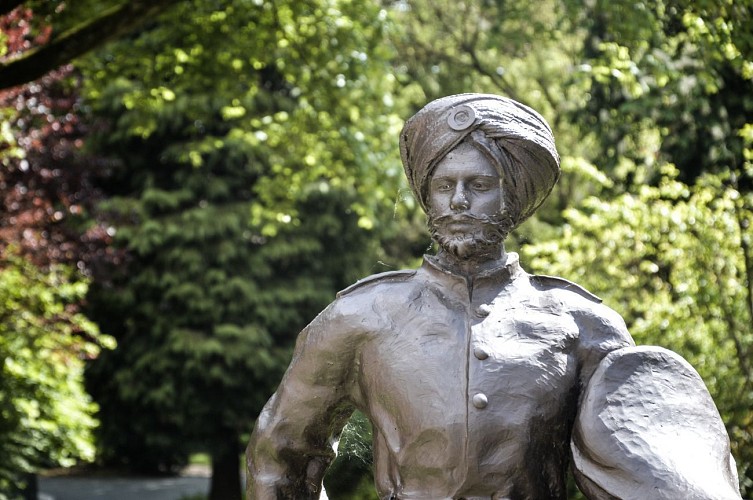
The statue rally : witnesses of the past

statue soldat écossais
Credit : Coquelicot Tourisme

Description

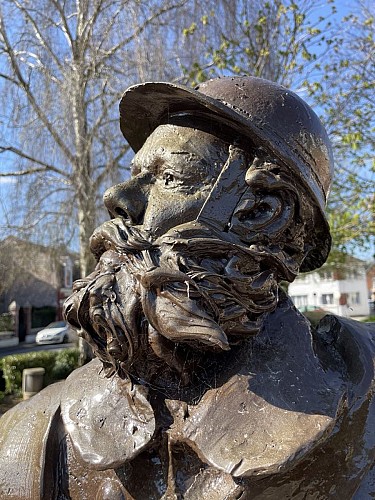
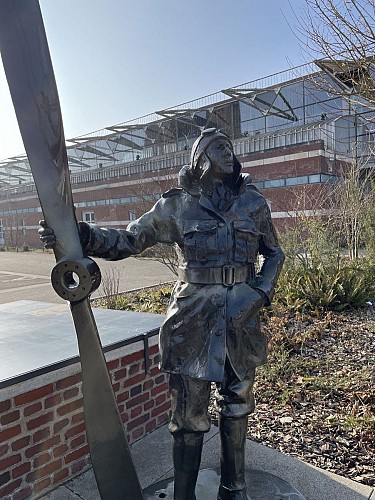
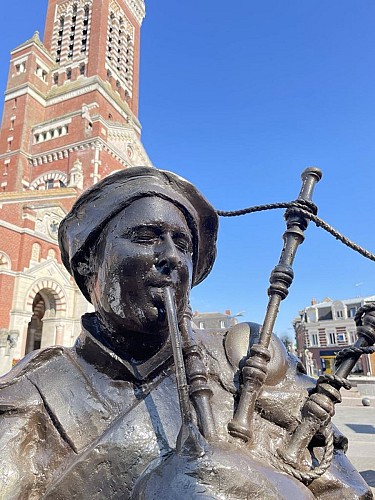
In Albert, the statues are not just works of art. They are silent but powerful witnesses to the tumult of the First World War. Each of them tells a unique story, a destiny shattered by the horros of the conflict. Their fixed gazes their postures marked by suffering, invite us on a journey into the past, where the echoes of battles still resonate. 

As visitors walk along this trail, they are swept away bu the stories etched in every detail : hope, pain , courage and tragedy. These statues depict portraits of lives turned upside down, fragments og humanity caught in the whirlwind of the war. They become witnesses of a bygone era, but to an indelible memory.

Each step of thisd tour is an open door to history. A journey that allows us to remeber, to pay tribute to those who lived through these chaotic moments. Bronze, a cold and tmiless material, is turned into a warm link between past and present, a memory etched in time. 

By walking along this path of memory, we become guardians of memories, bearers of history, and we understand that these statues are not simply monuments, but voices that, from the silence, whisper to us to never forget.

Are you ready to discover all these statues which are in different places in the town of Albert ?

Technical Information

Walking
Difficulty
Very easy
Duration
40mn (1d)
Dist.
2.3 km
Show more

Altimetric profile

Starting point

7 Avenue de la République , 80300   Albert
Lat : 50.00327Lng : 2.65242

Steps

image du object
3

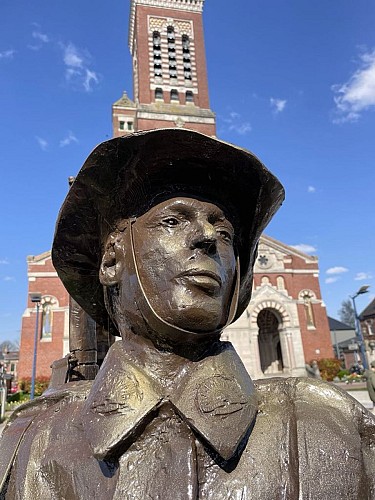
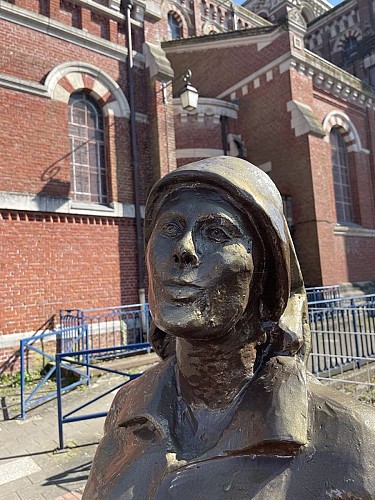
Stage 3 : The british officer

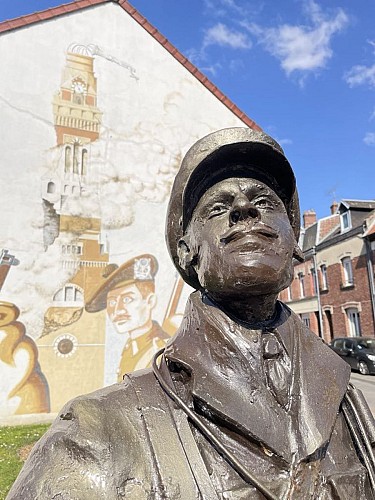
Now head to Rue Jeanne d'Harcourt to meet our next character !Admire the typical Art Deco facade of the Marché before turning left onto Delair street. Have you noticed this magnificent lion head ? Continue and take the first street on the right until you come to a beautiful fresco depicting the Virgin from our basilica of Notre-Dame de Brebières. Do you know its history ? It was bombed during the Great War, and its Virgin remained leaning horizontally for a very long time. All the british stationned in Albert, who were religious about death, said, "When the Virgin falls, the war will end!" This was indeed the case, as it fell in 1918 ! It's a lovely photo to take with the basilica painted on the fresco and the new basilica, rebuilt identically just behind it! Right in front of this moving fresco, you can see our third statue , the british officer ! Officers didn't have the easiest role either. They were often on the front lines, sharing the dangers with their soldiers. Yet they had to make strategic decisions under extremely difficult conditions. they needed a strong ability to boost the troops morale and demonstrate humanity in times of crisis.  This was the case with Captain Neville, buried in Carnoy-Mametz! English soldiers were madly fond of sports, and on July 1st 1916, an unprecedented incident took place : infantrymen launched an assault by kicking foot balls! An episode as crazy and incredible as this story can be ! Captain Neville improvised a football game in the middle of the war, encouraging his troops, whose morale was at rock bottom, to leave the trenches and kick the ball into the German trench! "The cannons will have done all the work. You won't need your rifles, the germans will be dead", the soldiers are sworn to. But the captain knows that it's wrong : night patrols have shown that the enemy trenches are intact. To boost his men's morale in the face of the machine guns, he gives them balls. One reads : "Grand European Final", "East Surreys versus Bavarians", and another : "No referee". Captain Neville set an example by kicking a ball, and he died, like many of his comrades. His men conquered the german trenches and brought back their balls, precious relics hailed after the battle. The press made him a hero, the embodiment of british sportsmanship. Today, many sports clubs come to pay tribute to him at his grave, 10 minutes away from Albert, by placing scraves of foot balls. 

14 Rue de Bordeaux 80300 Albert
- Office de Tourisme Pays du Coquelicot -
Consulter
image du object
10

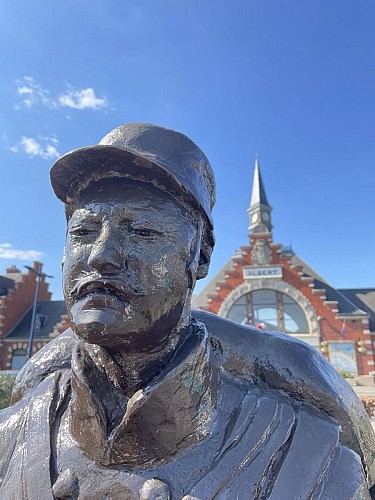
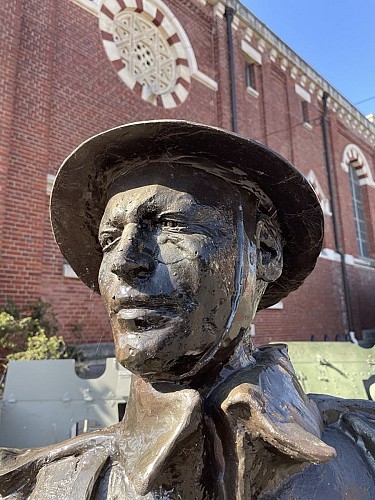
Stage 10 : The british soldier

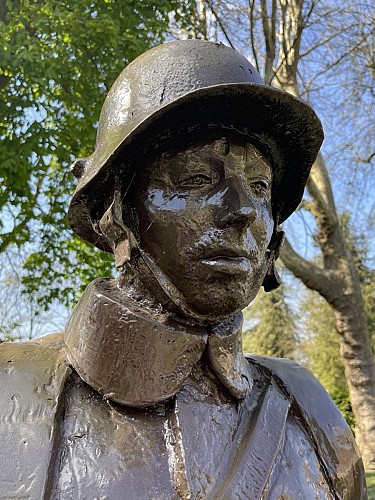
Wlakbehind the statue, have a proper look at the river Ancre, and head towards the bar "Les 3 Pigeons".Once there, turne left. Pass the basilica, just beyond you'll discover our last character, the british soldier.  The british soldier, "Tommy", wears a helmet on his head, the of which gives him the nickname "the fried egg", "the Brodie".Indeed, it serves for everything but protection ; it serves as a bowl and he can even shave with the water in it. It is equipped with trousers and a tunic with a closed collar, khaki color. The buttons are made of brass, representing the badge of the soldier's regiment and he wears a felt coat. This uniform was completed with calf bandages, which were not easy at all; they were wrapped around the feet and calves ; they had no boots. Trench foot developed when the foot was left to macerate for several days in cold, damp socks and shoes. The foot then became pale, clammy, swollen, numb and cold, often requiring amputation. Most soldiers wore their cartridge pouches slung across their chests. July 1st 1916, was the darkest day for the british army, with 20 000 soldiers killed. It was remembered for the scale of the human losses. These young men, full of hope, left their homes to defend our country, driven by a sense of duty and a spirit of camaraderie. There was no compulsort army ; they all enlisted voluntarily, often among brothers, friends, sports clubs, etc. Today, all these young soldiers are considered as heroes and every july 1st ceremonies are eld to honor them.  Your journey is completed. Our witnesses of the past still embody hope, pain, courage and tragedy today.These portraits of lives turned upside down, these fragments of humanity caught in the whirlwind of war, invite us to put the small worries of everyday life into perspective. They also become witnesses to a bygone era, but to an indelible memory. Each step of this tour is a gateway to history. A journey that allows us to remember and pay tribute to those who lived through these chaotic moments. Bronze, a cold and timeless material, thus becomes, a warm link between the past and the present. Like guardians of memory, transmitters of history, these statues are not simply monuments, but voices which, from the silence, whisper to us to never forget.  Thank you for letting them whisper once again, and if you want to learn more, we recommend the Musée Somme 1916, just behind the statue of the british soldier.Go down 10 meters underground and, thanks to scenes from life, immerse yourself in the stories of other characters. Then head to the battlefields of the Somme. 

2 Rue Anicet Godin 80300 Albert
- Office de Tourisme Pays du Coquelicot -
Consulter

Data author

Ratings and reviews

To see around
See more
Open
Close
Show
Show
Show
Show
Show
Show
Show
Show
Show
Show
Show
Caution!
We have no information on the difficulty of this circuit. You may encounter some surprises along the way. Before you go, please feel free to inquire more and take all necessary precautions. Have a good trip! 🌳🥾