Alert

Alerts

To see around
See more
Open
Close
Show
Show
Show
Show
Show
Show
Show
Show
Show
Show
Show

Oups... It would appear that Cirkwi does not have permission to use your location.

Presentation
Description
Map
Steps
Points of interest
Cirkwi brief's
Ratings and reviews
See around

The three châteaux by bike

The three châteaux by bike

Description

A 2-day loop to discover 3 majestic châteaux – Fontainebleau, Vaux-le-Vicomte and Blandy-les-Tours – the Fontainebleau Forest and the painters’ village of Barbizon.
Perfect for a weekend of bicycling just outside Paris.

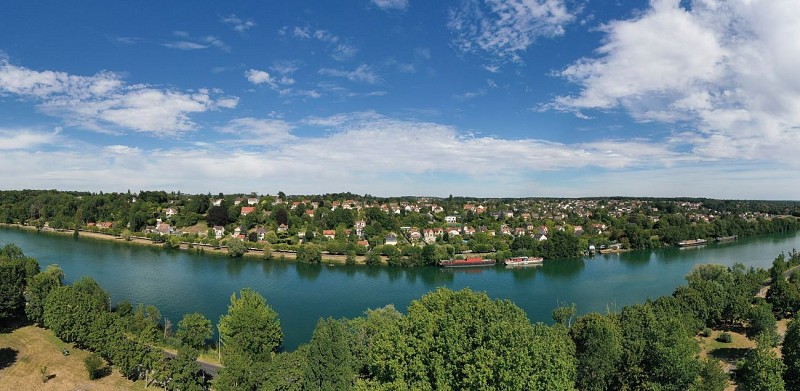
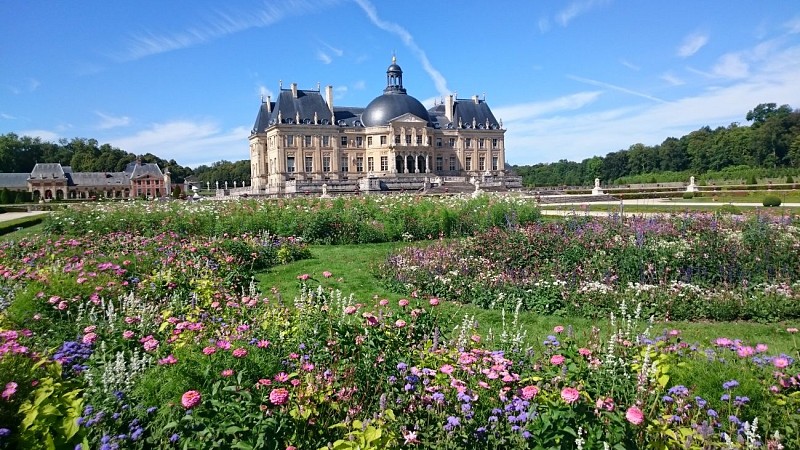
The northern section of this loop will lead you to three prestigious historic sites, from the banks of the Seine River on the edge of the Fontainebleau Forest to the Ancoeur Valley and its two fascinating châteaux: Blandy-les-Tours Castle with its medieval military architecture and sumptuous Vaux-le-Vicomte with its French formal garden. You’ll also admire picturesque villages and verdant landscapes of forests and fields.
However, please do be careful crossing certain heavily used roads, especially if cycling with children! This first northern section of the discovery loop is not recommended for children under 12 years of age.

The southern section of the “Three Châteaux Loop” will take you from Bois-le-Roi to Fontainebleau and its famous château, the former residence of French monarchs, for a sylvan excursion passing through the painters’ village of Barbizon before returning to Bois-le-Roi. The loop takes advantage of dedicated greenways passing through the forest for peaceful peddling.
This southern section is well suited to younger cyclists, but certain portions are not tarred/paved.

Technical Information

Racing biking
Difficulty
Not specified
Dist.
75 km
Show more

Altimetric profile

Starting point

3 3 rue des Sesçois , 77590   Bois-le-Roi
Lat : 48.475497Lng : 2.692617

Steps

image du object
3

Melun

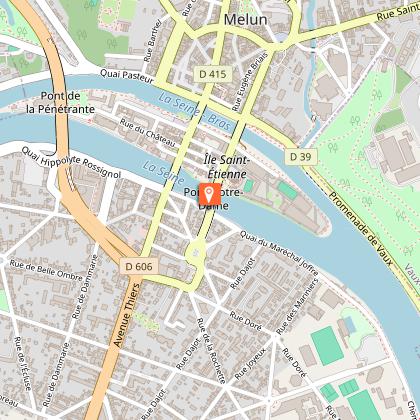
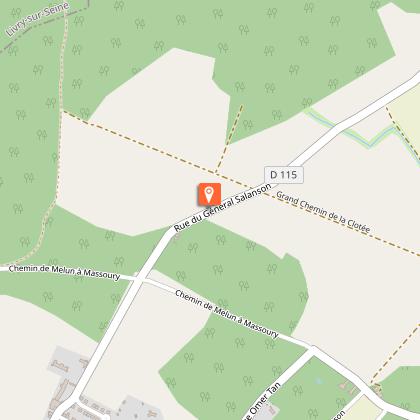
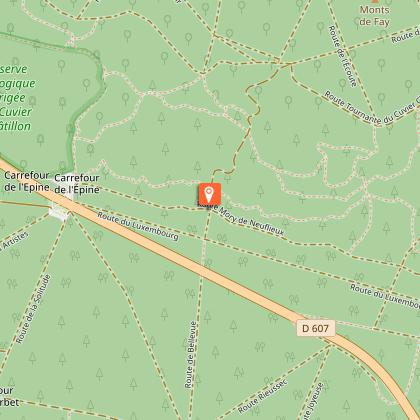
Traversez la Seine dès votre arrivée en ville. Empruntez le premier pont, en y accédant par la gauche juste avant le pont, via la rue Augereau. La traversée de Melun peut être dangereuse si vous n'êtes pas un cycliste averti. Dans ce cas, descendez de vélo pour effectuer les 800 mètres de ville qui vous attendent. Après le pont, au feu, continuez tout droit sur le boulevard Gambetta, au bout duquel se trouve la place Saint-Jean. Traversez cette place en diagonale, pour rejoindre la rue Bancel. Vous pouvez remonter en scelle. Après quelques dizaines de mètres, bifurquez à droite sur la rue des Trois Moulins. Passez deux feux, puis sous le pont de la D605. Juste après, prendre à gauche à la fourche pour monter la rue des Trois Moulins. A l'issue de cette petite montée, longez le mur d'enceinte de la propriété pour rejoindre légèrement sur la droite, juste avant le panneau d’entrée dans Rubelles, la rue de Praslin, en direction de Maincy. Puis, vous retrouvez en prenant à droite, la rue des Trois Moulins. Vous évoluez désormais le long de champs et de bois. Après la dernière habitation, partez en forêt grâce au sentier en ligne droite, que vous rejoignez en traversant la route dans la boucle du virage, juste avant un pont. Attention à la traversée de la route au niveau du virage, la visibilité est réduite. A la première fourche, prenez le sentier sur la droite. Quelques dizaines de mètres plus loin, vous débouchez dans un champ, via un chemin enherbé, puis sur la D82E2. Empruntez cette route par la gauche. Ici une légère côte vous attend, mais pas besoin d'être maillot jaune, vous allez survivre. Des habitations surgissent dans le paysage, dépassez-en quelques-unes puis tournez à droite sur le chemin des Temps perdus.

- Seine et Marne Attractivité -
Consulter
image du object
10

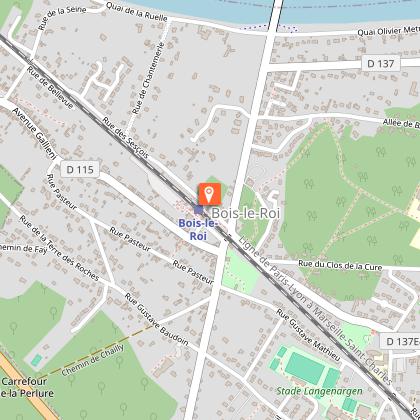
Bois-Le-Roi : bords de Seine et île de loisirs

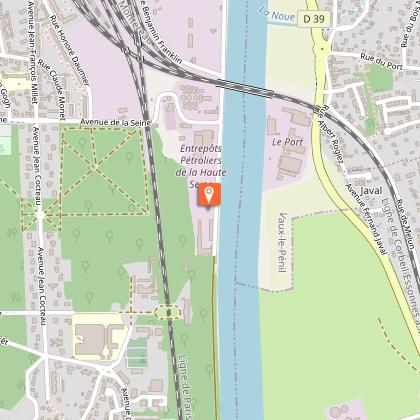
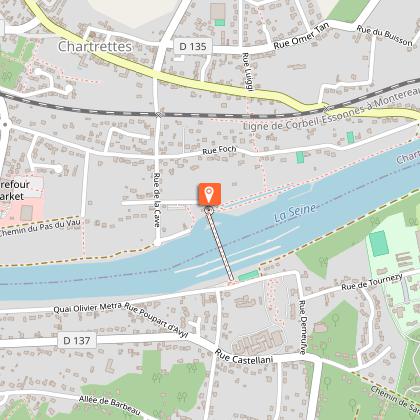
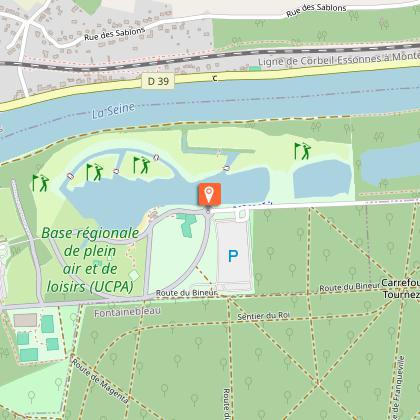
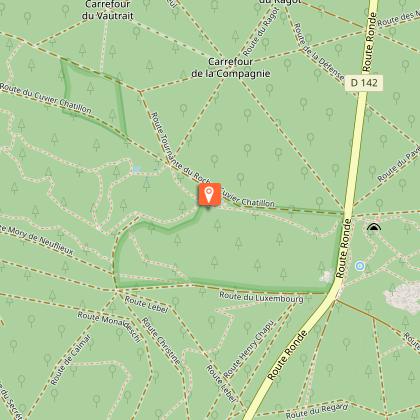
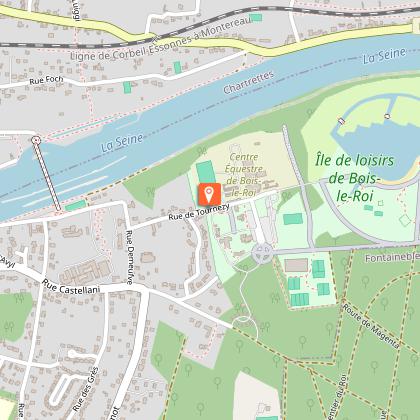
Empruntez la rampe qui tourne pour monter sur la passerelle sur le barrage et traversez la Seine. Attention, la passerelle sur le barrage est assez étroite et le sol peut être glissant par temps de pluie, alors n'hésitez pas à mettre pied à terre pour traverser. Une fois traversée la Seine, si vous souhaitez rejoindre la gare de Bois-le Roi, prenez à droite le quai Olivier Métra et continuez jusqu'au pont. Au niveau du pont, empruntez le chemin qui passe sous le pont en contrebas du quai. N'hésitez pas à descendre de votre vélo car le chemin est assez pentu. Passez sous le pont puis remontez juste après, sur le quai de la Ruelle. Après quelques dizaines de mètres, tournez à gauche dans la rue Chantemerle qui monte. Vous pourrez rejoindre la gare en tournant à gauche en haut de la rue Chantemerle. Après le barrage, si vous souhaitez poursuivre vers la partie Sud de ce circuit, pour rejoindre Fontainebleau puis Barbizon et revenir à la gare de Bois le Roi (circuit 1 jour), prenez à gauche la rue de l'Ile Saint-Pierre sur quelques dizaines de mètres. Au bout de la rue, prenez à droite la rue Demeufve qui monte légèrement puis tout de suite gauche la rue de Tournezy. Vous entrez dans l'île de loisirs de Bois-le-Roi : un très joli lieu propice à une pause baignade (fermé la nuit).Dans l'île de loisirs, continuez tout droit et dépassez l'accueil et le club équestre. Avant la baignade, empruntez sur votre droite la route goudronnée qui tourne en arc de cercle. A la fin de cette route, prenez à droite au rond-point pour emprunter à nouveau une grande route goudronnée. Continuez tout droit sur cette route pour sortir du site.

- Seine et Marne Attractivité -
Consulter
image du object
20

Vers Bois-le-Roi

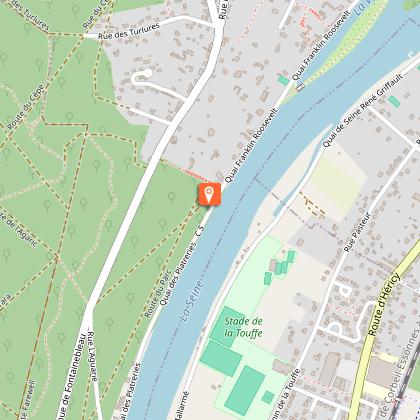
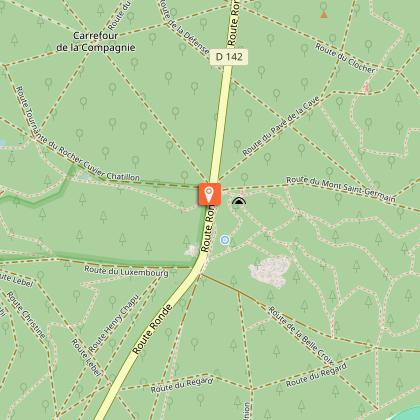
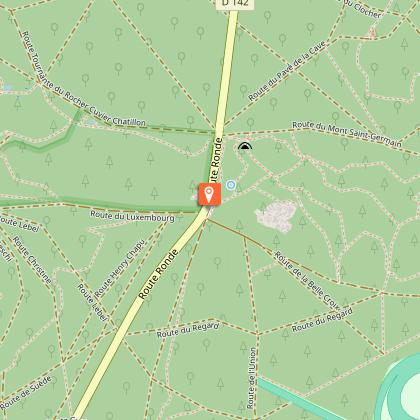
Vous débouchez sur un grand parking enherbé et ensablé. Traversez-le en diagonale pour rejoindre la Route du Luxembourg, une descente un peu raide sur une petite portion en gravillons. Si vous entendez le speaker de l’hippodrome, c’est que vous faites bonne route. Après l’hippodrome, en approchant d'une clairière, empruntez en bifurquant légèrement sur la gauche la Route du Sport, qui passe derrière un parking. Au bout de la route du Sport, prenez ensuite à droite la Route du Mont St Germain. Au bout de cette route, traversez de l’autre côté de la D606. Attention, soyez très prudent en traversant cette départementale très passagère. De l'autre côté de la route, poursuivez sur quelques mètres tout droit puis tournez à la 1ère à gauche sur la route de la Deuxième Tête qui vous mène au bout sur la route de la Butte St Louis. Au 1er carrefour, prenez à droite sur la route Victor où les coucous gris vous accompagneront. Au bout, prenez à gauche sur la route des Ventes Bouchard. Plus loin, tournez à la deuxième à droite sur la route des Larmières. Vous débouchez sur l’ancienne route de Bourgogne, que vous traversez, avec prudence, sur le passage piéton. Poursuivez sur la piste cyclable sur la gauche pour rejoindre Bois le Roi. Au premier croisement, continuez tout droit sur la piste cyclable. Au rond-point, prenez à droite l’avenue de la Forêt. Continuez toujours tout droit dans cette rue jusqu’au passage sous la voie ferrée. La gare de Bois-le-Roi n’est pas loin.

- Seine et Marne Attractivité -
Consulter

Points of interest
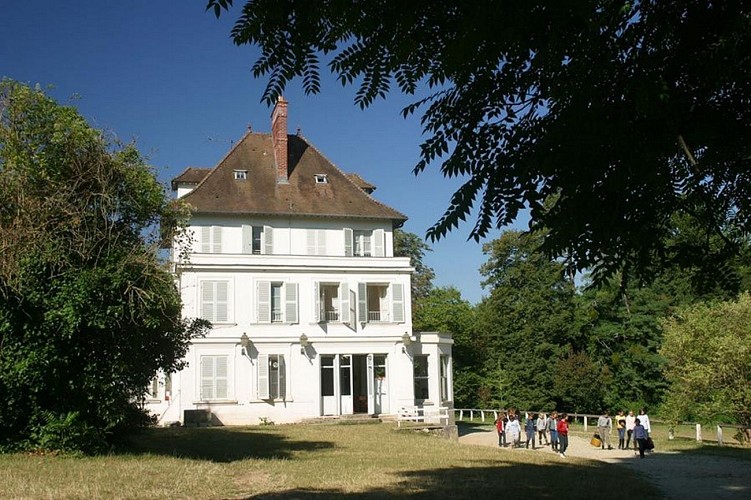
image du object

Centre d'hébergement de l'île de loisirs de Bois-le-Roi

Le centre d'hébergement de l'île de loisirs de Bois-le-Roi dispose de 166 lits répartis en trois bâtiments et de 73 lits en roulottes. "Le château" - hébergement de groupes ou de stages sportifs de 44 places en chambres multiples. Labellisé "Accueil vélo"Cette ancienne demeure de la famille Félix Potin a du caractère. Sa façade nord donne vers la Seine et la grande carrière d'équitation. Le château comporte des chambres de 3 à 9 lits au rez-de-chaussée et au premier étage. Les sanitaires sont situés sur les paliers des chambres. Le rez-de-chaussée est complété par trois salles de 40 à 100 m² , dédiées aux scolaires, à la détente ou aux réunions. "La forêt" - hébergement de groupes ou de stages sportifs de 56 places en chambres multiples. Ce bâtiment est situé à proximité du restaurant, du côté de la forêt de Fontainebleau. Il comporte 8 chambres de 6 lits (2 lits à étage et 2 lits en mezzanine) et 4 chambres de 2 lits pour l'encadrement. Les salles de bain homme et femme comportent chacune 4 douches et 3 WC. Le + développement durable : l'eau chaude des sanitaires est obtenue à partir de panneaux solaires "Les abeilles" - hébergement de groupes ou de stages sportifs de 66 places en chambres multiples. Au rez-de-chaussée ce bâtiment comporte 14 chambres (1 de trois lits et 13 de 4 lits). Ces chambres proposent 2 ou 3 lits bas et 1 lit en mezzanine. Chaque chambre comporte une salle de bain avec douche et lavabo. Les WC sont répartis dans les couloirs. Au premier étage 1 chambre de 11 lits convient à l'accueil de groupes ou de randonneurs. Ce bâtiment comporte un hall avec espace muni d'une cheminée et une salle de réunion de 48 m².  

Rue de Tournezy 77590 Bois-le-Roi
- Fontainebleau Tourisme -
Consulter
image du object

Palace of Fontainebleau

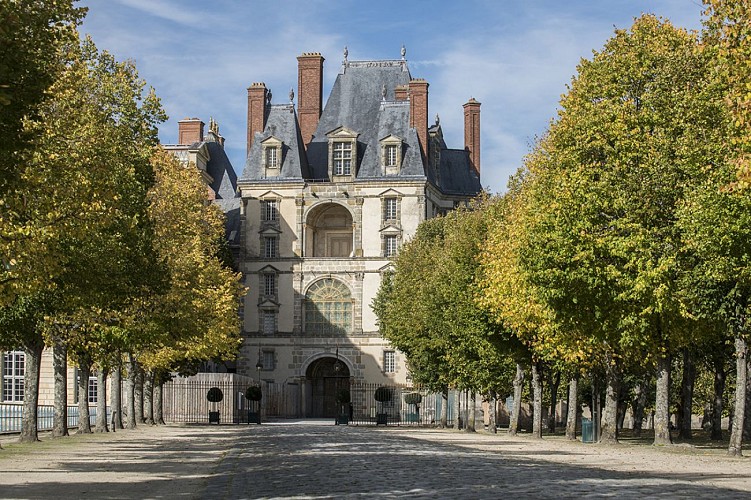
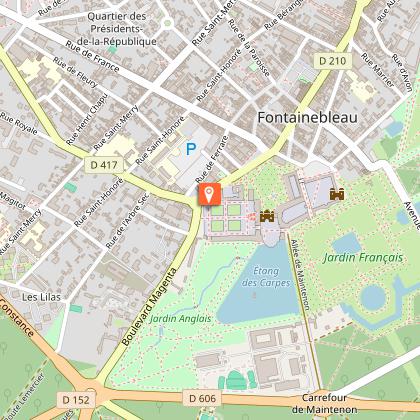
The Château de Fontainebleau is a big part of French history! This vast building, in both classical and Renaissance style, is not only famous for witnessing Napoleon's imperial adventure.From the royal charter of 1137 to the fall of the Second Empire in 1870, the Palace of Fontainebleau saw the lives of the greatest French sovereigns from day to day. The original medieval fortress was replaced by a Renaissance palace under the guiding hand of Francois I. At that time, two Italian artists, Primaticcio and Il Rosso vied in talent and founded the first School of Fontainebleau. The Galerie François I, which leads from the royal apartments to the chapel of the Convent of the Holy Trinity, is most original with its décor of frescoes, stucco and carved wood in praise of François I. The Ballroom was completed at the time of the last Valois kings, under Primaticcio’s direction. With Henri IV, the new Bourbon dynasty took over the palace, and built new rooms with interior decoration placed in the hands of the artists of the second School of Fontainebleau. Louis XIII completed the work started by his father. Under the Sun King Fontainebleau continued to be the royal family home, and the Grand Dauphin was born there in 1661. The king’s nieces were married from Fontainebleau, and the Edict of Nantes was revoked there in 1685. Louis XV and Louis XVI would spend the autumn there and initiated new, large scale building works and interior doing-ups. After the French Revolution, Napoleon I found the palace completely emptied of its furniture but intact. He undertook to refurnish the apartments and brought the palace back to its former glory as the home of the sovereign. Napoleon Bonaparte spent his last days there before his abdication in 1814 and departure for the Elba. Louis-Philippe was the first sovereign to order a complete restoration of Fontainebleau. The restoration of the Empire in 1852 gave renewed importance to the palace, and Napoleon III became strongly attached to this home, staying there regularly with his court. Housed in the Louis XV wing, the Napoleon I museum is dedicated to the Emperor and his family, with a large collection of objects from his everyday life, weapons used in military campaigns and gifts he received. The Chinese museum, created by Empress Eugenie, displays works of art from the Far East. The Jeu de Paume court, thought to be the oldest of the three surviving in France, is open to the public with demonstrations and introductory games. Le Nôtre's French gardens, the Queen’s English garden with its Fountain of Diana, the hedge maze and the Cour des Adieux are open to the public all year round. Boat excursions on the Etang aux Carpes or horse-drawn carriage rides are available. The Domain of the Fontainebleau Palace is inscribed at the UNESCO Humanity World Heritage. There is a little train going around the gardens during the touristic season.

Place du Général de Gaulle 77300 Fontainebleau
- Seine et Marne Attractivité -
Consulter
image du object

Fontainebleau palace gardens

In the 130 hectacres of garden , you can see the evolution of the art of the garden illustrated by the Great Flowerbed ("Grand Parterre") , French-style garden designed by Le Notre, the Carp Pond, the English garden, created under the first Empire, the Garden of Diana ("La jardin de Diane"), the Park , the 1200m canal ... Remarkable trees, Diana's Fountain, the Park, exotic essences, the English river ...These royal and imperial gardens are witnesses to the evolution of taste since the 16th until the 19th century in terms of landscaping. The Renaissance gardens created for Francis Ist and Henry IVth were mainly based upon a system of draining canals which started from the different wells and the carp pond and lead to the great canal. The Grand Parterre (Huge flowerbed) was created later in a very humid part situated between the carp pond and the canal. Under the reign of Louis XIVth, this "parterre" (the biggest one in Europe) will adopt a very classical appearance du to André Le Nôtre who conceived a real perspective leading from the pond to the canal with the fountain of "Tibre" in the centre of the parterre. This royal parterre reaches from the Maintenon alley to the cascades, from the ballroom and the quarter Henry IVth to the side perspective of "Saut du Loup" (the wolf hop). The Diana Garden is the former garden of the Queen. Its name comes from the fountain (17th century) which occupies its centre. This garden is limited by the "Galerie des Cerfs" built under Henry IVth (Deer Gallery), the small apartments (Louis XVIth), the Trinity Chapel, the Real Tennis court and separated from the town by a wall with some openings. The English garden was created in its present shape under the reign of Napoleon Ist. It is organised around an artificial romantic creek. Its valley like landscape integrates some sculptures and rare species of trees and plants. The carp pond, which dates back to the Middle Ages, is bordering this garden. In the centre of the pond the architect Louis Le Vau constructed a romantic pavilion under Louis XIVth (1662).

Place du Général de Gaulle 77300 Fontainebleau
- Fontainebleau Tourisme -
Consulter
image du object

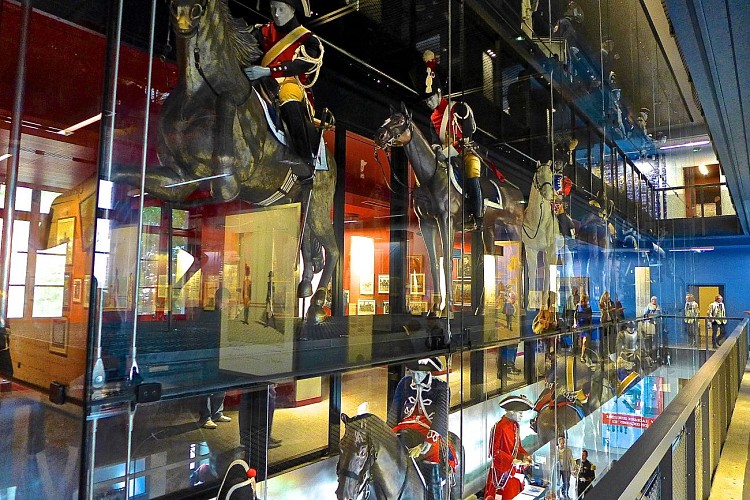
National Gendarmerie Museum

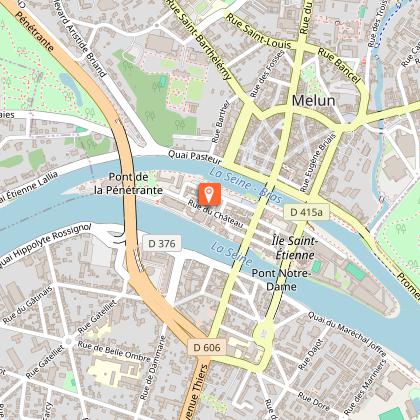
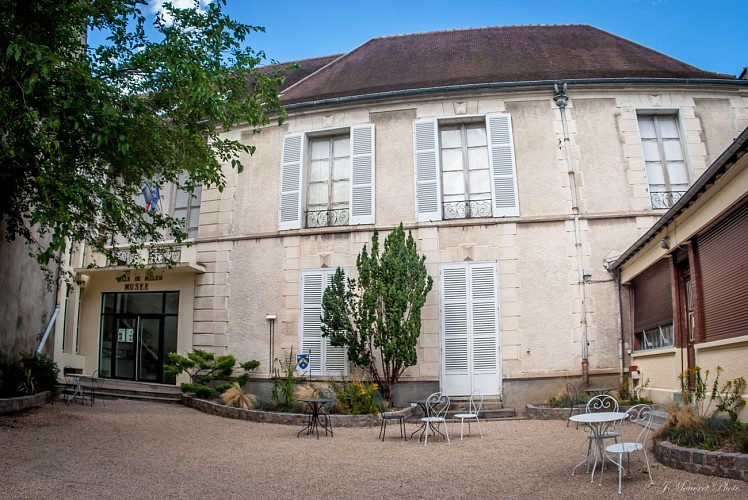
The MGN presents the history of the gendarmerie through the history of France. 2,000 unusual and exceptional objects have been selected to illustrate the highlights and missions of this unique army corps in the world.In Melun, the MGN was housed in a former barracks building that had been completely renovated. It opened its doors on October 10, 2015 and was inaugurated by the Minister of the Interior on December 17 of the same year. A quality setting Marked by modern architecture, the MGN displays a huge flaming grenade over 5 meters high forming the entrance to this museum of France and reveals many other treasures inside. Its resolutely immersive route extends over nearly 1,200m2 and is organized around the largest suspended display case in Europe, a true technical feat of 18 meters long and 8.5 meters high, which highlights the history of the gendarmerie throughout the history of France. A unique collection Of the 30,000 pieces in the collection, the museum has selected 2,000 unusual and exceptional objects to illustrate the highlights and missions of this unique army corps. Investigation seals, carnival masks, canteen barrels, bicycles, watercolors and many other unexpected objects sit alongside uniforms, weapons and headdresses in the museum's display cases to immerse the visitor in the history of an institution that has its origins in the Middle Ages and today reveals all its modernity. The history of France through the history of the gendarmerie Both chronological and thematic, the museum's tour traces the evolution of the gendarmerie through the eras and successive regimes, from the Middle Ages to the present day. The richness of the collection allows the history of this institution to be contextualized within the history of France, without forgetting to evoke all its modernity and its openness to the international. Many original pieces immerse the visitor in the great affairs of the history of France such as the arrest of the Bonnot gang, the Dominici affair, the heroic action of the dog Gamin and many other adventures. A museum for young and old Multimedia and sound ambiances lead visitors to the heart of an interactive, fun, unique and adapted experience, accessible to all. The MGN also includes: - a 70m2 shop offering books and souvenirs - a documentary resource centre accessible by appointment - a photo library of over 10,000 photos available by appointment - a 60-seat conference room - a cultural events room - a 200m2 temporary exhibition room

Avenue du 13ème Dragons (Parking gratuit au 1-3 rue Émile Leclerc) 77000 Melun
- Office de Tourisme de Melun Val de Seine -
Consulter
image du object

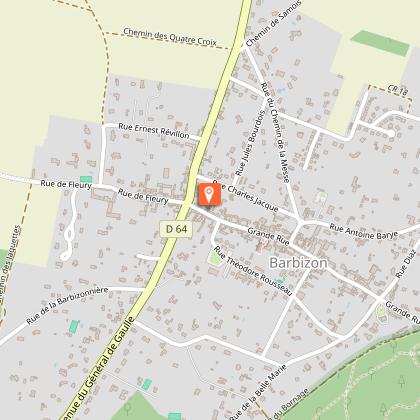
Barbizon school museum: the Ganne Inn

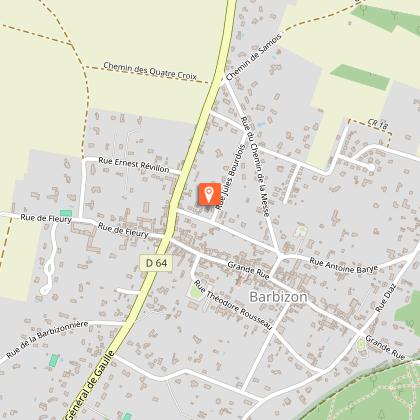
It is difficult to know precisely when the inn was built. Before 1820, the only inns in the region were at Chailly. Alfred Sensier, friend of Théodore Rousseau and a historian of Barbizon, gives the date of 1824.A return to the time of the painters of the forest of Fontainebleau. The museum of the school of Barbizon is spread over two sites : the Ganne Auberge and the Workshop-House of Theodore Rousseau. One is the principal historical way-points of the artists who came to work in the forest of Fontainebleau (1830-1875). The other is the Workshop where the famous landscape artist Theodore Rousseau lived from 1847 until his death in 1867. The Exhibition Rooms of the Auberge restore the friendly atmosphere so dear to the Peint'à Ganne, thanks to the furniture and decors and through a hundred different works (Jean-François Millet , Narcisse Diaz de la Peña , Constant Troyon , Rosa Bonheur...). Luck has had it that the newspaper “L’Illustration” published a full report in 1853, illustrated with engravings, showing the pictorial treasures hidden inside this modest inn, the major part of which has come miraculously down to us. The very serious Revue des Arts published in 1854 a guided tour of the three ground floor rooms and detailed the decorations. Has have helped us reconstruct the rooms at the inn at its most brilliant period. The painted furniture and panels and the way the rooms are presented are a good representation of the painters’ inn. The restoration of the upper floor started in 1990, has revealed decoration painted or drawn by the artists when staying in the rooms. Three exhibits show the work of the Barbizon School with landscape and animal themes. A very attractive audiovisual presentation takes you back to the time of the painters of the Barbizon School Leaving behind them Parisian studios and academicism, the "painted in Ganne" came together in the Auberge de Barbizon to paint "sur le motif" and for very bohemian parties.

92 Grande rue 77630 Barbizon
- Seine et Marne Attractivité -
Consulter
image du object

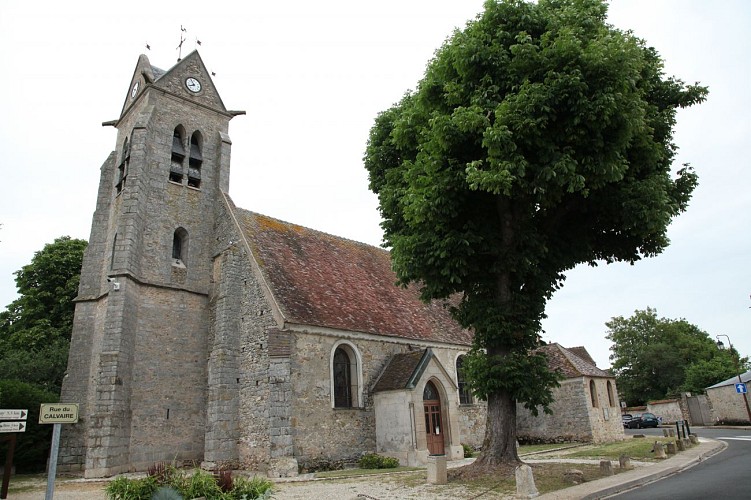
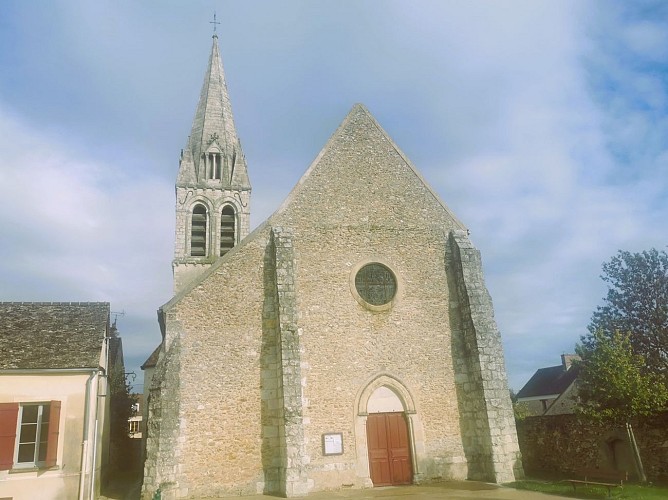
Église Saint-Germain

De plan rectangulaire simple à chevet droit, l’église Saint-Germain à Sivry-Courtry ne comporte ni bas-côté, ni transept. L’édifice est restauré en 1640, en 1881 puis en 1983.Saint Germain est le saint patron de l’église de Sivry. Évêque d’Auxerre en 418 et délégué du pape Célestin 1er, saint Germain est envoyé en Angleterre pour y combattre la doctrine du moine Pélage, qui niait le péché originel. Il participe au développement de l’Église de Grande-Bretagne et consacre évêque saint Patrick, l’apôtre des Irlandais. Il meurt à Ravenne en 448. De plan rectangulaire simple à chevet droit, l'Église ne comporte ni bas-côté, ni transept. La voûte en forme de bateau renversé a la particularité d'être traversée de part en part de poutres en bois peint. Restaurées au 20e siècle, elles ont retrouvé leur couleur bleue d'origine, couleur certainement dédiée à sainte Marie. A l'intérieur, l'édifice présente des voûtes d'ogives sans nervures. L’ édifice est restauré en 1640, en 1881 et en 1983. De construction plus moderne, le porche sud date probablement du 19e siècle. Le clocher d’une hauteur de 22 mètres a une base carrée et se termine par une couverture à quatre pignons flanqués de gargouilles et surmontés chacun par une originale girouette-fanion. Chaque pignon est par ailleurs agrémenté d’une horloge. Sur chaque côté du clocher, deux séries de deux abat-son en bois et ardoises renvoient le son de la cloche vers le sol. L'Église abrite de nombreux objets protégés au titre des Monuments Historiques : tableau, dalle funéraire...

rue de la Mairie 77115 Sivry-Courtry
- Communauté de Communes Brie des Rivières et Châteaux -
Consulter
image du object

The Val d'Ancoeur : a protected site

The history begins like a fairy tale : "Once upon a time the Val d'Ancoeur..." with its castles, its legends and the 3 names of this small stream, which has become a myth, that from Ancoeur becomes Ancoeuil to end as the Almont... before flowing into the Seine.(Extract from the website of the Departmental Archives) The Ancoeur stream is a watercourse that has its source in the municipality of Grandpuits-Bailly-Carrois at an altitude of 125 m. It then takes the name of "Ancoeuil" in the municipality of Moisenay and joins, after a journey of 25 km from its source, the Bassin de la Poële of the Vaux-le-Vicomte castle. At the exit of this basin, it flows into the "Almont" 5 km downstream into the Seine at Melun. It constitutes, with its tributaries, a catchment area of approximately 306 km². The Ancoeur stream flows through the municipalities of Grandpuits-Bailly-Carrois, La Chapelle-Gauthier, Bréau, Bombon, Saint-Méry, Blandy-les-Tours, Moisenay, Maincy and Melun. Classified as an "Exceptional Site" since October 14, 1985 by the Regional and Inter-Departmental Directorate for the Environment and Energy of Île-de-France, the Ancoeur stream offers enchanting landscapes. The classified site covers 1,861 hectares. Along the watercourses — the Almont, the Ancoeuil (or Ancueil) and then the Ancoeur — the Val d'Ancoeur unfolds its panoramas : villages, forests, castles (Vaux-le-Vicomte, Blandy-Les-Tours...) but also, at the confluence of the Seine, urbanised areas. "The Ancoeur is a very low-flow river, highly irregular and regularly at risk of running dry. The annual runoff depth within its catchment area is 96 millimeters annually, which is among the lowest in France, more than three times below the national average, and above all well below the average for the entire Seine basin (approximately 240 millimeters). The constant flow of the Ancoeur has, however, for centuries made it possible to operate the many mills. The large number of hydraulic structures, such as canals, basins and ponds, small reservoirs and mills, give the landscape a particular identity centred on water and its management. This is to be understood in relation to the wet character of the land." A place of life, production and creation, the Val d'Ancoeur brings together major heritage sites across the entire territory : churches and works of art dating back to the 12th century, castles, farms, mills, rural dwellings, small rural heritage... It has also become a subject of reflection and aesthetic admiration thanks to the artists who have captured its beauty and interpreted it in their own way. - The Ancueil ("Anqueil" in its 17th-century spelling) gave its name for example to a majestic statue in the park of Vaux-le-Vicomte, located to the left of all the grottos (1659–1662), facing the Tibre installed to the right in 1659. - The painter Paul Cézanne immortalised the bridge called Pont de Maincy in 1879 (now held at the Musée d'Orsay). - And the sculptor Auguste Rodin dedicated magnificent drawings to the collegiate church of Champeaux (1890–1917), as testimony to his admiration. For several years, the Communauté de Communes Brie des Rivières et Châteaux and the Communauté d'Agglomération Melun Val de Seine have joined forces to develop a Landscape Plan, revealing the assets of the Val d'Ancoeur. An opportunity for the protection and enhancement of the landscape heritage. The perimeter, which is based on the classified site, encompasses 11 municipalities across an area of approximately 56 km². It extends over a straight-line distance of nearly 17 km.

- Communauté de Communes Brie des Rivières et Châteaux -
Consulter
image du object

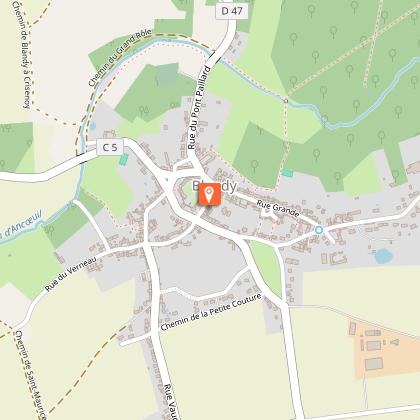
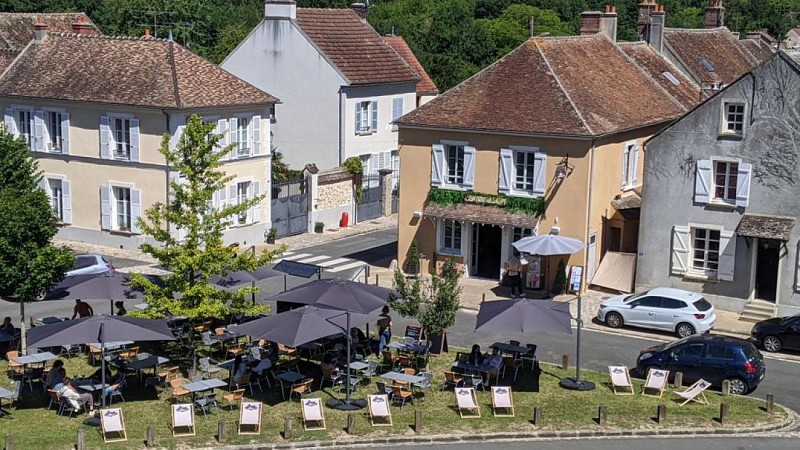
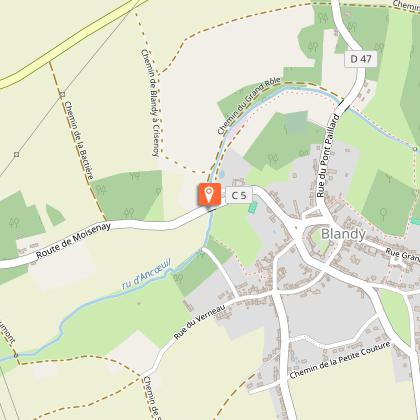
Blandy-les-Tours

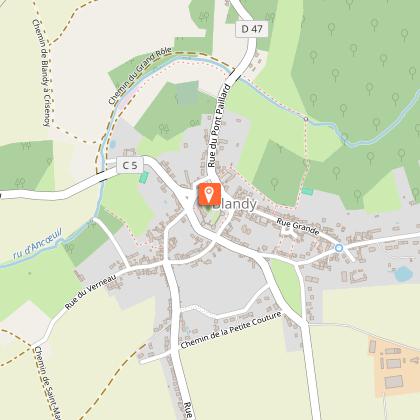
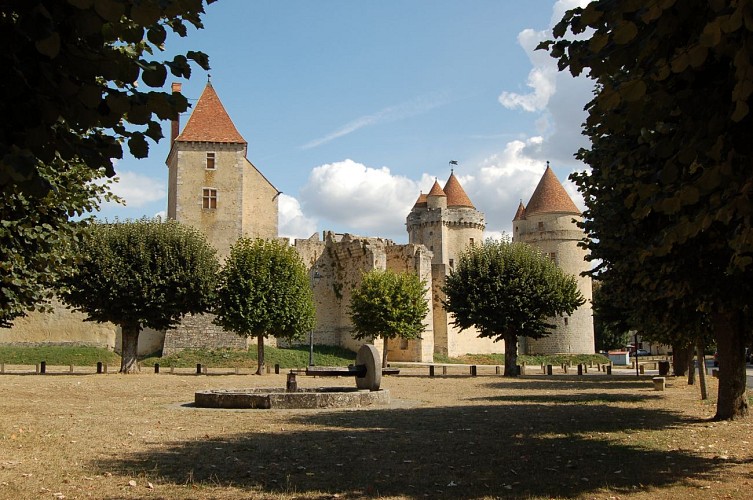
Entre les méandres du ru d'Ancœur et les remparts d'un château fort ressurgi du Moyen Âge, Blandy-les-Tours conjugue patrimoine exceptionnel et douceur des paysages briards.#AUX ORIGINES DE BLANDY Occupé depuis la Préhistoire, le territoire de Blandy conserve les traces d’une présence humaine ancienne découverte dans ses environs. Mentionné pour la première fois en 1206 dans les textes, le village appartient alors aux puissants vicomtes de Melun. Mais l’histoire de Blandy est bien plus ancienne. Son nom trouve ses origines à l’époque gallo-romaine, issu du latin "Blandiacum", il désigne le "domaine de Blandus" ou "Blandius", sans doute un riche propriétaire terrien établi sur ces terres. Longtemps appelé "Blandy-en-Brie", la commune adopte officieusement le nom de "Blandy-les-Tours" dès 1882. Mais c'est seulement le 25 février 1912 que le maire M. Mercier adresse une demande officielle de décret présidentiel pour officialiser ce nom. Les habitants de Blandy-les-Tours sont appelés les Blandynois et Blandynoises. Le blason de Blandy-les-Tours reprend l'héritage des vicomtes de Melun, seigneurs historiques du château. Il représente les armes de la famille de Chailly, premiers seigneurs connus, et intègre des éléments évoquant la puissance féodale du lieu, tours crénelées rappelant la forteresse qui donna son second nom à la commune. #MÉMOIRE DU PASSÉ > L’histoire du village est marquée par une journée où l’héroïsme et la tragédie se confondent. Durant l’Occupation, le café des « Cent Tickets », situé rue du Verneau, sert de lieu de rassemblement clandestin pour la Résistance locale. Le 22 août 1944, la Gestapo découvre la cachette et lance un assaut soudain et violent. Surpris par les premiers tirs, Maurice Salingros comprend immédiatement que la situation devient critique. Afin de permettre à ses camarades de s’échapper, il se précipite vers l’entrée du bâtiment et s’interpose face aux soldats allemands. Il est abattu sur place, mais son geste retarde l’ennemi et permet aux résistants de fuir par les jardins. Cette fuite provoque une réaction immédiate des forces allemandes, qui décident de se venger en rassemblant tous les hommes du village pour une exécution de masse. C’est alors que le professeur Raoul Kourilsky, médecin installé à Blandy, intervient. Maîtrisant l’allemand, il s’avance face aux soldats et engage des négociations directement avec l’officier. Après de longues heures de tension, il parvient à obtenir la libération des otages et évite ainsi un massacre de la population masculine du village. Une rue de Blandy porte aujourd’hui son nom en mémoire de son action. > La place du Colombier rappelle la présence passée d’un colombier seigneurial, édifice réservé autrefois aux seigneurs et symbole de leur autorité. Utilisé pour l’élevage des pigeons, il constituait une ressource alimentaire et agricole importante. Aujourd’hui réaménagée, la place conserve la mémoire de ce patrimoine rural au cœur du village. #VISAGES D’HISTOIRE > Une légende raconte qu’en 1439, Marie d’Harcourt, dernière héritière des d’Harcourt, aurait sauté du donjon du château de Blandy-les-Tours pour échapper au terrible chevalier Erard de Montargis, qui voulait l’épouser de force. Elle termina miraculeusement sa chute sur un épais tapis d’herbe et épousa le preux chevalier Jean de Dunois venu la secourir. > Né à Blandy-les-Tours le 14 mars 1625 Daniel Gittard est élève du célèbre Louis Le Vau, et sera par la suite élevé au rang d'architecte du roi Louis XIV et est devenu en 1671 l’un des tout premiers membres de la prestigieuse Académie royale d'architecture. Si sa famille est restée ancrée à Blandy, on lui doit des œuvres majeures à Paris et en France, il a également dirigé les travaux de la monumentale église Saint-Sulpice, dessiné le Grand Degré dans le parc du château de Chantilly ou encore conçu le célèbre Hôtel Lully. > Au 16e siècle, Jacqueline de Rohan, marquise de Rothelin et propriétaire du château, occupe une place importante dans l’histoire du château de la commune. Figure noble influente et engagée dans les débats religieux de son époque, elle est connue pour son soutien au protestantisme. > Le village conserve également la mémoire du général Laurent Schobert (1763–1846), officier de l’époque napoléonienne, fait baron d’Empire. Après une carrière militaire marquée par les conflits de la Révolution et de l’Empire, il choisit de se retirer à Blandy. Sa demeure est encore visible rue Grande et participe à l’identité patrimoniale du bourg. > À la fin du 19e siècle, le village attire et inspire les frères jumeaux Eugène et Alexis Delahogue, peintres orientalistes et paysagistes. Le village de Blandy-les-Tours devient pour eux un lieu de résidence et d’inspiration. Ils peignent notamment un tableau représentant le point Paillard et un autre le ru d’Ancoeur. > Michel Lévy, sculpteur contemporain de renommée internationale a choisi d'établir sa vie et ses ateliers au sein du Domaine de Chaunoy, sur le territoire de la commune. Ce célèbre sculpteur et plasticien français expose ses œuvres dans de nombreuses galeries à travers le monde. Il a notamment offert la statue du Joueur de Flûte à la commune. > Henri Hanneton est une figure majeure de la valorisation du patrimoine du village au 20e siècle. À partir des années 1980, il consacre une grande partie de son temps à la recherche historique sur le château et le village, en explorant les archives et en recueillant de nombreuses informations sur le passé local. Il est notamment à l’origine de la création de l’association des « Amis du château fort de Blandy », qui a joué un rôle essentiel dans la mise en valeur et la restauration du site. Grâce à son engagement, le château est mieux connu du public et son histoire est davantage diffusée. > Blandy compte également plusieurs écrivains contemporains. Philippe Kourilsky, biologiste de renom, ancien directeur général de l'Institut Pasteur et professeur honoraire au Collège de France, est aussi un essayiste engagé sur la science et l'éthique (Le Manifeste de l'altruisme, Mes années Pasteur). Son frère Olivier, néphrologue et professeur honoraire, signe sous le pseudonyme Docteur K des romans policiers primés mêlant intrigue et milieu hospitalier (Meurtre pour de bonnes raisons, Prix Littré 2010). Henri Germain, alias Jean-Zéphir Idoux, propose quant à lui une œuvre plus intimiste, mêlant poésie et nouvelles inspirées par la nature et les émotions humaines. Enfin, Guy Bénichou explore la mémoire et l'histoire, notamment à travers Les Enfants de la Shoah, témoignage de son engagement à transmettre les récits des survivants. #PATRIMOINE ET COUPS DE CŒUR > Édifié à partir du 13e siècle par les vicomtes de Melun, puis remanié aux 14e et 15e siècles, le château de Blandy-les-Tours constitue un remarquable exemple de forteresse médiévale en Île-de-France. Après avoir été partiellement démantelé et fortement dégradé au fil du temps, il fait l’objet, à partir de la fin du 20e siècle, d’un important programme de restauration mené par le Département de Seine-et-Marne. Depuis 1992, des travaux de reconstruction et de consolidation ont permis de redonner au site son allure de forteresse. > Construite à partir du 14e siècle, l’église Saint-Maurice présente dans son architecture une nef de style gothique, caractéristique des édifices religieux de cette période en Île-de-France. Au 16e siècle, dans le contexte des guerres de Religion qui divisent le royaume de France, l’église aurait connu une utilisation partagée entre catholiques et protestants, selon le principe du simultaneum. Restaurée à plusieurs reprises au fil des siècles, elle demeure aujourd’hui un élément important du patrimoine religieux et historique. > Situé en plein cœur du village le broyeur à pommes, rappelle le riche passé agricole et cidricole de Blandy. Autrefois installé au numéro 9 de la rue Grande, les habitants y apportaient les pommes récoltées dans les nombreux vergers de la commune. Broyées grâce à une lourde roue de pierre actionnée par un cheval, les pommes étaient ensuite pressées pour fabriquer le traditionnel cidre briard. Il a été déplacé et réinstallé sur la place du village dans les années 1990. > Le Val d’Ancœur, est un espace naturel protégé, classé Site d’Exception depuis le 14 octobre 1985, il s’étend sur 1 861 hectares de paysages variés. Le ru d’Ancœur traverse prairies et bois, offrant un cadre calme et verdoyant. Plusieurs chemins de randonnée permettent d’explorer les alentours de Blandy à pied, entre nature, patrimoine rural et avec de belles vues sur le château et les alentours. #LE SAVIEZ-VOUS ? Le nom de Blandy reste rare en France, seules 2 localités d'Île-de-France portent ce nom. On recense également une présence internationale du nom, dont une localité nommée Blandy à l'extrême nord de l'Écosse, ainsi que plusieurs rues nommées du même nom sur la côte Est des États-Unis, vestiges de la colonisation. C'est une correspondance insolite qui a mis en lumière cette curiosité toponymique mondiale. En 1918, une habitante de Blandy a échangé des lettres avec un homonyme anglophone portant le nom de famille Blandy. (source : Association Mémoires de Blandy).

1 place des Tours 77115 Blandy
- Communauté de Communes Brie des Rivières et Châteaux -
Consulter

Additional information

Updated by

Seine et Marne Attractivité - 05/06/2026
www.tourisme-seine-et-marne.fr/
Report a problem

Services for cyclists

Safety instructions and good practices: - Respect the French highway code and remain vigilant on and near all roads, particularly at intersections and when crossing départementales (secondary roads) and passing over bridges. To that end, carefully read the guide provided for each itinerary. - Wear a properly fitting helmet. At night and in bad weather, wear a fluorescent vest with reflective bands and carry a proper torch/flashlight. - Restrictions for children under 12: make sure that the loop you want to follow is well suited to your children. - After every picnic, leave no trash behind, and respect the wild flora and fauna. - Prior to departure, make sure that your smartphone or tablet is sufficiently charged. Consider taking along a charger. - If you happen to notice any anomaly while following an itinerary, please don’t hesitate to write us! We value all such observations and remarks.

Distinctions

Scandibérique

Open period

All year round daily.

Contact

Phone : 01 60 39 60 39

Email : info@attractivite77.fr

Website :
https://baladnature77.cirkwi.com/#!page=circuit&id=50740&langue=fr
https://www.tourisme-seine-et-marne.fr/

Facebook : https://www.facebook.com/77VivreEnGrand

Data author

Quartier Henri IV - Place d'Armes 77300 Fontainebleau France

The Cirkwi brief

Discover Biking Magic: Castles and Forests Near Paris

Embark on a two-day cycling adventure designed by Seine et Marne Attractivité that promises more than just a ride. Meandering through the northern reaches of the stunning Fontainebleau forest to the Val d'Ancoeur, this route unveils the grandeur of three historical chateaus - the medieval fortress of Blandy-les-Tours, the majestic Vaux-le-Vicomte, and the regal Fontainebleau. Coupled with a visit to the picturesque painters' village of Barbizon, this journey is not just about pedaling but experiencing the lush, green countryside dotted with enchanting villages. It's a narrative of history, art, and nature woven into the pedal strokes of your bicycle.

Brief Technical Overview

The "Three Castles Circuit" is a comprehensive 74.9km bike route with an elevation range between 39m and 140m. Riders should prepare for a total positive elevation gain of approximately 605 meters, indicating some challenging ascents. While the northern segment presents some busy road crossings requiring extra caution, particularly for those cycling with children under 12, the southern route promises a more serene experience with forest trails partially closed to traffic. However, it's worth noting that the entire path is not fully paved, posing an additional challenge especially for road bikes.

Seasonal Tips and Safety Advice

Regardless of the season, always check your bike's condition before setting off. Spring and autumn offer cooler temperatures and stunning natural beauty, making them ideal for this ride. High summer brings lush landscapes but also higher temperatures; ensure you carry plenty of water and sunscreen. Winter, while crisp and beautiful, may present icy paths; proceed with caution. Always wear a helmet, carry a basic repair kit, and ensure you have a means to contact emergency services. Given the route's occasional busy crossings, especially in the northern part, vigilance is paramount for safety.

Historical Significance of the Area

Bois-le-Roi, alongside its encompassing region, is steeped in rich historical and cultural significance. The area sits on the edge of the Fontainebleau forest, a royal hunting ground for French monarchs, symbolizing its long-standing connection with aristocracy and art. Each castle on the route - Fontainebleau, Vaux-le-Vicomte, and Blandy-les-Tours, offers a unique glimpse into France's architectural evolution and social history. Barbizon, the village of painters, sparked a revolutionary artistic movement in the mid-19th century, emphasizing the region's pivotal role in shaping French cultural landscape.

Regional Weather Patterns and Best Visit Times

The region experiences a temperate climate, with mild springs and autumns, warm summers, and moderately cold winters. The best times for embarking on this cycling journey are late spring (May to June) when the temperature is comfortable and the landscape is blossoming, and early autumn (September to October) when the heat subsides, and the forests display a vibrant palette of colors. Summer offers longer days; however, the heat can sometimes be intense, especially in the afternoons. Winter rides are feasible but require preparation for colder conditions and shorter daylight hours.
Automatically generated.

Ratings and reviews

To see around
See more
Open
Close
Show
Show
Show
Show
Show
Show
Show
Show
Show
Show
Show
Caution!
We have no information on the difficulty of this circuit. You may encounter some surprises along the way. Before you go, please feel free to inquire more and take all necessary precautions. Have a good trip! 🌳🥾