Alert

Alerts

To see around
See more
Open
Close
Show
Show
Show
Show
Show
Show
Show
Show
Show
Show
Show

Oups... It would appear that Cirkwi does not have permission to use your location.

Presentation
Description
Map
Steps
Points of interest
Ratings and reviews
See around

The Verne hike

Description

Discover the Maures mountain range on a mountain bike and enjoy the sensations.

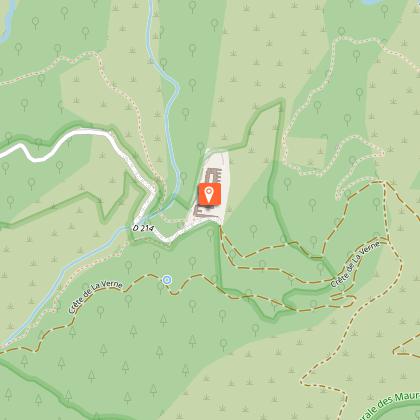
From the Croix d'Anselme car park, enjoy a 1 km descent on the RD 14, surrounded by chestnut trees. At the intersection, turn right towards Col des Fourches Gonfaron. At the arrow post "Vallon de Rascas" take the direction of Valescure and prepare your calves to start the climb for about 10 km until the arrow post "Cros de Mouton".

On arrival take the direction of La Garde-Freinet, continue for 1 km and turn right at the intersection towards Capelude. Hilly climb for 700 m on a sandy track until you reach the top of Le Défens. Here, take the time to stop and enjoy the panoramic view of the whole Collobrières forest and the sea.

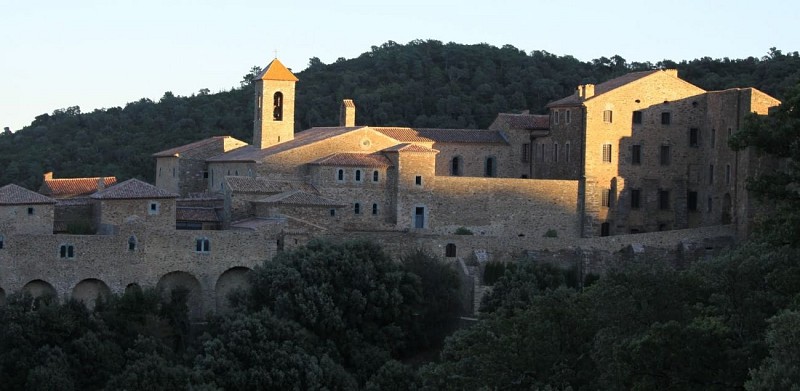
Enjoy the next 8 km of descent on a partly dirt and partly stony track surrounded by typical Mediterranean vegetation. On the way you can stop at the Treps reservoir, where picnic tables are available for a break. You can also admire the Chartreuse de la Verne in the distance.

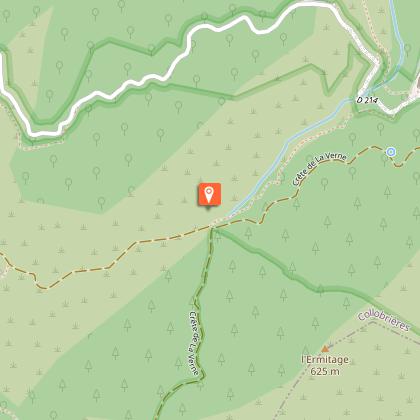
At the end of this descent, you will arrive on the RD 14, which you will have to climb for 400m to join the path on the left on the dirt roadside, which will take you to the ascent of the Chartreuse de la Verne on a trail of about 9.5 km with no difficulties or obstacles.
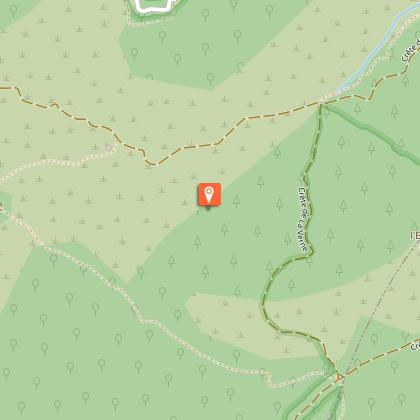
On arrival you can visit the monument and enjoy the view towards the Maures massif. Then, follow the arrow post "Chartreuse 1" located at the entrance of the monument towards Plateau Lambert through the undergrowth. This shaded single is relatively technical with some passages on less important stones. Then take the Ragusse track on your right to enjoy a descent on a stony track for about 7 km. Remember to descend below the trail to admire the cedar forest about 2 km from the arrow post. Be careful, this is a very technical trail with a steep descent and a lot of vegetation for experienced mountain bikers. Tip: leave your mountain bike at the top of the track and walk the trail.

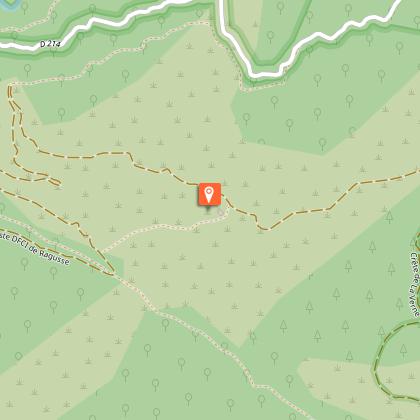
At the end of this descent, when you reach a small ford, take the RD to the left for 400m and then to the left on the trail parallel to the departmental road. This single track has some small obstacles to overcome (tree roots), and there are 450 m to go before you return to the start car park.

Technical Information

Mountainbiking
Difficulty
Medium
Duration
5h
Dist.
38 km
Show more

Altimetric profile

Starting point

Départ / arrivée : Parking de la Croix d'Anselme , 83610   Collobrières
Lat : 43.237987Lng : 6.356043

Steps

image du object
4

Histoire: Chartreuse de la Verne

Au cœur du massif des Maures, entre Collobrières et Grimaud, la Verne est un lieu-dit dont l’origine est controversée : son nom peut venir de la déesse romaine Laverna, protectrice des voleurs, qui aurait eu un temple à cet endroit, du latin populaire vernium (verno en provençal), désignant l’aulne des forêts présent dans les vallées voisines, ou du latin verna, dénommant les esclaves. En tout cas, c’est en 1170 que l’évêque de Toulon Pierre Isnard et l’évêque de Fréjus Frédol d’Anduse décident d’installer une chartreuse dédiée à la Vierge Marie à cet endroit, à 415 mètres d’altitude, exactement à la limite entre leurs deux diocèses. Fondé en 1084 par saint Bruno dans les Alpes, près de Grenoble, l’ordre des chartreux cherche à vivre en ermites, dans des petites maisons solitaires, avec des temps de vie communautaire. Le 3 octobre 1174 est consacrée la première église romane de la chartreuse de la Verne, dont les moines viennent du monastère voisin de Montrieux.Si la fondation agrandit rapidement son domaine grâce à de nombreuses donations (3 000 hectares de forêt, pâtures et terres agricoles, privilège d’exploiter les salines d’Hyères), la chartreuse connaît beaucoup de vicissitudes dues aux aléas climatiques et humains : incendies de 1214, 1271 et 1318, pillage de 1416 par des seigneurs locaux, pillage en 1578 pendant les guerres de Religion, attaque sarde en 1707 pendant les guerres de Louis XIV, d’où la présence de hautes fortifications autour des bâtiments. Plusieurs conflits éclatent avec les autorités voisines, notamment avec le seigneur de la Môle. Cependant, la chartreuse est chaque fois reconstruite et même agrandie, en particulier la chapelle. Au XVIIe siècle, est élevée une porte monumentale toujours visible, en pierre de serpentine, un célèbre marbre volcanique issu des Maures.La Révolution vient bouleverser l’histoire du monastère : ses biens sont confisqués par l’État et les moines sont expulsés en 1792. Le dernier prieur, Dom Raphaël Paris, part chercher refuge en Italie. La chartreuse est vendue, mais son état se dégrade rapidement. Prosper Mérimée la remarque dans les années 1840, mais il faut attendre 1921 pour que la chartreuse soit classée monument historique en tant que « vestiges dans la forêt ». Il ne reste plus que des ruines désolées, mais suffisamment parlantes pour attirer l’attention de Maupassant (1884) ou de Paul Morand (1940). C’est à partir de 1968 qu’une association de bénévoles passionnés se met à restaurer progressivement tout l’ensemble ; dans une salle proche de la chapelle, une maquette et une exposition de photos montrent l’évolution de ce prodigieux chantier, aujourd’hui pratiquement achevé. Depuis 1983, la vie monastique a repris grâce à la congrégation des Sœurs de Bethléem, dont les offices peuvent être suivis depuis la tribune de la chapelle.La visite, dont le prix finance la restauration, permet d’admirer l’essentiel des bâtiments. Elle commence par la porterie, qui rassemble les œuvres artisanales des moniales, dont de grandes statues, et se poursuit par les ateliers, où se pratiquaient les activités des moines. Deux vidéos permettent de mieux connaître la restauration et la vie du monastère. Comme toute chartreuse, la Verne présente deux cloîtres : si le grand (autrefois réservé aux pères), comportant le cimetière des chartreux, n’est visible que de loin, on peut visiter le petit cloître (jadis destiné aux frères), près duquel se situe une cellule témoin reconstituant la vie des chartreux au XVIIe siècle.

- OFFICE DE TOURISME INTERCOMMUNAL Cuers, Collobrières, Pierrefeu du Var, La Londe les Maures -
Consulter

Points of interest

image du object

Chartreuse de la Verne

Nestling in the heart of the Maures massif, the Chartreuse de la Verne offers a haven of silence, nature and ancient history.In the heart of the Maures massif, shrouded in forest and silence, the Chartreuse de la Verne emerges like a well-kept secret. Founded in 1170 on the ruins of an ancient priory, it has always borne the name Notre-Dame de la Verne. Its stones have withstood fire, pillage, war and the Revolution. Three fires in the Middle Ages reduced it to ashes. Each time, the monks rebuilt. Until 1792, when, forced to flee, they left behind an empty sanctuary, sold as national property. Nature then took over. Wind, rain, oblivion... Until, in 1968, a handful of enthusiasts founded the association Les Amis de la Verne. In 1986, around thirty nuns from the Bethlehem family revived the spiritual vocation of the site. Each of them lives in a hermitage, in silence, prayer and work. Their presence transforms the Carthusian monastery into a place of profound peace, which you feel as soon as you take your first steps. Today, part of the monastery is open to the public. Here you can discover the gatehouse, the bakery, a monk's cell and the 12th-century Romanesque church, the only place where visitors and nuns share a mutual respect and silence. Coming to La Verne is more than just visiting a monument. It's a moment of suspension, a break from the hustle and bustle. It's hearing the murmur of the centuries, feeling the strength of a place that has never ceased to be reborn. - How do you visit the Chartreuse de la Verne? The Monastery can be visited freely and independently. When you arrive, you will be given a tour booklet to guide you along the route. This booklet presents the main areas accessible to the public and guides you through the monument, following a defined route, for a calm and rewarding exploration. The visit takes place in a way that respects the silence and the monastic life that is still present here. - How much does it cost to visit the Chartreuse de la Verne? Adults: €7 Students: €5 Young people (aged 12 to 18): €3 Groups (10 people or more): €5 - How to get to the Chartreuse de la Verne The Chartreuse is accessible via the Route de la Verne, a narrow, winding road that crosses the Maures massif. Free parking is available at the end of the road. Access to the site is on foot along a dirt track about 700 metres long, with no difference in height, which takes about 10 minutes. Access not recommended for vehicles over 3.5 tonnes and coaches are not allowed. - Parking for vehicles and minibuses Limited number of parking spaces. For minibuses: parking can be reserved by calling 04 94 43 48 28. - Shop The monastic craft shop is open at the same times as the tour and is closed every Sunday. - Other practical information The monastery is closed in January, on religious holidays and every Tuesday after the All Saints' holiday until 31 March. Closed on days when the massifs are closed due to severe fire risks. Further information: www.risque-prevention-incendie.fr/83

Corniche des Maures RD 214 83610 Collobrières
- OFFICE DE TOURISME INTERCOMMUNAL Cuers, Collobrières, Pierrefeu du Var, La Londe les Maures -
Consulter

Additional information

Updated by

Office de tourisme intercommunal La Londe les Maures, Cuers, Collobrières, Pierrefeu du Var - 27/11/2025
www.mpmtourisme.com
Report a problem

Open period

All year round.
From June 21 to September 20, hiking trails are subject to the rules of access to the Var forest massifs to comply with the fire risk prevention plan. Information: Var Prefecture - 00 33 4 98 10 55 41 - var.gouv.fr.

Subject to favorable weather.

Type of land

Not suitable for strollers
Stone
Hard coating (tar, cement, flooring)
Ground

Reception complements

The proposed trails may cross areas where forestry, farming and pastoral activities are still present and active. Remember that you are walking on paths bordered by private property. Therefore, respecting the marked paths and the crops (olive trees, chestnut trees, cork...) is the best insurance for a pleasant walk.
In order to respect the work of the breeders and the peace and quiet of the herds, please adopt a few reflexes: go well around the herd, keep your distance. In the presence of guard dogs: stop while they identify you, get off your bike and walk calmly, do not threaten them, do not pet them. Keep your dog on a lead (if you are in an area where its presence is permitted).

No picking or taking: the routes crossed are rich in rare animal and plant species. Help us to preserve them!

Take your rubbish with you and help to preserve our environment.

Stay on the marked trails to avoid damaging the natural environment.

Users are liable if the basic safety rules are not followed.

Ratings and reviews

To see around
See more
Open
Close
Show
Show
Show
Show
Show
Show
Show
Show
Show
Show
Show
Caution!
We have no information on the difficulty of this circuit. You may encounter some surprises along the way. Before you go, please feel free to inquire more and take all necessary precautions. Have a good trip! 🌳🥾