Alert

Alerts

To see around
See more
Open
Close
Show
Show
Show
Show
Show
Show
Show
Show
Show
Show
Show

Oups... It would appear that Cirkwi does not have permission to use your location.

Presentation
Description
Map
Points of interest
Ratings and reviews
See around

Parcours "XIXe - XXIe siècle : le patrimoine contemporain"
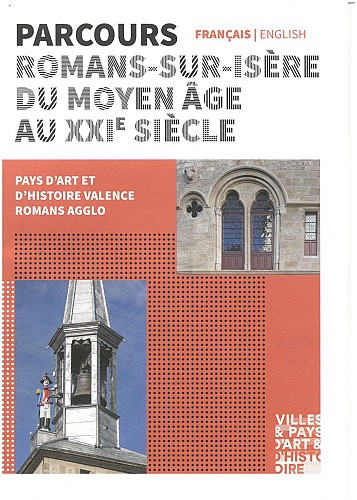
Parcours "XIXe - XXIe siècle : le patrimoine contemporain"_Romans-sur-Isère

Description

After the destruction of the medieval ramparts in the mid-19th century, the town expanded northwards. A new district emerged, located between the historic center and the train station.

The local economy undergoes new developments with the installation of
shoe manufacturing workshops. The need for labor led to a sharp rise in population, from 10,000 in 1850 to 20,000 in 1940 and 30,000 in 1968.
In the 19th and early 20th centuries, Romans was also a garrison town, housing several barracks.
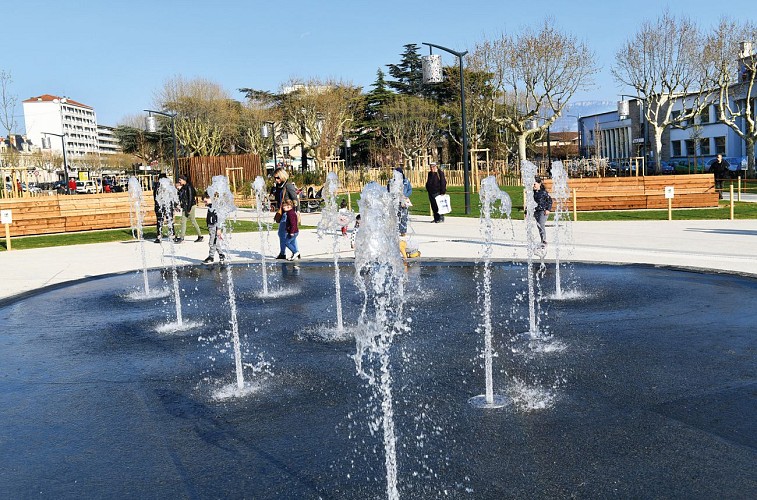
Today's city center gradually took on the face we know today.
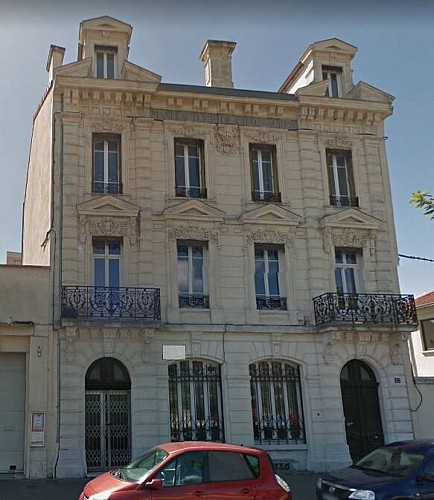
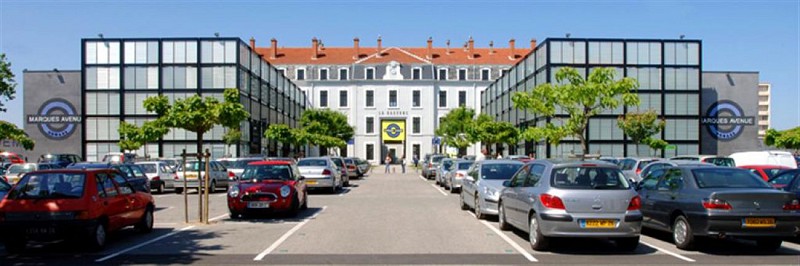
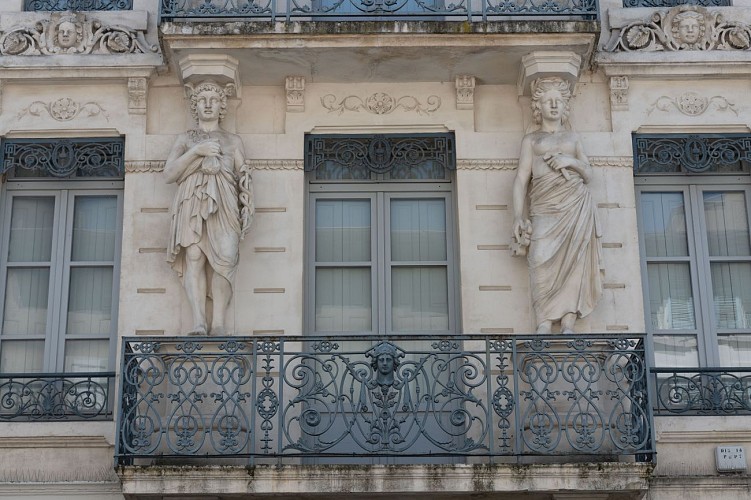
Traffic areas were created for cars, and emblematic monuments were built: the train station, the Bon barracks (now known as Marques Avenue), the Notre-Dame de Lourdes church, the bandstand and private mansions such as the Maison Figuet and the Maison des Statues.

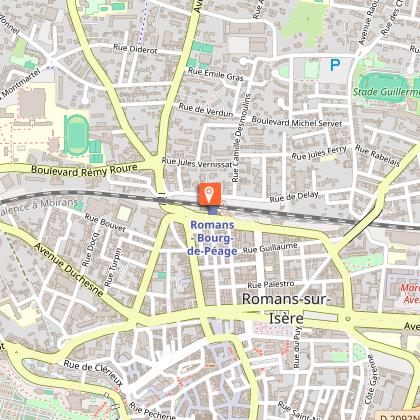
1 - Romans Bourg de Péage train station
2 - Figuet house
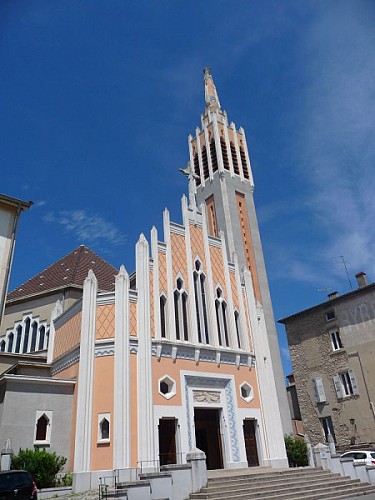
3 - Notre Dame de Lourdes
4 - Bon barracks (Marques Avenue)
5 - Shoe Museum
6 - Bandstand
7 - Champ de Mars
8 - House of Statues

Technical Information

Walking
Difficulty
Not specified
Duration
1h
Dist.
2.6 km
Show more

Altimetric profile

Starting point

5 Rue du Mouton , 26100   Romans-sur-Isère
Lat : 45.043402Lng : 5.048926

Points of interest

image du object

Eglise Notre-Dame-de-Lourdes

Consacrée en 1938 et achevée en 1940, elle est depuis 2024, protégée au titre des Monuments Historiques. et dessert le nouveau quartier de la gare. Le monument est labellisé « patrimoine du XXe siècle ». Elle est classée Monument Historique depuis 2026.Alors que le quartier de la gare se développe, l’évêché de Valence entreprend l’édification d’un nouveau lieu de culte sur une parcelle qui borde la nouvelle place centrale de Romans. Le projet est confié à deux architectes : François Bérenger et Dom Bellot. Ceux-ci s’inspirent du style gothique moderne pour construire un bâtiment en béton armé, que l’on peut aussi rapprocher du courant architectural de l’Art déco. La façade est rythmée par des ouvertures et des pignons « gothiques ». Le clocher culmine à 45 m. La statue de la Vierge, de près de 7 m, ainsi que les autres statues, sont dues à Georges Serraz. Les trois travées intérieures se regroupent en une coupole unique. L'autel est du sculpteur Toros. Le chemin de croix est réalisé par Jac Martin-Ferrières. Ce peintre né en 1893, d’abord marqué par le courant pointilliste, développe ensuite son propre style. Peintre et chimiste, il choisit de revenir à une technique antique, celle de la peinture à l’encaustique. Délayer les pigments dans de la cire d’abeille lui permet d’obtenir des couleurs plus contrastées. Il développe le thème du chemin de croix comme une histoire qui se déroule sur l’ensemble des murs de l’édifice, sans oublier les coupoles. La réalisation des vitraux est confiée à deux maîtres-verriers : Louis-Ferdinand Balmet (Grenoble) pour la nef et le choeur, et Georges Thomas (Valence) pour l’entrée. De 1941 à 1949, maîtres-verriers, peintre et sculpteur travaillent de concert pour produire un ensemble homogène, où la lumière vient mettre en valeur les autres oeuvres présentes dans l’église. L’iconographie choisie demeure classique : chaque vitrail représente un saint et plusieurs d’entre eux sont consacrées à Notre-Dame. Le choix du bleu comme couleur prédominante peut aussi être vu comme un hommage à Marie, à qui cette couleur est traditionnellement associée. Le mobilier du choeur est issu d’une commande passée en 1984 au sculpteur Toros, sculpteur romanais d’origine arménienne. Réalisé en feuilles de laiton, le mobilier très sobre représente des enfants portant une lyre (pupitre) et tendant les bras vers le ciel (autel). Au centre de l’autel, une mère recroquevillée sur son enfant est également présente. (Le 3 du document " Parcours Romans du Moyen Age au XXIème siècle" correspond au O du plan découverte de Romans)

7 Rue Solférino 26100 Romans-sur-Isère
- Valence Romans Tourisme -
Consulter
image du object

Romans sur Isère

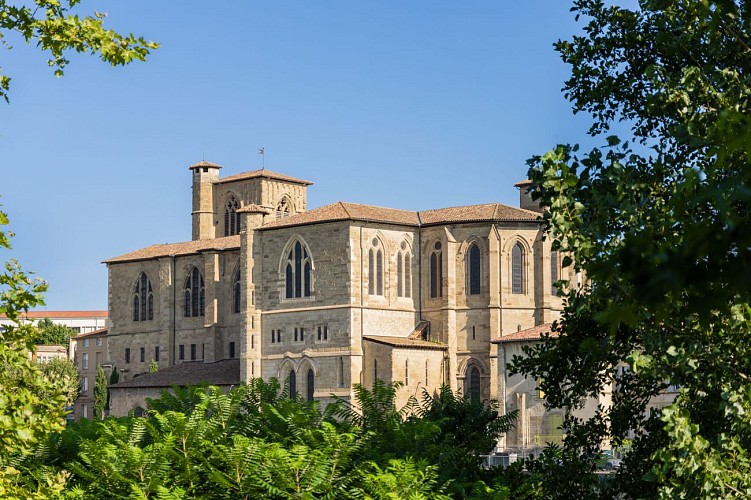
Romans is endowed with an undeniable cachet, heritage of a rich past, with its narrow streets where various architectural styles are mixed.Number of inhabitants: 33,700 Area: 3,308 ha. The Isère flows past your feet, but make no mistake Romans is indeed located in the Drôme. Since the Middle Ages, attracted by the abundant waters, tanners and leatherworkers have enjoyed great prosperity. Around 1850 the footwear industry took off and was to expand further during the first half of the 20th century. Innovation, expertise and quality made the reputation of what was to become the capital of luxury footwear. The greatest names in footwear have a showcase in Romans, at the international museum, located in the former Convent of the Visitation, which traces back 4000 years of history across the continents. The collegiate church erected on the site of an abbey founded in 838 AD by Barnard, Archbishop of Vienne, constitutes the cradle of the town. Over centuries, it has symbolised the power that the canons have exerted over the old town. Built by the consuls in defiance of the religious authorities, the Jacquemart Tower has watched over the citizens of Romans since 1429. Its clock is operated by the automated figure of a bell ringer with a hammer. Originally dressed in the traditional costume of the peasant (the "Jacques"), he now sports the uniform of a revolutionary volunteer from 1792. You will also discover a complete reconstruction of the Stations of the Cross, like that of Jerusalem, an attraction unique in France: the Calvary of the Récolle ts, one of the few French cemeteries from the Romantic Era to have remained intact in its original environment.

- Valence Romans Tourisme -
Consulter

Additional information

Environments

Town location
In centre of town

Updated by

Valence Romans Tourisme - 15/04/2026
www.valence-romans-tourisme.com/fr/
Report a problem

Open period

All year round daily.

Type of land

Hard coating (tar, cement, flooring)

Ratings and reviews

To see around
See more
Open
Close
Show
Show
Show
Show
Show
Show
Show
Show
Show
Show
Show
Caution!
We have no information on the difficulty of this circuit. You may encounter some surprises along the way. Before you go, please feel free to inquire more and take all necessary precautions. Have a good trip! 🌳🥾