Alert
Alerts
Chenaillet Massif
Description
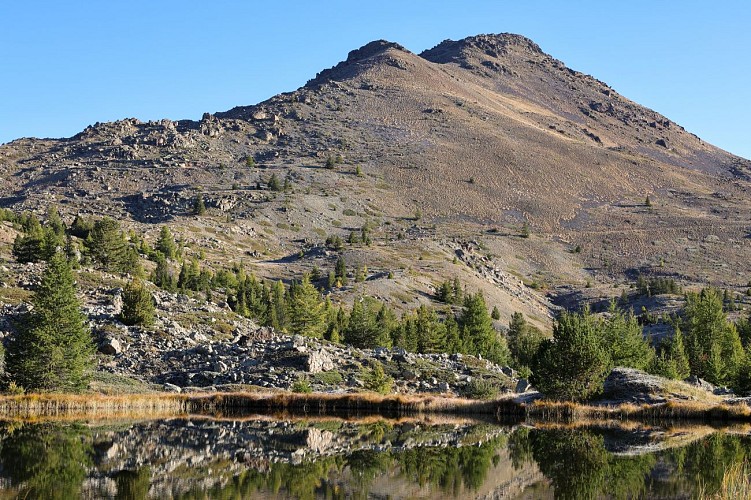
Rising to 2,650 meters, the Chenaillet Massif is an iconic site due to its geological richness. It is therefore a veritable open-air museum of Alpine geology, bearing witness to a past dating back hundreds of millions of years.
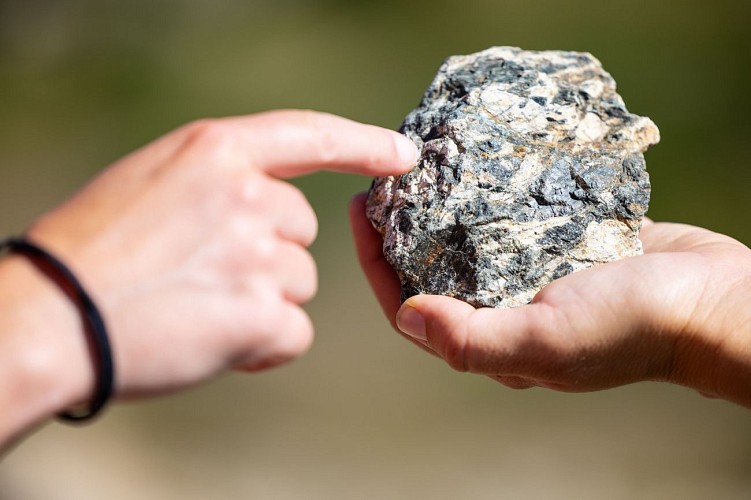
A true witness to the ancient Tethys Ocean, Le Chenaillet is one of the few places in Europe where fossilized oceanic crust can be observed directly in the field. Formed at the bottom of the Tethys Ocean around 200 million years ago, these rocks were gradually lifted up during the formation of the Alps.
Here you will find green serpentinites from the Earth's mantle, dark gabbros, evidence of ancient underwater magma chambers, and pillow basalts, remnants of underwater volcanoes.
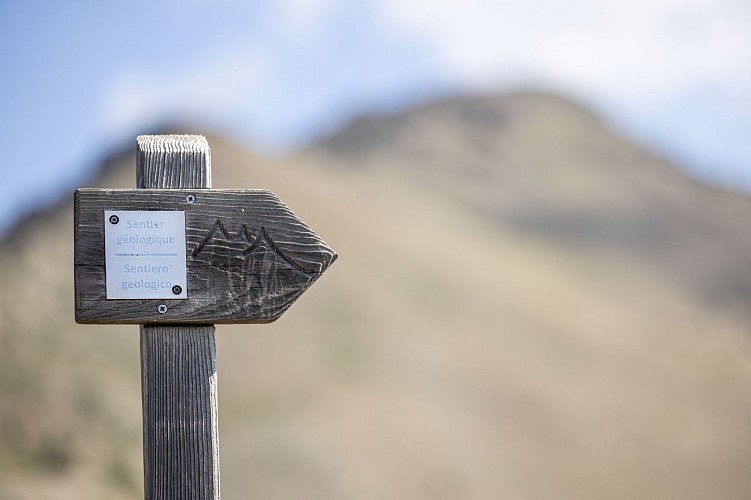
Starting from the Mur des Aittes, a marked geological trail allows visitors to discover the geological richness of the Chenaillet massif. Each panel clearly explains how the rocks were formed, how they bear witness to the movements of the Earth's plates, and how they tell the profound history of the Alps. Hikers can thus walk in the heart of geological processes that have taken place over millions of years.
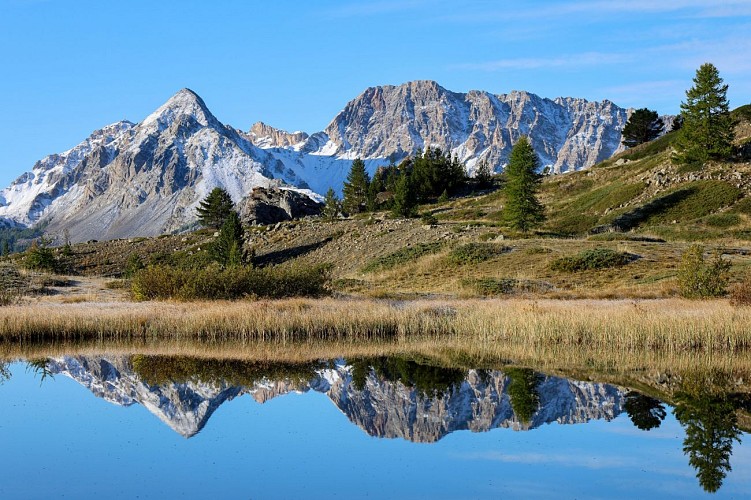
At the summit of Chenaillet, you can see the village of Montgenèvre on one side and various peaks overlooking it, such as Grand Chalvet, Pointe de Dormillouse, Tête des Fournéous, and more. On the other side, directly opposite, you can see Lasseron, Pic de Rochebrune and, further away, the Queyras and Briançonnais valleys and the Ecrins and Cerces massifs stretching as far as the eye can see.
The uniqueness of this massif lies in this combination of science and nature, which offers a unique experience.
Technical Information
Altimetric profile
Additional information
Price(s)
Free access.
Updated by
Office de tourisme des Hautes Vallées - La Grave - La Clarée - L'Izoard - 18/03/2026
www.hautesvallees.com/la-grave/
Report a problem
Open period
All year round daily.
Contact
Phone : 06 07 07 31 08
Email : izoard@hautesvallees.com
Website : https://www.hautesvallees.com/lizoard/
Facebook : https://www.facebook.com/Izoardtourisme/
Animals
Yes
Data author
