Alert
Alerts
The 58th (London) Division Memorial
Description
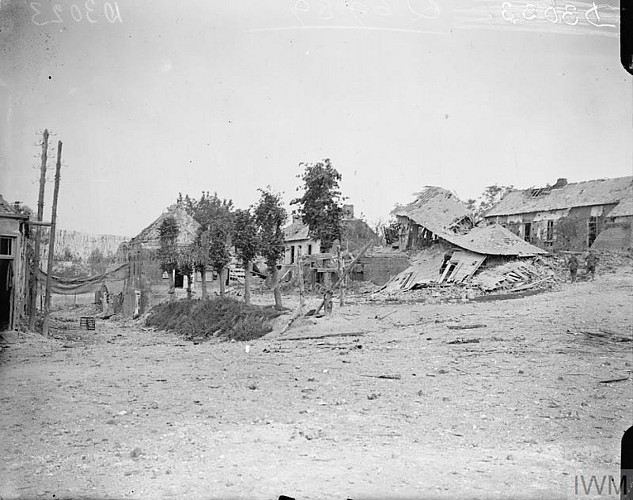
The heights to the north of Chipilly were of vital importance to the Allies during the offensive of 8 August 1918. Indeed, from this position held by the Germans, they were able to engage the Australian troops advancing to the south on the other side of the Somme.
The German lines held firm and the village remained in German hands throughout that first day. It was finally liberated on 9 August by British and American troops. The monument in front of the church pays tribute to the men of the 58th Division who liberated the village. The depiction of a dying horse was requested by the statue’s patron, to ensure that the sacrifice of animals during the Great War was remembered alongside that of the soldiers. As you cross the street, you can see the village’s war memorial, typical of those erected in small villages in the immediate post-war period.
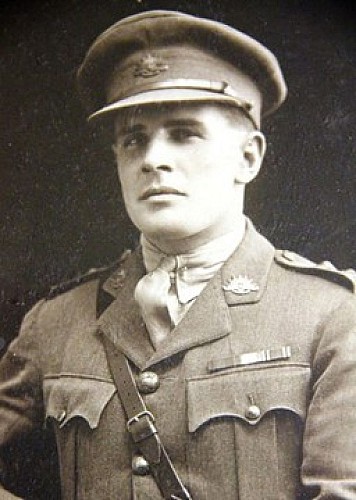
The capture of the village of Chipilly was greatly facilitated by the initiative of Company Quartermaster Sergeant Jack Hayes and five of his men. The six Australians played a crucial role in the capture of Chipilly by entering the village after a British unit had been held up, neutralising several German positions and facilitating the deployment of a machine gun that cut off the enemy’s retreat. Their action, though decisive and confirmed by historians, was not mentioned in the British report. Harold Dudley Andrews, whom you can see on the picture, was awarded the DCM for his action. The sector then came under Australian control to enable the Allied advance to continue.
Technical Information
Altimetric profile
Data author
